Think the past winter was bad? Get ready for mini Ice Age

Odds of storm waters flooding Manhattan up 20-fold, new study finds

"Maximum water levels in New York harbor during major storms have risen by nearly two and a half feet since the mid-1800s, making the chances of water overtopping the Manhattan seawall now at least 20 times greater than they were 170 years ago, according to a new study.

"Whereas sea-level rise, which is occurring globally, has raised water levels along New York harbor by nearly a foot and a half since the mid-19th century, the research shows that the maximum height of the city's "once-in-10-years" storm tide has grown additionally by almost a foot in that same period.

"The newly recognized storm-tide increase means that New York is at risk of more frequent and extensive flooding than was expected due to sea-level rise alone, said Stefan Talke, an assistant professor of civil and environmental engineering at Portland State University in Portland, Oregon.

"He is lead author of the new study accepted for publication in Geophysical Research Letters, a journal of the American Geophysical Union. The research also confirms that the New York harbor storm tide produced by Hurricane Sandy was the largest since at least 1821.

"Tide gauge data analyzed in the study show that a major, "10-year" storm hitting New York City today causes bigger storm tides and potentially more damage than the identical storm would have in the mid-1800s.

"Specifically, Talke explained, there's a 10 percent chance today that, in any given year, a storm tide in New York harbor will reach a maximum height of nearly two meters (about six and a half feet), the so-called "10-year storm." In the mid-19th century, however, that maximum height was about 1.7 meters (about 5.6 feet), or nearly a foot lower than it is today, according to tide gauge data going back to 1844, he noted.

"What we are finding is that the 10-year storm tide of your great-, great-grandparents is not the same as the 10-year storm tide of today," Talke said.

"To get the data used in the study, Talke and a graduate student photographed hundreds of pages of handwritten hourly and daily tide gauge data going back to 1844 that is stored at the US National Archives in College Park, Md.

"Talke and his students entered the data into spreadsheets and adjusted the data where points were erroneous or missing, including using newspaper accounts of big storms to fill in some of the holes. "

Article>>

 
yes water levels are rising as they return to previous levels.

http://www.climatedepot.com/2014/04...r-past-5-3-million-years-published-in-nature/

New paper finds sea levels were much higher than the present during almost all prior interglacials over past 5.3 million years
http://hockeyschtick.blogspot.com/2014/04/new-paper-finds-sea-levels-were-much.html
A paper published today in Nature reconstructs sea levels over the past 5.3 million years and shows that sea levels were higher than the present during almost every interglacial period over the past 5.3 million years. Sea levels at present during the current interglacial are indicated as the added red horizontal line at zero meters on Fig. 2 below, and excursions above this line indicate sea levels during past interglacials as much as 50+ meters [164+ feet] higher than present sea levels. Thus, there is no evidence that sea level rise during the present interglacial is unprecedented, unnatural, unusual or any different from that which occurred in prior interglacials, or any evidence of influence by man on sea levels.
Fig. 2 with added red horizontal lines show present sea levels. Horizontal axis is thousands of years before the present.
The last interglacial ~100,000 years ago [Eemian] had sea levels between 16-31 feet higher than the present, although it appears as a tiny blip above the red line in the graph a much more compressed scale above, but is better appreciated by this graph from another recent paper:
Sea levels during the last interglacial ~120,000 years ago were up to 5 meters higher than the present in this location and up to 9.5 meters higher at other locations
It is well known that interglacials have occurred at 100,000 year intervals over the past ~1 million years, and at intervals of ~44,000 years from ~1 million to 2.5 million years ago.
The primary purpose of the paper is to help solve the mystery of what causes ice ages, yet appears to only deepen the mystery. Instead, the authors find a ~550,000 year gap between the onset of cooling and glaciation, whereas these were previously assumed to occur at the same time.
The authors note, “We find that deep-sea temperature and sea level generally decreased through time, but distinctly out of synchrony, which is remarkable given the importance of ice-albedo feedbacks on the radiative forcing of climate,” thus implying that there are major problems with current global warming theory regarding ice-albedo positive feedbacks and radiative forcing.


Odds of storm waters flooding Manhattan up 20-fold, new study finds

"Maximum water levels in New York harbor during major storms have risen by nearly two and a half feet since the mid-1800s, making the chances of water overtopping the Manhattan seawall now at least 20 times greater than they were 170 years ago, according to a new study.

"Whereas sea-level rise, which is occurring globally, has raised water levels along New York harbor by nearly a foot and a half since the mid-19th century, the research shows that the maximum height of the city's "once-in-10-years" storm tide has grown additionally by almost a foot in that same period.

"The newly recognized storm-tide increase means that New York is at risk of more frequent and extensive flooding than was expected due to sea-level rise alone, said Stefan Talke, an assistant professor of civil and environmental engineering at Portland State University in Portland, Oregon.

"He is lead author of the new study accepted for publication in Geophysical Research Letters, a journal of the American Geophysical Union. The research also confirms that the New York harbor storm tide produced by Hurricane Sandy was the largest since at least 1821.

"Tide gauge data analyzed in the study show that a major, "10-year" storm hitting New York City today causes bigger storm tides and potentially more damage than the identical storm would have in the mid-1800s.

"Specifically, Talke explained, there's a 10 percent chance today that, in any given year, a storm tide in New York harbor will reach a maximum height of nearly two meters (about six and a half feet), the so-called "10-year storm." In the mid-19th century, however, that maximum height was about 1.7 meters (about 5.6 feet), or nearly a foot lower than it is today, according to tide gauge data going back to 1844, he noted.

"What we are finding is that the 10-year storm tide of your great-, great-grandparents is not the same as the 10-year storm tide of today," Talke said.

"To get the data used in the study, Talke and a graduate student photographed hundreds of pages of handwritten hourly and daily tide gauge data going back to 1844 that is stored at the US National Archives in College Park, Md.

"Talke and his students entered the data into spreadsheets and adjusted the data where points were erroneous or missing, including using newspaper accounts of big storms to fill in some of the holes. "

Article>>
 
yes water levels are rising as they return to previous levels.

http://www.climatedepot.com/2014/04...r-past-5-3-million-years-published-in-nature/

New paper finds sea levels were much higher than the present during almost all prior interglacials over past 5.3 million years
http://hockeyschtick.blogspot.com/2014/04/new-paper-finds-sea-levels-were-much.html
A paper published today in Nature reconstructs sea levels over the past 5.3 million years and shows that sea levels were higher than the present during almost every interglacial period over the past 5.3 million years. Sea levels at present during the current interglacial are indicated as the added red horizontal line at zero meters on Fig. 2 below, and excursions above this line indicate sea levels during past interglacials as much as 50+ meters [164+ feet] higher than present sea levels. Thus, there is no evidence that sea level rise during the present interglacial is unprecedented, unnatural, unusual or any different from that which occurred in prior interglacials, or any evidence of influence by man on sea levels.
Fig. 2 with added red horizontal lines show present sea levels. Horizontal axis is thousands of years before the present.
The last interglacial ~100,000 years ago [Eemian] had sea levels between 16-31 feet higher than the present, although it appears as a tiny blip above the red line in the graph a much more compressed scale above, but is better appreciated by this graph from another recent paper:
Sea levels during the last interglacial ~120,000 years ago were up to 5 meters higher than the present in this location and up to 9.5 meters higher at other locations
It is well known that interglacials have occurred at 100,000 year intervals over the past ~1 million years, and at intervals of ~44,000 years from ~1 million to 2.5 million years ago.
The primary purpose of the paper is to help solve the mystery of what causes ice ages, yet appears to only deepen the mystery. Instead, the authors find a ~550,000 year gap between the onset of cooling and glaciation, whereas these were previously assumed to occur at the same time.
The authors note, “We find that deep-sea temperature and sea level generally decreased through time, but distinctly out of synchrony, which is remarkable given the importance of ice-albedo feedbacks on the radiative forcing of climate,” thus implying that there are major problems with current global warming theory regarding ice-albedo positive feedbacks and radiative forcing.

And the Earth was once a ball of lava.
 
It's very simple jem. Sea levels are rising because ice is melting and the sea water is expanding as it gets warmer. You do know that warmer water has more volume right? There has been no pause at all in the warming of the oceans which contain over 90% of the earth's heat. In addition the storms are becoming stronger due to more heat content in the atmosphere. All of this is happening because CO2 is a greenhouse gas.
 
It's very simple jem. Sea levels are rising because ice is melting and the sea water is expanding as it gets warmer. You do know that warmer water has more volume right? There has been no pause at all in the warming of the oceans which contain over 90% of the earth's heat. In addition the storms are becoming stronger due to more heat content in the atmosphere. All of this is happening because CO2 is a greenhouse gas.


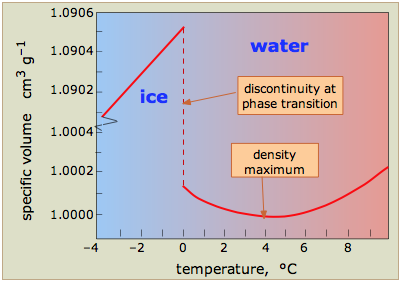
water_sp_volume.png
 
1. lucrum just challenged your point... showing that when ice melts volume decreases. (at first anyway)

2. the paper shows that sea level has be cycling for millions of years.
we also have data which shows co2 levels trail ocean warming. I have showed it to you a hundred times.


Any chance Lucrumb said anything intelligent? ^ Fortunately I have him on ignore.

(Rhetorical question)
 
Back
Top