the NIPCC was created by the Heartland Institute, a privately run organisation with significant connections to the fossil fuel industry, from whom it receives funding. Heartland was previously associated with campaigns funded by the tobacco industry to discredit science attesting to the damage caused by smoking tobacco. Its several reports have contributions from a number of the same lead authors. The 2009 report had 35 contributors; the 2011 report had 8 contributors. NIPCC contributors are paid for their contributions.

You are using an out of date browser. It may not display this or other websites correctly.
You should upgrade or use an alternative browser.
You should upgrade or use an alternative browser.
Think the past winter was bad? Get ready for mini Ice Age
- Thread starter gwb-trading
- Start date
Both the IPCC and its parody are âsynthesis reportsâ. They purport to summarise the science of climate change. You might expect that both reports would draw on all the recent climate science available to them. This is true of the IPCC, but in the case of the NIPCC, it has been noted that their work is highly selective. The report claims to be âindependentâ, yet its authors constantly cite their own work, that of other contributors, and frequently quote each other. Numerous papers widely discredited within climate science are still cited by the NIPCC.
Perhaps more importantly, the latest NIPCC report repeats many of the myths about climate change that it published in previous work. While the IPCC catalogues recent scientific developments, the NIPCC appears to find very little has changed since its last ârebuttalâ, a position seemingly at odds with the increasing amount of climate change research around the world. The following arguments were published in previous NIPCC reports, and are reiterated in this one: Temperature record is unreliable, Models are unreliable, It's a natural cycle, It's the sun, Sea level rise predictions are exaggerated, It's not bad
The CCR2 report also exhibits a flaw so basic it would not be condoned in the submission of a 1st year science student. In all scientific documents where scientific papers are cited, it is standard practice to append a numbered list of the papers referred to, and to add corresponding superscript numbers to any statement that depends on a citation for validity. This is the only way it is possible to check that what the authors claim is supported by the science they claim it for.
The full NIPCC report fails to provide any numbered citations. Although the authors list many scientific papers, at no point can a reader determine to which scientific paper any statements in the report refer to. In other words, it simply isnât feasible to check anything contained in the report, to see if any claims in it are accurate reflections of what the science says, or to determine whether the scientific papers cited relate specifically, or at all, to anything said in the report. This kind of obfuscation is either very sloppy, or patently devious.
Conclusions
It would be helpful to direct readers to a comprehensive rebuttal of the NIPCCâs report. A Google search for such a document is therefore revealing on two counts.
First, nobody seems to have bothered to debunk the copious inaccuracies, the bad science, the repeated but unsubstantiated claims, the sophistry and what could be seen uncharitably as outright deceit. Considering how tissue-thin is the substance even of the âsummary of NIPCC findingsâ, the damning record of the NIPCCâs previous work, the dubious reputation of its sponsor the Heartland Institute, and the all too clear relationship between Heartlandâs agenda and the vested interests of the fossil fuel industry that sponsors such work, it is not surprising that so many qualified people have ignored the report.
The second notable result of a Google search is that virtually all the listings are contrarian; blogs, news outlets and others, many of whom could be described as âthe usual suspectsâ. Credible media and the broader scientific community have comprehensively ignored the report.
The NIPCC report is akin to a confidence trick. It is pseudo-science, badly presented, made difficult to assess or check, and depends on âblinding the reader with scienceâ that may look credible until you actually try to verify those claims against the peer-reviewed published literature.
Heartland and the NIPCC know how busy educators are. They know perfectly well that teachers have neither the time, inclination or, in many cases, the necessary background, to determine the validity of the many and various claims contained in a 1000-page report. They seek to appeal to the credulous, and those who trust Heartland or the NIPCC will have that trust betrayed.
Like others driven by an agenda, Heartland and the NIPCC are now attempting to influence the education of young people, at the behest of the vested interests who pay for Heartlandâs services. It is hoped that these notes will help teachers and administrators determine for themselves the quality and purpose of the NIPCC report, and the manipulative agenda of those behind it.
Perhaps more importantly, the latest NIPCC report repeats many of the myths about climate change that it published in previous work. While the IPCC catalogues recent scientific developments, the NIPCC appears to find very little has changed since its last ârebuttalâ, a position seemingly at odds with the increasing amount of climate change research around the world. The following arguments were published in previous NIPCC reports, and are reiterated in this one: Temperature record is unreliable, Models are unreliable, It's a natural cycle, It's the sun, Sea level rise predictions are exaggerated, It's not bad
The CCR2 report also exhibits a flaw so basic it would not be condoned in the submission of a 1st year science student. In all scientific documents where scientific papers are cited, it is standard practice to append a numbered list of the papers referred to, and to add corresponding superscript numbers to any statement that depends on a citation for validity. This is the only way it is possible to check that what the authors claim is supported by the science they claim it for.
The full NIPCC report fails to provide any numbered citations. Although the authors list many scientific papers, at no point can a reader determine to which scientific paper any statements in the report refer to. In other words, it simply isnât feasible to check anything contained in the report, to see if any claims in it are accurate reflections of what the science says, or to determine whether the scientific papers cited relate specifically, or at all, to anything said in the report. This kind of obfuscation is either very sloppy, or patently devious.
Conclusions
It would be helpful to direct readers to a comprehensive rebuttal of the NIPCCâs report. A Google search for such a document is therefore revealing on two counts.
First, nobody seems to have bothered to debunk the copious inaccuracies, the bad science, the repeated but unsubstantiated claims, the sophistry and what could be seen uncharitably as outright deceit. Considering how tissue-thin is the substance even of the âsummary of NIPCC findingsâ, the damning record of the NIPCCâs previous work, the dubious reputation of its sponsor the Heartland Institute, and the all too clear relationship between Heartlandâs agenda and the vested interests of the fossil fuel industry that sponsors such work, it is not surprising that so many qualified people have ignored the report.
The second notable result of a Google search is that virtually all the listings are contrarian; blogs, news outlets and others, many of whom could be described as âthe usual suspectsâ. Credible media and the broader scientific community have comprehensively ignored the report.
The NIPCC report is akin to a confidence trick. It is pseudo-science, badly presented, made difficult to assess or check, and depends on âblinding the reader with scienceâ that may look credible until you actually try to verify those claims against the peer-reviewed published literature.
Heartland and the NIPCC know how busy educators are. They know perfectly well that teachers have neither the time, inclination or, in many cases, the necessary background, to determine the validity of the many and various claims contained in a 1000-page report. They seek to appeal to the credulous, and those who trust Heartland or the NIPCC will have that trust betrayed.
Like others driven by an agenda, Heartland and the NIPCC are now attempting to influence the education of young people, at the behest of the vested interests who pay for Heartlandâs services. It is hoped that these notes will help teachers and administrators determine for themselves the quality and purpose of the NIPCC report, and the manipulative agenda of those behind it.
Idso is a lead author of the reports of the Nongovernmental International Panel on Climate Change (NIPCC),[8][9] a project sponsored by the Heartland Institute.[10] An unauthorized release of documents indicate Idso received $11,600 per month in 2012 from the Heartland Institute.[11]


666, do you ever get your "science" from anything other than right wing propaganda outlets? If not, I can understand why are you so deluded.
Says the shit-for-brains moonbat who gets his from a writer of children's books. Hey -- have you read this one yet?666, do you ever get your "science" from anything other than right wing propaganda outlets? If not, I can understand why are you so deluded.


Oh, cartoons again. The last resort of the intellectually bankrupt.
Says the deranged libturd who "rebuts" science with zero-content propaganda from a children's book writer. Have you read this one yet?Oh, cartoons again. The last resort of the intellectually bankrupt.

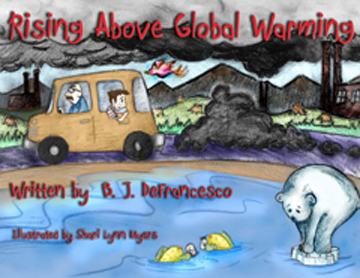
Oh, cartoons again. The last resort of the intellectually bankrupt.
Actually they are your favorite books that are on your intellectual level.