If it matters, I concur regarding B-Band EE usage, BUT...
B-band activates with T2P.
VTP relies on T1 for furthering the sequence to T2F.
Based on that reliance, Ab EE is potentially appropriate.
Aa EE includes T2P as a requirement, in addition to a UL -OR- Wait.
PP1c and PP6a definitions are clearly associated with T2P's and F's.
Also, back to B-band EE's...
Jacks B-band explanation has been posted several times. Plus once more...
Please note: Ba is common and Bc is not seen.
Something else to note and consider is that the above Ba description is different than the additional requirements on the B through K Bands EE page.
From above text...
Ba is found when P2 is greater than P1 or an inside bar has a larger volume than the outside bar AND the volume is between P2 and T2P.
From B-K page (typed in this post by me)...
Ba ... can be in UL int OR P2 > P1 OR P1 > P2
One more thing... if using a B-band EE, the lower limit is T2P.
VTP requires, vis-a-vis "kills" both T2P and T2F, if < T1
Regardless of the label we assign, the difference is the placement of associated P1. Either on EE bar itself -or- the on the next measurable.
Upon further reflection there is a gap here in the logic.
Perhaps we can tease it out more. Where this is most evident is in the assignment of EE - Ab. This EE appears quite frequently after P2 on the next bar. A band EE's are considered as a set of 4 bar combinations.
The next bar is a T2P < T1 which as defined yields Ab. In all the charts I've reviewed, there is not a T2P logged above T1 prior to Ab being assigned. Perhaps I'm missing some.
Let's say T2P is assigned and not an Ab.
The next bar is either another T2P or T2F or wait.
The T2P can be a BO such as defined by Bc (P2<P1) or Ba (P2>P1) or a Band pass as another T2P on the way to PP1c.
Wait is wait.
The T2F is a T2F.
As
@tiddlywinks has pointed out, the F band needs a T2F to activate and has presented the idea of T2F as a bar that is identified prior to C band activating. C band is required to activate prior to F band.
As such then if the bar forming the first T2F in the sequence is below T1, there would be two ways of looking at that. The first is that it is an Fd (T2F < T1) which is how I have been interpreting it, however that would not follow the logic tiddlywinks presented above for T2F itself has to present in the sequence as a pre-req for C band. C band is a pre-req for F band.
The other way to look at that is looking for another LVBO below T1. That gives us Ab for H band isn't activate until F band activates.
This is all well and good, except for two things:
1) There is not a lot of examples of Ab with a T2P prior (not on same bar as Ab) and
2) ID'ing Ab on the very bar of a forming T2P after P2 works in countless sequences.
So the question remains, what is the correct ID of the next bar after T2P is logged that is < T1?
I've been operating at the assumption that all F band paths are on the same bar, perhaps this is not the case and like A band, there is at least one other context to consider. The other possibility is that H band "is outside F band" is interpreted in a different dimension than the idea of H band only coming into being after F band activates.

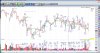
 Gaussians can come later or simultaneous. That's a lot to debrief or not get confused by in rt... crawl, stand, walk, run.
