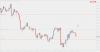
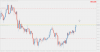
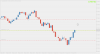
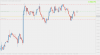
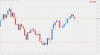
This tends to be true, but what it conceals (in my opinion) is that by the time the price returns to more typical deviation levels, as defined with reference to the indicator, the indicator can easily have moved so far that - for example - a price-movement "down" from an upper extreme to a norm can involve an increase in the price itself (and vice versa). In other words, it may technically be true, but it's not actually helpful.
This is why it is necessary to analyze the situation in terms of the relationships between a number of factors, including the overall trends in multiple time frames, average price ranges in multiple time frames, reoccurring price patterns, and horizontal support/resistance levels. It is also why it is important to use precise, carefully selected moving averages and their corresponding envelopes. By the time price returns to more typical deviation levels, the trade is already over, or soon will be, in that such levels more typically constitute take profit targets: