Ms. Mae’s Trade Strategy

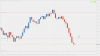
EURUSDM1.png


Though EURUSD theoretically has a lot more room to rise, given the fact that I’m going against what I conceptualize as the short-term trend and the intermediate trend both, I’ve once again decided to be satisfied with a modest 10-pips or so worth of profit from my trade.

ScreenHunter_6742 Dec. 04 00.06.jpg
 
It’s very possible that the fundamental influences at play here are so strong as to force USDCAD even lower (right-hand chart). Nonetheless, from a technical standpoint, I see this region as a valley from which I would not be surprised to witness price climbing, so I’m going to enter a long position, set by stop loss, and let the chips fall where they may.

ScreenHunter_6743 Dec. 04 01.04.jpg
 
The approach is predicated on three major suppositions:
  1. There are very specific simple moving averages which accurately reflect the overall trajectory of price in various timeframes.


I don't really know what it means.

To a skepchick like me, to be honest, it comes across as one of those things designed to sound very meaningful and slightly dressed up in technical language, which makes sense only/mostly within its own (conveniently undefined) terms of reference, i.e. it's perhaps superficially unarguable but it may not really mean very much at all?


Generally speaking, price is willing to distance itself only so far from these representative moving averages before it is compelled to return to more typical deviation levels.


This tends to be true, but what it conceals (in my opinion) is that by the time the price returns to more typical deviation levels, as defined with reference to the indicator, the indicator can easily have moved so far that - for example - a price-movement "down" from an upper extreme to a norm can involve an increase in the price itself (and vice versa). In other words, it may technically be true, but it's not actually helpful.


These “maximum degrees of separation” are referred to as “statistical support and resistance” levels


I offer the observation that referring to them as "statistical support and resistance levels" doesn't make them support and resistance levels. And they're not.

Support and resistance levels are determined by price-movements, not by indicator-movements.


and are assumed to be controlled by market makers and automated trading algorithms.


That clause strikes me as what Wikipedia editors refer to as "weasel words": they clearly beg the question "Assumed by whom, and with what evidence?".

No offense intended at all, but I'm like you in that I wouldn't back-test this, myself (albeit, I suspect, for a very different reason from yours).

I wish you nothing but well with the experiment.
 
It’s very possible that the fundamental influences at play here are so strong as to force USDCAD even lower... Nonetheless, from a technical standpoint, I see this region as a valley from which I would not be surprised to witness price climbing, so I’m going to enter a long position, set my stop loss, and let the chips fall where they may.

I was able to escape AUDUSD with a tiny profit, but not so USDCAD. So far, trading during the New York session has been relatively light, so I might have to wait until Tuesday before I can begin making up for any lost ground (if possible).

EURGBPM15.png


(Currently long EURGBP)
 
(Currently long EURGBP)

I locked in about 10-pips worth of profits from EURGBP, which seems, at least for the time being, to be “threatening” to become a pattern of mine. Of course, that means I missed out on the approximately 60 or so pips I would have collected (given where I placed my take-profit target) had I not done so before the BBC reported that they don't expect a deal from Brexit talks today. I’m now long NZDJPY and “planning” to hang around for a much more significant payout this time around, but that all depends on how price behaves in the interim, assuming the pair does not stop me out first.

NZDJPYM15.png
 
I can’t even imagine what kind of stuff you must have been doing to accomplish that.
Not really, selling .10 delta options is one way. Pairs trading until a pair breaks. Mean reversion without a stop loss. Buy & Hold Scalping (holding a loser long term until it becomes a winner while taking really small profits on winners).
 
I can’t even imagine what kind of stuff you must have been doing to accomplish that.


There are many ways of losing money with a 90% win-rate, Expiated (some of which Matthew's mentioned, just above).

The important thing, though, if I may say so, is not to assume/imagine that a very high win-rate is necessarily going to make it easier to make overall profits: not only is that not so, but the exact opposite is actually much more likely ... and the reasons for that are good and valid and pragmatic ones, and they're going to apply to you just as they do to everyone else.
 
Back
Top