Working through OB's
As a class OB's represent the most challenging aspect of the 10 cases of price. By definition, they are composed of two moves of price. To further compound the complexity they also can have 1, 2 or more moves of volume.
To sort out this complex and confusing problem, it's supportive to break it down into smaller more manageable chunks.
What is necessary is having some of the 'priors' on the table. Some priors would include, WCB (What came before) as n-1, WHN as n (What's Happening Now), and WMCN as n+1. Also having the 'pattern' handy with the Dom, non-Dom, Dom moves of price and volume defined. Also helpful is what I would consider PoLR (Path of Least Resistance) and PoGV (Path of Greater Volatility). Jack didn't define these per se and they are observable intrabar before EOB. PoLR is where the 3 legs of a price bar form with <= 2 retraces through the doji and PoGV is where there is >2 retraces through the doji as retraces become frequent reversals intrabar.
If we start with the listing of all the OB's there are the ones that are frequent such as PP4 and PP5 and the ones that are less so. If we look at the Modrian table, it points to the ones that are at the transitions of trends as defined by turns.
The OB's not mentioned in the Modrian are also present as turns but through the use of negative logic. One can know a thing by knowing what it is not.
For example if a BO,T1 is present as the prior C-turn and a PP4a comes up as the next ID'd EE, that puts us in Set A, then it is an A-turn due to the negative logic by which the table is constructed. As the trend progresses, since there is no PP4a listed in Set B, then the next EE will be a B-turn.
PP4a is also not listed in the Move Reversal table for either set, so with this particular EE as soon as the PP4a is ID'd then one KNOWS that price will oscillate back into the Dominant direction as defined by the initial BO,T1 C-turn. The exception is if one miss ID's the turn in the prior sequence.
It's the magic of the Modrian and Move Reversal table when used in combination!
Another distinction to have on the table are
when the OB's occur. So now we have OB's at the;
1) beginning of trends,
2) during the progression of trends and
3) at the end of trends.
Jack has defined FTT's as the event that is at the end of one trend. He also further defined that it's also the best entry for the beginning of next developing trend. To work through this exercise, it's supportive to keep them distinct and see where there is overlap. As one worked with the SCT material, it takes practice to identify FTT's and stay on one's trading fractal and not jump fractals.
This brings us to logging all the sequences that include OB's that are confusing. By working through all the permutations of price cases and context (which as it turns out is finite,) then one can create for themselves a Catalog of Clarity.
If we have the market be the teacher and consider each OB formation and sequence (WCB, WHN, WMCN) is perfect, whole and complete then we create a context where clarity is the end result. RDBMS is a descriptive language of what Jack called the Market System of Operation. As one develops facility with this method, one sees all the previous iterations (PVT, SCT) as building a complete system that has no flaws, anomalies nor noise.
Since questions guide focus, these are the following questions that will support creating further differentiation in with regard to OB's, it's important to observe the close of the bar in the
now.
This brings us the WCB the OB.
Was the price & volume sequence clean?
-When I refer to this what I mean is that was the prior trend/trend segment a complete trend or was it an incomplete trend?
Was the prior bar an EE?
-This will make a difference as one performs the VTP on the upper level as the OB is logged. Is it an assigned P1
from the prior bar?
Is there a difference when this assigned P1 is coincident with a FS or not?
Then we can consider WHN
Where are we in the OOE of the current trend?
-OB's can be sorted into categories depending on which Events composed it.
Did price go to the 'with trend' (peak or trough) extreme first?
Did price go to the 'countertrend' (peak or trough) extreme first?
-With these two having 'the pattern and seeing the Dom, non-Dom, Dom moves will help sort this out.
Then as we come to EOB
Where is the close compared to the open?
Was there an established FS from the prior bar/s?
Did price XO the FS?
Did price reverse from this excursion?
The answers to these questions will determine WMCN.
The assigned P1 will either signal change as an imminent reversal of price or it will further progress the trend in the OOE.
The close of the bar after the OB as WMCN contains a key of whether the OB was correctly ID'd.
Also worthy to note, as a tool, 'squishing' a current bar into it's previous creates clarity.
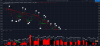
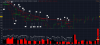
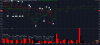
Here are some examples of working through some permutations. There are more sets to work out, but this will give a one a starting point.
Cheers!
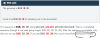
in sheet two 'negates' means that even though the OB signaled a turn as an assigned P1 on next bar. The turn did occur but is was followed by a fast one, a BM,rev. This turn is a return to the Dominant trend prior to the OB.