Making JH' SCT and all his material alive

Can you help me with that ? ->

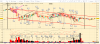
- why does time appear "Delayed" on my chart ? as circled in red.

- can you see the grid lines you talk about so that I can see the 30min form ? I can't locate them


You haven’t upgraded to a real-time data feed. With tradingview you get a data discount when using one of their supported brokers. By opening an account, you can then start to use the brokers platform to organize your MADA display.
This would include a DOM ladder, 2 T&S windows-filter one at 50 contacts and the other at 1 contract and 2 OTR charts- ES and YM.
They all work together to support carving turns.


You just need to adjust your scale.
 
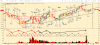
VTP corrected, full filled.

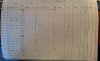
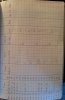
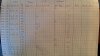
So hard.... And I still haven't understood what is to be written inside the 5 and 30min columns on the right side of the Log.
 

Attachments

  • VTP.png
    VTP.png
    272.6 KB · Views: 40
  • MADA for Log 1.jpg
    MADA for Log 1.jpg
    1.8 MB · Views: 34
  • MADA for Log 2.jpg
    MADA for Log 2.jpg
    1.7 MB · Views: 30
  • MADA for Log 3.jpg
    MADA for Log 3.jpg
    1.7 MB · Views: 29
  • MADA for Log 4.jpg
    MADA for Log 4.jpg
    1.9 MB · Views: 27
VTP corrected, full filled.

So hard.... And I still haven't understood what is to be written inside the 5 and 30min columns on the right side of the Log.


Sentiment is determined by the close of the bar (C.0 > O.0 = L, C.0 < O.0 = S)

5m is the price case, ie XR is S, XB is L (using bar.0 and bar.1) (mentally degapping required and as such noted on your log when you do and when you do not)

30m is for you to determine. Does one use two bars OR does one use a single bar?


I know that at times one just wants a correct answer to a simple question. Frequently and fortunately, the fastest path between two points is not a straight line. Thinking like an investigator, what's more important is the process by which you test each of the possibilities and suspending judgement until you've gathered enough evidence to rule out impossibilities.

What that leaves are possibilities, which reduce to probabilities, which reduce to actualities as the future crystalizes into the present.

This also requires an expansion of your thinking to include multiple scenarios unfolding in the present.

The result of this process develops durable confidence in your one-on-one relationship with the market.


Think of what is encapsulated by a 30min bar, when the bar starts and stops being one thing or another and the role of the doji. When is the earliest something comes into being and when is the latest a thing can come into being.


Having two movable vertical lines on the 5m chart, one to note the 30m and the other to move incrementally with the 5m supports the above effort of differentiation.
 
You haven’t upgraded to a real-time data feed. With tradingview you get a data discount when using one of their supported brokers. By opening an account, you can then start to use the brokers platform to organize your MADA display.
This would include a DOM ladder, 2 T&S windows-filter one at 50 contacts and the other at 1 contract and 2 OTR charts- ES and YM.
They all work together to support carving turns.


You'll know when to move forward with the above. It'll just seem like the next thing to do.
 
RDBMS TL's don't accelerate nor fan. They get established with a T1 or a P1 if that comes first. One still uses accelerating and fanning of TL's on higher timescales. RDBMS is a volume based system that uses price to gate or permit the measurement of volume. If you are seeing fanned and accelerated TL's on an RDBMS chart, it's to show the relationship between that and SCT. To use accelerated or fanned TL's on a 5m chart would give one a completely different sequence of events that would require some calibration. The difference between the two is in the domain of carving turns.

It is for now impossible for me to understand this.

You just need to do it. It's the process of doing it that will make the difference. When I first started, all I could do was pick out some of the BO,T1 and BM,rev's. It took a while, but slowly, as I memorized more of the volume forms by repetition, the chart fills in with more and more detail. As one debriefs their own chart, the aha's comes after RTH when in a more relaxed state, one tests different possible sequences to find the path of least resistance and the sequence that brings clarity into being. You'll know which one these are for the signal of change occurs before volume surges into the market. It's a repetitive experience of seeing and catching cyclic "waves."

I can't do that, I'd like to be able to but I do not have the pieces required to do it. I still do not know what EE's really are on a chart. Talking and words are nice, but when in front of the chart, things change. Plus, I am focused on the VTP which is still the most unreachable thing for me now. Can you help me with finding the time, energy and the words to do the EE Matrix while I'm also ont the VTP please ?
Cause from where I am now, it looks impossible.


This is a new attempt on VTP. I only did the first sheet cause I'd like to debrief step by step. I am unsure of almost everything I filled (i'm talking about the VTP columns) so why to continue if the base I need is not here yet ? Tell me if I'm wrong.
Anyway, I post my MADA routine and the Log filled as much as I can, this is not much, but already a lot for me.
 

Attachments

  • MADA.png
    MADA.png
    338.4 KB · Views: 34
  • Log 1.jpg
    Log 1.jpg
    893.9 KB · Views: 24
  • Log 2.jpg
    Log 2.jpg
    1.1 MB · Views: 27
  • Log 3.jpg
    Log 3.jpg
    1 MB · Views: 23
  • Log 4.jpg
    Log 4.jpg
    1.2 MB · Views: 25
  • Log 5.jpg
    Log 5.jpg
    983.3 KB · Views: 23
  • Log 6.jpg
    Log 6.jpg
    990.1 KB · Views: 26
It is for now impossible for me to understand this.


I can't do that, I'd like to be able to but I do not have the pieces required to do it. I still do not know what EE's really are on a chart. Talking and words are nice, but when in front of the chart, things change. Plus, I am focused on the VTP which is still the most unreachable thing for me now. Can you help me with finding the time, energy and the words to do the EE Matrix while I'm also ont the VTP please ?
Cause from where I am now, it looks impossible.


This is a new attempt on VTP. I only did the first sheet cause I'd like to debrief step by step. I am unsure of almost everything I filled (i'm talking about the VTP columns) so why to continue if the base I need is not here yet ? Tell me if I'm wrong.
Anyway, I post my MADA routine and the Log filled as much as I can, this is not much, but already a lot for me.


Why do you keep changing the open and the start of 81bars?

The log starts at the US open of RTH and ends 10min after the close of RTH.

We’ve discussed this at length.


Sometimes it’s better to start with a clean slate.

Start with a clean chart and DO NOT do any of the current way you annotate. Just stop.

Start with finding bar1 of the RTH of the ES.

If you can find this bar, then there is hope.

Put a vertical line at the opening bar and the 81st bar. This is your window.

To start the day, you begin by looking at the previous day’s window and degapping the last bar’s close to today’s first bar’s open. There’s more to do with this but it’s easier for now just to use the last bar to first bar and determine it’s price case after degapping.

The previous day’s last bar had a high and low, put a BM at both and observe which one gets penetrated with a close outside it’s boundary.

The first bar of the current day starts as a gapped sym. This sym calls forth two rtl’s each originating at it’s respective BM’s of the previous day’s last bar. This is occurring intrabar.

As this first bar builds it will take on a price case. This first 5m bar is also starting the first 30m bar of the day. This first 30m bar of the day is composed of 6 5m bars. As each 5m bar forms and time passes, the first 30m bar will complete only after the 6th 5m bar completes. The 30m bar will have price go through it’s doji multiple times, OR just once OR none. When price is above it’s doji, the bar is by definition - long sentiment. When below the doji - short sentiment.

On the 5m, the first bar of the day is frequently an OB when degapping to the last bar of the previous day. In that case, we know that an OB with increasing volume is an EE. There is a list. What are all the possible OB EE’s that it could be?

IT’S OK NOT TO KNOW, the correct answer.

It’s more important to engage in the thinking process to determine which EE it could be.

Let’s say the first 5m bar is a XB. In that case, the BM-short of the previous day’s last bar is penetrated AND the current close as long is true. Being a BO bar, this bar gets a BM at it’s low and a new rtl is drawn.
This bar is a BM,rev for it reversed from the previous context to a new context.

The trend line you are now drawing is not using the channel tool nor is it nesting fractal containers. TL’s are now simply a single thin black line connecting the pt1 and pt3 of a price case using the corresponding P1 and T1 of volume. Sometimes trending bars have no corresponding T1’s of volume for volume keeps increasing. One is still using pt1 and pt3 of price of the first qualifying price case but you are not adjusting the RTL. It remains as a measure for when the close of the current bar shifts from being on one side of this line or the other.
On the right side, the current sentiment is trending, when on the wrong side, then this bar is a BO,T1. It has broken out of the TL established by P1 and T1 of volume.

RDBMS tracks trend segments that compose trends. Each segment has it’s own sentiment. Sometimes it helps to mentally ‘squish’ multiple bars into a single bar much like a higher timeframe bar is composed of multiple faster frequency bars as a way to hilight what a confusing sentiment might be.


Get Index cards, file these under BM,rev.
With these cards one can see zones defined by where BM,rev -> BM,rev OR BO,T1 (depending on final bar form).

BB69DF28-2B92-4A37-924C-B3522E21EDC1.jpeg
 
Last edited:
Why do you keep changing the open and the start of 81bars?

The log starts at the US open of RTH and ends 10min after the close of RTH.

We’ve discussed this at length.


Sometimes it’s better to start with a clean slate.

Start with a clean chart and DO NOT do any of the current way you annotate. Just stop.

Start with finding bar1 of the RTH of the ES.

If you can find this bar, then there is hope.

Put a vertical line at the opening bar and the 81st bar. This is your window.

To start the day, you begin by looking at the previous day’s window and degapping the last bar’s close to today’s first bar’s open. There’s more to do with this but it’s easier for now just to use the last bar to first bar and determine it’s price case after degapping.

The previous day’s last bar had a high and low, put a BM at both and observe which one gets penetrated with a close outside it’s boundary.

The first bar of the current day starts as a gapped sym. This sym calls forth two rtl’s each originating at it’s respective BM’s of the previous day’s last bar. This is occurring intrabar.

As this first bar builds it will take on a price case. This first 5m bar is also starting the first 30m bar of the day. This first 30m bar of the day is composed of 6 5m bars. As each 5m bar forms and time passes, the first 30m bar will complete only after the 6th 5m bar completes. The 30m bar will have price go through it’s doji multiple times, OR just once OR none. When price is above it’s doji, the bar is by definition - long sentiment. When below the doji - short sentiment.

On the 5m, the first bar of the day is frequently an OB when degapping to the last bar of the previous day. In that case, we know that an OB with increasing volume is an EE. There is a list. What are all the possible OB EE’s that it could be?

IT’S OK NOT TO KNOW, the correct answer.

It’s more important to engage in the thinking process to determine which EE it could be.

Let’s say the first 5m bar is a XB. In that case, the BM-short of the previous day’s last bar is penetrated AND the current close as long is true. Being a BO bar, this bar gets a BM at it’s low and a new rtl is drawn.
This bar is a BM,rev for it reversed from the previous context to a new context.

The trend line you are now drawing is not using the channel tool nor is it nesting fractal containers. TL’s are now simply a single thin black line connecting the pt1 and pt3 of a price case using the corresponding P1 and T1 of volume. Sometimes trending bars have no corresponding T1’s of volume for volume keeps increasing. One is still using pt1 and pt3 of price of the first qualifying price case but you are not adjusting the RTL. It remains as a measure for when the close of the current bar shifts from being on one side of this line or the other.
On the right side, the current sentiment is trending, when on the wrong side, then this bar is a BO,T1. It has broken out of the TL established by P1 and T1 of volume.

RDBMS tracks trend segments that compose trends. Each segment has it’s own sentiment. Sometimes it helps to mentally ‘squish’ multiple bars into a single bar much like a higher timeframe bar is composed of multiple faster frequency bars as a way to hilight what a confusing sentiment might be.


Get Index cards, file these under BM,rev.
With these cards one can see zones defined by where BM,rev -> BM,rev OR BO,T1 (depending on final bar form).

View attachment 187894


I know that sometimes with this stuff, it can get incredibly confusing.

All your annotating has been building. This building is from the basic granularity of the market. Some of the annotating is like training wheels.

Just because you are starting a clear slate doesn’t negate the work you have done up to now. The different aspects of annotating is like working in layers and overlays.

We are just getting super focused on volume and simplifing where we can.

As you noticed with expanding your price case matrix, things that you did not notice before, you now notice. Things that didn’t have any meaning before begin to expand and get further defined.

Your sticking point moves with each iteration of MADA.

You see the beginning of longer term trends start with a simple 2bar relationship.

BO,T1 and BM, rev refine this relationship into zones that price has the possibility of moving into. These events have different meanings depending on the oscillating nested context of two sets of OOE’s interlocked in opposite operating points.

If the bar builds in a zone not defined by the above events, then it’s default characteristic is one of continuing to build the current EE. This EE is in the process of crystallizing from the future into the present.

It is in the process of becoming if not interrupted.

This is a volume based system. Price is the dependent variable. Although you can trade price, what one is really focused upon is the trading of the beginnings of trends overlap not the end of the overlap.

T1 ends the overlap of the prior trend. It must be. By definition P2 is the end of the Dominant traverse of a new trend. Use WCB to understand the “timelessness” of the “pattern.”

WCB is a multi-purpose tool.

When is the earliest signal for a new Dominant trend?
 
Last edited:
I needed some days off. The VTP and the around is causing me many troubles.

I'm in a better disposition now to go through the work.

@Sprout, studying your last 2 messages and planning on fillinf my log and post it when it's done.
 
Why do you keep changing the open and the start of 81bars?

Forgive me if you already told me that it's not a thing to do. Did you mention it already ? I am not sure of it. I did not know there was a fixed start for the 81 bars. I thought the start was when volume is providing suficient liquidity.
We’ve discussed this at length.
Apparently, yes you already mentionned it. I don't know where nor when, but I trust you.
Sometimes it’s better to start with a clean slate.

Start with a clean chart and DO NOT do any of the current way you annotate. Just stop.

Start with finding bar1 of the RTH of the ES.

If you can find this bar, then there is hope.

Put a vertical line at the opening bar and the 81st bar. This is your window.
RTH window clean chart.png

To start the day, you begin by looking at the previous day’s window and degapping the last bar’s close to today’s first bar’s open. There’s more to do with this but it’s easier for now just to use the last bar to first bar and determine it’s price case after degapping.

As I said previously, I do not understand the concept of degapping.

Do you mean here to just identify the price case formed by the last bar (closing RTH of the previous day) and the first one (opening RTH of the next day) ? In other way, do you mean we're to "stick" the last bar of the previous day to the first one of the next day, and act like of all the bars between those two did not exist, or also like if they formed just one ?Is this what degap mean?
What are all the possible OB EE’s that it could be?

IT’S OK NOT TO KNOW, the correct answer.

RTH prev day and next one.png


Anyway I could not answer that question.
Use WCB to understand the “timelessness” of the “pattern.”
Even with your explanation, I don't understand what is WCB.
When is the earliest signal for a new Dominant trend?
As your question begins by "When", I'd say "when a non dominant trend ends".
 
Here is the beginning of the Log of the window appearing on the first chart I joined in my prior message.
I have not my camera with me now, so I can't post my log sheet, therefore I post the screenshot with volume points and turns appearing only.

VTP without Log.png


At bar 4, issues begin.

Here follows what I say in my mind, maybe this will help you to help me, by locating where I start failing.

bar 1 -> it's an OB. I still don't get it as for loging OB.
bar 2 -> XB, I assign P1 on that bar cause it crosses the thin red RTL I arbitrary drew just before the beginning of RTH.
bar 3 -> Stitch Red (SR). No trendline on that price case crosses the previous one (or better said, no COUNTER trendline appear), so I advance to the next cell on my log : the volume bar is under the prior one : T1.
bar 4 -> XR. This time the TL established by the XR price case, does cross the prior RTL. Is it a new P1 assigned because of a BO,T1 ? Is it at least BO,T1 ? Cause I see volume under the prior bar, so as I labelled it I'd see a T1.
bar 5 -> SYM with a UL. Another problem here, how to log a SYM ? There's also (like on any OB for example) two opposite trendlines.So OF COURSE, one of them is breaking through the prior one established by the XR. So another BO,T1 cause now volume is higher ?


That is the problem I have, I don't know on the Log, what is to be watched FIRST to decide of the Event. The volume bar or the price bar ?
I see it now like if when a BO,T1 appears on price, then it's a P1 assigned, nothing more nothing less. When there's no BO,T1, then we can only focus on the volume bars.

I wish I could by what I say, expose in a clearer way what I miss so you could see it more easily, and you could help me to see what I do not.
 
Back
Top