Says who, scientists?
Scientists with all the past historic data with droughts in California. Go read your history.

Says who, scientists?
Says who, scientists?

Sounds good. So what do these scientists have to say about AGW?Scientists with all the past historic data with droughts in California. Go read your history.
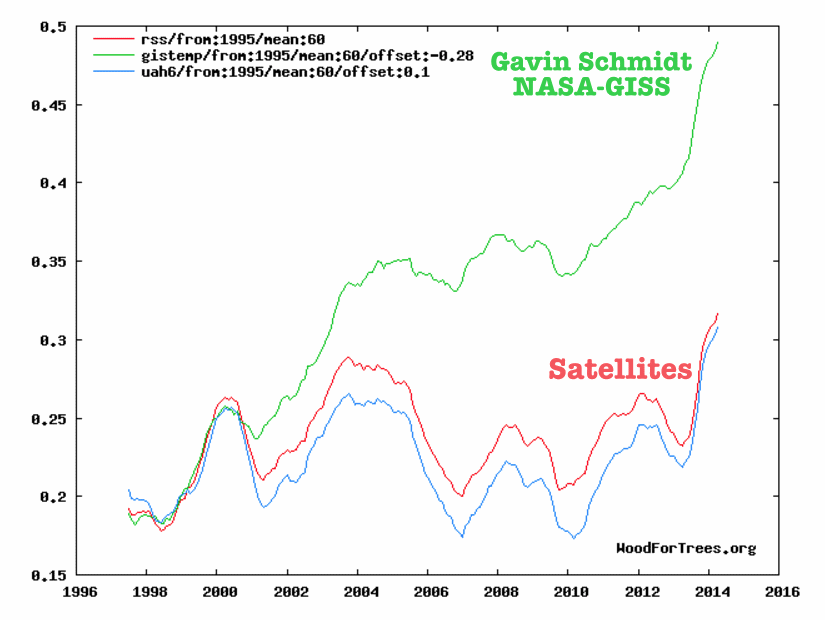
You have some nerve talking about logic. You can't even grasp the simple logic of rising GHG levels leading to higher temps.
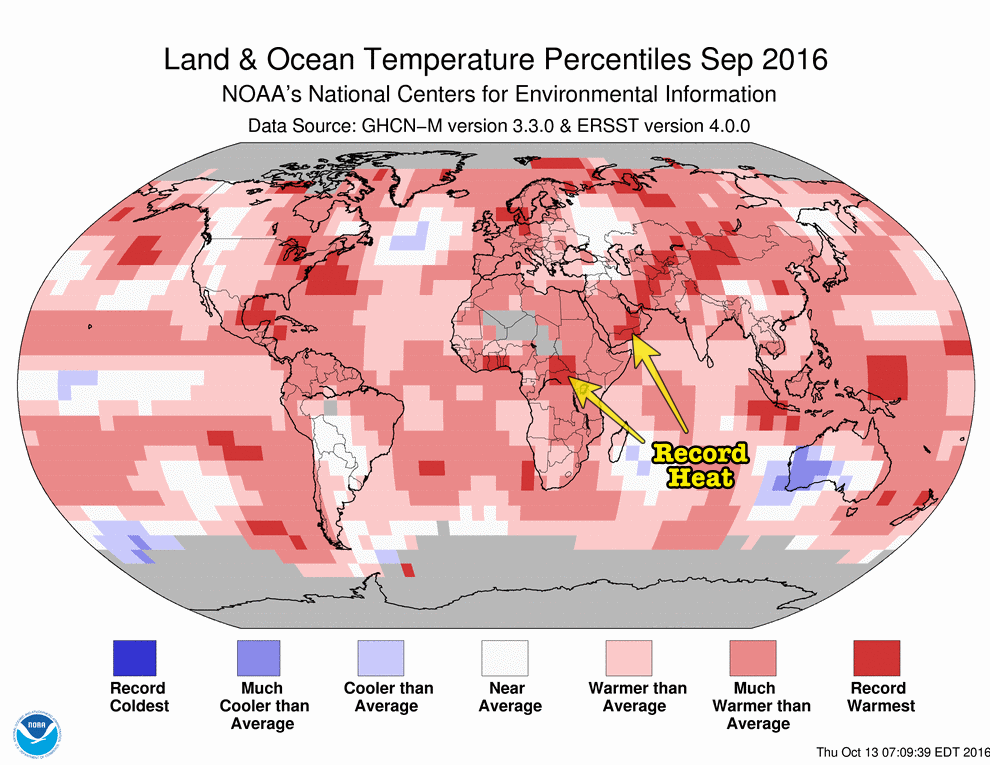
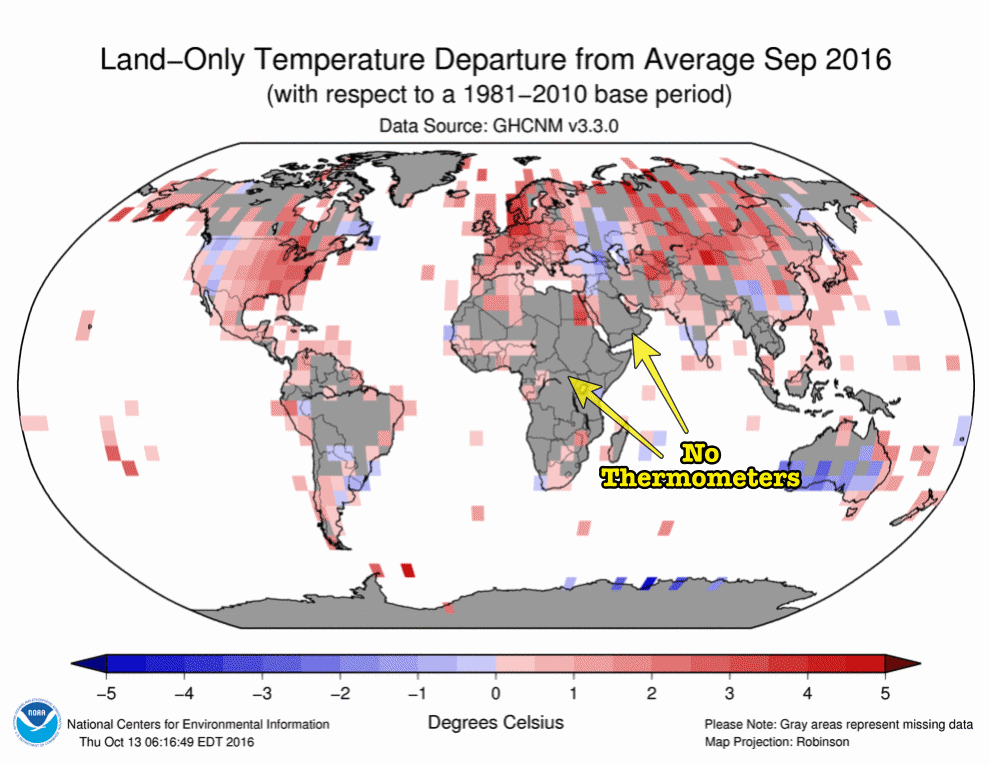
So California has been cooler over these drought years?
As usual FC is on the right side of history:
The world in 2076: Goodbye electicity, hello superconductivity

Kiyoshi Takahase Segundo / Alamy Stock Photo
ByMichael Brooks
Thirty years is a long time to wait for the next big thing. But for half ofNew Scientist‘s lifetime, a select group of researchers has been sure that a world-changing discovery is just around the corner. If it happened it would bring “revolutionary change for our normal life,” according to Yanming Ma of Jilin University in Changchun, China.
The breakthrough in question? A superconductor that operates at room temperature and ambient pressure. Sounds riveting, I know. But bear with me.
Superconductors are materials that conduct electricity with no resistance. The phenomenon was first discovered by Dutch physicist Heike Kamerlingh Onnes, who in 1911 saw mercury’s resistance drop to zero at 4.2 degrees above absolute zero. Other materials were found to be superconducting at slightly higher temperatures, but the need for extreme refrigeration limited the usefulness of the phenomenon.
Until 1986, that is. That was when we discovered the high temperature superconductors, which abruptly stop resisting below roughly 100 kelvin (which is -170 °C: the term “high temperature” is a relative one). Suddenly, creating room temperature superconductors didn’t seem so far-fetched.
That second great leap forward hasn’t happened – yet. So far we have not bettered what we found 30 years ago, says Paul Attfield of the University of Edinburgh, UK. Materials have been discovered that superconduct at somewhat higher temperatures, but only when under extremely high pressures.
For now, superconductors remain entirely impractical for the killer applications that would allow them to change the world: transport and electrical power transmission.
Superconductors are a strong barrier to magnetic fields, meaning that a ...
https://www.newscientist.com/articl...6-goodbye-electicity-hello-superconductivity/