
<object width="425" height="344"><param name="movie" value="http://www.youtube.com/v/g_txF7iETX0&color1=0xb1b1b1&color2=0xcfcfcf&hl=en&feature=player_embedded&fs=1"></param><param name="allowFullScreen" value="true"></param><embed src="http://www.youtube.com/v/g_txF7iETX0&color1=0xb1b1b1&color2=0xcfcfcf&hl=en&feature=player_embedded&fs=1" type="application/x-shockwave-flash" allowfullscreen="true" width="425" height="344"></embed></object>
First off, I am not a shill for MS -- I am far from it.
However, if they can actually pull this off...wow...
Furthermore, since they have already begun adding more features to their gaming console, the Xbox 360, that allows you to watch Netflix, listen to Pandora.com, and eventually access Hulu.com and CBS.com (the PS3 can do the same features with the exception of Netflix), could future consoles from the likes of MS, Sony, and even Nintendo, cut into the profit margins of companies like Comcast and Time Warner?
I mean, as of right now, because of Hulu and Torrents, I canceled my cable subscription (but not the internet). When systems of the future come out with these features, how much longer will it be until less techno-savvy people begin to do the same thing?
Discuss.
video is from the original blog post found here:
http://procrastineering.blogspot.com/2009/06/project-natal.html
Article:
---------------------------------------------
First off, I am not a shill for MS -- I am far from it.
However, if they can actually pull this off...wow...
Furthermore, since they have already begun adding more features to their gaming console, the Xbox 360, that allows you to watch Netflix, listen to Pandora.com, and eventually access Hulu.com and CBS.com (the PS3 can do the same features with the exception of Netflix), could future consoles from the likes of MS, Sony, and even Nintendo, cut into the profit margins of companies like Comcast and Time Warner?
I mean, as of right now, because of Hulu and Torrents, I canceled my cable subscription (but not the internet). When systems of the future come out with these features, how much longer will it be until less techno-savvy people begin to do the same thing?
Discuss.
video is from the original blog post found here:
http://procrastineering.blogspot.com/2009/06/project-natal.html
Article:
---------------------------------------------
If you've been wondering why my project blog has been pretty quiet, I can finally say it is because I have been helping Xbox with Project Natal. If you haven't seen the vision video, it is definitely worth checking out:
--[VIDEO]--
Now, I should preface by saying I don't deserve credit for anything that you saw at E3. A large team of very smart, very hard working people were involved in building the demos you saw on stage. The part I am working on has much more to do with making sure this can transition from the E3 stage to your living room - for which there is an even larger team of very smart, very hard working people involved. The other thing I should say is that I can't really reveal any details that haven't already been made public. Unfortunately.
Speaking as someone who has been working in interface and sensing technology for nearly 10 years, this is an astonishing combination of hardware and software. The few times Iâve been able to show researchers the underlying components, their jaws drop with amazement... and with good reason.
The 3D sensor itself is a pretty incredible piece of equipment providing detailed 3D information about the environment similar to very expensive laser range finding systems but at a tiny fraction of the cost. Depth cameras provide you with a point cloud of the surface of objects that is fairly insensitive to various lighting conditions allowing you to do things that are simply impossible with a normal camera.
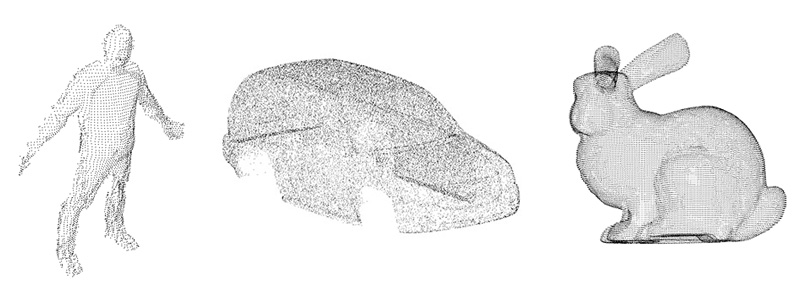
But once you have the 3D information, you then have to interpret that cloud of points as "people". This is where the researcher jaws stay dropped. The human tracking algorithms that the teams have developed are well ahead of the state of the art in computer vision in this domain. The sophistication and performance of the algorithms rival or exceed anything that I've seen in academic research, never mind a consumer product. At times, working on this project has felt like a miniature âManhattan projectâ with developers and researchers from around the world coming together to make this happen.
We would all love to one day have our own personal holodeck. This is a pretty measurable step in that direction.
Xbox and Microsoft deserve an enormous amount of credit for taking on such an ambitious project. Itâs one thing to say âWouldnât it be cool ifâ¦â, but itâs another thing entirely to say, âletâs dedicate the resources to really make it happen inventing whatever needs to be invented along the way.â I have to say it's pretty neat building the future.