
You are using an out of date browser. It may not display this or other websites correctly.
You should upgrade or use an alternative browser.
You should upgrade or use an alternative browser.
Why do traders find it difficult to make money?
- Thread starter Waylen
- Start date

Why did I declare it a TR?Aloha volpri,
Thank you very much for your response!
I do not think I was clear with my question. I understand where you declared it a TR (bar 20 on attached chart), and I understand the trading techniques you used before and within the TR. I also understand where you start counting your 20 bars.
What is unclear to me is why you declared it a TR at all.
Likely I'm misunderstanding Brooks' definition of a TR being a 20+ bar PB. To me, it looks like there is only an 11 bar PB (starting on bar 13).
I know there will be a lot for me to learn from your response on this one. Thank you
View attachment 346642
The market cycle. Channels morph into ranges once the channel begins to flatten. The last leg of a channel usually becomes the first leg in the TR. Since price was in a bear channel and then began to flatten out in that first PB in the drawn rectangle) and most definitely went sideways after that then traded up on that big bull bar this became the marker to draw the rectangle. The rectangle needs two points. So, you draw back to the left with the rectangle and that them envelopes the last leg of the previous bear channel thus causing to be within the TR rectangle.
Once a channel begins to flatten in all most all cases that last part of the channel become the first leg in the bear channel. You can see that after that big bull bar up followed by a triple top well by then the rectangle points became obvious. So drawing from right to left it ends at the far top left of your rectangle. Next it is a matter of counting the bars in the rectangle until 20 bars are completed then start using TR techniques. By the time I took that 4th trade there were around 24 bars in the rectangle so when that larger bear bar (bar of my long 4th trade) appeared I used a TR technique fading the move down by going long in the bottom 1/3 of the Trading Range and capturing a scalp of 3 points on a move towards the middle of the TR.
TR is a sideways multi-leg sideways move. It is not a 20 bar PB. Once it gets 20 bars within the rectangle it is NO LONGER a PB but a TR.
I hope I have explained:
1) what a trading range is. It is more of a sideways two-sided trading. It can be multi-leg but the point is up and down PA between two or more points. It usually has overlapping bars.
2) how a previous trend or channel MORPHS into the TR and it’s last leg (of the channel) actually becomes the first leg in the TR once a trading range can be drawn.
3) about using TR techniques once the sideways has at least two points in it to be able to draw the range and the rectangle has 20 bars in it.
You could just forget drawing a rectangle and just extend the bear channel all the way to the right end of the chart and continue trading it as a bear channel. However, to my eyes I see a definite flattening out and it makes more sense to me to say the channel is morphing into more of a sideways move. But if I had traded it as one continuous bear channel it must be remembered that a channel IS a TR too. Just a tilted trading range! And techniques for trading it are similar to TR techniques but do vary some from TR techniques.
I always try to be aware of the market cycle and when price is morphing into another market cycle. Price simply flattened out enough for me to start thinking …TR coming up. Then when we got that triple top and overlapping bars. TR behavior.
Last edited:
Exactly why I am flat at the end of the session. Trade #5. I won’t carry a position overnight in the futures. I am a scalper and I will be flat when the session closes. I do not like surprises on the next open. That said it would have worked out just fine as I would have been long at the session close …..remember long in bottom 1/3 of a TR. When next session opens gap up I would have made some profit right on then open. However, it could have just as easily gapped down on the next open and since I would be long I would have a loss on my hands right at the open.To me it looks like a higher high that trapped traders into a lower low, followed by a gap up at the open.
Remember, any successful BO of a TR that comes around 20 to 40 bars into a TR once the TR gets to at least 20 bars long then odds are 50/50 that BO does happen when it comes it can be a top or bottom BO. Same probability of being either one.
Why did I declare it a TR?
The market cycle. Channels morph into ranges once the channel begins to flatten. The last leg of a channel usually becomes the first leg in the TR. Since price was in a bear channel and then began to flatten out in that first PB in the drawn rectangle) and most definitely went sideways after that then traded up on that big bull bar this became the marker to draw the rectangle. The rectangle needs two points. So, you draw back to the left with the rectangle and that them envelopes the last leg of the previous bear channel thus causing to be within the TR rectangle.
Once a channel begins to flatten in all most all cases that last part of the channel become the first leg in the bear channel. You can see that after that big bull bar up followed by a triple top well by then the rectangle points became obvious. So drawing from right to left it ends at the far top left of your rectangle. Next it is a matter of counting the bars in the rectangle until 20 bars are completed then start using TR techniques. By the time I took that 4th trade there were around 24 bars in the rectangle so when that larger bear bar (bar of my long 4th trade) appeared I used a TR technique fading the move down by going long in the bottom 1/3 of the Trading Range and capturing a scalp of 3 points on a move towards the middle of the TR.
TR is a sideways multi-leg sideways move. It is not a 20 bar PB. Once it gets 20 bars within the rectangle it is NO LONGER a PB but a TR.
I hope I have explained:
1) what a trading range is. It is more of a sideways two-sided trading. It can be multi-leg but the point is up and down PA between two or more points. It usually has overlapping bars.
2) how a previous trend or channel MORPHS into the TR and it’s last leg (of the channel) actually becomes the first leg in the TR once a trading range can be drawn.
3) about using TR techniques once the sideways has at least two points in it to be able to draw the range and the rectangle has 20 bars in it.
You could just forget drawing a rectangle and just extend the bear channel all the way to the right end of the chart and continue trading it as a bear channel. However, to my eyes I see a definite flattening out and it makes more sense to me to say the channel is morphing into more of a sideways move. But if I had traded it as one continuous bear channel it must be remembered that a channel IS a TR too. Just a tilted trading range! And techniques for trading it are similar to TR techniques but do vary some from TR techniques.
I always try to be aware of the market cycle and when price is morphing into another market cycle. Price simply flattened out enough for me to start thinking …TR coming up. Then when we got that triple top and overlapping bars. TR behavior.
Nice explanation bro! Well-researched.
Thanks.Nice explanation bro! Well-researched.

Why did I declare it a TR?
The market cycle. Channels morph into ranges once the channel begins to flatten. The last leg of a channel usually becomes the first leg in the TR. Since price was in a bear channel and then began to flatten out in that first PB in the drawn rectangle) and most definitely went sideways after that then traded up on that big bull bar this became the marker to draw the rectangle. The rectangle needs two points. So, you draw back to the left with the rectangle and that them envelopes the last leg of the previous bear channel thus causing to be within the TR rectangle.
Once a channel begins to flatten in all most all cases that last part of the channel become the first leg in the bear channel. You can see that after that big bull bar up followed by a triple top well by then the rectangle points became obvious. So drawing from right to left it ends at the far top left of your rectangle. Next it is a matter of counting the bars in the rectangle until 20 bars are completed then start using TR techniques. By the time I took that 4th trade there were around 24 bars in the rectangle so when that larger bear bar (bar of my long 4th trade) appeared I used a TR technique fading the move down by going long in the bottom 1/3 of the Trading Range and capturing a scalp of 3 points on a move towards the middle of the TR.
TR is a sideways multi-leg sideways move. It is not a 20 bar PB. Once it gets 20 bars within the rectangle it is NO LONGER a PB but a TR.
I hope I have explained:
1) what a trading range is. It is more of a sideways two-sided trading. It can be multi-leg but the point is up and down PA between two or more points. It usually has overlapping bars.
2) how a previous trend or channel MORPHS into the TR and it’s last leg (of the channel) actually becomes the first leg in the TR once a trading range can be drawn.
3) about using TR techniques once the sideways has at least two points in it to be able to draw the range and the rectangle has 20 bars in it.
You could just forget drawing a rectangle and just extend the bear channel all the way to the right end of the chart and continue trading it as a bear channel. However, to my eyes I see a definite flattening out and it makes more sense to me to say the channel is morphing into more of a sideways move. But if I had traded it as one continuous bear channel it must be remembered that a channel IS a TR too. Just a tilted trading range! And techniques for trading it are similar to TR techniques but do vary some from TR techniques.
I always try to be aware of the market cycle and when price is morphing into another market cycle. Price simply flattened out enough for me to start thinking …TR coming up. Then when we got that triple top and overlapping bars. TR behavior.
Aloha volpri!
Thank you for such a detailed response!
You're dedication to our community is both admirable and priceless. Totally righteous
Mahalo
May this will bring a little clarity on IDing a TR. You got a BO of a bear trendline at bar 13 (that larger bull bar). But that is not the first sign we are flattening out the previous bear move.Aloha volpri,
Thank you very much for your response!
I do not think I was clear with my question. I understand where you declared it a TR (bar 20 on attached chart), and I understand the trading techniques you used before and within the TR. I also understand where you start counting your 20 bars.
What is unclear to me is why you declared it a TR at all.
Likely I'm misunderstanding Brooks' definition of a TR being a 20+ bar PB. To me, it looks like there is only an 11 bar PB (starting on bar 13).
I know there will be a lot for me to learn from your response on this one. Thank you
View attachment 346642
The bar before bar 13 is a PB even though it barely did break the blue trendline. Or depending on how you actually draw the trendline it didn’t break it.
Then 3 bars to the left if that we have a small doji pb.
Then 3 more bars to the left of that small doji pb we have a small two bar bull Pb that actually started that little sideways move up to the big bull 13 bar.
We also have overlapping bars in that small sideways move before bar 13.
All this together indicates the bear trend may be ending. But still it is not a TR big enough to use TR techniques. Once we get that triple top then a rectangle can be drawn and once that is done then just simply count the bars within the rectangle. When I can count 20 bars then I use TR techniques…fading tops and bottoms..etc. and other TR techniques.
Remember all pauses, even if small, are simply small TR’s whether they are in tge form of a PB…a flag…triangle or whatever…they simply are pauses in a previous trend and usually have some two-sided trading. But I cannot trade these small pauses using TR techniques until such pauses, or a conglomeration of such small pauses, grows to 20 bars or so.
Why?
Because at 20 bars I can deem that the pauses are no longer a PB with a continuation of the previous trend thus putting the odds at 50/50 for a new successful BO to occur out of top or bottom of the range. Why? At 20 bars sideways motion the previous trend has mostly exhausted it’s influence on price. Therefore, any coming successful BO of the now established TR has same odds of breaking out of the top of the TR as out of the bottom.
AND…..
Since 20 bars is now a TR I can use TR techniques because 80% of BOs top or bottom fail. So I just keep fading those BO until a BO does succeed and then at that point I change to BO techniques.
We have to remember that the TR may go on for 40 or 50 bars before a successful BO occurs or a successful BO may occur at the 24th bar or any bar after the 20 bars. Usually not so soon, but it can.
Basically, what we are dealing with here is the principle of inertia. The market TENDS to continue doing what it is doing, at least for a little while more, until some outside force acts upon in. So, if it is going sideways in a 20 bar established TR it will LIKELY keep doing so UNTIL an institution manages to push it out of that TR with a successful BO. There will likely be several attempts to do so (because bearish and bullish institutions are both active at all times…that is why we see probing all session long) that will fail. 80% of BOs attempts of a TR fail but one will eventually succeed. At that time, if a SUCCESFULL BO occurs out of the top the then the bullish institutions have the upper had and are winning so I change techniques..no longer fading BOs but GOING WITH THEM and adding on PBs…etc
TRs are not noise. If they are broad enough there are lucrative ways to trade them. To ignore them and their trading opportunities is to cut oneself out of many trading opportunities in the session because strong BOs occur only about 10% of the time. So why limit yourself to trading only successful BOs. Some traders will say “because BOs are higher probability trades.” My response is that trading ranges have many high probability trades too.
Remember, MOST of the time the market is going sideways. About 70%. Why ignore that?
Last edited:
Thanks. I suppose I need to explain things better as to why I see certain things or do certain things. I have done this so long that I don’t have to look at every single detail when trading. My eyes just see a trend morphing and a TR forming and then I start looking for when I can draw a rectangle around that price action followed by counting the bars within the now formed rectangle.Aloha volpri!
Thank you for such a detailed response!
You're dedication to our community is both admirable and priceless. Totally righteous
Mahalo
This morning I took a 20 point major trend reversal with 1 contract to highlight MTRs. I will post that shortly.
I really really like scalping 1 to 8 points. It just fits my personality. However, I will occasionally take a bigger intraday swing trade that has at least two legs in it and some sort of measured move in it. Today I want to highlight a MTR trade. Usually 1 to three of those MTRs take place in a session.
Thanks. I suppose I need to explain things better as to why I see certain things or do certain things.
volpri, your explanations are so thought-out, it's amazing. I've read, probably, a thousand of your posts and have only had a couple questions (which you've thoroughly addressed here and in your journal). I even have a little more than a hundred screen shots on my phone of what I think are your most important posts and charts.
Thank you again!

Thanks. I suppose I need to explain things better as to why I see certain things or do certain things. I have done this so long that I don’t have to look at every single detail when trading.
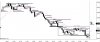
It's nice of you trying to teach others, but I read the PA differently to you. I guess every trader sees different things on their charts, and so here is what I saw when I looked at your annotated chart. (My comments are in yellow)
