
You are using an out of date browser. It may not display this or other websites correctly.
You should upgrade or use an alternative browser.
You should upgrade or use an alternative browser.
Why didn’t Microsoft die?
- Thread starter themickey
- Start date

I use the Windows operating system on my PC by necessity, but everything else is Google because it's more convenient with my android phone.
But your PC cannot run on Android, because Google cannot make an OS for the PC. And thus, you are locked in. Like all of us. Wheeee!
It's clearly very difficult to break an entrenched monopoly like Windows and its suite in businesses. Several have tried and failed.
It's particularly annoying at every MS update having to ensure it doesn't push its wares on my system. But I get just as annoyed when Samsung pushes its wares on my android phone. I'm a Google fan.
It's particularly annoying at every MS update having to ensure it doesn't push its wares on my system. But I get just as annoyed when Samsung pushes its wares on my android phone. I'm a Google fan.

Well there is Chromebook/Pixelbook which are running Android OS's.But your PC cannot run on Android, because Google cannot make an OS for the PC. And thus, you are locked in. Like all of us. Wheeee!
They include spreadsheets, word documents, PDF programs, various apps all for free not like Office365 which is subscription based. Then also this all runs from the cloud with first 2 years free then about $2 per month.
These machines are laptops, not tower type PC's.
The downside imo, some programs you can't load eg some printer drivers.
There are also usually only 2× C Ports, so you need a hub for USB ports or extra video ports.
Quick release C port magnetic charging cable, right angled swivel head.
Last edited:
As pointed out by others, MSFT was never in real trouble as a business - it just felt that way as AAPL moved in on the higher-end device market while Android stole lower-end phones. Even if they had missed cloud computing entirely, it could have been a great steady earner for investors to this day.
I've used Windows since the mid 90s and never seriously considered switching. Windows 7 in particular is/was the best version ever, works reliably and runs the programs I need. What drives me up the wall about Microsoft (and software companies generally) is the endless torrent of updates and new versions, of which around 10% improve the software, 40% no change or slight negative due to bloat, and 50% clearly make it worse. E.g I was a habitual user of Skype until one update literally broke it. Not looking forward to (finally) upgrading to Windows 10/11, that's for sure.
Seems to be a facet of human society, actually - we're largely incapable of preserving a good thing for more than a couple generations.
OMG!!! I thought again I was the only one who thought Windows 7 is the best ever and never want to upgrade Windows 7 to 10 or 11 no matter how much they threatened me with end-of-support and to charge me for the upgrades later on but I just never ever want to upgrade especially after seeing how crappy they made Windows 8 and then made a half-hearted effort to improve it later bit by coming out with a pathetic Windows 8.1. If I can, I would use Windows 7 until the day I die. I never want to use a computer with the same "apps" appearing again and again and again in ten thousand different places, and with no organized folders and files. Why can't I just work with softwares and programs and icons??
Why didn’t Microsoft die?
By Shira Ovide July 23, 2021
For a decade or so, Microsoft botched so many significant technology trends that the company became a punchline. But Microsoft more than survived its epic mistakes. Today, it is (again) one of the tech world’s superstars.
Microsoft’s ability to thrive despite doing almost everything wrong might be a heartening saga about corporate reinvention. Or it may be a distressing demonstration of how monopolies are extremely hard to kill. Or maybe it’s a little of both.
Understanding Microsoft’s staying power is relevant when considering an important current question: Are today’s Big Tech superstars successful and popular because they’re the best at what they do, or because they’ve become so powerful that they can coast on past successes?
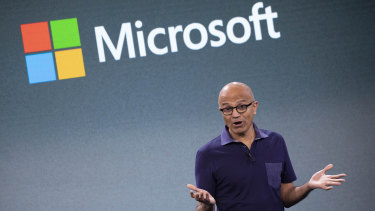
Microsoft CEO Satya Nadella steered the software giant out of its funk after taking charge in 2014.Credit:AP
Ultimately, the angst about Big Tech in 2021 — the antitrust lawsuits, the proposed new laws and the shouting — boils down to a debate about whether the hallmark of our digital lives is a dynamism that drives progress, or whether we actually have dynasties. And what I’m asking is, which one was Microsoft?
Let me go back to Microsoft’s dark days, which arguably stretched from the mid-2000s to 2014. They were weirdly not that bad. Yes, Microsoft was so uncool that the company was roasted in Apple television ads and many people in the tech industry wanted nothing to do with it. The company failed to make a popular search engine, tried in vain to compete with Google in digital advertising and had little success selling its own smartphone operating systems or devices.
Microsoft’s ability to thrive despite doing almost everything wrong might be a heartening saga about corporate reinvention. Or it may be a distressing demonstration of how monopolies are extremely hard to kill.
And yet, even in the saddest years at Microsoft, the company made oodles of money. In 2013, the year that Steve Ballmer was semi-pushed to retire as CEO, the company generated far more profit before taxes and some other costs — more than $US27 billion — than Amazon did in 2020.
No matter how much Microsoft’s software might have stunk — and a lot of it did — many businesses still needed to buy Windows computers, Microsoft’s email and document software and its technology to run powerful back-end computers called servers. Microsoft used those much-needed products as leverage to branch into new and profitable business lines, including software that replaced conventional corporate telephone systems, databases and file-storage systems.
Microsoft wasn’t always good in those years, but it did pretty well. And more recently, Microsoft shifted from treading water to being both financially successful and relevant in cutting-edge technologies. So was this turnaround a healthy sign or a discouraging one?
On the healthy side of the ledger, Microsoft did at least one big thing right: cloud computing, which is one of the most important technologies of the past 15 years. That and a culture change were the foundations that morphed Microsoft from winning despite its strategy and products to winning because of them. This is the kind of corporate turnaround that we should want.
I’ll also say that Microsoft is different from its Big Tech peers in a way that might have made it more resilient. Businesses, not individuals, are Microsoft’s customers and technology sold to organisations doesn’t necessarily need to be good to win.
And now the discouraging explanation: What if the lesson from Microsoft is that a fading star can leverage its size, savvy marketing and pull with customers to stay successful even if it makes meh products, loses its grip on new technologies and is plagued by flabby bureaucracy? Was Microsoft so big and powerful that it was invincible, at least long enough to come up with its next act? And are today’s Facebook or Google comparable to a 2013 Microsoft — so entrenched that they can thrive even if they’re not the best?
I don’t have definitive answers, and size and power don’t guarantee that a company can weather many mistakes and stay relevant. But a lot of the drama and fighting about technology in 2021 hinge on those questions.
Maybe Google search, Amazon shopping and Facebook’s ads are incredibly great. Or maybe we simply can’t imagine better alternatives because powerful companies don’t need to be great to keep winning.
The New York Times
Themickey posts great article after great article and makes good posts about the articles.
Well worth following this fellow.
Usually I follow people like Lescor (come back!) and Dustin but I can't resist good research.
Last edited:
Funny story:
Apple would have died had Microsoft not made a large and critically needed investment.
Why? Microsoft was worried about possible antitrust legislation and wanted to tout to Apple as a prime competitor.
Haha. After the looming antitrust problems faded away, Microsoft sold their Apple shares
Bill Gates would have looked like a triple-genius had he told Microsoft to keep the shares!
Apple would have died had Microsoft not made a large and critically needed investment.
Why? Microsoft was worried about possible antitrust legislation and wanted to tout to Apple as a prime competitor.
Haha. After the looming antitrust problems faded away, Microsoft sold their Apple shares
Bill Gates would have looked like a triple-genius had he told Microsoft to keep the shares!

I hope I can see MS dies before I die......
That's not going to happen unless you are -30 years old. (And we know you are not -30, because you are alive as evidenced by your typing). Sorry man.