Let's say I'm interested in backtesting something. As an example I want to back test taking a long after a supply line break (as per usual) but the pullback forms a double top (+/- 2 ticks). How do I take context into consideration? It would be easy enough to eliminate all occurrences that happened in a range but should I be concerned with where it happens in the bigger picture? Do I need to break it down into groups (maybe near the mean, at a lower end of the channel and at the upper end of the channel)? Or is it more of a brute force approach in the beginning?

You are using an out of date browser. It may not display this or other websites correctly.
You should upgrade or use an alternative browser.
You should upgrade or use an alternative browser.
Trading Price:Phase Two:Backtesting
- Thread starter dbphoenix
- Start date

Let's say I'm interested in backtesting something. As an example I want to back test taking a long after a supply line break (as per usual) but the pullback forms a double top (+/- 2 ticks). How do I take context into consideration? It would be easy enough to eliminate all occurrences that happened in a range but should I be concerned with where it happens in the bigger picture? Do I need to break it down into groups (maybe near the mean, at a lower end of the channel and at the upper end of the channel)? Or is it more of a brute force approach in the beginning?
These are the sorts of hypotheses that can be backtested if formulated properly. If, for example, one looks at DTs within the context of AMT, he'll be taking only those that are at or near an extreme and comparing the results with those obtained by taking all DTs without regard to where they occur.
Does this take time? Yes. Is it worth it? Unquestionably. If one wants a high P:L ratio, then he must limit himself to the best trades (which also provide a high winrate). But it is the best trades that give him the confidence to trade size. Yes, one can trade 1 contract with a winrate of 40% and a P:L of 2:1, but he won't be retiring on it.
There are variables to be controlled, of course: drawing the trendline, drawing the channel, finding the mean, determining how close price has to be to any of these to provide the desired result, what qualifies as a "double top", where the entry most likely to succeed will be, and so on. But putting this together is always easier when a team is doing it. If there's no team, one has to do it himself. But once done, it's done.
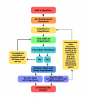
Those who have Developing A Plan will have seen this:
Last edited by a moderator:
One of the chief advantages of the scientific method, if conducted properly, is to avoid bias, particularly confirmation bias (1) and in-group bias (2):
1. Confirmation Bias
This is a fatal flaw of trading; we tend to surround ourselves with information that validates our own point of view and dismiss input that conflicts with our reasoning (also known as cognitive dissonance). This is the primary reason why we always strive to see âboth sides of every tradeâ as the residual grist between variant views is where educationâand profitabilityâresides.
2. In-Group Bias
This is a manifestation of confirmation bias, or the tendency to surround ourselves with those who share similar takes on the tape. This could pertain to our physical environment or a virtual experience, such as Twitter. Not only does this provide a false sense of security in our individual viewpoints, it makes us suspiciousâor angryâwith outsiders who dare to question how we feel.
3. Gamblerâs Fallacy
One of the most famous disclaimers in finance is that past performance is no guarantee of future results. This bias is often referred to as a âglitchâ in our thinking in that it extrapolates what happened in the past to construct an idea of what will happen the future. How many of you have played roulette at a casino under the premise that a string of red increases the likelihood of a black outcome? Thatâs flawed thinking; the odds of red (or black, for that matter) or 48% on each independent spin.
4. Post-Purchase Rationalization
The definition of an investment should never be a trade gone awry. Nobody initiates market exposure expecting to lose money, but we should never post-rationalize our risk (such as ignoring stop-losses or throwing good money after bad). We would be wise to remember that good traders know how to make money but great traders know how to take a loss.
5. Neglecting Probability
History is littered with stretches where in hindsight weâre reminded not to confuse brains with a bull market. This bias limits our ability to properly assess risk, whether itâs overstating an unlikely event (such as buying a stock for a takeover) or understating an unlikely event (such as Y2K, the fiscal cliff, or a terrorist attack). Tail events do happen, of course, but betting on an outlier is a long shot by its very definition.
6. Observational Selection Bias
This is when we suddenly notice something we havenât noticed before, and wrongly assume the frequency has increased (when it hasnât). Letâs say I bought cannabis stocks as a way to play (what I perceive to be) the legalization of marijuana. All of a sudden, everywhere I look, there are more and more signs that support my thesis; the topic is featured on 60 Minutes, itâs a hot-button issue during the election, it gained momentum in the mainstream media. While some of that may prove true, I am on the lookout for news, whether itâs conscious or not.
7. Status-Quo Bias
Most of us are creatures of habit in our own way; we use the same toothpaste or align with a particular smartphone device. That routine often extends to our investments in the marketplace; weâre comfortable with the stocks (or indices) we often trade and often miss opportunities outside of that comfort zone for fear of the unknown. Change isnât only positive, itâs inevitable.
8. Negativity Bias
Letâs face it: We live in a sensationalist society where scare tactics and negative headlines garner the most attention. If you doubt this for a minute, turn on your local news tonight. Scientists theorize that we perceive negative news to be more important than positive news. The riskâfor the bears and for humans as a wholeâis the tendency to dwell on bad news rather than embrace good news, and thereâs the added twist that the stock market is widely considered to be a leading indicator.
9. Bandwagon Effect
How prevalent is this when it comes to the financial markets? They teach it in college as a stylistic approach (momentum investing)! Nobody in our businessâor in the mediaâwants to miss a move in the stock market, and history is littered with bubbles and busts that demonstrate this bias in kind. In life, this is driven by our innate desire to âfit in and conform"; in the markets, itâs driven by two factors: fear and greed.
10. Projection Bias
This is predicated on projecting our thoughts and beliefs onto others and assuming that others are wired the same way (theyâre not). This can lead to "false consensus bias," which not only assumes that other people think like we do, but that they reach the same conclusions. In short, this creates a false consensus, or sense of confidence when in fact one doesnât, or shouldnât, exist.
11. The Current Moment Bias
This is a direct descendent of the immediate gratification mindset that dominated society for many yearsâand some will argue that the government is currently operating in this mode, mortgaging our childrenâs standard of living to achieve short-term fixes. In short, we want to live as well as possible and pay for it at a later date (as evidenced by the level of debt and our growing deficit). The housing crisis was rooted in this bias, as is the basic concept of leverage.
12. Anchoring Effect
This tendency, also known as the relativity trap, compares a situation to a limited sub-set of information; itâs when we focus on a number or value and extrapolate it to a current situation. This often manifests in the marketplace through the fundamental metric, when we observe that a stock is âcheapâ relative to its peers or a historical precedent (also known as a âvalue trapâ).
--Todd Harrison
1. Confirmation Bias
This is a fatal flaw of trading; we tend to surround ourselves with information that validates our own point of view and dismiss input that conflicts with our reasoning (also known as cognitive dissonance). This is the primary reason why we always strive to see âboth sides of every tradeâ as the residual grist between variant views is where educationâand profitabilityâresides.
2. In-Group Bias
This is a manifestation of confirmation bias, or the tendency to surround ourselves with those who share similar takes on the tape. This could pertain to our physical environment or a virtual experience, such as Twitter. Not only does this provide a false sense of security in our individual viewpoints, it makes us suspiciousâor angryâwith outsiders who dare to question how we feel.
3. Gamblerâs Fallacy
One of the most famous disclaimers in finance is that past performance is no guarantee of future results. This bias is often referred to as a âglitchâ in our thinking in that it extrapolates what happened in the past to construct an idea of what will happen the future. How many of you have played roulette at a casino under the premise that a string of red increases the likelihood of a black outcome? Thatâs flawed thinking; the odds of red (or black, for that matter) or 48% on each independent spin.
4. Post-Purchase Rationalization
The definition of an investment should never be a trade gone awry. Nobody initiates market exposure expecting to lose money, but we should never post-rationalize our risk (such as ignoring stop-losses or throwing good money after bad). We would be wise to remember that good traders know how to make money but great traders know how to take a loss.
5. Neglecting Probability
History is littered with stretches where in hindsight weâre reminded not to confuse brains with a bull market. This bias limits our ability to properly assess risk, whether itâs overstating an unlikely event (such as buying a stock for a takeover) or understating an unlikely event (such as Y2K, the fiscal cliff, or a terrorist attack). Tail events do happen, of course, but betting on an outlier is a long shot by its very definition.
6. Observational Selection Bias
This is when we suddenly notice something we havenât noticed before, and wrongly assume the frequency has increased (when it hasnât). Letâs say I bought cannabis stocks as a way to play (what I perceive to be) the legalization of marijuana. All of a sudden, everywhere I look, there are more and more signs that support my thesis; the topic is featured on 60 Minutes, itâs a hot-button issue during the election, it gained momentum in the mainstream media. While some of that may prove true, I am on the lookout for news, whether itâs conscious or not.
7. Status-Quo Bias
Most of us are creatures of habit in our own way; we use the same toothpaste or align with a particular smartphone device. That routine often extends to our investments in the marketplace; weâre comfortable with the stocks (or indices) we often trade and often miss opportunities outside of that comfort zone for fear of the unknown. Change isnât only positive, itâs inevitable.
8. Negativity Bias
Letâs face it: We live in a sensationalist society where scare tactics and negative headlines garner the most attention. If you doubt this for a minute, turn on your local news tonight. Scientists theorize that we perceive negative news to be more important than positive news. The riskâfor the bears and for humans as a wholeâis the tendency to dwell on bad news rather than embrace good news, and thereâs the added twist that the stock market is widely considered to be a leading indicator.
9. Bandwagon Effect
How prevalent is this when it comes to the financial markets? They teach it in college as a stylistic approach (momentum investing)! Nobody in our businessâor in the mediaâwants to miss a move in the stock market, and history is littered with bubbles and busts that demonstrate this bias in kind. In life, this is driven by our innate desire to âfit in and conform"; in the markets, itâs driven by two factors: fear and greed.
10. Projection Bias
This is predicated on projecting our thoughts and beliefs onto others and assuming that others are wired the same way (theyâre not). This can lead to "false consensus bias," which not only assumes that other people think like we do, but that they reach the same conclusions. In short, this creates a false consensus, or sense of confidence when in fact one doesnât, or shouldnât, exist.
11. The Current Moment Bias
This is a direct descendent of the immediate gratification mindset that dominated society for many yearsâand some will argue that the government is currently operating in this mode, mortgaging our childrenâs standard of living to achieve short-term fixes. In short, we want to live as well as possible and pay for it at a later date (as evidenced by the level of debt and our growing deficit). The housing crisis was rooted in this bias, as is the basic concept of leverage.
12. Anchoring Effect
This tendency, also known as the relativity trap, compares a situation to a limited sub-set of information; itâs when we focus on a number or value and extrapolate it to a current situation. This often manifests in the marketplace through the fundamental metric, when we observe that a stock is âcheapâ relative to its peers or a historical precedent (also known as a âvalue trapâ).
--Todd Harrison