Ok... so going forward with nailed down setups, here is what I see happened today.
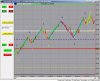
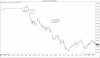
A - Right at the open we had a very fast REJ which penetrated the OL. If I had a 2 point stop loss beyond the level, I could have taken a long at the level or even 1 point above and not get stopped out.
I ended up entering about 1 point above the bar. When this trade works, it just works, but the problem is that if price comes down to test this level again, it might bounce off again but no way could I take a 4 point loss to find one given at the entry is so high up.
This is what I do now, I look to see at what point a trade is invalidated, and how far away would that be from my entry.
B - So no idea why price stopped here, but I will not look to see what happens if price reaches here again.
C - Carrying forwrad the previous swing low provides just congestion, hence why these random swing points on a one minute chart just seem too random.
D - This swing point is better because its an ultimate low for the day, and the area of a major previous rejeciton. Here, it seems to go through without trouble.
E - New swing low that is rejected quite well. Notice that 2 point above a ledge forms, and price even comes down to test it again. Looking for this, going long somewhere after that test at "e" should be called for, but this is huge bar that goes up.
F - Hinges are quite easy to spot, but the trouble is, sometimes the lines of the hinge have to be adjusted as price goes sideways. If I take a quick exit out the bottom, the price is good, but it comes back up.
f - Here we seem to test the apex, and price goes down, but could I even see this if I took the first exit out of the hinge and see that price came back up? Furthermore, price does bounce off the ON and goes past the price here at the apex.
So taking these trades has to be a quick in and out.. no wishing and hoping.
G - Random place to stop, except that if we count this as the mean of the previous congestion area around B.
H - Random rejection here.
I - Yes another random rejection, but its interesting we have 2. And yes, price breaks through on the down side.
J - Bringing forward the previous low at E, we have no trobule going lower, but this just leads to sideways action which can really chop you up.
K - No idea why price turned here, not really close enough to that 54 level.
L - This I love and have talked about before. I gave up on it because I saw that price was sometimes bouncing off and not breaking through. But here is the thing. These lines tend to be quite tight, and look at the good move it launches. I do favor the breakthrough with this type of behavior, but if I'm wrong, if intead it reverses, having a tight stop is possible since the horizontal level is usually quite obvious.
M - It happens here again, this wedge.
N - And what's more, it happens at that previous swing high from B. We do get a break through, but we are so close to the end of the day that there is no time for a major move.
P - Here is the first bounce, 2 ticks below the OH. When it stops going lower, I could perhaps exit for a tiny profit or hold to see what happens right at the level.
Q - So here we have a bounce again. Could go short again, or if I'm still holding the short from before its still not invalidated since there is no penetration.
R - But here we have penetration. Once price starts to go in my favor, like at Q, then I think tracking it down with a supply line is called for and when it breaks, exit for a profit. A re-entry on the short can always be made, but on this third try up, we have penetration. So do I make it a rule to only short twice when price comes up from the bottom? Hmmm....
So as you can see, so much to think about, and I really have to just pick something easy, analyze it to death, know exactly where my entry and exit will be, and hope that I last long enough to see a statistical advantage.
Swing points are tricky. If they are the lowest swing point, or the highest swing point, this might set something up, but random swing points are just too random. Hinges can be very good, but I need to really look at all the types to see where its best to get in or out. And as you know, I like my OH and OL. The last thing to look at is a trading range, and trading them by just taking the reversal trade, no confirmation, and a tight stop, but only if the range is pretty with well defined levels.