You are using an out of date browser. It may not display this or other websites correctly.
You should upgrade or use an alternative browser.
You should upgrade or use an alternative browser.
Trading NQ via Price Action
- Thread starter k p
- Start date
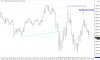
K - So by this point, there is yet another range forming. (today is all about ranges)
L - Here is a FBO from the bottom. As ND says, initial exits from a trading range in a well established trend that are counter trend almost always fails. Here it fails.
M - This is a failure to reach the top of the range. This has me thinking short. It drops out the bottom nicely.
N - A test of the breakout level that is successfully rejected.
Ahhhh.. I do love this analysis. But dammit, I need entries.... profitable entries!
L - Here is a FBO from the bottom. As ND says, initial exits from a trading range in a well established trend that are counter trend almost always fails. Here it fails.
M - This is a failure to reach the top of the range. This has me thinking short. It drops out the bottom nicely.
N - A test of the breakout level that is successfully rejected.
Ahhhh.. I do love this analysis. But dammit, I need entries.... profitable entries!
Attachments

Excuse the amateur question, but when you mean limit order, you mean entering a short on my DOM above where price is, so as price comes up, the limit order is filled for the short? This way, it seems that instead of being "swept" into a trade by entering a stop sell in a retracement for example, I am entering a sell limit above a current price so that I'm swept into the trade on a high point with a stop loss just above where I think the upper limit or this trading range is?
I have often thought this as well. Why I am shorting in retracement, why not just short a little higher, this way, if price goes higher still, my loss isn't that high. (this way though I don't have confirmation of price coming down at least to hit my stop limit entry, I'm only entering based on a hunch that it will come down and getting in at a better price)
Study the retraces on the 1-min chart, where price retraces, then stops and turns back in the direction of the previous price swing. See if you notice a particular "more often than not" pattern that you can use to enter positions using limit orders on the retrace.
K - So by this point, there is yet another range forming. (today is all about ranges)
L - Here is a FBO from the bottom. As ND says, initial exits from a trading range in a well established trend that are counter trend almost always fails. Here it fails.
M - This is a failure to reach the top of the range. This has me thinking short. It drops out the bottom nicely.
N - A test of the breakout level that is successfully rejected.
Ahhhh.. I do love this analysis. But dammit, I need entries.... profitable entries!
OK, perfect illustration you have on this chart. Are you familiar with Bob Volman's methods? Your box contains a range. L is the "tease" (the market's possibly tipping its hand) and you now have a signal to look for a short entry setup.
Notice where price stops at M. This is the study I recommended in my previous post.
Now you have a range break ("failed") and a LH as price comes back to test the range low a second time.
Now, if price breaks the range low again, after coming off a lower high, it's likely to continue down to the next key support level in line to be tested (or to print a measured move). This is the second mouse (usually) no-heat trade

Bob Volman's 70-tick chart methods translate beautifully to the 1-min chart.
Study the retraces on the 1-min chart, where price retraces, then stops and turns back in the direction of the previous price swing. See if you notice a particular "more often than not" pattern that you can use to enter positions using limit orders on the retrace.
This is a very interesting type of trade that I have thought about before so I'm glad you came to point this out to me. Can you comment some more about the safety/risk? Here is how I see it. Suppose we are in a down trend and price retraces up. The idea is to put a stop somewhere below the low of a previous bar (you use 1 tick, Db suggests one point). This of course might get us into the trade without clearing the previous lows, and in case its a 123 setup for a long, we might just be going short when we test the previous low and shoot up. But what we at least have is the confirmation that price came back down.
If instead we enter on a limit order, say 3 points above the low where we saw a few one minute bars stop and go back down, we can essentially be trying to short at the high of the retracement just before it turns back down. If we are wrong, we can almost have only 1 point stop before scratching. The risk here is that we are shorting as price is actually coming up, so this trade might work less often, but the risk is smaller.
Am I understanding the risk/benefit?
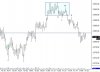
I've included a picture as a sample from today. At B would be the place to put a traditional stop limit order to sell, which would fill.] lets say at 76. Now price instead shoots up, but we might want to clear the highs at A before we call this trade a loss, and this high is at 80, so we have to take a 4 point loss. If instead we take a sell limit at C, expecting price to turn around and go back own at 80, we get filled for a short at 80, but since price keeps going up, we might just get out by 81 or 82, thereby cutting our risk drastically. We might not always get filled of course if price never comes up again, but its a lower risk trade in some ways... correct?
Last edited:
Are you familiar with Bob Volman's methods?
Notice where price stops at M. This is the study I recommended in my previous post.
I did read his book way back when on your recommendation, but I don't think much of it stuck at the time, and lots of his methods use a MA which I do not. Now of course it would make total sense because of the 8 months of being here every morning!

As for the second comment, I probably need this pointed out to me a few times more!
 (but clearly it stuck since I did this naturally myself today)
  This could be why I'm quoting what you and Db say so often... just saying it out loud (typing it is just as good) really helps get it into the brain so that it can be used in real time and I know what to do.
I've included a picture as a sample from today. At B would be the place to put a traditional stop limit order to sell, which would fill.] lets say at 76. Now price instead shoots up, but we might want to clear the highs at A before we call this trade a loss, and this high is at 80, so we have to take a 4 point loss. If instead we take a sell limit at C, expecting price to turn around and go back own at 80, we get filled for a short at 80, but since price keeps going up, we might just get out by 81 or 82, thereby cutting our risk drastically. We might not always get filled of course if price never comes up again, but its a lower risk trade in some ways... correct?
View attachment 145245
Getting filled short at 80 is anticipating a range will form. You see, there's a low and then a test of that low which forms an approximate double bottom. Offering 80 means you're anticipating a consolidation range will form. So you'd get filled at 80 and scratch for a tiny loss like you said at 81 or so.
I occasionally play ranges, though I prefer to see them wider on the 1-min (back to back wide choppy bars on the 5-min). The example you illustrate sets up a 1-2-3 long to me, so I'd feel like I'm about to throw some money away shorting 80 because those little 1-2-3's tend to break through the swing high/low in the middle.
I'd rather buy 78 counter-trend (early entry of the 1-2-3 setup) and look for a break of 80 and a retrace back up to (drum roll, please....) 86.50!
It's very common for retraces on the 1-min chart in a well-defined trending move (HL/HH or LH/LL) to go as far as N (if you're interested in this, you can study it and define N for yourself).
Retraces where price breaks a 5-min bar's high/low on the turn, usually forming a multi-bar pullback, often retrace to previous S/R - the common textbook TA concept of previous support becomes resistance and previous resistance becomes support, which is in fact the core concept behind the 5-min TL breakout pullback setup. This is the 1-2-3 breakout of 80 you illustrated.
As you continue to study these ideas and create a set of rules for yourself, it will more and more seem like pure magic. All it is, though, is simple mathematical patterns created by a constant search for value entries within acceptable risk:reward frameworks. Since the "big players" have to move size around and use longer time frames for their decisions of where value currently lies, they leave identifiable footprints for us "little guys".
Right after I posted I realized that my example was actually terrible given the second test of the low just above 74 between B and C as you point out. I was in a haste to try and find something with which to use to illustrate the sell limit order as price was climbing. In my "post" chart for today I too indicated that as an area to take a long so I'm glad I didn't miss it, I just used it as a terrible example of a retracement.
So lets try this example one more time with a proper illustration.
The box above is that beautiful setup of the range with the FBO complete with the lower high that launches the the down move.
A - By the time we get here, we are already in a well established down trend. If I short here around 3981, I see that price will move in my favor but then retrace back up to B, which is over 2 points above my entry.
B - If instead I have a limit sell order in place at about 83.50, which is just below the previous retrace up to C, then I can get into a short right here. If we in fact go above C, I might be able to bail out for only a point loss, but this is still much better than the loss I have to incur from the entry at A.
Of course price might never come all the way to B (this is one tick lower than C), so I might miss it all together. I also do not have good confirmation of this trade since I'm shorting as price is actually going up and not coming down, but what I get in exchange for this is a much better entry price for my short and can have a might tighter stop
.

So lets try this example one more time with a proper illustration.
The box above is that beautiful setup of the range with the FBO complete with the lower high that launches the the down move.
A - By the time we get here, we are already in a well established down trend. If I short here around 3981, I see that price will move in my favor but then retrace back up to B, which is over 2 points above my entry.
B - If instead I have a limit sell order in place at about 83.50, which is just below the previous retrace up to C, then I can get into a short right here. If we in fact go above C, I might be able to bail out for only a point loss, but this is still much better than the loss I have to incur from the entry at A.
Of course price might never come all the way to B (this is one tick lower than C), so I might miss it all together. I also do not have good confirmation of this trade since I'm shorting as price is actually going up and not coming down, but what I get in exchange for this is a much better entry price for my short and can have a might tighter stop
.
Update On Charting Issues
Ok, I think I'm back in business. After changing the setting to make sure to use the sever timestamps in the QuoteManager, things look much better now. (In the Multicharts help, they say this shouldn't be necessary). Also, when I was hitting reload for my charts, the data never changed until much later in the day. Well.. there is a setting for that too! I can force Multicharts to not use any cached data but always get it fresh from the server whenever I hit reload. This setting was also not activated, and the advice is that it shouldn't be needed. At any rate, now when I did see a bar that didn't close on the correct tick compared to the charts on TWS from IB, hitting reload, which only took less than 5 seconds made it match up perfectly. So the only excuse for my horrible trading going forward will just be me!
Here is the bigger problem still... the lack of a continuous contract. Having learned from Db first, I see the power of AMT. His calls lately are nothing short of magic. So knowing where you are in terms of the channel, and where the mean is, is of vital importance to developing the big picture and not miss the forest for the trees. But IB doesn't provide a continuous contract, and I can only build one in Multicharts with a max of 2 contract, hence barely 6 months of data. Its time consuming to draw this all the time on investing.com... the drawing tools are so had to use. Anyway... that's my next beef to solve.
Ok, I think I'm back in business. After changing the setting to make sure to use the sever timestamps in the QuoteManager, things look much better now. (In the Multicharts help, they say this shouldn't be necessary). Also, when I was hitting reload for my charts, the data never changed until much later in the day. Well.. there is a setting for that too! I can force Multicharts to not use any cached data but always get it fresh from the server whenever I hit reload. This setting was also not activated, and the advice is that it shouldn't be needed. At any rate, now when I did see a bar that didn't close on the correct tick compared to the charts on TWS from IB, hitting reload, which only took less than 5 seconds made it match up perfectly. So the only excuse for my horrible trading going forward will just be me!
Here is the bigger problem still... the lack of a continuous contract. Having learned from Db first, I see the power of AMT. His calls lately are nothing short of magic. So knowing where you are in terms of the channel, and where the mean is, is of vital importance to developing the big picture and not miss the forest for the trees. But IB doesn't provide a continuous contract, and I can only build one in Multicharts with a max of 2 contract, hence barely 6 months of data. Its time consuming to draw this all the time on investing.com... the drawing tools are so had to use. Anyway... that's my next beef to solve.