It's a horrible idea to tie health care to employers; one of the worst decisions in the history of the country.Don't forget that big biz wants single payer to get out of health insurance costs.

You are using an out of date browser. It may not display this or other websites correctly.
You should upgrade or use an alternative browser.
You should upgrade or use an alternative browser.
Those of us who had decent health care in 2009 have been ripped off
- Thread starter Tom B
- Start date
Some of the most powerful people in the US are talking about a massive change to healthcare
https://finance.yahoo.com/news/most-powerful-people-us-talking-131232144.html
https://finance.yahoo.com/news/most-powerful-people-us-talking-131232144.html
what the hell are you doing rewriting history again... joint program...
I gave you the history. Obama had spoken about single payer during the campaign but his insurance company paymasters had him and the leadership facedown their party and take it out.
Obamacare passed without a single republican vote. Had democrats had any guts they could have made govt payer or single payer or anything they wished.
I gave you the history. Obama had spoken about single payer during the campaign but his insurance company paymasters had him and the leadership facedown their party and take it out.
Obamacare passed without a single republican vote. Had democrats had any guts they could have made govt payer or single payer or anything they wished.
The train wreck was a joint project, but the Republicans had the leadership role. How quickly we forget that the majority of Democrats wanted the public option, but a few Democrats combined with nearly 100% of Republicans killed it. Then once the Democrats forced through Obamacare, sans public option, The Republicans set about from day one to wreck it, And they largely succeeded. I always viewed Obamacare as just a step toward the inevitable. Had the public option been included from the get go, the transition would be smoother. But regardless, it will take years, if it ever happens, to wring out all the graft and corruption from U.S. "medical care". It may take rolling out the guillotine.
We are a nation of crises. Sometimes things have to get incredibly bad before we act. That's because there are so many pigs feeding at the trough. And the hardest thing in the world is to get pigs away from a trough.
It's a horrible idea to tie health care to employers; one of the worst decisions in the history of the country.
So obviously you must think the decision to make any employer with more than 50 employees pay for healthcare was a terrible decision right? Obama and the dems basically incentivised businesses not to grow. Liberal economists (an oxymoron) all insisted it would have absolutely no impact on job growth, and then Obama had one of the worst records for job creation in decades, even after coming out of a severe recession.
We can only judge that decision in light of all the constraints surrounding it. As a general principle however healthcare ought not to be tied to employers and employment. But that's just one of the fucked up things about U.S. healthcare.So obviously you must think the decision to make any employer with more than 50 employees pay for healthcare was a terrible decision right?
U.S. politics will preclude a direct solution. The fundamental impediment to tackling the problem directly will be the need to decide which pigs now feeding at the trough will take the biggest hits if the cost is to be brought down. Thats a losing battle; instead, a practical way to get around having to make that decision is to attack regulatory capture full force. If done right, that approach can garner tremendous public support from all political directions, and politicians can escape blame and get re-elected. We are politically capable of that. And then once we have brought regulatory capture to its knees, the market will be free to decide who will be making less. You'll get your drugs from Canada and Western Europe, or your local prescribing pharmacist. MRIs will cost the same in the U.S. as they do in Canada, etc. Then too, you have to limit insurance to either policies that expand public health coverage, or supplemental policies that cover the co-pay. We should rule out a Swiss-like system where the insurance companies are allowed to feed at the trough, although a highly regulated trough. That is of course why care in Switzerland is next most costly compared to the U.S.Some of the most powerful people in the US are talking about a massive change to healthcare
https://finance.yahoo.com/news/most-powerful-people-us-talking-131232144.html
In U.S. medicare, there is a 20% co-pay. Sounds reasonable enough until you realize what the total bill can run for a serious illness. Twenty percent of a million is still enough to bankrupt the average middle class family. If the cost is brought down to what it is in other countries a 20% copay will make sense again, especially if the copay is capped at some point.
Last edited:
We can only judge that decision in light of all the constraints surrounding it. As a general principle however healthcare ought not to be tied to employers and employment. But that's just one of the fucked up things about U.S. healthcare.
U.S. politics will preclude a direct solution. The fundamental impediment to tackling the problem directly will be the need to decide which pigs now feeding at the trough will take the biggest hits if the cost is to be brought down. Thats a losing battle; instead, a practical way to get around having to make that decision is to attack regulatory capture full force. If done right, that approach can garner tremendous public support from all political directions, and politicians can escape blame and get re-elected. We are politically capable of that. And then once we have brought regulatory capture to its knees, the market will be free to decide who will be making less. You'll get your drugs from Canada and Western Europe, or your local prescribing pharmacist. MRIs will cost the same in the U.S. as they do in Canada, etc. Then too, you have to limit insurance to either policies that expand public health coverage, or supplemental policies that cover the co-pay. We should rule out a Swiss-like system where the insurance companies are allowed to feed at the trough, although a highly regulated trough. That is of course why care in Switzerland is next most costly compared to the U.S.
In U.S. medicare, there is a 20% co-pay. Sounds reasonable enough until you realize what the total bill can run for a serious illness. Twenty percent of a million is still enough to bankrupt the average middle class family. If the cost is brought down to what it is in other countries a 20% copay will make sense again, especially if the copay is capped at some point.
The Thing that no one wants to talk about is that in order for the U.S. to have a European, or Canadian model taxes have to go way up and benefits have to go down, Your talking about MRI's, dont even get me started on the odds of getting an MRI in Canada if you arent dying.
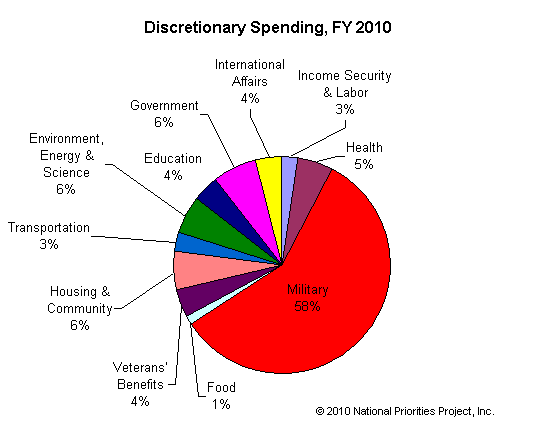
Bottom line U.S. spends a huge portion of the budget on military while all over these european countries, and Canada spend next to nothing, only way to get what liberals want, which is shittier healthcare run by government, is to chop military spending hard.
I am definitely all for chopping military spending hard, but you should be careful what you wish for, YOUR healthcare is also going to take a massive hit once the government has to ration it.
Last edited:
Probably net cost is the measure most consumers of healthcare should use when comparing health care in different countries. The cost of an MRI is France is ~$280 and `$1200 in the US (Old data.) It is more like $2500 in the US in many places, but there is little uniformity. What is it in Canada? It is probably a good idea to use actual data rather than personal opinion or anecdote when comparing health care in different countries, don't you think. I have discovered that there is a tremendously large body of comparative studies available. The care in the U.S. does not look very good.in order for the U.S. to have a European, or Canadian model taxes have to go way up and benefits have to go down, Your talking about MRI's, dont even get me started on the odds of getting an MRI in Canada if you arent dying.
http://www.healthpopuli.com/2013/04...s-it-still-the-prices-and-are-we-still-stupid
See also https://www.cugh.org/sites/default/...o_Comparative_Health_Care_Systems_FINAL_0.pdf
https://en.wikipedia.org/wiki/Comparison_of_the_healthcare_systems_in_Canada_and_the_United_State
You are here: Home / Canadian Health Care Information / World Health Organization’s Ranking of the World’s Health Systems
World Health Organization’s Ranking of the World’s Health Systems
121
Some people fancy all health care debates to be a case of Canadian Health Care vs. American. Not so. According to the World Health Organization’s ranking of the world’s health systems, neither Canada nor the USA ranks in the top 25.
Improving the Canadian Healthcare System does not mean we must emulate the American system, but it may mean that perhaps we can learn from countries that rank better than both Canada and the USA at keeping their citizens healthy.
World Health Organization Ranking; The World’s Health Systems
1 France
2 Italy
3 San Marino
4 Andorra
5 Malta
6 Singapore
7 Spain
8 Oman
9 Austria
10 Japan
11 Norway
12 Portugal
13 Monaco
14 Greece
15 Iceland
16 Luxembourg
17 Netherlands
18 United Kingdom
19 Ireland
20 Switzerland
21 Belgium
22 Colombia
23 Sweden
24 Cyprus
25 Germany
26 Saudi Arabia
27 United Arab Emirates
28 Israel
29 Morocco
30 Canada
31 Finland
32 Australia
33 Chile
34 Denmark
35 Dominica
36 Costa Rica
37 USA
38 Slovenia
39 Cuba
40 Brunei
41 New Zealand
42 Bahrain
43 Croatia
44 Qatar
45 Kuwait
46 Barbados
47 Thailand
48 Czech Republic
49 Malaysia
50 Poland
51 Dominican Republic
52 Tunisia
53 Jamaica
54 Venezuela
55 Albania
56 Seychelles
57 Paraguay
58 South Korea
59 Senegal
60 Philippines
61 Mexico
62 Slovakia
63 Egypt
64 Kazakhstan 65 Uruguay
66 Hungary
67 Trinidad and Tobago
68 Saint Lucia
69 Belize
70 Turkey
71 Nicaragua
72 Belarus
73 Lithuania
74 Saint Vincent and the Grenadines
75 Argentina
76 Sri Lanka
77 Estonia
78 Guatemala
79 Ukraine
80 Solomon Islands
81 Algeria
82 Palau
83 Jordan
84 Mauritius
85 Grenada
86 Antigua and Barbuda
87 Libya
88 Bangladesh
89 Macedonia
90 Bosnia-Herzegovina
91 Lebanon
92 Indonesia
93 Iran
94 Bahamas
95 Panama
96 Fiji
97 Benin
98 Nauru
99 Romania
100 Saint Kitts and Nevis
101 Moldova
102 Bulgaria
103 Iraq
104 Armenia
105 Latvia
106 Yugoslavia
107 Cook Islands
108 Syria
109 Azerbaijan
110 Suriname
111 Ecuador
112 India
113 Cape Verde
114 Georgia
115 El Salvador
116 Tonga
117 Uzbekistan
118 Comoros
119 Samoa
120 Yemen
121 Niue
122 Pakistan
123 Micronesia
124 Bhutan
125 Brazil
126 Bolivia
127 Vanuatu 128 Guyana
129 Peru
130 Russia
131 Honduras
132 Burkina Faso
133 Sao Tome and Principe
134 Sudan
135 Ghana
136 Tuvalu
137 Ivory Coast
138 Haiti
139 Gabon
140 Kenya
141 Marshall Islands
142 Kiribati
143 Burundi
144 China
145 Mongolia
146 Gambia
147 Maldives
148 Papua New Guinea
149 Uganda
150 Nepal
151 Kyrgystan
152 Togo
153 Turkmenistan
154 Tajikistan
155 Zimbabwe
156 Tanzania
157 Djibouti
158 Eritrea
159 Madagascar
160 Vietnam
161 Guinea
162 Mauritania
163 Mali
164 Cameroon
165 Laos
166 Congo
167 North Korea
168 Namibia
169 Botswana
170 Niger
171 Equatorial Guinea
172 Rwanda
173 Afghanistan
174 Cambodia
175 South Africa
176 Guinea-Bissau
177 Swaziland
178 Chad
179 Somalia
180 Ethiopia
181 Angola
182 Zambia
183 Lesotho
184 Mozambique
185 Malawi
186 Liberia
187 Nigeria
188 Democratic Republic of the Congo
189 Central African Republic
190 Myanmar
Source: World Health Organization
Filed under Canadian Health Care Information · Tagged with Health System Rankings, World Health Organization
Last edited:
Its tough for me to comment on this Piezoe, because your probably right in terms of most my evidence being anectodal.
But the thing is that neither one of us is going to end up in the bottom end of the bracket where the averages are made. Bottom line is both of us are well off, we have good healthcare.
And under that circumstance i cant see how you would choose canadian healthare as your first line of defence, bottom line Rich people pay to go to the U.S. no one pays to go the other way. So then basically all of medical innovation we have comes from rich hypocrites willing to pony up, but yet we still have a broken medical system where we claim "we are looking out for the poor"
But the thing is that neither one of us is going to end up in the bottom end of the bracket where the averages are made. Bottom line is both of us are well off, we have good healthcare.
And under that circumstance i cant see how you would choose canadian healthare as your first line of defence, bottom line Rich people pay to go to the U.S. no one pays to go the other way. So then basically all of medical innovation we have comes from rich hypocrites willing to pony up, but yet we still have a broken medical system where we claim "we are looking out for the poor"
Probably net cost is the measure most consumers of healthcare should use when comparing health care in different countries. The cost of an MRI is France is ~$280 and `$1200 in the US (Old data.) It is more like $2500 in the US in many places, but there is little uniformity. What is it in Canada? It is probably a good idea to use actual data rather than personal opinion or anecdote when comparing health care in different countries, don't you think. I have discovered that there is a tremendously large body of comparative studies available. The care in the U.S. does not look very good.
The train wreck was a joint project, but the Republicans had the leadership role. How quickly we forget that the majority of Democrats wanted the public option, but a few Democrats combined with nearly 100% of Republicans killed it. Then once the Democrats forced through Obamacare, sans public option, The Republicans set about from day one to wreck it, And they largely succeeded. I always viewed Obamacare as just a step toward the inevitable. Had the public option been included from the get go, the transition would be smoother. But regardless, it will take years, if it ever happens, to wring out all the graft and corruption from U.S. "medical care". It may take rolling out the guillotine.
We are a nation of crises. Sometimes things have to get incredibly bad before we act. That's because there are so many pigs feeding at the trough. And the hardest thing in the world is to get pigs away from a trough.
So, exactly how did the Republicans wreck Obamacare?
War is peace. Freedom is slavery. Ignorance is strength. "Obamacare is death"