There’s a reason why programmers generally fail in trading. Programming is just a tool like a hammer. A hammer doesn’t make you a great carpenter.
Last edited:

There’s a reason why programmers generally fail in trading. Programming is a just a tool like a hammer. A hammer doesn’t make you a great carpenter.
If you're using an indicator, or some combination of indicators that any algorithm could easily backtest, wouldn't algorithms have arbitrated any edge away?
If there exists a pattern that has an edge, wouldn't an algorithm be able to trade it far faster and earlier than you? Quants could easily get paid to write an algo that tries out every combination of indicators on every timeframe...
Granted, by the same logic, that edge would eventually no longer exist to the algorithm either thru alpha decay...
Suffice it to say, it seems that any good edge is outside the realm of inside-the-box thinking with regards to indicators or simple price-action.
I'm a fan of technical analysis, but if I follow the logic of "if it works, somebody or some machine has already leveraged it to the maximum" then it seems that only leaves fundamental predictions?
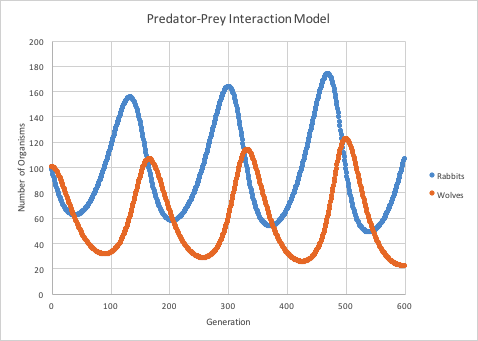
Or is it like Heisenberg's uncertainty principle; everybody interacting with the same pattern will fundamentally alter the pattern so that it doesn't end up being what everyone predicted, and we can only see the true patterns in hindsight?
It is pretty obvious that Trading and Programming are not the same thing.
But programmers have a huge personality edge when it comes to systematic trading (but not discretionary trading). Most programmers are rationally minded (xNTx) and introverts (INTJ), obviously not all, but most.
Assuming they can find an edge and develop discipline, they will find it much easier to go down the systematic trading route than almost any other personality type.
Of course most cant find an edge or develop the required discipline.. Those two are the hardest part.

And to add to you comment and include IAmThe Casino diatribe about institutional vs retail vol, indicators only see volume - retail or institutional all look the same.You’re right. There’s no edge in technical analysis. I’m honestly confused as to why so many people use it — a lot of those indicators were developed in the 70s-90s. There are much better ways to trade now, but for some people, trading is all about the “experience” (point and click on a chart) and not the outcome (making money on a signal you identified after rigorous analysis).
%%Yogi Berra applies here about theory and practice. This is like asking if everyone jumped up and landed at the same time would there be a tremendous earthquake?

