The Rise And Fall Of America

Ok sig or anyone else......

"I am the beginning of everything the end of everywhere, I am the beginning of eternity the end of time and space"

What am I?
 
Deciphering U.S. Foreign Policy in the Trump Era

A narrative of power, without persuasion
By Roncevert Ganan Almond
January 18, 2018

Roncevert Ganan Almond is a partner at The Wicks Group, based in Washington, D.C. He has advised the U.S.-China Economic and Security Review Commission on issues concerning international law and written extensively on maritime disputes in the Asia-Pacific. The views expressed here are strictly his own.


https://thediplomat.com/2018/01/deciphering-u-s-foreign-policy-in-the-trump-era/

The Trump Doctrine

The initial orientation and catalyst of the story is a civilizational divide. In Poland, in a speech leading to the G-20 summit, the president vividly invoked the “Warsaw Uprising” as part of a “civilizational call to arms for the West” against all challengers, whether “oppressive ideologies” of “terrorism and extremism” or “powers that seek to test our will, undermine our confidence, and challenge our interests.” Later, before the United Nations General in New York, Trump targeted the “rogue regimes” of Iran and North Korea that support terrorism and threaten their own people and others with weapons of mass destruction. The NSS affirms this grouping, identifying Iran and North Korea as being rogue regimes that “violate all principles of free and civilized states.” Coupled with the threat from global terrorists and rogue regimes, are the “revisionist powers” of China and Russia, which seek to “shape a world antithetical to U.S. values and interests.” They are determined to “make economies less free and less fair, to grow their militaries, and to control information and data to repress their societies and expand their influence.” The NSS characterizes this struggle as being “fundamentally political contests between those who favor repressive systems and those who favor free societies and those who favor free societies.” In short, America faces a clash of civilizations.

Trump’s response to these threats is three-fold: First and foremost, his strategy calls for building and maintaining an overwhelming and preeminent military force, as supported by his massive increase in U.S. defense spending. Under this so-called “overmatch” doctrine, the United States must maintain a “combination of capabilities in sufficient scale to prevent enemy success” and “to ensure that America’s sons and daughters will never be in a fair fight.” The United States must deter conflict or, if failing deterrence, win in war. This capability must be extended across all domains (the full spectrum of land, air, maritime, space, and cyberspace) and must address and prevent all possible strategic attacks, from terrorist threats to addressing “gray zone” attacks by rival powers that blur the line between war and peace.

To reinforce America’s deterrence, the Trump administration vows to prevent adversaries from using the threat of escalation (including to nuclear conflict) as a means of coercion. The White House will be “risk informed” but not “risk averse” in taking preemptive measures in defense of U.S. vital interests. One indication of this doctrine in action may be recent White House discussions of a “bloody nose” strike against North Korea. Perhaps the president recalls the observation of Mike Tyson, the former boxing champion and early Trump campaign supporter: “Everyone has a plan ‘till they get punched in the mouth.”

Secondly and in support of military predominance, the president’s strategy focuses on strengthening the American economy. In Trump’s words: “Economic security is national security.” Therefore, the White House commits to growing, preserving and protecting U.S. competitive advantages in science, technology, and innovation that serve as the basis for extending America’s military might, with emerging technologies becoming advanced weapons, for example. A related priority is revitalizing American manufacturing, the industrial base that has grown perilously dependent on global supply chains, according to the NSS. To further insure independence and freedom of action, Trump is also embracing and expanding America’s new role as the world’s most dominant energy power, the top producer of petroleum and natural gas hydrocarbons, through such actions as the controversial decision to open nearly the entirety of U.S. coastal waters to off-shore drilling.

Thirdly and finally, Trump is seeking to renegotiate America’s external relationships. This leg of the strategy primarily relates to renewed trade relationships to achieve lower U.S. trade deficits, one of the major themes of Trump’s tour of Asia as I noted in these pages. To achieve this goal, the White House seeks to combat “unfair trading practices” such as dumping, discriminatory non-tariff barriers, forced technology transfers, non-economic capacity, industrial subsidies, and other support from governments and state-owned enterprises. Trump also expects allies and partners to proportionately contribute the capabilities, and demonstrate the will, to confront shared threats.

As part of this renegotiation, the Trump administration is offering allied “industrialized democracies” and like-minded states, “aspiring partners” presumably from the developing world, assistance in defending themselves against powerful states that threaten their sovereignty and independence through aggression, economic or otherwise. But this is not a matter of altruism: In addition to promoting U.S. economic interests, the goal of this effort is to maintain a “favorable balance of power” across the globe. As the NSS states: “We will compete with all tools of national power to ensure that regions of the world are not dominated by one power.” The prime target, of course, is China.
 
Very interesting comparison:

NSS ( National Security Strategy (NSS) on December 18, 2017 https://www.whitehouse.gov/wp-content/uploads/2017/12/NSS-Final-12-18-2017-0905.pdf )

VS

BRI ( Belt and Road Initiative https://en.wikipedia.org/wiki/One_Belt_One_Road_Initiative )
The Belt and Road Initiative is believed by analysts Tom Miller, Christopher Balding and Chenggang Xu[52] to be a way to extend Chinese influence at the expense of the US, in order to fight for regional leadership in Asia.[53]


The Climate Change Promise of China’s Belt and Road Initiative

China cannot afford to back a Belt and Road that damages the environment.
By Zhang Chao
January 18, 2018

https://thediplomat.com/2018/01/the-climate-change-promise-of-chinas-belt-and-road-initiative/

However, disturbing as these coal power projects are, most of them were actually launched before 2013, when the BRI was proposed. Furthermore, China’s involvement principally took place in the form of market-driven project contracting (126 projects), which indicates the limited role of Chinese stakeholders in project decision-making. Moreover, the idea of eliminating coal power plants is not without controversy: while some developed countries have pledged to phase them out, they remain the cheapest means of meeting the surging energy needs in developing countries. For power consumers in the developing world, coal is far from something to get rid of..


China in 2018: What to Expect

Forecasting Beijing’s goals and actions in the next year.
By Tuan N. Pham
January 11, 2018

https://thediplomat.com/2018/01/china-in-2018-what-to-expect/

The “how” consists of several strategic goals. First, promote abroad “Xi Jinping Thought on Socialism with Chinese Characteristics in a New Era.” Until now, Beijing did not actively export its ideology to the world. However, Xi views Western liberal democracy as at best an obstruction to China’s rise and at worst a threat to the Chinese Dream. He believes Chinese socialism is philosophically and practically superior to the Western alternative, as evidenced by China’s meteoric national development and economic growth; the China model provides a way to catch up with the developed nations and prevent the regression to humiliating colonialism.

The second major goal is to displace the extant Western-oriented world order with one without dominant U.S. influence. This includes offering developing countries a strategic economic and political choice of China’s “benevolent” governance, involving mutual friendship but not encumbering alliances – economic development with political independence. In essence, take note of China, a rising power and growing economic juggernaut that does not have to make political accommodations, an appealing case to developing states, particularly those under authoritarian rule.

The third goal is to further develop the PLA to enable and safeguard national rejuvenation. Xi charges the PLA to realize military modernization by 2035 and become a world-class military by 2049, which means the PLA must attain regional preeminence by 2035 and global parity with the long-dominant U.S. military by 2049.

The fourth goal is to exercise a more assertive foreign policy to promote and advance the Chinese Dream. National security is now just as important as economic development. The new strategic approach calls for the balanced integration of both interests – long-term economic development with concomitant economic reforms intended to restructure and realign the global political and security order and safeguard and enhance the internal apparatuses of China’s socialist system until it can be the center of that new global order.

These four goals are good organizing principles to assess strategic actions that Beijing will probably undertake in this coming year.
 
Last edited:
You'd be surprised that intelligent, well meaning, mature adults have no problem with discussing politics with those who hold different views. I have a number of friends who are far to the right and far to the left of me, and we're able to hold intelligent well meaning conversations and learn from one another all the time. We also actually look at data like, for example, housing starts before forming opinions on the matter. Is this fake data, and if so can you demonstrate the "real" data we should use instead? Or do you just not grasp how to read the graph and that precipitous fall in housing starts during the Bush presidency and rise during the Obama presidency isn't apparent to you? Again, using your simplistic metrics.
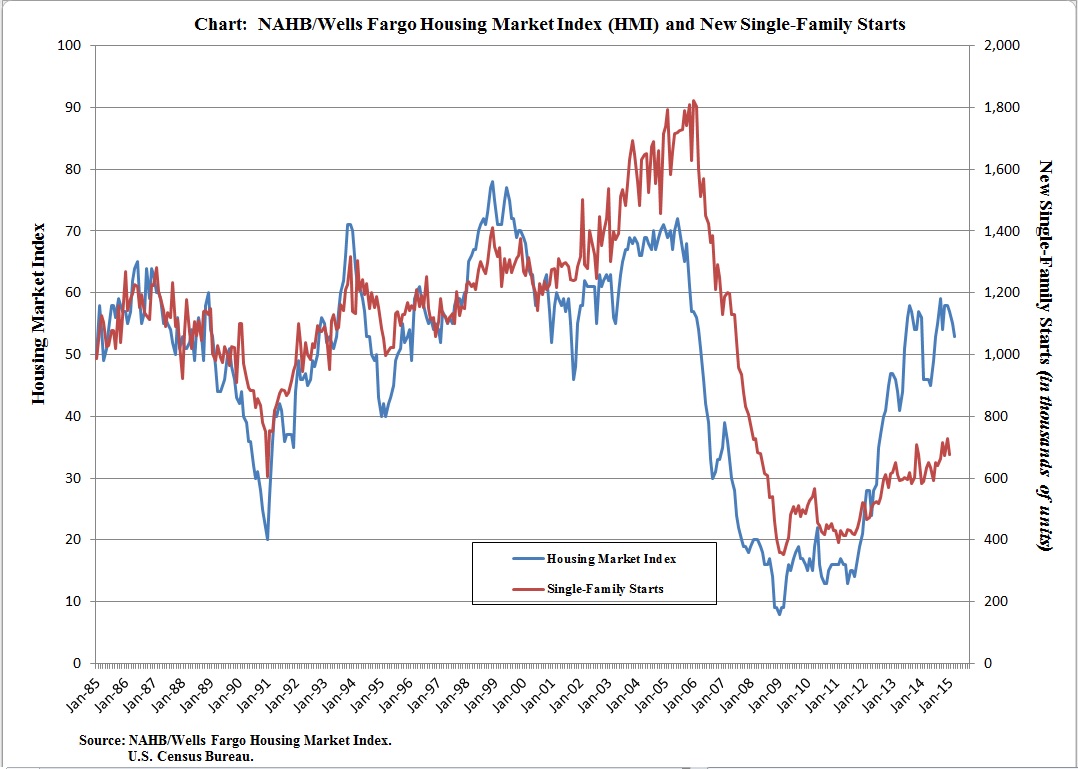
nahbhmi0318.jpg


On the other hand, you've so far demonstrated nothing but a combination of juvenile name calling and Breitbart sound bites, together with bizarre use of acronyms that you apparently don't actually know the meaning of. You are in no way acting mature and reasonable, and I'm damn sure going to point that out.

I sincerely hope that you eventually learn to look at data before forming opinions, develop the ability to reform your opinions when presented with information that contradicts them, and realize that childish name calling and mindless stereotyping is best left to junior high.
I too was super conservative and couldn't understand the idiocy those who didn't fit the mindset I was raised in when I was your age, so I get where you're coming from. Since then I got an engineering degree, served a full career in the military, went to a business school you'd be hard pressed to call socialist, and started two successful companies that now employee dozens of people, the first of which I started in 2008 so I actually lived through running a business in the time period you're talking about but apparently didn't really experience. This exposure to the rest of the world was very eye opening for me, and hopefully will be for you as well if you're able to listen to others. Notice that I didn't say I wanted you to become more liberal or even agree with anything I say. I'd much rather you were able to come up with your own well formed and supportable ideas that you could discuss intelligently than that you agree with me. A little humility on things you don't know and haven't experienced wouldn't hurt you either. I wish you luck on what looks to be a long journey.

Just for the heck of it, this is a pretty good post on the subject by a very thoughtful blogger...

http://www.calculatedriskblog.com/2018/01/update-for-fun-stock-market-as.html

Sure looks like trading the Obama rally was a lot more fun than trading the Trump one, innit?
 
If you've ever led anything you'd realize that is a central tenant to leadership in any field, knowing your limitations, humility in knowing that there is much you don't know, and the ability to listen to subject matter experts. I only wish we saw more of that today, you?
What positions have you held? What wisdom do you have to share?
 
PS the economists...i.e. the leftist economists predicted if Trump won the stock market would crash and the end of America was nigh. First thing that happened is the markets rallied and now one year later we are are having all time record highs almost daily. Companies are racing back to USA. New jobs being created. Now if we can just get rid of Nafta..opps that is another can of worms to open.

Marketsurfer had to flee in disgusts cause his price drivers failed. In fact Sig you could be marketsurfer incognito??? If you are, how are the book sales?

The market is rallying on promises and assumptions. He hasn't really delivered on much yet. Do you think policy changes are immediately reflected in the economy? It takes a year for effects to be visible, only now the US economy is starting to account for Trump's decisions (not promises).

Dollar is doing terribly and that'll start hurting some eventually but the exporters will enjoy it. It's also worth noting that other CBs are selling their dollars and buying Yuan and Euro.
 
What positions have you held? What wisdom do you have to share?
Well I was a military officer for 20+ years and have started 2 successful companies. So while I certainly don't claim to know everything about leadership (see my assertion that good leaders have humility in knowing what they don't know) I've certainly been a student of leadership for some time and have had the good fortune to get a lot of hands on experience. As for insights, I think I already provided those at least related to this conversation. A good leader knows their limitations, is humble in knowing what they don't know and to extend that knowing that there's a lot they don't know they don't know, and listens to subject matter experts. I'm not sure you'd find any successful leader outside the current POTUS who would disagree with that?
 
Looking back on recent US history there was one President who at the time seemed to have all the gifts of leadership. He looked good, sounded great but made a fatal mistake which subsequent leaders have endorsed without realizing circumstances have changed.
He was completely hopeless at Foreign Policy and got the US involved in Vietnam on the assumption that a country living in the stone age could not offer much resistance. How wrong he was.
Subsequent Presidents have spent shedloads of dollars on meddling in other country's affairs with not many positives to show for it. Trump thinks the answer is more expensive weapons. Is it ? I doubt it.
 
Back
Top