
The Limits of 'Made in America' Economics

Are you implying that the president usually is elected by only around 50% voters, however the whole congress is elected by 100% voters?

https://elitetrader.com/et/threads/chicago-boys.311728/page-3#post-4494597


No, that wouldn't be true in either case.
I'm saying presidents are recycled to manufacture the look of democracy, while shielding the true power. Not saying it was like this when we were founded, it's just what we've grown to become.

Now bear with me, I might sound like a loon for a minute.
The Fed controls the money supply, and the NY Fed to be precise is the most powerful entity in that system. The NY Fed is owned by the districts banks with the primary dealers allocated the top lot.
The board of governors is selected not by the president, but by the owners of the shares. Much like a private corporation.
Since the hand that gives is always above the hand that receives, and Washington has to borrow money to fund our country, are they not told what to do by the most powerful banks?

But hey, what do I know?
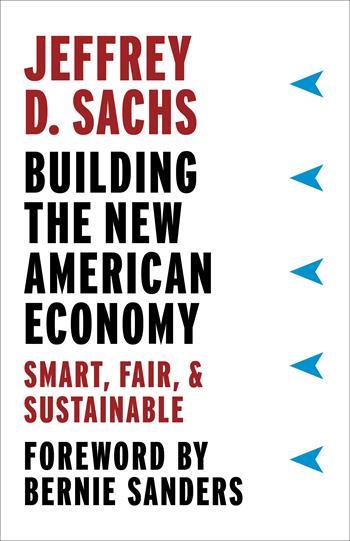
 
How about this book:

9780231184045.jpg


' My father famously declared that GDP "measures neither our wit nor our courage, neither our wisdom nor our learning, neither our compassion nor our devotion to our country; it measures everything in short, except that which makes life worthwhile." Jeffrey Sachs presents an economic vision beyond GDP, one that is based on compassion and sustainability, and that aligns with the globally agreed Sustainable Development Goals. This is a roadmap for America's future economic strategy. - Kerry Kennedy, president of the Robert F. Kennedy Center for Justice and Human Rights '


Foreword, by Bernie Sanders
Preface
Acknowledgments
1. Why We Need to Build a New American Economy
2. Investment, Saving, and U.S. Long-Term Growth
3. Decoding the Federal Budget
4. Sustainable Infrastructure After the Automobile Age
5. Facing Up to Income Inequality
6. Smart Machines and the Future of Jobs
7. The Truth About Trade
8. Disparities and High Costs Fuel the Health Care Crisis
9. A Smart Energy Policy for the United States
10. From Guns to Butter
11. Investing for Innovation
12. Toward a New Kind of Politics
13. Restoring Trust in American Governance
14. Prosperity in Sustainability
Suggested Further Readings
Notes

About the Author

Jeffrey D. Sachs is University Professor at Columbia University and serves as Quetelet Professor of Sustainable Development and professor of health policy and management at Columbia University. He is a New York Times best-selling author, and his books include The End of Poverty (2005), Common Wealth: Economics for a Crowded Planet (2008), The Price of Civilization (2011), To Move the World: JFK's Quest for Peace (2013), and The Age of Sustainable Development (Columbia University Press, 2015).
 
Maybe one day the average Joe in the US will realize the rich are just out for themselves.
Forget the blurb that is spouted at elections.
 
https://elitetrader.com/et/threads/...hing-else-entirely.311895/page-3#post-4503723
I think the US has reached a point of diminishing returns status. Her competitive advantage has become less and less from now on. Huge national debt!

Any further advance development in military and space would contribute little directly on her economy's future, possibly. Just like another Japan for the last 30/40 years.

The main reason is there will be not many products that the US produce but other countries cannot. Especially, the US brands in the international markets could be affected negatively due to current international relations, with Europe, ME, China, Asia, Canada, South America, etc.

For many of the current products, their patent protection periods are nearly gone. Protectionism could be useful for lasting just a bit longer, but no overall growth. Lack of money for building new infrastructure. Any war could make the US economy even worse. imo

My view is the US should merge ultimately with Canada and South America, to form a union like EU or the merge of west and east Germany. That could be the positive solution, after all, for the US. Based on the proven success of EU and Germany. The overall size of the cake/market/pool needs to grow into a bigger and bigger size, in order to grow the economy.

Japan should merge its economy closely with Korea, Taiwan and Indonesia in order to help/save Japan's growth.

ME should do the same, in order to attain final and lasting peace. Africa countries, too!

People should understand, war is the common enemy to them. War should be eliminated!

LOL

US vs Canada by year 2050

August 17, 2017

Canada Poised To Become A Global Superpower In 2050

https://www.narcity.com/ca/on/toronto/lifestyle/canada-to-become-a-global-superpower-in-2050

There are several analyses supporting this notion. One regards the dwindling of the United States' economy and international influence. By 2050, the U.S. is projected to no longer have the world's largest economy, with a GDP less than that of China and a per capita income with no more room for growth. India could even see itself surpassing the U.S., as it is poised to become the most populous country on earth with a projected 1.6 billion people.

Such provides a gaping window of opportunity for Canada to hurtle itself to the top. While it is projected to have a GDP of only $2.29 trillion, it will still have the resources, government, and cultural tolerance to establish itself as a serious player at the big table.
 
The US has refused or is unable to become competitive and therefore has to resort to artificial methods like tariffs. The bosses think it is preferable to move production offshore to low wage economies.
Will there be resurgence of Nationalism ? Perhaps more than flag burning but the trashing of foreign made cars etc.
 
A planned high inflation could provide huge tax incomes the US originally expected. But ...


08152017_Price_Index.gif


Does Weak Inflation Mean the Economy Is Worse Than It Looks?


By Anthony Mirhaydari
August 15, 2017

http://www.thefiscaltimes.com/Columns/2017/08/15/Does-Weak-Inflation-Mean-Economy-Worse-It-Looks

It wasn't supposed to be like this. The economic expansion is in its ninth calendar year. The unemployment rate has plummeted to 4.3 percent, down from more than 8 percent five years ago. Home prices have bounced back. The stock market has never been higher. And the Federal Reserve is in the third year of its monetary policy tightening, confident enough in the pace of economic growth to raise interest rates and hint at the start of a rollback of its bloated $4.4 trillion balance sheet.

And yet, a deepening pullback in the prices of everything from housing to cars and cellphone plans is pushing inflation down sharply.

This suggests that perhaps the economy isn't as robust as the Fed and the markets believe — and that the pace of rate hikes could be slowed. More worrisome, it suggests that the economy, already very late in its life cycle based on variety of measures, could be at risk of tipping into a recession if given a push in that direction (like, maybe, an armed confrontation between the United States and North Korea).
 
images


Will America Grow up Before It Grows Old?

Book by Peter George Peterson
3.2/5·Goodreads

The facts are plain: Social Security is headed for massive, unsustainable deficits in the next century. Politicians talk of a Social security "trust fund" but there are no hard assets in it--only government bonds. ... Google Books

Originally published: 1996
Author: Peter George Peterson
Genre: Non-fiction

Authored by the owner of the above web site. The 20th United States Secretary of Commerce.


Life and career

Peterson was born in Greece and came to America at 17 years of age, the son of Venet and George Peterson, Greek immigrants.[5] His father opened and ran a diner in 1923 after changing his name from Georgios Petropoulos.

https://en.wikipedia.org/wiki/Peter_George_Peterson

Peterson has been named the most influential billionaire in U.S. politics.[3]

On August 4, 2010, it was announced that he had signed "The Giving Pledge." He was one of 40 billionaires, led by Bill Gates and Warren Buffett, who agreed to give at least half their wealth to charity.[4] Most of his giving has been to his own foundation, The Peter G. Peterson Foundation, which focuses on raising public awareness about long-term fiscal sustainability issues.
 
Last edited:
A planned high inflation could provide huge tax incomes the US originally expected. But ...


08152017_Price_Index.gif

The wanted inflation has still not arrived yet. ...

Aug 17 2017

'Stunning admission': Federal Reserve admits inflation modelling needs a fix

If the Fed is unsure about what really will boost inflation, what hope has everyone else got?

http://www.afr.com/markets/equity-m...flation-modelling-needs-a-fix-20170817-gxy8c7

If it's true that the first step towards fixing a problem is admitting that you have one, then the US Federal Reserve is on its way to finding out why inflation is so low right now.

As every economist knows, the Fed's main job is to target inflation at 2 per cent, but since 2012 it hasn't really come close.
 
Last edited:
Back
Top