My biology made me do it? Why some voters may embrace the right
The way your body automatically responds to a threatening picture is strongly linked to how likely you are to favour right wing populism, saysJohn Hibbing
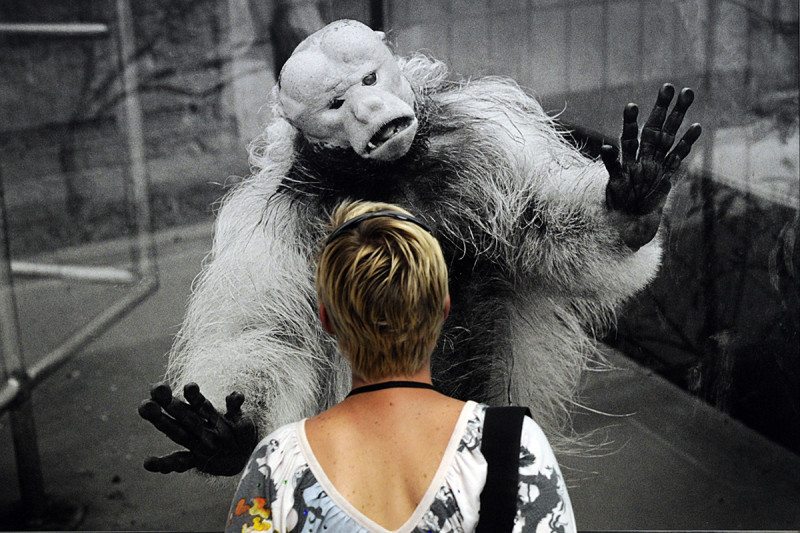
What are you afraid of?
Boris Horvat/Getty
ByJohn Hibbing
A cute bunny or a coiled snake? If given the choice of looking at happy or ominous images, humans spend more time on the ominous ones. We also remember threatening stimuli more readily and display heightened physiological responses to them. This makes perfect evolutionary sense since organisms not attuned to threats in the environment are less likely to survive and prosper.
Such tendencies, however, often mask a lot of variation in response.Certain people are significantly more “threat sensitive” than othersand react more strongly to threats. They typically favour policy proposals that would seem to mitigate threats. You might think those attuned to threats should be especially likely to want to do something about them.
But here is where things get interesting. All threats are not created equal and elevated threat sensitivity appears to favour some policy areas rather than others.
For example, those who have measurably higher levels of threat sensitivity – recorded via changes in skin conductance, for example, when presented with a threatening image – are more likely to support law and order policies such as mandatory sentences and the death penalty, increased defence spending, restrictions on immigration, gun rights, unifying, patriotic displays, and traditional lifestyles such as heterosexual families.
At the same time, those registering high on indicators of threat sensitivity do not seem to be especially supportive of policies targeted at other potential threats such as those created by climate change, gun accidents, or by a failure of international diplomacy.
Right-wing similarities
Explaining these inconsistencies seems particularly important in the wake of the US elections, but also because we see similar patterns among supporters of right-wing people’s parties around the world.
Why are the predominantly conservative and therefore mainly threat sensitive supporters of Donald Trump so eager to restrict migration, to treat lawbreakers harshly, and to elevate their group above all other groups by “making America great again” when they are remarkably sanguine about the long-term dangers of global warming?
Part of the answer may lie in the contours of human evolution. Throughout our history as a species, the primary threats we faced emanated from other human beings, either from members of the tribe over the hill or from members of our own group breaching accepted norms of behaviour.
Given the length of time we existed in hunter-gatherer bands, threats from out-groups and from in-group violators of the norm may have become ingrained in our social defence mechanisms. Modern problems such as global warming have no evolutionary correlate and therefore convincing people of their dangers is likely to be a much tougher sell.
We are intensely social creatures and the threats that motivate us to take political action are likely to be social. Longer-term, abstract, non-social threats require extra work from humans, especially those busy dealing with the social threats they think they see in their immediate environment.
None of this is to say larger, modern, non-social threats are unimportant; only that, somewhat ironically, recognition of their importance may not come naturally to threat sensitive individuals.
It may be no coincidence that the candidate to rise out of a threat-sensitive voter base was not a tree-hugging, planet-saving environmentalist but rather an isolationist, anti-immigrant, law-and-order populist. And with populists emboldened and a common biology to tap, more could follow elsewhere.
https://www.newscientist.com/articl...-do-it-why-some-voters-may-embrace-the-right/
The way your body automatically responds to a threatening picture is strongly linked to how likely you are to favour right wing populism, saysJohn Hibbing
What are you afraid of?
Boris Horvat/Getty
ByJohn Hibbing
A cute bunny or a coiled snake? If given the choice of looking at happy or ominous images, humans spend more time on the ominous ones. We also remember threatening stimuli more readily and display heightened physiological responses to them. This makes perfect evolutionary sense since organisms not attuned to threats in the environment are less likely to survive and prosper.
Such tendencies, however, often mask a lot of variation in response.Certain people are significantly more “threat sensitive” than othersand react more strongly to threats. They typically favour policy proposals that would seem to mitigate threats. You might think those attuned to threats should be especially likely to want to do something about them.
But here is where things get interesting. All threats are not created equal and elevated threat sensitivity appears to favour some policy areas rather than others.
For example, those who have measurably higher levels of threat sensitivity – recorded via changes in skin conductance, for example, when presented with a threatening image – are more likely to support law and order policies such as mandatory sentences and the death penalty, increased defence spending, restrictions on immigration, gun rights, unifying, patriotic displays, and traditional lifestyles such as heterosexual families.
At the same time, those registering high on indicators of threat sensitivity do not seem to be especially supportive of policies targeted at other potential threats such as those created by climate change, gun accidents, or by a failure of international diplomacy.
Right-wing similarities
Explaining these inconsistencies seems particularly important in the wake of the US elections, but also because we see similar patterns among supporters of right-wing people’s parties around the world.
Why are the predominantly conservative and therefore mainly threat sensitive supporters of Donald Trump so eager to restrict migration, to treat lawbreakers harshly, and to elevate their group above all other groups by “making America great again” when they are remarkably sanguine about the long-term dangers of global warming?
Part of the answer may lie in the contours of human evolution. Throughout our history as a species, the primary threats we faced emanated from other human beings, either from members of the tribe over the hill or from members of our own group breaching accepted norms of behaviour.
Given the length of time we existed in hunter-gatherer bands, threats from out-groups and from in-group violators of the norm may have become ingrained in our social defence mechanisms. Modern problems such as global warming have no evolutionary correlate and therefore convincing people of their dangers is likely to be a much tougher sell.
We are intensely social creatures and the threats that motivate us to take political action are likely to be social. Longer-term, abstract, non-social threats require extra work from humans, especially those busy dealing with the social threats they think they see in their immediate environment.
None of this is to say larger, modern, non-social threats are unimportant; only that, somewhat ironically, recognition of their importance may not come naturally to threat sensitive individuals.
It may be no coincidence that the candidate to rise out of a threat-sensitive voter base was not a tree-hugging, planet-saving environmentalist but rather an isolationist, anti-immigrant, law-and-order populist. And with populists emboldened and a common biology to tap, more could follow elsewhere.
https://www.newscientist.com/articl...-do-it-why-some-voters-may-embrace-the-right/