
Maybe I could give you my actual trade data from Feb and March?I backtested more combination of the Mar 2020 meltdown.
I am too incompetent, just couldn't make either the near-long/far short or near-short/far-long hedges worked unless I timed it, set one up just prior to the meltdown.

You are using an out of date browser. It may not display this or other websites correctly.
You should upgrade or use an alternative browser.
You should upgrade or use an alternative browser.
The Beauty of Options - Portfolio Insurance at a Discount
- Thread starter Sweet Bobby
- Start date

Kind of embarrass to say, I wrote my own BSM equation in excel. I validated the codes with actual option chain data.Chef, what backtesting program were you using? I'm about to start testing myself. I appreciate your input.
With it I can compute calls and puts over any scenarios I want to test. Normally I use HV as a proxy for IV. I can also reverse the codes using market option chains to compute IV. This gives me flexibility to run analysis forward and backward.
In this case:
1. Downloaded historical SPY.
2. Used historical VIX as proxy for near month IV, back month I floated (I don't have data for term structure). Probably not critical if I was looking for first order effects.
3. Ran a few March crash scenarios (different long/short set ups) to see the net outcome of a long/short portfolio insurance.
Invariably, at the time of the March 2020 crash, to first order the net long/short at that moment dominated the outcome. Intuitively this makes sense to me.
I hope @Sweet Bobby will critique this and point out any mistakes I made because the devil is in the details. I am quite sure he has his secret source, just like you have yours.
That would be helpful. Thanks.Maybe I could give you my actual trade data from Feb and March?
Chef, I will send the data to you after the market closes today.That would be helpful. Thanks.
I spent many sleepless nights thinking about this.
- Portfolio hedge. If in @Sweet Bobby's case, I put on his hedge from the get go right after I wrote my puts, I would end with zero profit?
No.
For everyone interested in Tal risk management, I strongly advise to read a 4 part series written by Mark Spitznagel here:
https://www.universa.net/riskmitigation.html
They are as good as one can get with public information
For example, he says (bold is mine):
“
Achieving higher sustained CAGRs through volatility tax savings is the name of the game in risk mitigation; it is precisely how risk mitigation adds value. All such strategies aim to do it, but not all are created equal. They all ultimately require a tradeoff between the degree of loss protection provided (the amount of the portfolio’s negative compounding that is avoided) versus the degree of opportunity cost paid by the allocation of capital to that protection rather than to the rest of the portfolio (or the amount that the portfolio’s arithmetic average return is lowered). These are the two sides of the safe haven coin, and we can only measure each side vis-à-vis the other. Evaluating this highly nonlinear tradeoff is tricky, and is fraught with mathematical mistakes, as the effect on the volatility tax is often indirect or invisible. The best risk mitigation solution can be a counterintuitive one.
“
2. I hedge after my initial position generated a profit to protect that profit?
It depends. If you feel you need an hedge, you have to evaluate the cost and benefit, and value if you couldn’t be better off closing all legs og the position and take all your profit at once. Some “option trainers” show you a position you can keep at zero risk of loss (meaning, you don’t have losses for any price of the underlying). But there’s no magic here, it’s just a strong marketing tool: only way to get these “no risk positions” is with different trades in different times, meaning you had a risk in the past and now you can book a profit for having assumed that risk.
3. Assume I have case #2. I can hedge one put with some long puts. how many depends on expiration and strike. And of course the cost should be reasonable.
4. So, the hedge of a short put is some long OTM puts. This is just a spread. If the longs have a longer expiration, it is some diagonal.
Not always. You can hedge with VIX futures, VIX options, VIX ETF’s and their options, you can even hedge with Swiss Franc or even some bonds, The limit is only your creativity, and… some solid backtest.
6. What if I sell some puts to reduce the cost of a hedge? This is now @Sweet Bobby's portfolio insurance.
7. It is not free or riskless. Another short put increases the risk when a black swan hits and the portfolio is now not fully protected.
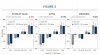
Yes, sort of. If you look the jpeg (yes, Mark Spiznagel again, "insurance" is the tail risk strategy), you see that one cannot protect everything , the cost would be enormous. My guess is, what some of the best players are doing, they accept loosing on a 10% correction of the S%P, but they want to protect against a 30% correction.
Everyone is afraid of crash, not of a simple “correction”. Moreover, the volatility tax, (as Mark call it) is non linear, and is affecting more than 3 times a 30% correction (compared to a 10% one).
8. I used BSM and some real SPY + VIX data to try recreate/backtest the hedge.
Good, I wish I had the time, patience and skills to do the same!
Just remember that with VIX you can get “synthetic option price” only for ATM, and for one expiration (21-22 business days).For example, you miss entirely the skew and the term structure.
This way, you can have an idea of backtesting very simple option strategy (e.g. one short straddle on ine delivery…) , but not the ones we’re talking here.
I have a feeling @Sweet Bobby was either lucky or he was hiding his real method.
As they say…better lucky then smart…..
Ok no kidding.
I had a look of some videos by Ron Bertino, trying to find where he speakes about “fake theta” of OTM options (I haven’t found it, by the way, he talks a lot about theta of OTM options, but just repeating they decay different from ATM…. which is hardly a news… r.g. also Bittman in his more recent book explains the subject).
What Bobby seems to do is very similar to what Ron Bertino proposes: some “income traders” (as of they could exist…. if I could… I’d ban the use of “income” and “option” in the same sentence) , and some sort of downside protection (he talks about a “black swan hedge” but the details are private, so one has only his word for it, unless - of course - one buys his course.....).
Quote frankly, I used a lot of “fast forward”, so I don’t have all the nuances and I don't want to be tranchant with just one vendor (boy! there are so many who tell the same old story!!) , but – generally speaking - if I had a friend willing to trade that way I’ll probably oblige him to write 100 times on a blackboard…
In option trading the passage of time is not an edge (and neither always is IV > HV)…
In option trading the passage of time is not an edge (and neither always is IV > HV)…
In option trading the passage of time is not an edge (and neither always is IV > HV)…
Take care.
Attachments
Last edited:
Your responses are extremely helpful. Thank you.Just remember that with VIX you can get “synthetic option price” only for ATM, and for one expiration (21-22 business days).For example, you miss entirely the skew and the term structure.
This way, you can have an idea of backtesting very simple option strategy (e.g. one short straddle on ine delivery…) , but not the ones we’re talking here.
A specific response on this comment:
Coding my own BSM came out of a homework assignment I did when I attended a Coursera online class on VBA excel.
It is good for study general relationships. I can run time series, vary IV, strikes, underlying. I can input historical underlying and premium and see how IV changes and compare to HV. I can run Monte Carlo or run different distribution function...
The limitation: Good for first order effects but not good enough to trade or analyze microstructures.
For example I can use it to get general rules on trading straight call/put but not accurate enough for spreads, flies...
Have a good day.
I have very lumpy returns over the years including this March. Looked to hedge since started trading full time in 2010 but haven't found anything cheap.It depends. If you feel you need an hedge, you have to evaluate the cost and benefit, and value if you couldn’t be better off closing all legs og the position and take all your profit at once. Some “option trainers” show you a position you can keep at zero risk of loss (meaning, you don’t have losses for any price of the underlying). But there’s no magic here, it’s just a strong marketing tool: only way to get these “no risk positions” is with different trades in different times, meaning you had a risk in the past and now you can book a profit for having assumed that risk.
I decided a few years back that the best hedge was time. As long as I had a hard lower limit on my portfolio value, time would smooth/cure any short term losses. So I focused on maximum absolute return instead of risk adjusted. Do you have any opinion on this?
Regards,
After thinking about this some more and running a few more tests, I agree my thesis of buying far and selling near is flawed. When the s**t hits the fan, far does not protect as well as near.Well, Weeklies are expensive, so people like to sell. But they are expensive for a reason.
Also, people like to buy FAR because these FAR options have less theta. Problem is …. by now you already know….. if you have less theta, you also don’t have much gamma.
Moreover, FAR options have the biggest VEGA but…. IV for a distant expiration move much less than the first delivery, so this VEGA doesn’t protect you when you are short of weeklies, and the VEGA of the short weeklies blows up in one’s face.
Formally speaking, as Taleb, (once again) explained, VEGA is not additive on different expiration cycles, which means you cannot algebraically sum up VEGA SHORT DATED with VEGA LONG DATED (Taleb also proposes a correction factor, but also his solution is just a roughly approximation).
The big boys (e.g Susquehanna, Wolverine etc..) treat this matter as strictly confidential , and there’s not a set of rules and procedures commonly accepted.
And, if I want to limit my risks, a spread is a lot simpler.
Today was a great day because I was able to harvest 9 of my short puts for 20 cents. The beautiful thing about harvesting is it leaves me with a lot of long puts with 35 days to expiration. That's pretty good protection going forward.
I bought two tranches of my hedge outright today just to beef up the hedge. On Monday, I will be looking to finance the hedge with a condor on a down move or possibly a call credit spread on an up move. The cool thing about my strategy is that you just trade what the market gives you.
I'm praying for a crash, but playing for profits regardless of what the market gives me. I hope you all have a wonderful weekend!
I bought two tranches of my hedge outright today just to beef up the hedge. On Monday, I will be looking to finance the hedge with a condor on a down move or possibly a call credit spread on an up move. The cool thing about my strategy is that you just trade what the market gives you.
I'm praying for a crash, but playing for profits regardless of what the market gives me. I hope you all have a wonderful weekend!