
The ACD Method

One thing I would argue with ACD is that, unlike what Fisher talked about originally, it DOES work on thin markets, just not intra-day. I saw on another forum posters mocking the idea of anyone actually trading dairy products. I agree, butter isn't really tradeable, but things like milk and lumber do actually work with ACD if your timeframe is days rather than minutes.

But then again, I'm a little different, and likely do not fit in with 99% on ET...which I don't see as a bad thing ;)

I would argue ACD works even better on less liquid and less "watched" stuff because you have less noise. The more liquid something is, generally the more noise you have to tolerate.
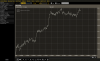
 
Here you go guys: SPY/EEM
 

Attachments

  • 2015-09-04-PROPHET.png
    2015-09-04-PROPHET.png
    58.7 KB · Views: 111
Mav/King, strong $ is deflationary sure but why is Eurozone grappling with deflation given that the euro is about 20% weaker than it was against the commodity currency/greenback?
Thanks for R.Pal vid Mav...gains more kudos when one knows it is from January.

For one, demand completely fell off the map in the PIGS countries and Germany's economy has weakened considerably. Lower currency prices can provide some support but overall demand is weaker. When you look at Bund yields they are showing that there is no chance in hell that Europe is going to generate growth for a considerable period of time. Remember, Europe is a much more state stimulated economy then the US and Asia. And as government debts increase, government spending has to decrease. Europe might become the next Japan where they have another decade of zero real growth.
 
Last edited:
What lies ahead.....

This is not a prediction but rather an observation of current conditions and how they played out in the past. Bull markets end violently. The first major correction near the highs is usually NOT the top. It's just enough to shake out the marginal buyers and draw in marginal shorts. What usually happens after is quite significant. The most volatile and parabolic leg of the bull market usually commences. This means not only a move to new highs but a violent move to new highs. In some case this last leg can go significantly above the old highs but the action is so violent and fast. That last high IS the final high and prices at that point can and usually do enter a bear market that on avg lasts 12 to 18 months.

The economic theory behind this behavior is rather fascinating. I can discuss that more if anyone wants me to. But it's just something to keep in mind. That means I would venture to guess we see this move take place into year end and early next year with the top coinciding around Feb to April.
 
What lies ahead.....

This is not a prediction but rather an observation of current conditions and how they played out in the past. Bull markets end violently. The first major correction near the highs is usually NOT the top. It's just enough to shake out the marginal buyers and draw in marginal shorts. What usually happens after is quite significant. The most volatile and parabolic leg of the bull market usually commences. This means not only a move to new highs but a violent move to new highs. In some case this last leg can go significantly above the old highs but the action is so violent and fast. That last high IS the final high and prices at that point can and usually do enter a bear market that on avg lasts 12 to 18 months.

The economic theory behind this behavior is rather fascinating. I can discuss that more if anyone wants me to. But it's just something to keep in mind. That means I would venture to guess we see this move take place into year end and early next year with the top coinciding around Feb to April.
I'm going to have to agree with you, but I think we're looking at November to January.
 
Are you not counting Octobers sell off as a correction? It was pretty violent and we ran to highs. My bias is we've topped but I'd be interested in hearing the economic theory behind it.
 
What lies ahead.....

This is not a prediction but rather an observation of current conditions and how they played out in the past. Bull markets end violently. The first major correction near the highs is usually NOT the top. It's just enough to shake out the marginal buyers and draw in marginal shorts. What usually happens after is quite significant. The most volatile and parabolic leg of the bull market usually commences. This means not only a move to new highs but a violent move to new highs. In some case this last leg can go significantly above the old highs but the action is so violent and fast. That last high IS the final high and prices at that point can and usually do enter a bear market that on avg lasts 12 to 18 months.

The economic theory behind this behavior is rather fascinating. I can discuss that more if anyone wants me to. But it's just something to keep in mind. That means I would venture to guess we see this move take place into year end and early next year with the top coinciding around Feb to April.

Interesting. It is possible to create a possible fundamental story for such a scenario. Lets say Fed delays interest rates rise until next year which provides some boost to the market. This would even bring some speculations about QE4 which market would have to discount into price. More importantly problems in emerging markets would still provide capital flows to US and because of low interest rates good chunk of it would end up in stock market. This could really provide fuel for a violent and fast move up. Of course next year rate rise eventually happens and party will be over. At least that could be the story in cnbc if this move indeed happens. I am very interested to hear economic theory you were talking about :)
 
Back
Top