Tell Me Why This Simple Strategy Won't Work

You would have a better chance waiting for a fundamental change in a currency. Something like a rate hike/cut/QE ect.. BOJ is probably still the best option since it's not a set time of the announcement the algos can't grab it as quickly and you have a shot at getting a better price. Obviously EUR is supposed to be the next to do QE but the way they have been slowly leaking the details it could make the trade a lot harder to get any edge into.

Your strategy would only work it sounds like if you got instant edge which is tough to do without looking for small wins.

You would probably be better off splitting your stake into 2 separate accounts. In one account buy a biotechnology stock in the other account short the same stock. You will take tons of losses and probably never get one to work but just maybe you will get a stock that goes from $3 to $500. Even then your losses probably won't be made back. Moral of the story, random trading is deadly.
 
What was your last trade that you took a loss on?

If this question is for me, it was a AUD USD Trade that I took a loss of about 4pips on.
I'm currently trying a similar strategy to the one I described except instead of trying to double my account on
each trade, I try to at least make up my cumulative losses up till that point. Plus a small profit.

For instance, attached is yesterdays series that ended with a cumulative gain.
The last trade was an 8pip gain that made up for everything else.
 

Attachments

  • Capture01XScratches.JPG
    Capture01XScratches.JPG
    196 KB · Views: 48
Last edited:
1. You Go Short (Or Long) a Pair.
2. Your Stop Loss Is 3 or 4 pips (Or Some Small Arbitrary number that you pick and stick with)
3. Your Profit Target For Each Trade Is To Double Your Account.
4. You Never Go Short (Or Long) at a Higher (Or Lower) Level Than the Previous Trade.
5. You keep Your Risk At Fixed Percentage of Your Account Always (Say 1 or 2percent)
6. No matter how deep the drawdown gets, you keep doing this.


Tell me the flaw in this ?

The flaw with going short certain products ie commodities is that your gain is capped instead going long with unlimited gain potential.If you're doing FX make sure you know who is printing more than who. If it had a 1:20 or greater Risk:Reward ratio it might stand a chance to overcome spread and comish. Cut loss, let winner run. Although your win rate would be very low which not many can handle that.

If you have a 5 pip stop and 1 pip of spread factored into that. You'll have to make 20% a year just to break even.

Perhaps you look into a larger stop.

I'd try a 20-100pip stop with 1:5- 1:10 Risk:Reward


Test your hypothesis . Stick with what works and discard what doesn't.

Find a consistent reason for entry and test .
 
Last edited:
The problem with this strategy is that you will experience a long string of losses that will mount up and blow up your account. The 3-4 pips is within the noise level of any actively traded currency pair. Money management is important, but having a system that has an edge is also very important. Trading noise will never work.

yes, exactly - were it not for noise, trading would be sooooo easy. The pairs that move the most are more jittery when you zoom in. There is no pair with tiny spread and really smooth constant nice volatile moves.

I never understood the people who say, just find a system that always loses and place the opposite trades. Seems they never thought that through.

a flaw is #2 having a stop loss. A good way is to have an emergency stop loss, but exit the trade usually before it gets there. Otherwise if you have stop loss too tight you lose a lot more trades.
 
Last edited:
1. You Go Short (Or Long) a Pair.
2. Your Stop Loss Is 3 or 4 pips (Or Some Small Arbitrary number that you pick and stick with)
3. Your Profit Target For Each Trade Is To Double Your Account.
4. You Never Go Short (Or Long) at a Higher (Or Lower) Level Than the Previous Trade.
5. You keep Your Risk At Fixed Percentage of Your Account Always (Say 1 or 2percent)
6. No matter how deep the drawdown gets, you keep doing this.


Tell me the flaw in this ?

As replies have already said, there are many basic assumptions here which doom such a strategy to failure. My specialty is actually "micro scalping". By way of definition, "micro scalping" is looking for targets in the 5-15 PIP range, and "nano scalping" involves targets in a 2-5 PIP range. But achieving this precision requires specialist technique, analytics, platform and trading venue. Guessing cannot work. And a "Martingale" or similar doubling-up on loss positions until they become winners, also will not work (unless you are infinitely rich).

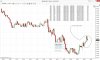
Instead, as in all trading, technical analysis is required to determine trade direction. In the case of micro/nano scalping, those analytics look like the attached image which is able to resolve trades within a narrow range of price movement by selecting key entry points through Depth of Market analysis. For this style is it necessary to identify key pivots where Market Movers are turning, as shown. Even here there is a degree of interpretation involved.

HyperScalper

MarkersInUSDJPY.PNG


HyperScalper
 
A good way is to have an emergency stop loss, but exit the trade usually before it gets there. Otherwise if you have stop loss too tight you lose a lot more trades.

Do you mean, like, don't set a 20 pips stop because that will get knocked out easily. Instead set an emergency stop at 30 pips. Then when the loss reaches 20 pips, you manually exit ?

Given that you already know small stops cause losses, and larger stops causes less losses, isn't it more logical to continue to increase the stop loss size until there are no losses ?
 
Last edited:
Do you mean, like, don't set a 20 pips stop because that will get knocked out easily. Instead set an emergency stop at 30 pips. Then when the loss reaches 20 pips, you manually exit ?

no what I meant was exit when it's time to exit (depends on the situation)... depends on each trade and what's going on. I guess that's harder if your coding strategies, but in manual trading it's not a problem to do since you are at the computer anyhow.

I mean have a stop to handle situations like power or internet loss but otherwise close the trade yourself before it gets there.

Ok, maybe some people will still want to use a fixed stop loss - which is ok if it works for them, the thing is just to make sure you don't have a tight stop loss producing a constant string of losses.
 
no what I meant was exit when it's time to exit (depends on the situation)...


Just another word for random exit then ? The OP is already working on a random entry. Now he can add on a random exit, and the strat would be complete.
 
Back
Top