SCTlearning from scratch

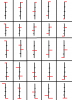
2. Now draw all the variations on step 1. and do it in an organized manner

I made several messes doing Step 2

It was kinda pain to get organized

Finally on paint i did 5 by 5 as time saver

I feel so dumb at times.. not like planting corn

5by5.png
 
Last edited by a moderator:
Price Case Expressions

thanks for this follow up.

you have the expressions for each crital part of pair relationship.

Fine job.

You have also used the convention mentioned in step 1 of post 4.

This, quite nicely, brings up the coding part of making an ATS for SCT

expressions for each end and be combined into a "function" of the whole relationship of the pair.

To do this a simple addition is made.

you use ( ) around each expression and "AND" them together.

so who invented this approach
Carnap did and it is called logic theory

So now we wll be using logic to learn.

All learning is deductive and induction is not allowed.

so now you can read A. Lo of MIT in the light of an inductive process that is invalid/
 
2. Now draw all the variations on step 1. and do it in an organized manner


I made several messes doing Step 2

It was kinda pain to get organized

Finally on paint i did 5 by 5 as time saver

I feel so dumb at times.. not like planting corn


edwina.

wow you are same as redneck in post # 9.

I see a differently oriented solution. RN is horizontally oriented (congrats to him) and you have tradtional vertical orientation of CW type potential trader.

Go on to step 3


dont save up anwers and post a group in future
because it is better to have a chain of conversations

In the past several matrices have been posted
some were 4x4's and so on

for any given bar volatility there is a square matrices
 
Thanks for reply,

I've tried "always in methods" in the past intra day with market orders and just get chopped to death essentially giving whoever was on the other side using limits a good trade and my broker comish. I used a Darvas style method. buying at the breakout of the box, selling breakdowns of the box. Now I essentially do the opposite with limits intraday and that works way better for me. Kind of like market making in a range.

Contrary, On larger timeframes where commission and spread aren't an issue (daily/weekly charts) the darvas box breakouts work for me . (rectangles) as well as the other "CW " patterns I mentioned.

So are you the guy using limits intraday or market orders?

Are you recommending the beginner here use limits or market orders for this method you are teaching?
 
Okay, I added the lateral to the chart and did my best with the algebraic expressions. I was not sure exactly how to express the lateral. I know there are more intricacies one a lateral is established--like the low of bar.0 can be lower as long as it closes inside the lateral. Is that to be included in the expression as well?

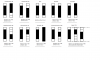
I drew the "bounds" of a lateral. I also just went ahead and labeled the price cases.

Who is A. Lo of MIT? Is there something I should read for clarification?

Price Cases-1.png
 
Last edited by a moderator:
For those that use SierraChart, here is my code to determine price case.
Sierrachart uses the C++ programming language.

Hello Jack!

Code:
#include "sierrachart.h"

enum PricecaseEnum 
{
	PC_UNKNOWN = -0xBAD,
	PC_XB = 1, // Translation Black -$$$$-
	PC_XR = 2, // Translation Red -$$$$-
	// Outside bars
	PC_OUTB = 3,
	PC_OUTR = 4,
	PC_OUT_DOJI = 5,
	// Lateral Formations ALWAYS begin with 
	// one of the following PriceCases... 
	PC_HITCH = 10,
	PC_FTP = 11, // Flat Top Pennant
	PC_FBP = 12, // Flat Bottom Pennant
	PC_SYM = 13, // Symmetrical Pennant
	PC_STB = 14, // Stitch Black
	PC_STR = 15, // Stitch Red
};


PricecaseEnum GetPriceCase(SCBaseDataRef InData, long index)
{
	// Determine Pricecase of 2 adjacent price bars (index & index-1)
	// Lateral formations are NOT determined here as only
	// a ***possibility of the start*** of a lateral formation can
	// be determined using 2 bars. (see PricecaseEnum)
	
	// IsLateral and TrackLateral honor lateral user settings 
	// and lateral specific vars, and handles monitoring at least a minimum 
	// 3 bar lateral formation and ultimate end of lateral movement.  
	
	float H0 = InData[SC_HIGH][index];
	float H1 = InData[SC_HIGH][index - 1];
	float L0 = InData[SC_LOW][index];
	float L1 = InData[SC_LOW][index - 1];

	if (H0 > H1 && L0 > L1)
		return PC_XB;

	else if (H0 < H1 && L0 < L1)
		return PC_XR;

	else if (H0 == H1 && L0 == L1) 
		return PC_HITCH;

	else if (H0 == H1 && L0 > L1) 
		return PC_FTP;

	else if (H0 == H1 && L0 < L1) 
		return PC_STR;

	else if (L0 == L1 && H0 < H1) 
		return PC_FBP;

	else if (L0 == L1 && H0 > H1) 
		return PC_STB;

	else if (L0 > L1 && H0 < H1) 
		return PC_SYM;

	else if (L0 < L1 && H0 > H1)
		// Outside Black or Red or 
		if (InData[SC_LAST][index] > InData[SC_OPEN][index])
			return PC_OUTB;
		else if (InData[SC_LAST][index] < InData[SC_OPEN][index])
			return PC_OUTR;
		else
			return PC_OUT_DOJI;

	else 
		return PC_UNKNOWN;

}

Tahnks for introducing the levels of coding (using C++). some coding is a reference look up type and other coding is process in real time coding.

the reference coding for the system of operation of the markets comes in just a few look up tables.

we will have a look up for price, for volume, for end effects, for making money (2). and for compartmentalizing the End effects into ten subsets.

all of this is just a little larger than the alphabet in terms of annotation symbols.

so now we have the boundaries of the system in terms of knowledge reference system tables

We will build mind as simple computer with "perception" that operates faster than the markets operate.

so we will move to "anticipation" oreintation


So we are seeing many and diverse contributions that
 
Okay, I added the lateral to the chart and did my best with the algebraic expressions. I was not sure exactly how to express the lateral. I know there are more intricacies one a lateral is established--like the low of bar.0 can be lower as long as it closes inside the lateral. Is that to be included in the expression as well?

I drew the "bounds" of a lateral. I also just went ahead and labeled the price cases.

Who is A. Lo of MIT? Is there something I should read for clarification?

Yes the lateral is a more complex internal market interlude.

we will build minds to be able to express it in logic using a RDBMS approach.

This is where CW has never gone. CW has a risk and betting orientaion through inductive reasoning. Science does not follow this procedure.

We will see just where a complete algorithm comes from and why and how the complete HS required a dictate PM. (See Keynes)

Hang on for a few days.
 
Thanks for reply,

I've tried "always in methods" in the past intra day with market orders and just get chopped to death essentially giving whoever was on the other side using limits a good trade and my broker comish. I used a Darvas style method. buying at the breakout of the box, selling breakdowns of the box. Now I essentially do the opposite with limits intraday and that works way better for me. Kind of like market making in a range.

Contrary, On larger timeframes where commission and spread aren't an issue (daily/weekly charts) the darvas box breakouts work for me . (rectangles) as well as the other "CW " patterns I mentioned.

So are you the guy using limits intraday or market orders?

Are you recommending the beginner here use limits or market orders for this method you are teaching?

THE CW which uses risk and bettingin the OODA routine context favors placing bets with limit orderwhich function in a FIFO manner and which become market orders at end of FIFO line.

Risk comes from not having a complete system of the market operations.

As you are seeing we are dealing with market info mation as found in a mental computer that always "knows it knows" with certainty. So we know to develop a complete system using deduction to complete the system


WE use MADA as a certainty based routine
All thrend segments have three parts: two ends and a middle

ends are moments and middles span time in an Order Of Events


all of this is rejected by the CW belief system based upon OOda betting and risk. too bad for those folloers
 
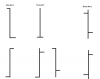
3. in some manner determine how many unilateral parts a bar may be broken into.

Here are the 3 kinds i found

am a little messy but it is three kinds i know now

part3.png
 
Last edited by a moderator:
3. in some manner determine how many unilateral parts a bar may be broken into.


Here are the 3 kinds i found


am a little messy but it is three kinds i know now

this is correct

leg, 2 leg and three leg

we can use yours and RN's 5x5 to circle the three kinds

here is the drill
;
open in paint

get ellpses or cicles on paint


use blue ciclres to do 1 legs there are two

use red circles to do the two legs ones; there are 12.

leave rest alone; most are three legged
 
Back
Top