#include "sierrachart.h"

enum PricecaseEnum
{
	PC_UNKNOWN = -0xBAD,
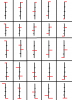
	PC_XB = 1, // Translation Black -$$$$-
	PC_XR = 2, // Translation Red -$$$$-
	// Outside bars
	PC_OUTB = 3,
	PC_OUTR = 4,
	PC_OUT_DOJI = 5,
	// Lateral Formations ALWAYS begin with
	// one of the following PriceCases...
	PC_HITCH = 10,
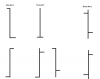
	PC_FTP = 11, // Flat Top Pennant
	PC_FBP = 12, // Flat Bottom Pennant
	PC_SYM = 13, // Symmetrical Pennant
	PC_STB = 14, // Stitch Black
	PC_STR = 15, // Stitch Red
};


PricecaseEnum GetPriceCase(SCBaseDataRef InData, long index)
{
	// Determine Pricecase of 2 adjacent price bars (index & index-1)
	// Lateral formations are NOT determined here as only
	// a ***possibility of the start*** of a lateral formation can
	// be determined using 2 bars. (see PricecaseEnum)

	// IsLateral and TrackLateral honor lateral user settings
	// and lateral specific vars, and handles monitoring at least a minimum
	// 3 bar lateral formation and ultimate end of lateral movement.

	float H0 = InData[SC_HIGH][index];
	float H1 = InData[SC_HIGH][index - 1];
	float L0 = InData[SC_LOW][index];
	float L1 = InData[SC_LOW][index - 1];

	if (H0 > H1 && L0 > L1)
		return PC_XB;

	else if (H0 < H1 && L0 < L1)
		return PC_XR;

	else if (H0 == H1 && L0 == L1)
		return PC_HITCH;

	else if (H0 == H1 && L0 > L1)
		return PC_FTP;

	else if (H0 == H1 && L0 < L1)
		return PC_STR;

	else if (L0 == L1 && H0 < H1)
		return PC_FBP;

	else if (L0 == L1 && H0 > H1)
		return PC_STB;

	else if (L0 > L1 && H0 < H1)
		return PC_SYM;

	else if (L0 < L1 && H0 > H1)
		// Outside Black or Red or
		if (InData[SC_LAST][index] > InData[SC_OPEN][index])
			return PC_OUTB;
		else if (InData[SC_LAST][index] < InData[SC_OPEN][index])
			return PC_OUTR;
		else
			return PC_OUT_DOJI;

	else
		return PC_UNKNOWN;

}