You are using an out of date browser. It may not display this or other websites correctly.
You should upgrade or use an alternative browser.
You should upgrade or use an alternative browser.
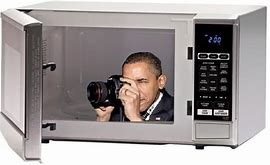
RIP, Spygate May 24th, 2018 — May 25th, 2018
- Thread starter exGOPer
- Start date

you are a smart guy, why do you resort to fake arguments?
you have a few real ones... lay them out without bullshit and we would take you much more seriously.
1. We were anti corrupt swamp long before Bannon and Breitbart which was long before Trump gained traction. Trump got elected because he was the only guy to really push anti immigration... then he closed the deal in the last few months when Bannon got on board and he become anti swamp and increased his pro american worker rhetoric. We planted the thoughts in Trumps brain... not the other way around as you stated. The sad thing is you know that... so why b.s.?
2. As can be read in the link to the Hill article.
The FBI engaged this informant or spy to do operations on Trump.
They participated with Hillary to hire a spy to get info from Russians and used they oppo research to get warrants to spy. They must have had nothing on these people because previous FISA request had failed.
3. The IRS was weoponized against conservatives.
So yeah your post was silly especially because when you call me honey, you sound like a faggot.
you have a few real ones... lay them out without bullshit and we would take you much more seriously.
1. We were anti corrupt swamp long before Bannon and Breitbart which was long before Trump gained traction. Trump got elected because he was the only guy to really push anti immigration... then he closed the deal in the last few months when Bannon got on board and he become anti swamp and increased his pro american worker rhetoric. We planted the thoughts in Trumps brain... not the other way around as you stated. The sad thing is you know that... so why b.s.?
2. As can be read in the link to the Hill article.
The FBI engaged this informant or spy to do operations on Trump.
They participated with Hillary to hire a spy to get info from Russians and used they oppo research to get warrants to spy. They must have had nothing on these people because previous FISA request had failed.
3. The IRS was weoponized against conservatives.
So yeah your post was silly especially because when you call me honey, you sound like a faggot.
The underlying gist of my silly post, jem. was that I wouldn't be much concerned about an FBI investigation of myself unless I was actually guilty of a crime. So when we see Trump repeating over and over , beating a dead horse as it were, that the FBI is corrupt, that they are engaged in a witch hunt, we should weigh Trump's behavior and rhetoric against the probability that the FBI would persist in an investigation that is going nowhere producing no evidence of wrong doing, that the Grand Juries convened are all corrupt, the courts are corrupt, and the many indictments handed down so far, the guilty pleas and the convictions. have no substantial evidence behind them.
The chief criminal has planted the idea in your brain that your government is, in general, corrupt, and you can't get it out. The only way your going to be able to get it out and see truth is to ask for the evidence. The truth, jem. is that the government is , in general, not corrupt. Yes, it is from time to time, inefficient, wrong, bungling, but, in general, it is not corrupt. Finding corruption in individual government officials from time to time is not evidence for general corruption in government. Trump, with his staged rhetoric has been able to turn truth on its head in the minds of 30 to 40 million people. It's the classic technique of a demagogue we are witnessing.
By the way you should not call me a Democrat, though I don't much care, when you know I am neither a Democrat nor a Republican. Of course I voted for Clinton, but I had no choice. I recognized that Trump had a serious personality disorder, disqualifying him, in my opinion, as a candidate. I also knew of his past which was disturbing, and his behavior during the campaign only reinforced my opinion of him. He's turned out to be far far worse as President than I could have imagined.
jem, Why not start with conjecture supportable by evidence. These statements have me completely baffled, as there is no support for them in actual evidence. The evidence is to the contrary.
I am moved to call you "honey" when you act like a pathetic little child whose dreamed of monsters, and I am moved to pat you on the head and say, "There , there, everything is going to be alright."
1) The FBI engaged this informant or spy to do operations on Trump; 2) They participated with Hillary to hire a spy to get info from Russians. 3) The IRS was weoponized against conservatives.
Last edited:

https://www.nytimes.com/2018/05/28/us/politics/trump-conspiracy-theories-spygate.html
Former aides to the president, speaking privately because they did not want to embarrass him, said paranoia predisposed him to believe in nefarious, hidden forces driving events. But they also said political opportunism informed his promotion of conspiracy theories. For instance, two former aides said Mr. Trump had resisted using the term “deep state” for months, partly because he believed it made him look too much like a crank.
But Mr. Trump saw that it played well in the conservative news media, and so in November, he began using it, the two aides said. The strategy appears to have yielded results. Several polls have shown a dip in public approval of the special counsel investigation over the past several months, as the president has repeatedly attacked it. And a Monmouth Poll released in March found that a bipartisan majority believes an unelected “deep state” is manipulating national policy
Sam Nunberg, a former Trump aide who worked for him when he began championing false claims about Mr. Obama’s birthplace, said the president was reflecting the media that fueled his core supporters.
“In the new media landscape, InfoWars and Fox News are where the president’s getting his support, and these theories are promulgated there,” said Mr. Nunberg, who disputed that “Spygate” qualified as a conspiracy theory.
Mr. Trump’s talk of conspiracies has also gained currency within a Republican Party establishment that once shunned it.
During the 2016 campaign, Senator Lindsey Graham, Republican of South Carolina, denounced Mr. Trump’s talk of the government hiding the real story about Sept. 11. “That’s something that really only comes from the kook part of America,” Mr. Graham said at the time.
Mr. Trump insisted last year that Mr. Obama had tapped his phones in Trump Tower, a stunning assertion for which he offered no proof.
“I thought, ‘Well, that doesn’t seem right to me,’” Mr. Graham said last week. But, he noted, it was later revealed that one of Mr. Trump’s former campaign associates, Carter Page, had in fact been under surveillance. And on “Spygate,” the senator added, “There seems to be something to this one. I want to find out: Did it happen? Is there a good reason?”
Senator John Cornyn, Republican of Texas, distanced himself from the president’s sinister language, but not necessarily the questions he had raised about the informant. “I wouldn’t describe it the way he described it,” Mr. Cornyn said. “Confidential informant? Spy? I guess he can use his own words.”
Then, like many lawmakers who once denounced the president’s assaults on law enforcement agencies, Mr. Cornyn gave the president a level of validation, saying it was worth knowing what the F.B.I.’s “motivation” was in the inquiry into the Trump campaign.
“A lot of people really want to believe a conspiracy because it’s a lot easier to think a malevolent force is in charge than that our government is run by idiots,” Mr. Erickson said in an interview.
Former aides to the president, speaking privately because they did not want to embarrass him, said paranoia predisposed him to believe in nefarious, hidden forces driving events. But they also said political opportunism informed his promotion of conspiracy theories. For instance, two former aides said Mr. Trump had resisted using the term “deep state” for months, partly because he believed it made him look too much like a crank.
But Mr. Trump saw that it played well in the conservative news media, and so in November, he began using it, the two aides said. The strategy appears to have yielded results. Several polls have shown a dip in public approval of the special counsel investigation over the past several months, as the president has repeatedly attacked it. And a Monmouth Poll released in March found that a bipartisan majority believes an unelected “deep state” is manipulating national policy
Sam Nunberg, a former Trump aide who worked for him when he began championing false claims about Mr. Obama’s birthplace, said the president was reflecting the media that fueled his core supporters.
“In the new media landscape, InfoWars and Fox News are where the president’s getting his support, and these theories are promulgated there,” said Mr. Nunberg, who disputed that “Spygate” qualified as a conspiracy theory.
Mr. Trump’s talk of conspiracies has also gained currency within a Republican Party establishment that once shunned it.
During the 2016 campaign, Senator Lindsey Graham, Republican of South Carolina, denounced Mr. Trump’s talk of the government hiding the real story about Sept. 11. “That’s something that really only comes from the kook part of America,” Mr. Graham said at the time.
Mr. Trump insisted last year that Mr. Obama had tapped his phones in Trump Tower, a stunning assertion for which he offered no proof.
“I thought, ‘Well, that doesn’t seem right to me,’” Mr. Graham said last week. But, he noted, it was later revealed that one of Mr. Trump’s former campaign associates, Carter Page, had in fact been under surveillance. And on “Spygate,” the senator added, “There seems to be something to this one. I want to find out: Did it happen? Is there a good reason?”
Senator John Cornyn, Republican of Texas, distanced himself from the president’s sinister language, but not necessarily the questions he had raised about the informant. “I wouldn’t describe it the way he described it,” Mr. Cornyn said. “Confidential informant? Spy? I guess he can use his own words.”
Then, like many lawmakers who once denounced the president’s assaults on law enforcement agencies, Mr. Cornyn gave the president a level of validation, saying it was worth knowing what the F.B.I.’s “motivation” was in the inquiry into the Trump campaign.
“A lot of people really want to believe a conspiracy because it’s a lot easier to think a malevolent force is in charge than that our government is run by idiots,” Mr. Erickson said in an interview.
Last edited:
1. The spy paid Papadoupolis. You think he did that without consulting with FBI?
2. Hillary paid for the Oppo/ Dossier meme from an English spy who got his info from Russians
The FBI offered to continue to pay for it.
3. For a bout a year when we spoke about the IRS targeting conservatives you gave us the Pro publica... george soro denial b.s. It came out that they admitted they did target.
but you know all that so why the b.s?
2. Hillary paid for the Oppo/ Dossier meme from an English spy who got his info from Russians
The FBI offered to continue to pay for it.
3. For a bout a year when we spoke about the IRS targeting conservatives you gave us the Pro publica... george soro denial b.s. It came out that they admitted they did target.
but you know all that so why the b.s?
1. The spy paid Papadoupolis. You think he did that without consulting with FBI?
2. Hillary paid for the Oppo/ Dossier meme from an English spy who got his info from Russians
The FBI offered to continue to pay for it.
3. For a bout a year when we spoke about the IRS targeting conservatives you gave us the Pro publica... george soro denial b.s. It came out that they admitted they did target.
but you know all that so why the b.s?
None of those make Halper a 'spy', he was a patriot trying to sniff out all the criminals (see Manafort, Flynn etc) hired.
Senate Republicans already saw the evidence, not a single one backed up Trump after the DOJ visit.