This is your opinion, and this is the opinion of a novice traderWell simply put, if you don’t understand the role of volume then you also do not have a complete system.

You are using an out of date browser. It may not display this or other websites correctly.
You should upgrade or use an alternative browser.
You should upgrade or use an alternative browser.
Oscillators
- Thread starter Resto
- Start date
thank you for your opinion, now I know for sure that you are not interesting to meThe market’s basic granularity is OHLCVT. Everything else is derived from this moment by moment data flow. To exclude any of the basic data as unessential is not inclusive and therefore incomplete.
I will repeat
#108 Wednesday at 4:48 PM
"For example, why should I talk with a trader who takes into account the effect of volumes on the dynamics of indices. Say, the Dow Jones index is calculated according to the formula and reflects the dynamics of the development of 30 American companies. The money you invest in this index does not affect its dynamics,
And on this site a dozen of these idiots
"
ES is calculated using the same formula
For fools, the state of the index depends on the total value of the companies included in its composition, and the average indicator of their value falls on the chart - you trade in probability, and there is no way to provoke the dynamics of the itself Index
#108 Wednesday at 4:48 PM
"For example, why should I talk with a trader who takes into account the effect of volumes on the dynamics of indices. Say, the Dow Jones index is calculated according to the formula and reflects the dynamics of the development of 30 American companies. The money you invest in this index does not affect its dynamics,
And on this site a dozen of these idiots
"
ES is calculated using the same formula
For fools, the state of the index depends on the total value of the companies included in its composition, and the average indicator of their value falls on the chart - you trade in probability, and there is no way to provoke the dynamics of the itself Index
Last edited:
and if any of you thinks that I personally will begin to prove something to him, then he is deeply mistaken. if you did not find the information in previous posts, ask, and I’m not going to repeat the same thing 10 times
600 views per week, which means that at least 2,000 people watched, from this crowd I only need 2 people, the rest of the herd I do not need
600 views per week, which means that at least 2,000 people watched, from this crowd I only need 2 people, the rest of the herd I do not need

I decided to try an idea of using triangles on charts to help decide whether to enter a trade or not.
Consider a line chart with right triangles to represent the relationship between two points.

Negative angle A shows the relationship between points 1 and 2. Positive angle B shows the relationship between points 3 and 4.
Scripts create data having angles between various combinations of points on daily charts for a historical period.
For this example, the input charts have two current cycles of trading days according to a John Ehlers-style autocorrelation periodogram (similar to https://quantstrattrader.wordpress.com/2017/02/15/ehlerss-autocorrelation-periodogram/ ).
The scripts scale the prices and times to allow the data to be compared (similar to what the above chart looks like).
The scripts also create a target for prediction. For this example, the target is (next_bar_close_price - next_bar_open_price) / (high_price_in_past_two_cycles - low_price_in_past_two_cycles) * 100.
A genetic programming rules generator creates rules to classify relationships between the angles in the data to create rules:

The rules have conditional statements to compare angles to other angles or angles to constants. For example,
In the code snippet, scaled_close1587to0349 refers to the angle about 1.587 current cycles away before the most recent close price to about 0.349 current cycles before the most recent price.
71.3478 is a constant value in degrees.
Nested (indented) if statements execute when the previous if statement evaluates true, and a return 89 means the rule suggests to take the trade. 89 is just the highest value used for comparing angles to constant values.
If control gets to the return NAN at the end, the rule suggests to not take the trade.
In this example, the predicted class is the upper one-third of the target values. For the historical period of 5042 instances (about 20 years), the rule was hit 504 times (9.99603 percent) and successfully predicted the class 365 times (72.4206 percent). The mean result for the 504 hits was 5.76526 percent of the prior price range in the most recent two cycles.
Could you (or anyone else) provide feedback on about this idea of using triangles for analysis of price data for making trading decisions?
Consider a line chart with right triangles to represent the relationship between two points.
Negative angle A shows the relationship between points 1 and 2. Positive angle B shows the relationship between points 3 and 4.
Scripts create data having angles between various combinations of points on daily charts for a historical period.
For this example, the input charts have two current cycles of trading days according to a John Ehlers-style autocorrelation periodogram (similar to https://quantstrattrader.wordpress.com/2017/02/15/ehlerss-autocorrelation-periodogram/ ).
The scripts scale the prices and times to allow the data to be compared (similar to what the above chart looks like).
The scripts also create a target for prediction. For this example, the target is (next_bar_close_price - next_bar_open_price) / (high_price_in_past_two_cycles - low_price_in_past_two_cycles) * 100.
A genetic programming rules generator creates rules to classify relationships between the angles in the data to create rules:
The rules have conditional statements to compare angles to other angles or angles to constants. For example,
Code:
    0000: if  scaled_close1587to0349 >= scaled_close1619to0317
    0001:         if  71.3478 >= scaled_close0158to0031
            ...
    0008:                                                                 return  89
In the code snippet, scaled_close1587to0349 refers to the angle about 1.587 current cycles away before the most recent close price to about 0.349 current cycles before the most recent price.
71.3478 is a constant value in degrees.
Nested (indented) if statements execute when the previous if statement evaluates true, and a return 89 means the rule suggests to take the trade. 89 is just the highest value used for comparing angles to constant values.
If control gets to the return NAN at the end, the rule suggests to not take the trade.
In this example, the predicted class is the upper one-third of the target values. For the historical period of 5042 instances (about 20 years), the rule was hit 504 times (9.99603 percent) and successfully predicted the class 365 times (72.4206 percent). The mean result for the 504 hits was 5.76526 percent of the prior price range in the most recent two cycles.
Could you (or anyone else) provide feedback on about this idea of using triangles for analysis of price data for making trading decisions?
square 52 gann is more reliableI decided to try an idea of using triangles on charts to help decide whether to enter a trade or not.
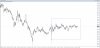
Consider a line chart with right triangles to represent the relationship between two points.
View attachment 213162
Negative angle A shows the relationship between points 1 and 2. Positive angle B shows the relationship between points 3 and 4.
Scripts create data having angles between various combinations of points on daily charts for a historical period.
For this example, the input charts have two current cycles of trading days according to a John Ehlers-style autocorrelation periodogram (similar to https://quantstrattrader.wordpress.com/2017/02/15/ehlerss-autocorrelation-periodogram/ ).
The scripts scale the prices and times to allow the data to be compared (similar to what the above chart looks like).
The scripts also create a target for prediction. For this example, the target is (next_bar_close_price - next_bar_open_price) / (high_price_in_past_two_cycles - low_price_in_past_two_cycles) * 100.
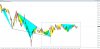
A genetic programming rules generator creates rules to classify relationships between the angles in the data to create rules:
View attachment 213163
The rules have conditional statements to compare angles to other angles or angles to constants. For example,
Code:0000: if scaled_close1587to0349 >= scaled_close1619to0317 0001: if 71.3478 >= scaled_close0158to0031 ... 0008: return 89
In the code snippet, scaled_close1587to0349 refers to the angle about 1.587 current cycles away before the most recent close price to about 0.349 current cycles before the most recent price.
71.3478 is a constant value in degrees.
Nested (indented) if statements execute when the previous if statement evaluates true, and a return 89 means the rule suggests to take the trade. 89 is just the highest value used for comparing angles to constant values.
If control gets to the return NAN at the end, the rule suggests to not take the trade.
In this example, the predicted class is the upper one-third of the target values. For the historical period of 5042 instances (about 20 years), the rule was hit 504 times (9.99603 percent) and successfully predicted the class 365 times (72.4206 percent). The mean result for the 504 hits was 5.76526 percent of the prior price range in the most recent two cycles.
Could you (or anyone else) provide feedback on about this idea of using triangles for analysis of price data for making trading decisions?
And how to deal with it
Attachments
Last edited:
In technical analysis, the most important thing is to have a control point that will allow you to make a decision about a future transaction, if your system is capable of issuing such a point - this system already has the right to life, and you can develop it. This system further
that’s why, for example, Gartley is much more reliable than Elliott
and Gann is more reliable than Gartley
and these systems are based on Charles Dow’s notes
that’s why, for example, Gartley is much more reliable than Elliott
and Gann is more reliable than Gartley
and these systems are based on Charles Dow’s notes
Last edited: