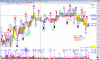
Thanks tiddly! Now we wait for Sprout for the consensus.

You are using an out of date browser. It may not display this or other websites correctly.
You should upgrade or use an alternative browser.
You should upgrade or use an alternative browser.
On 10-case geometry and beyond
- Thread starter Simples
- Start date

Thanks tiddly! Now we wait for Sprout for the consensus.
One would have to be an idiot to argue with Jack.
Everything that he has asserted, I've discovered to be true due to my own DD.
I'm appreciative, grateful and enjoy his viewpoint,... he's brilliant !!
One of his classics, enjoy !!
Last edited:
Thanks much Sprout. So we can only have a true BO if there is close to the right side of the rtl with lower volume.
Thanks much Sprout. So we can only have a true BO if there is close to the right side of the rtl with lower volume.
My understanding at this point in time: "True BO" means RTL BO when both PV-annotations line up correctly according to The Pattern. The overall ideal and mandatory sequence for it would then be, with no exceptions: (P1)-DV(T1)-BO-IV(P2). IV could here be used to validate "true BO" as well, as long as there is the correct colour (aka not a "flaw"). Mandating Close beyond RTL also help for validation, whereas two consecutive Closes beyond would mean BO "for sure this time". However, PV-sequencing continues intra-bar after BO.
The ID of ideal sequence above is complicated by several facts of bar-by-bar analysis:
- PV-bar aliasing due to TF scaling and shifting. IOW scaling and/or shifting TF may provide slightly different resolution and time-derived sequence signals.
- Sequences may proceed and even complete intra-bar, thus be obscured/overwritten until EOB conclusion.
- Volume may at any point in time, surge or become absent. This is what I believe JH refers to as "flaws". One may regard this as additional information entering the market, that more or less obscures ID of The Pattern model derivatives. Internals and laterals assist in filtering these occurences.
- Imperfect ID will provide analysis flaws as well, though the system tends to self-correct at extremes of PV.
Mandating Close beyond RTL also help for validation, whereas two consecutive Closes beyond would mean BO "for sure this time".
Real-time trading "truths and observations"
Using fast charts, (I use 2,3 & 4 minute time frames. I consider these fast charts. I leave it to the reader to determine how their own setup relates to the term "fast".)
1) Mandating price bar close beyond RTL may prevent some whipsaw. Monitoring PRV during the formation of the price bar is even more telling before the trigger is pulled.
2) Two consecutive closes for a BO?... On a fast chart, if you are vigilantly annotating/trading the EEs, without the same vigilance on at least one, either containers and/or gaussians, your timing will likely be very late with 2 consecutive closes... Using the EE's, we are dealing with segments. Segment BO and larger container than a segment BO can (and should) be differentiated!!
3) So here's a few questions... Do you draw TL in laterals? If so, does the single and/or double close beyond RTL apply in a lateral? Does a lateral need to end before close beyond RTL might be applicable? If a BM is located on a lateral boundary, does that have any effect?
Trade On!
Real-time trading "truths and observations"
Using fast charts, (I use 2,3 & 4 minute time frames. I consider these fast charts. I leave it to the reader to determine how their own setup relates to the term "fast".)
1) Mandating price bar close beyond RTL may prevent some whipsaw. Monitoring PRV during the formation of the price bar is even more telling before the trigger is pulled.
2) Two consecutive closes for a BO?... On a fast chart, if you are vigilantly annotating/trading the EEs, without the same vigilance on at least one, either containers and/or gaussians, your timing will likely be very late with 2 consecutive closes... Using the EE's, we are dealing with segments. Segment BO and larger container than a segment BO can (and should) be differentiated!!
3) So here's a few questions... Do you draw TL in laterals? If so, does the single and/or double close beyond RTL apply in a lateral? Does a lateral need to end before close beyond RTL might be applicable? If a BM is located on a lateral boundary, does that have any effect?
Trade On!
2, 3 and 4 min TF sounds like a good setup to overcome TF issues like scaling and shifting. However, I wouldn't find time to follow such fast TF in realtime.
1) Intrabar Close beyond RTL is the first sure sign of BO in price. Otherwise price would never break RTL. Close moving back would be FBO. BO doesn't mandate trades either way, but TL management.
2) Agreed. I wouldn't wait for 2 Closes, but after 2 Closes one should be looking extra closely what is happening to RTL.
3) I don't really use Laterals for TL management, yet. Maybe in the future, but Laterals are a bit strange to me yet.
My setup is admittedly limited, but working on reading from one chart first.
Last edited:
2, 3 and 4 min TF sounds like a good setup to overcome TF issues like scaling and shifting. However, I wouldn't find time to follow such fast TF in realtime.
Au contraire... calibrating is a PITA (pain in the ass, not flatbread!!) NQ near or over 100 point linear range is insane. And regular too!! RTY more manageable but with 2.5x more increments vs NQ. But yea, my TF are exercise!! No time for lollygagging... working(trading) or not working(trading) is binary.

Intrabar Close
What is an intrabar close? Time-based bars close after a specified duration. How could/does a bar close "intrabar"? Maybe a semantic I'm not understanding? IBGS??
Au contraire... calibrating is a PITA (pain in the ass, not flatbread!!) NQ near or over 100 point linear range is insane. And regular too!! RTY more manageable but with 2.5x more increments vs NQ. But yea, my TF are exercise!! No time for lollygagging... working(trading) or not working(trading) is binary.
What is an intrabar close? Time-based bars close after a specified duration. How could/does a bar close "intrabar"? Maybe a semantic I'm not understanding? IBGS??
I didn't mean IBGS, just "Latest price" intrabar, often simply (incorrectly?) referred to as "Close" by platforms. Either way, Close isn't magical, but one of many sequences of PV, however you want to name it.
I know this sounds like kind of a circular logic: Within a setup/TF we kind of need to see Close in relationship with Open and Volume though, but really just out of necessity as a method to workout PV.
Last edited:
I didn't mean IBGS, just "Latest price" intrabar, often simply (incorrectly?) referred to as "Close" by platforms. Either way, Close isn't magical, but one of many sequences of PV, however you want to name it.
I know this sounds like kind of a circular logic: Within a setup/TF we kind of need to see Close in relationship with Open and Volume though, but really just out of necessity as a method to workout PV.
Jack seems to disagree though, favouring more directional filtering using P-cases/internals/laterals, as also evident in his chart and logs, though unsure of all the logic involved.
Last edited:
Thank you to @Simples for "butt" thread link. While reading, I ran across an exchange discussing the Ac-EE.
It seems the Ac EE on the A-Band EE sheet in use is outdated...
This is post #909, made on Oct 28, 2013, From Jack...
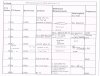
The attached non-hand-written A-Band EE sheet confirms the "broadened" Ac definition (and a few others). Note, I don't know the origins of this version, but it is out there. I've posted it before.
As a final confirmation, I looked for usage on Jacks later charts... I found an Ac-2 EE annotation on 5/22/14
I conclude, Ac-2 is a legitimate EE.
Broadening in the butt thread
It seems the Ac EE on the A-Band EE sheet in use is outdated...
This is post #909, made on Oct 28, 2013, From Jack...
Good Work
Consider the SCT to be cast in stone.
For me to improve it comes under the process advanced in the piece "BF or BS" on the home page of Behavioral Finance.
In a system that is tightly integrated it is a "must" to thoroughly search through all the building blocks that arise from the foundation.
Ac is an EE that has had a lot of introspection. It got to A band the hard way. Originally it was a reject from the PP set. you point out specifically why it is hard to conside it a "regulrar guy" in the A band.
The recent occurances have been significant as qualitifiers for upgrading the Ac definition. I refer to 22Oct13 bar 18 where the bar spike was incredible. Then, later we took snagits of A bander's midday. (22OCT13, bars 36, 41, 45 and 76). Finally, we saw a similar Ac onbar 58 on the 24OCT13.
So a non PP1 followed by another fourth P1 is now an Ac and there is no T1 nor any int.
We went through "broadenng" the definition.
One other facet came up in the conversations. It is a good idea the collect snagits of EE's. My collection, during development, takes up a few binders.
One thing that made it easier was that I was building "out of" another fully refined geometric system that was allied with an fully synchronized indicator system.
The attached non-hand-written A-Band EE sheet confirms the "broadened" Ac definition (and a few others). Note, I don't know the origins of this version, but it is out there. I've posted it before.
As a final confirmation, I looked for usage on Jacks later charts... I found an Ac-2 EE annotation on 5/22/14
I conclude, Ac-2 is a legitimate EE.
Broadening in the butt thread