I wrote in yesterday’s post that the decision to go long or short is not simply a matter of noting whether the progress being tracked by a given set of trend lines is along a bullish or bearish trajectory, but that it is also extremely important to consider the amount of distance observed between price and those same trend lines.
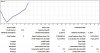
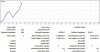
For example, though the instrument pictured below is extremely bearish, I am watching and waiting for an opportunity to buy. This is because the asset is currently in a situation a lot of traders would call oversold.
Many traders use an indicator such as the stochastic oscillator or the commodity channel index (CCI) to assess these types of conditions—again, often referred to as overbought or oversold. But I prefer a more direct measurement in the form of percent deviation from the mean, which I feel does a better job of conveying the
degree to which the asset is evidencing atypical behavior.
I’ve heard some traders belittle those who use the terms overbought and oversold, stating that such vocabulary is flawed, and that it would be more appropriate to speak in terms supply and demand.
I guess the fact that I fail to see a great distinction between the two just points to my ignorance. Either way, neither of these descriptions is able to help me conceptualize the situation in a way that seems logical to me in that, as best as I can tell, the most important factors given these scenarios appear to be how
dramatic of an interval is formed and
in how short a period of time this formation takes place.
If the asset were truly overbought or oversold, if supply or demand were truly exhausted, I would not expect to see an
immediate resumption of progress along the same path after only a momentary break from the advance.
In thinking this over, my mind returned to when I used to trade equities. It is not uncommon for stock traders to refer to periods of profit taking when investors take advantage of their good fortune by exiting positions after having just experienced substantial gains.
Paper profits are not quite a reality until they are pocketed, so smart investors will take some of their earnings off the table from time to time to lock in their gains. I don’t know what market makers in the Forex domain are actually doing, nonetheless, if I imagine this going on, it gives me a framework for explaining in my own mind what might be happening.
It’s been my experience that an asset can continue in a given direction for what seems like almost an eternity, that it will continue along the same path for hours, days, or even weeks longer than one might expect—provided that the slope is
gradual!
But as soon as price suddenly moves too much, too fast, it will inevitably snap back at some point. The fact that it will continue forever in moving slowly, but snap back if moving quickly, suggests to me that players not wishing to miss out on the opportunity to capitalize on a favorable development and make their gains a reality before they disappear will begin pocketing profits, thereby drying up supply or demand on a temporary basis, but only for a moment, with a resumption of former price action occurring once the players return to the table for more/seconds.