CONCLUSION:
I believe I have pretty much gathered all the information I need, or am likely to glean, from this little jaunt in my overall quest to perfect the art of trading foreign currency pairs online.
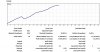
My previous approach to guerrilla trading saw me executing an average of about five trades per day, with some days lacking any trades at all, and others resulting in a maximum of about ten. My success rate was around 90%, and it was not uncommon for me to put together a string of consecutive days in which there was not one single loosing trade. The typical amount of profit I realized per trade was approximately five pips.
My current approach to guerrilla trading:
Ms. Mae’s Multiple Simple Moving Average Envelope Strategy, sees me executing an average of about 20 trades per day, with some days resulting in as few as seven or eight trades, and the maximum to date being more than 70. The typical amount of profit I realize per trade is approximately eight pips, but it is not unusual for that to rise as high as 13 to 20 pips. The percentage of trades averaging near the upper end of this profit range is likely to increase as I come to feel more confident about this emerging style of trading.
My daily success rate currently fluctuates between 70% to 80% on average, so one of my primary goals going forward will be to hone my decision-making process so that this climbs nearer to (or reaches) 90% on a regular basis.
The last major change I made to my setup(s) was on Thursday, December 21, 2017, when I realized I had assigned a prominent role to a simple moving average that was not doing the job I incorrectly ascribed to it. I reassigned the job to the correct moving average and have not made a mistake in diagnosing the direction of the intra-day trend since then.
In reviewing my most recent forecasts at
“South Winds, Red Skies & Clouds in the East,” I am completely satisfied with my ability to read the Forex market’s “atmospheric conditions” and anticipate with a good degree of reliability the most likely trajectory of the exchange rates in the near future.
I was happy enough with Thursday’s busy, messy, cluttered setup, but removed all the simple moving average envelopes from the chart to perform an analysis that I hoped would deal with my lopsided reward-to-risk ratios.
I am still using the resulting chart, which I posted on Friday, December 22, 2017, except that I reintroduced two of the simple moving average envelopes, though this is still much fewer than were on the chart originally.
The technique for which I use this setup, which I was calling
“The Solution,” I will now refer to as “Method 1.” At present, my preference is to apply this setup to 15-minute charts.
Subsequent to Method 1, I came up with the idea for a “spiking” chart, which I’m now calling “Method 2,” the image of which I posted yesterday. My current preference is to apply this setup to 1-hour (60-minute) charts.
My favorite trade is to wait for a spike in the 60-minute Method 2 chart, and then switch to a 1-minute chart to time the exact moment I should enter a trade to get in on a
genuine reversal in the direction of the overall trend, maximizing the profitability of my trades while avoiding head fakes, and avoiding attempts to catch a falling knife.
My second favorite trade is to use the 15-minute Method 2 charts to enter positions when an exchange rate is resuming its progress in the direction of the overall trend after a minor pullback or after consolidation.
I would like to see my success rate return to 90%, but as long as I make a profit each day, I will be happy.