You are using an out of date browser. It may not display this or other websites correctly.
You should upgrade or use an alternative browser.
You should upgrade or use an alternative browser.
Mathematical relationship between future and underlying
- Thread starter otello
- Start date
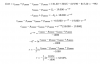

I could guess that the EUR funds can earn a rate above EURIBOR via money market or hedged USD overnight rate (eg. Fed funds less EUR/USD swap rate?). You may want to compare this to the cross currency swap rate. (not sure)I attach the image with the details of the calculation. It must be taken into account that in Europe the risk-free rate is currently around 4%.
In your opinion, where could the error be?
I am interested in analyzing this basis as well. What broker/exchange ticker are you using for the index calculation? Also, you are using the front month EUREX contract, FDAX?
In practice, I have found that I can simply chart the differential (F-S) instead of (1/T*ln(F/S)) for most uses. You are unlikely to be trading the basis against another rate I would presume.
Thanks.
This result leads us to another question: shouldn't the risk-free interest rate be the same for futures and options that have the same maturity?
yes, and it’s not technically going to be the risk free rate but rather sofr - the rate the best counterparty pays.
edit; in 2007-2008 this became an arbitrage opportunity as options priced to LIBOR but the spread of what different banks paid was huge. Some could lend money at a profit and others could borrow more favorably than in the CP market.
I could guess that the EUR funds can earn a rate above EURIBOR via money market or hedged USD overnight rate (eg. Fed funds less EUR/USD swap rate?). You may want to compare this to the cross currency swap rate. (not sure)
I am interested in analyzing this basis as well. What broker/exchange ticker are you using for the index calculation? Also, you are using the front month EUREX contract, FDAX?
In practice, I have found that I can simply chart the differential (F-S) instead of (1/T*ln(F/S)) for most uses. You are unlikely to be trading the basis against another rate I would presume.
Thanks.
The broker I am using is an Italian bank, called Banca Sella. However, I don't know what its real-time data supply source is.
The futures contract I refer to in my previous posts is the one that expires in June 2024, the third Friday of the month.
And the options I mentioned also refer to that deadline.
Therefore, both futures and options have the same expiration.
yes, and it’s not technically going to be the risk free rate but rather sofr - the rate the best counterparty pays.
edit; in 2007-2008 this became an arbitrage opportunity as options priced to LIBOR but the spread of what different banks paid was huge. Some could lend money at a profit and others could borrow more favorably than in the CP market.
I don't know the sofr rate and I'm not entirely familiar with the subject of rates.
Anyway, thank you for the answer, which certainly offers reasons for very interesting reflections.