You are using an out of date browser. It may not display this or other websites correctly.
You should upgrade or use an alternative browser.
You should upgrade or use an alternative browser.
Making JH' SCT and all his material alive
- Thread starter WchPl
- Start date

Parts 3, 4 and 5 coming soon
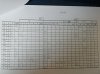
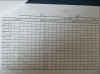
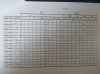
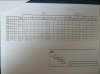
End of the debrief of 12th session of MADA on 09/06/19. Parts 3, 4 and 5.
It has been a big debrief.
I know I have not integrated at this first attempt all SQU and FS in the same column as required. I mean...I expect to have forgotten to put it sometimes. No big deal, I know now I have to put it; on next session, it should be perfect for this refinement.
In addition, the major crux I have on this session is clearly concerning FFs, TFs and SFs. In part 4 comes a moment where it's obvious some tl's has been misplaced or something close to that or something else that I can't manage at the moment. I'm a bit empty of energy today, surely because of the three hours of helping my sister for her house move...before starting my work LOL
It's 7:30pm, I'm done

See you tomorrow for 13th Session.
Debrief of 12th Session of MADA on 09/06/19 - 26 EE's IDd
PART 3
PART 4
PART 5
13th session coming soon
Attachments
13th session coming soon
Road to expert drill : 13th MADA session - 26 EE's IDd
I have been obliged to clean my chart on TV because there were too many drawing; the flow on the chart was sooooo slow. I had then to begin next session whithout doing carryover from prior day.
MADA on 09/07/19
PART 1
PART 2
NB : I have a doubt on the Ag, doubt that echoes to something I know that still remains to be cleared.
PART 3
NB : doubt on th P2 revchron. Weird
PART 4
PART 5
Debrief coming soon
Attachments

PART 2
NB : I have a doubt on the Ag, doubt that echoes to something I know that still remains to be cleared.
Can not be Ag... P2 > P1 is false. -AND- Just after P2 is false.
3 P2's w/accel = PP1a
What an interesting post !Can not be Ag... P2 > P1 is false. -AND- Just after P2 is false.
3 P2's w/accel = PP1a
Let's have a granular dissection.
What is the sequence ? The sequence is P1-P1-T1-P2(< each P1)-P2 (< each P1)- P2 (between P1's)-T2P-bar exceeding all prior ones.
What is needed to have an Ag ? : P2 must be above P1 AND the HVBO must be JUST after P2.
Between the wrongly-IDd Ag and P2, is there something ? Yes, there's a T2P.
So at this time, we already know Ag doesn't have all its necessary conditions filled to exist. Ag is killed, so to speak.
What I find interesting in what you say is that neither this condition is filled, nor the P2 < P1.
But is there a way, another POV (which, if what you state is true, would be a wrong one), that would lead to see P2 exceeds P1 ? Yes, and it would be by considering the third P2 to the first one.
Let's assume this is then wrong, and one is not to compare last P2 to first P1.
What is/are the way(s) that would then lead to see P2 below P1 ? There are two ways : by considering first P2 to each P1 OR second P2 to each P1. Any of the first two P2's are below each of the two P1's. Concerning the P2's, being as we have 3 of them and being as we've said last P2 cannot be considered if we want what you say to be true, then only the first two ones remain usable.
As deep as I'm aware, when IDing volume elements, we only use "last" and "leftmost" concepts. The in-between are like only "repetition of anteriority".
Therefore, let's have a look at the first P2.
First P2 is under each P1. Being as we have two P1's, it still remains to determine if the "leftmost" or the "last" is used for comparison. Then , what if that first P2 was between the two P1s in value ?
This takes us back to Bands, and one little doubt I've always had concerning them.
Let's have an example : We have P1-T1-P2. As I know, A-band is established geometrically by P1 and T1 and its activeness starts when P2 is there.
Let's have another example : P1-P1-T1-P2. I've always wondered whether the first or the second P1 is used as upper limit of the A-Band. I'm sure this must be DDd, and I'll do it.
When some weeks ago I worked hard on building the EE's Matrix, I, as I explained it later, was not in the right/lining up mindset to do it. Then I put this work aside until I've done the 20 days of MADA. I'm sure it's both by doing MADA AND building this matrix that the DD will come. Maybe some steps back to the litterature would help too.
Up to now, I've always considered, arbitrary cause I'm not sure, that the first P1 is the reference for A-band. NB : The same problem surges again when we have any Revchron and I wonder if this moves the boundaries of any Band concerned by this revchron in particular, whichever it is.
Writing this, this comes to my mind : Let's say we have P1-T1-T1-P2(> first T1).
Next volume bar is under first T1 and WHEREVER compared to second T1.
Is there an EE ? I know there is one.
Which is it ? I know it's an Ab.
What is an Ab ? a LVBO under T1.
What is a LVBO ? A Low Volume Break Out.
Break Out of what ? Of the LOW boundary of the Band.
So what is in this case the reference used ? first T1.
Where there another T1 after the first one in this given example ? Yes there was.
So, in terms of establishment of the A-band, does this mean it was built from P1 and first T1 or from P1 and second T1 ? Obviously, from P1 and FIRST T1.
Conclusion : the second T1 did not affect the definition of the boundaries of the Band.
Thus, can it be different as for P1's in a row ? No.
Back to our example : The sequence was P1-P1-T1-P2(< each P1)-P2 (< each P1)- P2 (between P1's)-T2P-bar exceeding all prior ones.
I've DDd that first P1 is the high boundary of the A-band established in the end by T1 and that springs to life at first P2.
I've previously DDd that we must use as for the Ag necessary condition of P2 > P1, the first P2.
So, I know now what to compare : FIRST P2 to FIRST P1.
Where is first P2 compared to first P1 ? P2<P1.
So yes, no need to see anything else, Ag can not be.
Good.
Then can it be an Aa ? As stated by the litterature an INT WAIT must be there (with P1, T1, P2 and T2P all present in trend). As no WAIT is there due to the retro that is triggered on Lat4 and all not initially not measured bars have been finally measured, Aa can't be.
Ab ? Of course no, cause if we have here an A-band EE, it's only an HVBO as the bar in question is exceeding all prior ones.
Ac ? No, we need three P1's for that.
Ad ? No, we only are one bar after P2.
Ae ? No, we do not have two T1's as required.
Af ? No, we're not in the Lat anymore.
Ag ? See above
Ah ? Lol
Any PP! ? No, we are in A-band.
Volume elements :
P1 ? No, it is killed after T2P.
T1 ? Lol
P2 ? P2 is never killed, but here the bar is exceeding last P1 so it would be a P1revchron but as said, P1 is killed after T2P. So no for P2.
T2P ? No, T2P repeat is above prior T2P but must remain below P2.
T2F ? Lol
P3P, P3F ? We need T2F, so no.
Then what ?
Something must have been missed dureing the DD AND/OR, an error/ommission must have been made before in the sequence.
This takes me to the last part of your post : PP1a w/Acc is PP1a. And it's great ot have to talk about it.
If you remember, in the past I've worked and dug a lot on the "acceleration concept when concerning the PP!s that deal with it".
PP1, PP1a and PP1c. I had not the same vision, differenciation and simply level of understanding at this time, than the ones I'm in nowadays.
I had started with thinking about the "acceleration". I was saying to myself (for PP1 for example) : three P1's with acceleration...what does this mean. At first, it only meant one thing to me : P1.0-P1.1 must be > P1.1-P1.2. ONLY this it meant for me. Then, I don't remember while writing now if it was @Simples or @Sprout , it has been reminded to me that the concept of acceleration had always be linked to something in our world -> the slope of rtl's.
Then I watched my PP!s sheet and constatated that the inequation I had taken as the whole description of the item PP1 was the AddReq.
From this moment I've always considered that to get a PP1, a PP1a or a PP1c, I need BOTH the AddReq AND the acceleration of the slope of the rtl to ID one of them.
In the example of my chart, where you see a PP1a, this is what I see :
First P1 of the sequence (BMrev, 11:35am), let's call it :
Bar 1: Lat4 so we are in Lat and I'm stills ticking to JH's "no rtl should be started into a Lat". So I don't draw any rtl here.
Bar 2 : we're not in a Lat anymore, so if next bar allows it, I'll draw a rtl. Vol is INC so P1rep.
Bar 3 : SYM doji degap wait, no rtl can be established by using a statistically not significant data. No rtl is drawn yet.
Bar 4 : Lat3 wait. same as for rtl.
Bar 5 : Lat4 triggers retro. Then back to
Bar 3 : Lat2, vol is DEC so T1. At this moment this bar could make believe we can use it as by being measured it becomes significant statistically speaking BUT we're in a LAT. And prior bar is Lat1 so...no rtl can be built.
Bar 4 : Lat3, volume INC, P2.
Bar 5 : Lat4, volume INC, P2rep.
Bar 6 : Lat5, volume INC P2rep and here you, from what I DDd of your post, see a PP1a.
So you see both Acc of the rtl AND AddReq of PP1a.
Do I see the Add Req ? Yes and there is.
Do I see the Acceleration of the rtl ? If you see a PP1a here as I assume, I understand how you see acceleration. BUT as I stick to the "no rtl can be started in a Lat", I can't see any Acc of a rtl that cannot be there...
It will be a pleasure to dig, re-discuss this deeper, but for now, time to eat
OMFG!!
How is ACCELERATION determined?
Hint: acceleration as applied to PP1, PP1a, and PP1c (or whatever YOU label 3 T2P w/accel)
does not involve the price pane!! Plus, there are no "kills" associated with PP1, PP1a, or PP1c
How is ACCELERATION determined?
Hint: acceleration as applied to PP1, PP1a, and PP1c (or whatever YOU label 3 T2P w/accel)
does not involve the price pane!! Plus, there are no "kills" associated with PP1, PP1a, or PP1c
Yeah What ??OMFG!!

I've just taken the time to recover a bit my energy but it's now 11:30pm for me. Time to sleep, I'll be back on this tomorrow.How is ACCELERATION determined?
Hint: acceleration as applied to PP1, PP1a, and PP1c (or whatever YOU label 3 T2P w/accel)
does not involve the price pane!! Plus, there are no "kills" associated with PP1, PP1a, or PP1c
AND
No matter if there is PP1a or not on this bar :
After deeper reflexion, let's assume you're right and there is PP1a in this scenario.
Now, let's imagine there is no acceleration from P2's therefore P2.0-P2.1 < P2.1-P2.2.
This is possible to happen.
No EE would be there until my mis-IDd Ag. So what would it be then ?
If we had a wait along the line, we would have Aa. Fine.
Aa ? No
Ab ? Lol
Ac ? No
Ad ? No
Ae ? No
Af ? No cause we do not have P2 > P1
Ag ? lol
Ah ? even less
Any PP! ? Still not
P1 ? NO, it's killed after T2P
T1 ? still big lol
P2 ? ...............................................
So it would be a P1 revchron.. but P1 is killed after T2P. T2P rep, T2F, P3P and P3F can't be.P2 ? P2 is never killed, but here the bar is exceeding last P1 so it would be a P1revchron but as said, P1 is killed after T2P. So no for P2.
So my current DD (and I'm very tired at the moment, bear with me please) is : P1 being killed, and everything else being killed to, the only remaining option would be ... P2revchron.
Good night !
For me... with your annotations/IDs AS IS.... playing the what if game...
The T2P activates band B... The Ag is a Ba.
Note: I believe there is a confusion on the B through K Bands hand-written sheet.
Ba has a description of Band Pass. But the additional requirements do not match a Band Pass.
Bc has a description of HVBO > P2. But the additional requirements describe a Band Pass.
I choose to go by the additional requirements rather than the description.
For me... with your annotations/IDs AS IS... The Ag is a Ba.
I would take profits, and wait for the next measurable P1 before establishing a reverse or re-entry position. The n-1 is BMRV. Both Ba and Bc are recognized as turns, set C and set B respectively, hence my take profit. With the Ba/c description/requirement confusion, wait for measurable P1 is prudent imo.
The T2P activates band B... The Ag is a Ba.
Note: I believe there is a confusion on the B through K Bands hand-written sheet.
Ba has a description of Band Pass. But the additional requirements do not match a Band Pass.
Bc has a description of HVBO > P2. But the additional requirements describe a Band Pass.
I choose to go by the additional requirements rather than the description.
For me... with your annotations/IDs AS IS... The Ag is a Ba.
I would take profits, and wait for the next measurable P1 before establishing a reverse or re-entry position. The n-1 is BMRV. Both Ba and Bc are recognized as turns, set C and set B respectively, hence my take profit. With the Ba/c description/requirement confusion, wait for measurable P1 is prudent imo.
Last edited:
The T2P activates band B... The Ag is a Ba.
I disagree. One of the requirement of Ag is P2 < P1. We've seen it's not the case so Ag is killed.
One of the requirement for Ba is either P2>P1 or UL along the line. None of those conditions are here satisfied. So I'd say Ba cannot be either.
After reviewing my sheets, post #1089 of this thread, and thinking about it, that's where I'm currently seeing things :
I'm open to more DD's and refinements.
Finally, as for the acceleration when we talk about PP1, PP1a and PP1b.
As we know, the PP§s and Bands sheets have both descriptions AND AddReq.
When you say the Acceleration as for those three items do NOT concern the price pane : if I look my PP!sheet, wheteher the handwritten version or not, there is a description so a definition and AddReq. For example, PP1 is described as "3 P1's w/acc".
What I DD is that being as, to that definition, there is an ADDITIONAL requirement, then additional to what ? Can you ADD something to another one if this previous other one is not there ? This is dissonant to me.
Up to now and for a nice amount of time, I see that sometimes the definition seem to include MORE possibilities than the combination of them with AddReq's. I see the AddReq's as having a reducing effect of the definition field. They give precision to the definition that can sometimes appear coarse, vaste.
So, this is my own DD :
- if there is a definition, one is to stick to it at first step
- after this step, we must add the AddReq to the definition and get precision and refinement
- if there is an AddReq, it is ADDED to the definition.
- so the AddReq is going FARER in the sense that it REDUCES the possibilities expressed by the definition alone
- so the AddReq brings something MORE to the definition and by negative logic the scope of the definition field reduces itself and becomes more precise.
- so when a PP1 is described as 3 P1's with acceleration, one is to answer to, in a granular way :
- what is a P1 ? we know what it is
- what are 3P1's ? we know what they are
- what is acceleration ? from what I know and have read and worked, acceleration has always meant only one thing : the opposite of fanning. And this deals with rtl's therefore with price.
- so, if the definition only mentions acceleration, I understand it as whithout any AddReq, the following would be a PP1
- BUT, being as there is an AddReq that imposes to see acceleration of volume values, I can only consider a PP1 when this comes :
- whereas you'd see the following as a PP1
- If what I expose was false, then why would there be AddReq ?
For instance, if we take Ag, it's an HVBO just after P2. So a new P1 after P2.
What if one doesn't check if the AddReq so Context column of the A-band sheet and misses that P2 needs to be above P1 ? and what if P1 was above P2 in fact ?
-> one would see an Ag when we currently would see a P1revchron.
As far as I can DD, think about what you say, I really don't see any maneer/way/reason why it would be true. Maybe you've read, seen or DD'd I have not. It's possible, but for now I must continue with what fits to my spectrum of differenciation.
Debrief coming soon
Rectification : 13th session was on 09/09/19 and NOT on 09/07/19.
So
Debrief on 13th Session MADA on 09/09/19 - 26 EE's IDd
PART 2
PART 3-4
PART 4-5
Break time this afternoon, see you tonight (in about 6-7 hours for me) or tomorrow.
14th Session coming soon