Making JH' SCT and all his material alive

Hi @Sprout , @Simples ,

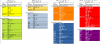
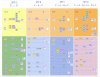
I created modrian table based on what Jack uploaded in a thread.
Refer to the attached 'jh modrian'.
Is it still valid? I found another version with slightly different content, '*-another version'.

How to use the table?
Is it by using lookup of the bottom table?
E.g. if the prior vol bar is 'PP1', then it might be SET A or SET B or SET D. if current vol bar turns out 'BO.T1', the possibility is SET A or SET B or SET D.
And, the 'n' column is the WMCN (what must come next)?
Then, what is failsafe override? failsafe as per glossary 'events used as an instruction to reverse and create wash trades or small profits instead of losing money'. failsafe override = changing trailing stop?

Thanks and regards.
 

Attachments

  • jh modrian.png
    jh modrian.png
    69.8 KB · Views: 28
  • jh Modrian Table v3-another version.jpeg
    jh Modrian Table v3-another version.jpeg
    238.6 KB · Views: 27
Hi @Sprout, @Simples,

How to read the 'TP volume element ranges' in the attached?
There are columns 'Volume Element', 'Repeat (New)', 'Rev Chron (New New)', 'Next (First)', 'Kill (Suppress)' and 'Gate (Permit)'.
According to glossary, 'Repeat' is re-assignment of current volume element, 'Rev Chron' not found, 'Next' instruction to assign the next volume element in the current OOE, 'Kill' instruction to actively wait, do not allow something specific to be done even when it appears that things should proceed forward. prevents false activity, and 'Gate' instruction to allow for testing of a certain element (which element?).

Take for example P1 & T1. I'm trying to interpret it.
---
'Volume Element': P1, is pt 1 of new up/down trend
'Repeat (New)': >=, re-assign P1 if current vol bar (must it be pt1 also? or assume it's pt1 in fractal timeframe lower than 5m?) is higher than the earlier P1
'Rev Chron (New New)': >=, how to read this?
'Next (First)': Assigned, how to read this?
'Kill (Suppress)': After T1, T2P, suppress / do not annotate current vol bar as P1 if it happens after T1 or T2P
'Gate (Permit)': After P2, T2F, how to read this?
---
'Volume Element': T1, is BO of rtl of old trend
'Repeat (New)': <=, re-assign T1 if current vol bar (must it be BO of rtl also? or assume it is in fractal timeframe lower than 5m?) is lower than the earlier T1
'Rev Chron (New New)': After P1 F(ailure), how to read this?
'Next (First)': After P2 onward, how to read this?
'Kill (Suppress)': After P2 onward, how to read this?
'Gate (Permit)': None, how to read this?

My own understanding, which is incomplete: Elements follow OOE of events as described in the table from top to bottom, when permission to measure (NOT WAIT). "Next" (First) is logic for first occurence of that event. First volume element always starts from P1 assigned, nothing is seen in OOE before start of each trend. On following bar "Repeat" logic is checked. "Rev Chron" also need to be checked, if an earlier event occur again on bar n. When false, OOE progress forward according to "Next". "Kill" and "Gate" is logic for permitting or preventing certain events. P3F and P3P are for n+1 tests, though I think they make more sense when locating EE's. When Event is missing or EE, progression of trend has ended.

The logic for VTP works together with price, especially with failsafes or container BO's. Since each trend is unique, this need to be deduced through MADA to build facility and to interpret the sheets and texts concerning VTP logic as annotations.

So best bet is to try the logic out, ie. together with failsafes, learning by trial and error, and also checking old posts and charts. I prefer Jack's original posts, so as to connect directly to source and not mislead. Read as many Jack posts as possible.


EDIT: Not using Modrain. There are posts in the "butt" thread about it. I read the entire thread yesterday evening.

Thank you.

 
Last edited:
5x5 is updated. However, I'm not able to change the bar color. Not expert in image editor hehe. @Sprout, is it correct?
@Simples , i have updated the pattern with additional CCC.

Thank you all.


There are still some bars on your grid that can form from a high volatility path that you have not defined.
 
Hi @Sprout, @Simples,

How to read the 'TP volume element ranges' in the attached?
There are columns 'Volume Element', 'Repeat (New)', 'Rev Chron (New New)', 'Next (First)', 'Kill (Suppress)' and 'Gate (Permit)'.
According to glossary, 'Repeat' is re-assignment of current volume element, 'Rev Chron' not found, 'Next' instruction to assign the next volume element in the current OOE, 'Kill' instruction to actively wait, do not allow something specific to be done even when it appears that things should proceed forward. prevents false activity, and 'Gate' instruction to allow for testing of a certain element (which element?).

Take for example P1 & T1. I'm trying to interpret it.
---
'Volume Element': P1, is pt 1 of new up/down trend
'Repeat (New)': >=, re-assign P1 if current vol bar (must it be pt1 also? or assume it's pt1 in fractal timeframe lower than 5m?) is higher than the earlier P1
'Rev Chron (New New)': >=, how to read this?
'Next (First)': Assigned, how to read this?
'Kill (Suppress)': After T1, T2P, suppress / do not annotate current vol bar as P1 if it happens after T1 or T2P
'Gate (Permit)': After P2, T2F, how to read this?
---
'Volume Element': T1, is BO of rtl of old trend
'Repeat (New)': <=, re-assign T1 if current vol bar (must it be BO of rtl also? or assume it is in fractal timeframe lower than 5m?) is lower than the earlier T1
'Rev Chron (New New)': After P1 F(ailure), how to read this?
'Next (First)': After P2 onward, how to read this?
'Kill (Suppress)': After P2 onward, how to read this?
'Gate (Permit)': None, how to read this?

Thank you.


Get out a pencil and paper. Make the x axis time and the y axis volume. Then translate those words into a picture where there are zones that allow for some elements and other zones where those elements are not allowed as one progresses through the OOE of volume.
 
Hi @Sprout , @Simples ,

I created modrian table based on what Jack uploaded in a thread.
Refer to the attached 'jh modrian'.
Is it still valid? I found another version with slightly different content, '*-another version'.

How to use the table?
Is it by using lookup of the bottom table?
E.g. if the prior vol bar is 'PP1', then it might be SET A or SET B or SET D. if current vol bar turns out 'BO.T1', the possibility is SET A or SET B or SET D.
And, the 'n' column is the WMCN (what must come next)?
Then, what is failsafe override? failsafe as per glossary 'events used as an instruction to reverse and create wash trades or small profits instead of losing money'. failsafe override = changing trailing stop?

Thanks and regards.


The second version is the version I created for myself as a way to simplify the locating on EE’s. The idea being that Jack talked about a periodic table of elements.

You have to be logging consistently and locating EE’s before the table is of much use. The VTP is better assimilated in ‘passes’, ‘levels’ and ‘layers’

How the logic works is by locating the current EE in the table but when first starting one doesn’t know which trend type it is which is what the sets refer to. It’s just the way it is. So a good place to start is by looking in the 30m chart and locating an obvious change of trend on that timeframe excluding the extended hours. Then one drills down to the 5m bar where this turn occurred.
One still doesn’t my quite known exactly the turn until one processes a number of EE’s through the table as it self-corrects.

Until one posts a correctly annotated chart and a log with EE’s, working with the table is premature. The table’s purpose is to define turns and trend types.

The handwritten log is what drives the forward progression of learning the method.
The reason for the necessity of being handwritten is that there is a sports memory being developed with the gestures that ensure completeness as well as building capacity, facility and assimilation into longterm memory.

FS’s are BM,rev and BO,T1’s. Pt1 is overridden by pt1 in the opposite direction or the TL establish by pt3 is XO’d.
 
Hi @Sprout,

What is 'high volatility path'?

Thank you.

As bar forms in TF, one may assume it followed path of least volatility in order to make O->Both Extremes->C, leg2 with bar sentiment. Path of highest volatility is opposite path. Lower TF will clarify what path price actually took for that bar.
 
Get out a pencil and paper. Make the x axis time and the y axis volume. Then translate those words into a picture where there are zones that allow for some elements and other zones where those elements are not allowed as one progresses through the OOE of volume.
Hi @Sprout,

I will be busy starting from Wednesday and will have limited time.
I really want to learn JHM. I'm trying to follow Jack's by doing the logging and asking questions how to fill in the blanks. I'm afraid by doing extra exercises/drills will take very long and dragging the whole process as I also don't understand how to perform those.

I value my time and yours. I know you have good intentions, you read my posts and reply back with guidance and exercises to develop my foundation, LTM, etc. But I don't see much progress on my side. I know you did it out of goodwill, I appreciate it. You didn't promise me anything and I didn't offer you anything.
However, if not much progress, I feel that it will waste my time and your time.
You know JHM and how to benefit from it. On my part, I'm still searching for answer.
The answer may or may not be JHM, as I don't know JHM yet. Knowing JHM doesn't mean 100% I will get benefit from it. I may be incompatible with it and cannot utilize it to its full potential.

I thought since you have gone through the hardship studying JHM, you would be more willing to share the knowledge. You are smart and can find a way to communicate it better and speedier.
But if you cannot help me on how to do the logging and understanding JHM, it's okay.
I will try to read other threads and from what @WchPl will be doing in this thread.
Please, no offense, it's just me disappointing with my own progress.

Thank you.
 
Hi @Sprout,

I will be busy starting from Wednesday and will have limited time.
I really want to learn JHM. I'm trying to follow Jack's by doing the logging and asking questions how to fill in the blanks. I'm afraid by doing extra exercises/drills will take very long and dragging the whole process as I also don't understand how to perform those.

I value my time and yours. I know you have good intentions, you read my posts and reply back with guidance and exercises to develop my foundation, LTM, etc. But I don't see much progress on my side. I know you did it out of goodwill, I appreciate it. You didn't promise me anything and I didn't offer you anything.
However, if not much progress, I feel that it will waste my time and your time.
You know JHM and how to benefit from it. On my part, I'm still searching for answer.
The answer may or may not be JHM, as I don't know JHM yet. Knowing JHM doesn't mean 100% I will get benefit from it. I may be incompatible with it and cannot utilize it to its full potential.

I thought since you have gone through the hardship studying JHM, you would be more willing to share the knowledge. You are smart and can find a way to communicate it better and speedier.
But if you cannot help me on how to do the logging and understanding JHM, it's okay.
I will try to read other threads and from what @WchPl will be doing in this thread.
Please, no offense, it's just me disappointing with my own progress.

Thank you.


There are no ‘extra’ drills. All are designed for one whom does them to increase discernment and increase what Jack calls one’s ‘spectrum of differentiation.’

The pace of your ‘aha’s’ are dependent on your own work.

Nobody can do that for you.

Given how you’ve expressing yourself and looking for shortcuts, this method is most likely not for you.

It is however well suited for someone willing to ‘to roll up their sleeves’ and work on changing their perceptions of how markets work. It does require commitment, persistence and dedication. Not so much because of the material itself but more so of all the other stuff we have in our minds that get in the way. It’s a lifetime of acculturation that requires updating.

To those whom put in the work come the rewards of pulling the ‘full offer of the market’ at any given time.

You have the price cases, the 5x5 grid, the next is to annotate charts using ‘the pattern ‘ and identifying trends. You do this at the same time as logging.
There are posted logs that you can use as a template and you fill out what you can and post the result. Doing so allows someone other than you to see what you see and what the next step is to do. That’s just how the process works the fastest. To think this method is like a cookbook and all you need are the ingredients to make an award winning pie is not realistic.

It’s just too complex and overwhelming. The pieces do all fit together but can you put together a car engine from a box of parts?

It’s like someone taking a couple of classes of a martial art and expecting to be a black belt and be a winner in a MMA bout or street scuffle.


May you experience good fortune in your endeavors!
 
No, you get me wrong. If you or anyone else gave me the correct answer, it would absolutely not help me, it would make me save time that would later convert itself into an irrecoverable one. Why so ? cause I can't currently ID the source from where the answer emerges. I must find the source, not its foam. And I know the source is the relationship with the market.
Plus, if I had correct answers whithout correct work, it would not lead me to where I want to get to. Cause this wouldn't create anything but lack of understandings, that would reveal later in the future in an even more frustrating and heartbreaking times. But if I had to say "it would be easier if" then I'd say "It would be easier if I had had the chance to begin from the starting point". BUT -> if things did not go this way, as everything that happens, it is that it was necessary : so, for things not to cease.

To be perfectly honest, sometimes I know that you could lead me FASTER not to the correct answer directly, but to explore the right zone that would lead to the correct answer. Instead, most of times you lead me to explore a lot of was is relied more or less directly to what I ask for.....You know I know ;)
And as I know this, I understand that is an inestimable thing for me, because I feel what you're doing with me is nothing but leading me to an extreme level of mastering...

In a nutshell, even it's hard, I know what you're doing with me ;)

My mind is currently changing and transmuting itself in a destabilizing way. Your support is really incredible in that process, and I give you a sincer and human thank you for that.


@WchPl
I think you should stay with your current chart, you’re right there.

To repeat, you just did your matrices where you either fanned or accelerated trendlines. That makes bar 6 within an estabished TL and progression of trend OR one would ‘carve’ by accelerating the TL and then bar 6 becomes more clearly defined FS.

Either one can work, it’s that either one leaves more money on the table in different contexts.

What’s important is to be consistent. It’s from this space as one refines then the ‘carving’ makes more sense.
 
Back
Top