
In the Coronavirus Fight in Scandinavia, Sweden Stands Apart

so while GWB has been telling you that Covid must infect via aerosol because he says so...

Many studies have found masks don't work.

https://www.rcreader.com/commentary...f-science-relevant-to-covide-19-social-policy


Review of the Medical Literature

Here are key anchor points to the extensive scientific literature that establishes that wearing surgical masks and respirators (e.g., “N95”) does not reduce the risk of contracting a verified illness:

Jacobs, J. L. et al. (2009) “Use of surgical face masks to reduce the incidence of the common cold among health care workers in Japan: A randomized controlled trial,” American Journal of Infection Control, Volume 37, Issue 5, 417 – 419. https://www.ncbi.nlm.nih.gov/pubmed/19216002

N95-masked health-care workers (HCW) were significantly more likely to experience headaches. Face mask use in HCW was not demonstrated to provide benefit in terms of cold symptoms or getting colds.

Cowling, B. et al. (2010) “Face masks to prevent transmission of influenza virus: A systematic review,” Epidemiology and Infection, 138(4), 449-456. https://www.cambridge.org/core/journals/epidemiology-and-infection/article/face-masks-to-prevent-transmission-of-influenza-virus-a-systematic- review/64D368496EBDE0AFCC6639CCC9D8BC05

None of the studies reviewed showed a benefit from wearing a mask, in either HCW or community members in households (H). See summary Tables 1 and 2 therein.

bin-Reza et al. (2012) “The use of masks and respirators to prevent transmission of influenza: a systematic review of the scientific evidence,” Influenza and Other Respiratory Viruses 6(4), 257–267. https://onlinelibrary.wiley.com/doi/epdf/10.1111/j.1750-2659.2011.00307.x

“There were 17 eligible studies. … None of the studies established a conclusive relationship between mask/respirator use and protection against influenza infection.”

Smith, J.D. et al. (2016) “Effectiveness of N95 respirators versus surgical masks in protecting health care workers from acute respiratory infection: a systematic review and meta-analysis,” CMAJ Mar 2016 https://www.cmaj.ca/content/188/8/567

“We identified six clinical studies … . In the meta-analysis of the clinical studies, we found no significant difference between N95 respirators and surgical masks in associated risk of (a) laboratory-confirmed respiratory infection, (b) influenza-like illness, or (c) reported work-place absenteeism.”

Offeddu, V. et al. (2017) “Effectiveness of Masks and Respirators Against Respiratory Infections in Healthcare Workers: A Systematic Review and Meta-Analysis,” Clinical Infectious Diseases, Volume 65, Issue 11, 1 December 2017, Pages 1934–1942, https://academic.oup.com/cid/article/65/11/1934/4068747

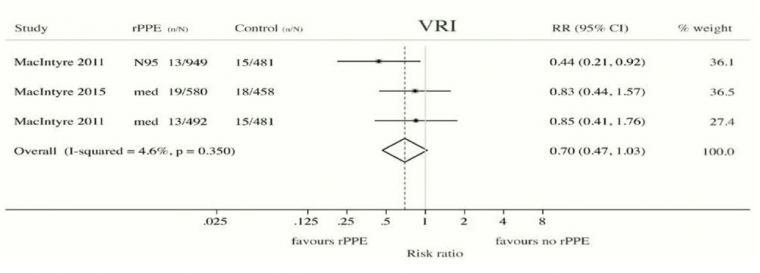
“Self-reported assessment of clinical outcomes was prone to bias. Evidence of a protective effect of masks or respirators against verified respiratory infection (VRI) was not statistically significant”; as per Fig. 2c therein:


offeddu-chart-verified-respitory-infections.png


Radonovich, L.J. et al. (2019) “N95 Respirators vs Medical Masks for Preventing Influenza Among Health Care Personnel: A Randomized Clinical Trial,” JAMA. 2019; 322(9): 824–833. https://jamanetwork.com/journals/jama/fullarticle/2749214

“Among 2862 randomized participants, 2371 completed the study and accounted for 5180 HCW-seasons. ... Among outpatient health care personnel, N95 respirators vs medical masks as worn by participants in this trial resulted in no significant difference in the incidence of laboratory-confirmed influenza.”

Long, Y. et al. (2020) “Effectiveness of N95 respirators versus surgical masks against influenza: A systematic review and meta-analysis,” J Evid Based Med. 2020; 1- 9. https://onlinelibrary.wiley.com/doi/epdf/10.1111/jebm.12381

“A total of six RCTs involving 9,171 participants were included. There were no statistically significant differences in preventing laboratory-confirmed influenza, laboratory-confirmed respiratory viral infections, laboratory-confirmed respiratory infection, and influenza-like illness using N95 respirators and surgical masks. Meta-analysis indicated a protective effect of N95 respirators against laboratory-confirmed bacterial colonization (RR = 0.58, 95% CI 0.43-0.78). The use of N95 respirators compared with surgical masks is not associated with a lower risk of laboratory-confirmed influenza.”

Conclusion Regarding That Masks Do Not Work
No RCT study with verified outcome shows a benefit for HCW or community members in households to wearing a mask or respirator. There is no such study. There are no exceptions.

Likewise, no study exists that shows a benefit from a broad policy to wear masks in public (more on this below).

Furthermore, if there were any benefit to wearing a mask, because of the blocking power against droplets and aerosol particles, then there should be more benefit from wearing a respirator (N95) compared to a surgical mask, yet several large meta-analyses, and all the RCT, prove that there is no such relative benefit.

Masks and respirators do not work.

Precautionary Principle Turned on Its Head with Masks
In light of the medical research, therefore, it is difficult to understand why public-health authorities are not consistently adamant about this established scientific result, since the distributed psychological, economic, and environmental harm from a broad recommendation to wear masks is significant, not to mention the unknown potential harm from concentration and distribution of pathogens on and from used masks. In this case, public authorities would be turning the precautionary principle on its head (see below).

Physics and Biology of Viral Respiratory Disease and of Why Masks Do Not Work
In order to understand why masks cannot possibly work, we must review established knowledge about viral respiratory diseases, the mechanism of seasonal variation of excess deaths from pneumonia and influenza, the aerosol mechanism of infectious disease transmission, the physics and chemistry of aerosols, and the mechanism of the so-called minimum-infective-dose.

In addition to pandemics that can occur anytime, in the temperate latitudes there is an extra burden of respiratory-disease mortality that is seasonal, and that is caused by viruses. For example, see the review of influenza by Paules and Subbarao (2017). This has been known for a long time, and the seasonal pattern is exceedingly regular. (Publisher's note: All links to source references to studies here forward are found at the end of this article.)

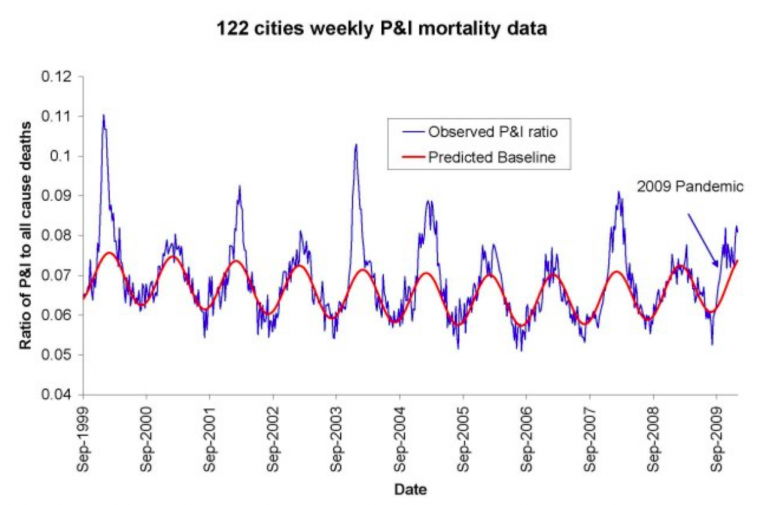
For example, see Figure 1 of Viboud (2010), which has “Weekly time series of the ratio of deaths from pneumonia and influenza to all deaths, based on the 122 cities surveillance in the US (blue line). The red line represents the expected baseline ratio in the absence of influenza activity,” here:


viboud-chart-rancourt-mask-paper.png


The seasonality of the phenomenon was largely not understood until a decade ago. Until recently, it was debated whether the pattern arose primarily because of seasonal change in virulence of the pathogens, or because of seasonal change in susceptibility of the host (such as from dry air causing tissue irritation, or diminished daylight causing vitamin deficiency or hormonal stress). For example, see Dowell (2001).

In a landmark study, Shaman et al. (2010) showed that the seasonal pattern of extra respiratory-disease mortality can be explained quantitatively on the sole basis of absolute humidity, and its direct controlling impact on transmission of airborne pathogens.

Lowen et al. (2007) demonstrated the phenomenon of humidity-dependent airborne-virus virulence in actual disease transmission between guinea pigs, and discussed potential underlying mechanisms for the measured controlling effect of humidity.

The underlying mechanism is that the pathogen-laden aerosol particles or droplets are neutralized within a half-life that monotonically and significantly decreases with increasing ambient humidity. This is based on the seminal work of Harper (1961). Harper experimentally showed that viral-pathogen-carrying droplets were inactivated within shorter and shorter times, as ambient humidity was increased.

Harper argued that the viruses themselves were made inoperative by the humidity (“viable decay”), however, he admitted that the effect could be from humidity-enhanced physical removal or sedimentation of the droplets (“physical loss”): “Aerosol viabilities reported in this paper are based on the ratio of virus titre to radioactive count in suspension and cloud samples, and can be criticized on the ground that test and tracer materials were not physically identical.”

The latter (“physical loss”) seems more plausible to me, since humidity would have a universal physical effect of causing particle/droplet growth and sedimentation, and all tested viral pathogens have essentially the same humidity-driven “decay.” Furthermore, it is difficult to understand how a virion (of all virus types) in a droplet would be molecularly or structurally attacked or damaged by an increase in ambient humidity. A “virion” is the complete, infective form of a virus outside a host cell, with a core of RNA or DNA and a capsid. The actual mechanism of such humidity-driven intra-droplet “viable decay” of a virion has not been explained or studied.

In any case, the explanation and model of Shaman et al. (2010) is not dependent on the particular mechanism of the humidity-driven decay of virions in aerosol/droplets. Shaman’s quantitatively demonstrated model of seasonal regional viral epidemiology is valid for either mechanism (or combination of mechanisms), whether “viable decay” or “physical loss.”

The breakthrough achieved by Shaman et al. is not merely some academic point. Rather, it has profound health-policy implications, which have been entirely ignored or overlooked in the current coronavirus pandemic.

In particular, Shaman’s work necessarily implies that, rather than being a fixed number (dependent solely on the spatial-temporal structure of social interactions in a completely susceptible population, and on the viral strain), the epidemic’s basic reproduction number (R0) is highly or predominantly dependent on ambient absolute humidity.

For a definition of R0, see HealthKnowlege-UK (2020): R0 is “the average number of secondary infections produced by a typical case of an infection in a population where everyone is susceptible.” The average R0 for influenza is said to be 1.28 (1.19–1.37); see the comprehensive review by Biggerstaff et al. (2014).

In fact, Shaman et al. showed that R0 must be understood to seasonally vary between humid-summer values of just larger than “1” and dry-winter values typically as large as “4” (for example, see their Table 2). In other words, the seasonal infectious viral respiratory diseases that plague temperate latitudes every year go from being intrinsically mildly contagious to virulently contagious, due simply to the bio-physical mode of transmission controlled by atmospheric humidity, irrespective of any other consideration.

Therefore, all the epidemiological mathematical modeling of the benefits of mediating policies (such as social distancing), which assumes humidity-independent R0 values, has a large likelihood of being of little value, on this basis alone. For studies about modeling and regarding mediation effects on the effective reproduction number, see Coburn (2009) and Tracht (2010).

To put it simply, the “second wave” of an epidemic is not a consequence of human sin regarding mask wearing and hand shaking. Rather, the “second wave” is an inescapable consequence of an air-dryness-driven many-fold increase in disease contagiousness, in a population that has not yet attained immunity.

If my view of the mechanism is correct (i.e., “physical loss”), then Shaman’s work further necessarily implies that the dryness-driven high transmissibility (large R0) arises from small aerosol particles fluidly suspended in the air; as opposed to large droplets that are quickly gravitationally removed from the air.

Such small aerosol particles fluidly suspended in air, of biological origin, are of every variety and are everywhere, including down to virion-sizes (Despres, 2012). It is not entirely unlikely that viruses can thereby be physically transported over inter-continental distances (e.g., Hammond, 1989).

More to the point, indoor airborne virus concentrations have been shown to exist (in day-care facilities, health centers, and on-board airplanes) primarily as aerosol particles of diameters smaller than 2.5 μm, such as in the work of Yang et al. (2011):

“Half of the 16 samples were positive, and their total virus −3 concentrations ranged from 5800 to 37 000 genome copies m . On average, 64 per cent of the viral genome copies were associated with fine particles smaller than 2.5 μm, which can remain suspended for hours. Modeling of virus concentrations indoors suggested a source strength of 1.6 ± 1.2 × 10⁵ genome copies m−3 air h−1 and a deposition flux onto surfaces of 13 ± 7 genome copies m−2 h−1 by Brownian motion. Over one hour, the inhalation dose was estimated to be 30 ± 18 median tissue culture infectious dose (TCID50), adequate to induce infection. These results provide quantitative support for the idea that the aerosol route could be an important mode of influenza transmission.”

Such small particles (< 2.5 μm) are part of air fluidity, are not subject to gravitational sedimentation, and would not be stopped by long-range inertial impact. This means that the slightest (even momentary) facial misfit of a mask or respirator renders the design filtration norm of the mask or respirator entirely irrelevant. In any case, the filtration material itself of N95 (average pore size ~0.3−0.5 μm) does not block virion penetration, not to mention surgical masks. For example, see Balazy et al. (2006).

Mask stoppage efficiency and host inhalation are only half of the equation, however, because the minimal infective dose (MID) must also be considered. For example, if a large number of pathogen-laden particles must be delivered to the lung within a certain time for the illness to take hold, then partial blocking by any mask or cloth can be enough to make a significant difference.

On the other hand, if the MID is amply surpassed by the virions carried in a single aerosol particle able to evade mask-capture, then the mask is of no practical utility, which is the case.

Yezli and Otter (2011), in their review of the MID, point out relevant features:

  1. Most respiratory viruses are as infective in humans as in tissue culture having optimal laboratory susceptibility
  2. It is believed that a single virion can be enough to induce illness in the host
  3. The 50-percent probability MID (“TCID50”) has variably been found to be in the range 100−1000 virions
  4. There are typically 10 to 3rd power − 10 to 7th power virions per aerolized influenza droplet with diameter 1 μm − 10 μm
  5. The 50-percent probability MID easily fits into a single (one) aerolized droplet
  6. For further background:
  7. A classic description of dose-response assessment is provided by Haas (1993).
  8. Zwart et al. (2009) provided the first laboratory proof, in a virus-insect system, that the action of a single virion can be sufficient to cause disease.
  9. Baccam et al. (2006) calculated from empirical data that, with influenza A in humans,“we estimate that after a delay of ~6 h, infected cells begin producing influenza virus and continue to do so for ~5 h. The average lifetime of infected cells is ~11 h, and the half-life of free infectious virus is ~3 h. We calculated the [in-body] basic reproductive number, R0, which indicated that a single infected cell could produce ~22 new productive infections.”
  10. Brooke et al. (2013) showed that, contrary to prior modeling assumptions, although not all influenza-A-infected cells in the human body produce infectious progeny (virions), nonetheless, 90 percent of infected cell are significantly impacted, rather than simply surviving unharmed.
All of this to say that: if anything gets through (and it always does, irrespective of the mask), then you are going to be infected. Masks cannot possibly work. It is not surprising, therefore, that no bias-free study has ever found a benefit from wearing a mask or respirator in this application.

Therefore, the studies that show partial stopping power of masks, or that show that masks can capture many large droplets produced by a sneezing or coughing mask-wearer, in light of the above-described features of the problem, are irrelevant. For example, such studies as these: Leung (2020), Davies (2013), Lai (2012), and Sande (2008).

Why There Can Never Be an Empirical Test of a Nation-Wide Mask-Wearing Policy
As mentioned above, no study exists that shows a benefit from a broad policy to wear masks in public. There is good reason for this. It would be impossible to obtain unambiguous and bias-free results [because]:

  1. Any benefit from mask-wearing would have to be a small effect, since undetected in controlled experiments, which would be swamped by the larger effects, notably the large effect from changing atmospheric humidity.
  2. Mask compliance and mask adjustment habits would be unknown.
  3. Mask-wearing is associated (correlated) with several other health behaviors; see Wada (2012).
  4. The results would not be transferable, because of differing cultural habits.
  5. Compliance is achieved by fear, and individuals can habituate to fear-based propaganda, and can have disparate basic responses.
  6. Monitoring and compliance measurement are near-impossible, and subject to large errors.
  7. Self-reporting (such as in surveys) is notoriously biased, because individuals have the self-interested belief that their efforts are useful.
  8. Progression of the epidemic is not verified with reliable tests on large population samples, and generally relies on non-representative hospital visits or admissions.
  9. Several different pathogens (viruses and strains of viruses) causing respiratory illness generally act together, in the same population and/or in individuals, and are not resolved, while having different epidemiological characteristics.
Unknown Aspects of Mask Wearing
Many potential harms may arise from broad public policies to wear masks, and the following unanswered questions arise:

  1. Do used and loaded masks become sources of enhanced transmission, for the wearer and others?
  2. Do masks become collectors and retainers of pathogens that the mask wearer would otherwise avoid when breathing without a mask?
  3. Are large droplets captured by a mask atomized or aerolized into breathable components? Can virions escape an evaporating droplet stuck to a mask fiber?
  4. What are the dangers of bacterial growth on a used and loaded mask?
  5. How do pathogen-laden droplets interact with environmental dust and aerosols captured on the mask?
  6. What are long-term health effects on HCW, such as headaches, arising from impeded breathing?
  7. Are there negative social consequences to a masked society?
  8. Are there negative psychological consequences to wearing a mask, as a fear-based behavioral modification?
  9. What are the environmental consequences of mask manufacturing and disposal?
  10. Do the masks shed fibers or substances that are harmful when inhaled?
Conclusion
By making mask-wearing recommendations and policies for the general public, or by expressly condoning the practice, governments have both ignored the scientific evidence and done the opposite of following the precautionary principle.

In an absence of knowledge, governments should not make policies that have a hypothetical potential to cause harm. The government has an onus barrier before it instigates a broad social-engineering intervention, or allows corporations to exploit fear-based sentiments.

Furthermore, individuals should know that there is no known benefit arising from wearing a mask in a viral respiratory illness epidemic, and that scientific studies have shown that any benefit must be residually small, compared to other and determinative factors.

Otherwise, what is the point of publicly funded science?

The present paper about masks illustrates the degree to which governments, the mainstream media, and institutional propagandists can decide to operate in a science vacuum, or select only incomplete science that serves their interests. Such recklessness is also certainly the case with the current global lockdown of over 1 billion people, an unprecedented experiment in medical and political history.

Denis G. Rancourt is a researcher at the Ontario Civil Liberties Association (OCLA.ca) and is formerly a tenured professor at the University of Ottawa, Canada. This paper was originally published at Rancourt's account on ResearchGate.net. As of June 5, 2020, this paper was removed from his profile by its administrators at Researchgate.net/profile/D_Rancourt. At Rancourt's blog ActivistTeacher.blogspot.com,he recounts the notification and responses he received from ResearchGate.net and states, “This is censorship of my scientific work like I have never experienced before.”

The original April 2020 white paper in .pdf format is available here, complete with charts that have not been reprinted in the Reader print or web versions.

jem,

You remind me of the technical analysis debaters.

Its very simple.
  • You can do your own self tests via coughing into your own Petri Dish / Culture with a mask on and then coughing into your own Petri Dish / Culture without a mask.
https://www.grainger.ca/en/category/Dishes-and-Petri-Dishes/Labware/c/24955

Next, store your cultures via the following instructions...

Between 70 and 98 degrees F

Leave the Petri dishes in a warm, dark place where the bacteria can develop, undisturbed, for several days. Remember to store the dishes upside down, so the bacterial growth remains undisturbed by any water droplets. The ideal temperature for growing bacteria is between 70 and 98 degrees F (20-37 degrees C).

How to grow Bacteria in Petri Dish @ https://www.wikihow.com/Grow-Bacteria-in-a-Petri-Dish

The above instructions work very well and will enable you to do your own research with your own mask to determine if they're effective in minimizing the viral load of whatever comes out of your mouth.
  • That's the key, it doesn't prevent every single droplet...you want to minimize the viral load.
You can then post your results here @ Elitetrader.com in about 7 days at the earliest. That's about how much time my son did his own test in his science class for an at home experiment that he volunteer to do when he developed an interest in bacteria after my own hospitalization / coma (life support) due to septic pneumonia.

Your Experiment - You can even set multiple petri cultures at specific distances away from you and then cough in their direction. Write on the petri cultures the distance away (e.g. 1 feet, 2 feet, 3 feet, 4 feet and so on). Do the test for two categories - With a face mask on versus without a face mask. :D

Useful Tip - Don't store your cultures in the same cabinet with food. :rolleyes:

By the way, I did the above same experiment in science class when I was in high school and studying abroad. It really is a fun experiment to do especially with your children for a science project.

Therefore, when I say to do your own research...its what I literally meant.

Spoiler Alert - Face mask work in minimizing the viral load.

P.S. My teenager got a A+ on his experiment. :D

wrbtrader
 
Last edited:
so while GWB has been telling you that Covid must infect via aerosol because he says so...

Many studies have found masks don't work.

https://www.rcreader.com/commentary...f-science-relevant-to-covide-19-social-policy


Review of the Medical Literature

Here are key anchor points to the extensive scientific literature that establishes that wearing surgical masks and respirators (e.g., “N95”) does not reduce the risk of contracting a verified illness:

Jacobs, J. L. et al. (2009) “Use of surgical face masks to reduce the incidence of the common cold among health care workers in Japan: A randomized controlled trial,” American Journal of Infection Control, Volume 37, Issue 5, 417 – 419. https://www.ncbi.nlm.nih.gov/pubmed/19216002

N95-masked health-care workers (HCW) were significantly more likely to experience headaches. Face mask use in HCW was not demonstrated to provide benefit in terms of cold symptoms or getting colds.

Cowling, B. et al. (2010) “Face masks to prevent transmission of influenza virus: A systematic review,” Epidemiology and Infection, 138(4), 449-456. https://www.cambridge.org/core/journals/epidemiology-and-infection/article/face-masks-to-prevent-transmission-of-influenza-virus-a-systematic- review/64D368496EBDE0AFCC6639CCC9D8BC05

None of the studies reviewed showed a benefit from wearing a mask, in either HCW or community members in households (H). See summary Tables 1 and 2 therein.

bin-Reza et al. (2012) “The use of masks and respirators to prevent transmission of influenza: a systematic review of the scientific evidence,” Influenza and Other Respiratory Viruses 6(4), 257–267. https://onlinelibrary.wiley.com/doi/epdf/10.1111/j.1750-2659.2011.00307.x

“There were 17 eligible studies. … None of the studies established a conclusive relationship between mask/respirator use and protection against influenza infection.”

Smith, J.D. et al. (2016) “Effectiveness of N95 respirators versus surgical masks in protecting health care workers from acute respiratory infection: a systematic review and meta-analysis,” CMAJ Mar 2016 https://www.cmaj.ca/content/188/8/567

“We identified six clinical studies … . In the meta-analysis of the clinical studies, we found no significant difference between N95 respirators and surgical masks in associated risk of (a) laboratory-confirmed respiratory infection, (b) influenza-like illness, or (c) reported work-place absenteeism.”

Offeddu, V. et al. (2017) “Effectiveness of Masks and Respirators Against Respiratory Infections in Healthcare Workers: A Systematic Review and Meta-Analysis,” Clinical Infectious Diseases, Volume 65, Issue 11, 1 December 2017, Pages 1934–1942, https://academic.oup.com/cid/article/65/11/1934/4068747

“Self-reported assessment of clinical outcomes was prone to bias. Evidence of a protective effect of masks or respirators against verified respiratory infection (VRI) was not statistically significant”; as per Fig. 2c therein:


offeddu-chart-verified-respitory-infections.png


Radonovich, L.J. et al. (2019) “N95 Respirators vs Medical Masks for Preventing Influenza Among Health Care Personnel: A Randomized Clinical Trial,” JAMA. 2019; 322(9): 824–833. https://jamanetwork.com/journals/jama/fullarticle/2749214

“Among 2862 randomized participants, 2371 completed the study and accounted for 5180 HCW-seasons. ... Among outpatient health care personnel, N95 respirators vs medical masks as worn by participants in this trial resulted in no significant difference in the incidence of laboratory-confirmed influenza.”

Long, Y. et al. (2020) “Effectiveness of N95 respirators versus surgical masks against influenza: A systematic review and meta-analysis,” J Evid Based Med. 2020; 1- 9. https://onlinelibrary.wiley.com/doi/epdf/10.1111/jebm.12381

“A total of six RCTs involving 9,171 participants were included. There were no statistically significant differences in preventing laboratory-confirmed influenza, laboratory-confirmed respiratory viral infections, laboratory-confirmed respiratory infection, and influenza-like illness using N95 respirators and surgical masks. Meta-analysis indicated a protective effect of N95 respirators against laboratory-confirmed bacterial colonization (RR = 0.58, 95% CI 0.43-0.78). The use of N95 respirators compared with surgical masks is not associated with a lower risk of laboratory-confirmed influenza.”

Conclusion Regarding That Masks Do Not Work
No RCT study with verified outcome shows a benefit for HCW or community members in households to wearing a mask or respirator. There is no such study. There are no exceptions.

Likewise, no study exists that shows a benefit from a broad policy to wear masks in public (more on this below).

Furthermore, if there were any benefit to wearing a mask, because of the blocking power against droplets and aerosol particles, then there should be more benefit from wearing a respirator (N95) compared to a surgical mask, yet several large meta-analyses, and all the RCT, prove that there is no such relative benefit.

Masks and respirators do not work.

Precautionary Principle Turned on Its Head with Masks
In light of the medical research, therefore, it is difficult to understand why public-health authorities are not consistently adamant about this established scientific result, since the distributed psychological, economic, and environmental harm from a broad recommendation to wear masks is significant, not to mention the unknown potential harm from concentration and distribution of pathogens on and from used masks. In this case, public authorities would be turning the precautionary principle on its head (see below).

Physics and Biology of Viral Respiratory Disease and of Why Masks Do Not Work
In order to understand why masks cannot possibly work, we must review established knowledge about viral respiratory diseases, the mechanism of seasonal variation of excess deaths from pneumonia and influenza, the aerosol mechanism of infectious disease transmission, the physics and chemistry of aerosols, and the mechanism of the so-called minimum-infective-dose.

In addition to pandemics that can occur anytime, in the temperate latitudes there is an extra burden of respiratory-disease mortality that is seasonal, and that is caused by viruses. For example, see the review of influenza by Paules and Subbarao (2017). This has been known for a long time, and the seasonal pattern is exceedingly regular. (Publisher's note: All links to source references to studies here forward are found at the end of this article.)

For example, see Figure 1 of Viboud (2010), which has “Weekly time series of the ratio of deaths from pneumonia and influenza to all deaths, based on the 122 cities surveillance in the US (blue line). The red line represents the expected baseline ratio in the absence of influenza activity,” here:


viboud-chart-rancourt-mask-paper.png


The seasonality of the phenomenon was largely not understood until a decade ago. Until recently, it was debated whether the pattern arose primarily because of seasonal change in virulence of the pathogens, or because of seasonal change in susceptibility of the host (such as from dry air causing tissue irritation, or diminished daylight causing vitamin deficiency or hormonal stress). For example, see Dowell (2001).

In a landmark study, Shaman et al. (2010) showed that the seasonal pattern of extra respiratory-disease mortality can be explained quantitatively on the sole basis of absolute humidity, and its direct controlling impact on transmission of airborne pathogens.

Lowen et al. (2007) demonstrated the phenomenon of humidity-dependent airborne-virus virulence in actual disease transmission between guinea pigs, and discussed potential underlying mechanisms for the measured controlling effect of humidity.

The underlying mechanism is that the pathogen-laden aerosol particles or droplets are neutralized within a half-life that monotonically and significantly decreases with increasing ambient humidity. This is based on the seminal work of Harper (1961). Harper experimentally showed that viral-pathogen-carrying droplets were inactivated within shorter and shorter times, as ambient humidity was increased.

Harper argued that the viruses themselves were made inoperative by the humidity (“viable decay”), however, he admitted that the effect could be from humidity-enhanced physical removal or sedimentation of the droplets (“physical loss”): “Aerosol viabilities reported in this paper are based on the ratio of virus titre to radioactive count in suspension and cloud samples, and can be criticized on the ground that test and tracer materials were not physically identical.”

The latter (“physical loss”) seems more plausible to me, since humidity would have a universal physical effect of causing particle/droplet growth and sedimentation, and all tested viral pathogens have essentially the same humidity-driven “decay.” Furthermore, it is difficult to understand how a virion (of all virus types) in a droplet would be molecularly or structurally attacked or damaged by an increase in ambient humidity. A “virion” is the complete, infective form of a virus outside a host cell, with a core of RNA or DNA and a capsid. The actual mechanism of such humidity-driven intra-droplet “viable decay” of a virion has not been explained or studied.

In any case, the explanation and model of Shaman et al. (2010) is not dependent on the particular mechanism of the humidity-driven decay of virions in aerosol/droplets. Shaman’s quantitatively demonstrated model of seasonal regional viral epidemiology is valid for either mechanism (or combination of mechanisms), whether “viable decay” or “physical loss.”

The breakthrough achieved by Shaman et al. is not merely some academic point. Rather, it has profound health-policy implications, which have been entirely ignored or overlooked in the current coronavirus pandemic.

In particular, Shaman’s work necessarily implies that, rather than being a fixed number (dependent solely on the spatial-temporal structure of social interactions in a completely susceptible population, and on the viral strain), the epidemic’s basic reproduction number (R0) is highly or predominantly dependent on ambient absolute humidity.

For a definition of R0, see HealthKnowlege-UK (2020): R0 is “the average number of secondary infections produced by a typical case of an infection in a population where everyone is susceptible.” The average R0 for influenza is said to be 1.28 (1.19–1.37); see the comprehensive review by Biggerstaff et al. (2014).

In fact, Shaman et al. showed that R0 must be understood to seasonally vary between humid-summer values of just larger than “1” and dry-winter values typically as large as “4” (for example, see their Table 2). In other words, the seasonal infectious viral respiratory diseases that plague temperate latitudes every year go from being intrinsically mildly contagious to virulently contagious, due simply to the bio-physical mode of transmission controlled by atmospheric humidity, irrespective of any other consideration.

Therefore, all the epidemiological mathematical modeling of the benefits of mediating policies (such as social distancing), which assumes humidity-independent R0 values, has a large likelihood of being of little value, on this basis alone. For studies about modeling and regarding mediation effects on the effective reproduction number, see Coburn (2009) and Tracht (2010).

To put it simply, the “second wave” of an epidemic is not a consequence of human sin regarding mask wearing and hand shaking. Rather, the “second wave” is an inescapable consequence of an air-dryness-driven many-fold increase in disease contagiousness, in a population that has not yet attained immunity.

If my view of the mechanism is correct (i.e., “physical loss”), then Shaman’s work further necessarily implies that the dryness-driven high transmissibility (large R0) arises from small aerosol particles fluidly suspended in the air; as opposed to large droplets that are quickly gravitationally removed from the air.

Such small aerosol particles fluidly suspended in air, of biological origin, are of every variety and are everywhere, including down to virion-sizes (Despres, 2012). It is not entirely unlikely that viruses can thereby be physically transported over inter-continental distances (e.g., Hammond, 1989).

More to the point, indoor airborne virus concentrations have been shown to exist (in day-care facilities, health centers, and on-board airplanes) primarily as aerosol particles of diameters smaller than 2.5 μm, such as in the work of Yang et al. (2011):

“Half of the 16 samples were positive, and their total virus −3 concentrations ranged from 5800 to 37 000 genome copies m . On average, 64 per cent of the viral genome copies were associated with fine particles smaller than 2.5 μm, which can remain suspended for hours. Modeling of virus concentrations indoors suggested a source strength of 1.6 ± 1.2 × 10⁵ genome copies m−3 air h−1 and a deposition flux onto surfaces of 13 ± 7 genome copies m−2 h−1 by Brownian motion. Over one hour, the inhalation dose was estimated to be 30 ± 18 median tissue culture infectious dose (TCID50), adequate to induce infection. These results provide quantitative support for the idea that the aerosol route could be an important mode of influenza transmission.”

Such small particles (< 2.5 μm) are part of air fluidity, are not subject to gravitational sedimentation, and would not be stopped by long-range inertial impact. This means that the slightest (even momentary) facial misfit of a mask or respirator renders the design filtration norm of the mask or respirator entirely irrelevant. In any case, the filtration material itself of N95 (average pore size ~0.3−0.5 μm) does not block virion penetration, not to mention surgical masks. For example, see Balazy et al. (2006).

Mask stoppage efficiency and host inhalation are only half of the equation, however, because the minimal infective dose (MID) must also be considered. For example, if a large number of pathogen-laden particles must be delivered to the lung within a certain time for the illness to take hold, then partial blocking by any mask or cloth can be enough to make a significant difference.

On the other hand, if the MID is amply surpassed by the virions carried in a single aerosol particle able to evade mask-capture, then the mask is of no practical utility, which is the case.

Yezli and Otter (2011), in their review of the MID, point out relevant features:

  1. Most respiratory viruses are as infective in humans as in tissue culture having optimal laboratory susceptibility
  2. It is believed that a single virion can be enough to induce illness in the host
  3. The 50-percent probability MID (“TCID50”) has variably been found to be in the range 100−1000 virions
  4. There are typically 10 to 3rd power − 10 to 7th power virions per aerolized influenza droplet with diameter 1 μm − 10 μm
  5. The 50-percent probability MID easily fits into a single (one) aerolized droplet
  6. For further background:
  7. A classic description of dose-response assessment is provided by Haas (1993).
  8. Zwart et al. (2009) provided the first laboratory proof, in a virus-insect system, that the action of a single virion can be sufficient to cause disease.
  9. Baccam et al. (2006) calculated from empirical data that, with influenza A in humans,“we estimate that after a delay of ~6 h, infected cells begin producing influenza virus and continue to do so for ~5 h. The average lifetime of infected cells is ~11 h, and the half-life of free infectious virus is ~3 h. We calculated the [in-body] basic reproductive number, R0, which indicated that a single infected cell could produce ~22 new productive infections.”
  10. Brooke et al. (2013) showed that, contrary to prior modeling assumptions, although not all influenza-A-infected cells in the human body produce infectious progeny (virions), nonetheless, 90 percent of infected cell are significantly impacted, rather than simply surviving unharmed.
All of this to say that: if anything gets through (and it always does, irrespective of the mask), then you are going to be infected. Masks cannot possibly work. It is not surprising, therefore, that no bias-free study has ever found a benefit from wearing a mask or respirator in this application.

Therefore, the studies that show partial stopping power of masks, or that show that masks can capture many large droplets produced by a sneezing or coughing mask-wearer, in light of the above-described features of the problem, are irrelevant. For example, such studies as these: Leung (2020), Davies (2013), Lai (2012), and Sande (2008).

Why There Can Never Be an Empirical Test of a Nation-Wide Mask-Wearing Policy
As mentioned above, no study exists that shows a benefit from a broad policy to wear masks in public. There is good reason for this. It would be impossible to obtain unambiguous and bias-free results [because]:

  1. Any benefit from mask-wearing would have to be a small effect, since undetected in controlled experiments, which would be swamped by the larger effects, notably the large effect from changing atmospheric humidity.
  2. Mask compliance and mask adjustment habits would be unknown.
  3. Mask-wearing is associated (correlated) with several other health behaviors; see Wada (2012).
  4. The results would not be transferable, because of differing cultural habits.
  5. Compliance is achieved by fear, and individuals can habituate to fear-based propaganda, and can have disparate basic responses.
  6. Monitoring and compliance measurement are near-impossible, and subject to large errors.
  7. Self-reporting (such as in surveys) is notoriously biased, because individuals have the self-interested belief that their efforts are useful.
  8. Progression of the epidemic is not verified with reliable tests on large population samples, and generally relies on non-representative hospital visits or admissions.
  9. Several different pathogens (viruses and strains of viruses) causing respiratory illness generally act together, in the same population and/or in individuals, and are not resolved, while having different epidemiological characteristics.
Unknown Aspects of Mask Wearing
Many potential harms may arise from broad public policies to wear masks, and the following unanswered questions arise:

  1. Do used and loaded masks become sources of enhanced transmission, for the wearer and others?
  2. Do masks become collectors and retainers of pathogens that the mask wearer would otherwise avoid when breathing without a mask?
  3. Are large droplets captured by a mask atomized or aerolized into breathable components? Can virions escape an evaporating droplet stuck to a mask fiber?
  4. What are the dangers of bacterial growth on a used and loaded mask?
  5. How do pathogen-laden droplets interact with environmental dust and aerosols captured on the mask?
  6. What are long-term health effects on HCW, such as headaches, arising from impeded breathing?
  7. Are there negative social consequences to a masked society?
  8. Are there negative psychological consequences to wearing a mask, as a fear-based behavioral modification?
  9. What are the environmental consequences of mask manufacturing and disposal?
  10. Do the masks shed fibers or substances that are harmful when inhaled?
Conclusion
By making mask-wearing recommendations and policies for the general public, or by expressly condoning the practice, governments have both ignored the scientific evidence and done the opposite of following the precautionary principle.

In an absence of knowledge, governments should not make policies that have a hypothetical potential to cause harm. The government has an onus barrier before it instigates a broad social-engineering intervention, or allows corporations to exploit fear-based sentiments.

Furthermore, individuals should know that there is no known benefit arising from wearing a mask in a viral respiratory illness epidemic, and that scientific studies have shown that any benefit must be residually small, compared to other and determinative factors.

Otherwise, what is the point of publicly funded science?

The present paper about masks illustrates the degree to which governments, the mainstream media, and institutional propagandists can decide to operate in a science vacuum, or select only incomplete science that serves their interests. Such recklessness is also certainly the case with the current global lockdown of over 1 billion people, an unprecedented experiment in medical and political history.

Denis G. Rancourt is a researcher at the Ontario Civil Liberties Association (OCLA.ca) and is formerly a tenured professor at the University of Ottawa, Canada. This paper was originally published at Rancourt's account on ResearchGate.net. As of June 5, 2020, this paper was removed from his profile by its administrators at Researchgate.net/profile/D_Rancourt. At Rancourt's blog ActivistTeacher.blogspot.com,he recounts the notification and responses he received from ResearchGate.net and states, “This is censorship of my scientific work like I have never experienced before.”

The original April 2020 white paper in .pdf format is available here, complete with charts that have not been reprinted in the Reader print or web versions.

All of this information regarding the comparison of masks to full protection gear for medical professionals is completely meaningless to the discussion. Medical professionals are on the receiving end, not the transmitting end. The primary purpose of a mask outside a hospital setting is to prevent you from infecting others.

Multiple studies including the one from Duke University have demonstrated the effectiveness of masks in the prevention of the spreading of aerosol emissions from individuals to stop the transmission of COVID-19 to others if the mask wearer is infected. This includes studies showing the best types of masks and their effectiveness.


Masks Save Lives: Duke Study Confirms Which Ones Work Best
https://hartfordhealthcare.org/about-us/news-press/news-detail?articleid=27691&publicId=395

At the same time we should take a look at the background of Denis G. Rancourt, whose nonsense you are pushing. This individual is a clown who was dismissed as a professor of Physics at the University Ottawa in 2009 for "academic squatting", grading issues, and a host of other problems. Of course Rancourt is most well known for pushing his white supremacy theories and other complete nonsense.

Better find a more credible source for argument against masks
https://www.laconiadailysun.com/opi...cle_3005ef4c-c1f4-11ea-9a41-a31c336c4b93.html

In a letter by Charlie Gallagher in the July 8 issue of The Sun, he cites an article in the River Cities Reader, by Dennis (sic) K. (sic) Rancourt, which states that “Masks and respirators do not work.” The author of the article, Denis G. Rancourt, was dismissed as a professor of Physics at the University Ottawa in 2009 and is now a researcher for the Ontario Civil Liberties Association. He references a number of “peer reviewed” scientific studies to support his views and he concludes by attacking governments and the mainstream media for supporting the wearing of face masks during the current pandemic.

If one reviews the studies that he references in his article, it becomes quickly obvious that he cherry-picked only those statements from the studies that appear to support his views, ignoring other conclusions supporting the use of masks. He also used a number of studies whose purpose was to compare the performance of N-95 masks, surgical masks, and respirators worn by health care workers to reduce their chance of becoming infected by their patients. Current face mask recommendations from the government and the scientific community are based primarily on studies showing that they substantially reduce the risk of an infected (and possibly asymptomatic) individual from transmitting the disease to others, although a recent study at Texas A&M University also indicates a substantial benefit to the wearer from being infected by Covid-19.

If you are interested in Mr. Rancourt’s views on other subjects, you might try his Nov. 21, 2019 article in “Dissident Voice” entitled, “Dear Young Progressives: The White-Supremacist Anti-Immigration Anti-Political-Correctness Free-Speech Fascists Are Your Friends” or exploring his views on climate change. Thank you for wearing your face mask and distancing when appropriate — together, we can beat this pandemic.
 
Last edited:
Just a couple of weeks after neighboring countries opening the border to Sweden -- large portions of Sweden are declared high risk again and travel requires quarantine upon return.

Norway Declares Parts of Sweden & Finland as COVID-19 High-Risk
https://www.schengenvisainfo.com/news/norway-declares-parts-of-sweden-finland-as-covid-19-high-risk/

Sweden’s regions Blekinge and Södermanland as well as Finland’s region Uusimaa will be placed on Norway’s “red” countries list, after estimating that the infection rate in these areas has been mounting lately, Norway’s Government has announced.

From Saturday, October 3, all persons wishing to enter Norway from any of the zones mentioned above will be required to undergo a period of ten days of mandatory quarantine, SchengenVisainfo.com reports.

On Monday, Norway’s Prime Minister Erna Solberg clarified to Sweden’s counterpart Stefan Löfven that Norway will not fully open their doors to their neighbour country, during the meeting between the leaders of two Nordic governments.

“It is clear that the Swedes would have like us to be more liberal on the question of borders,” Solberg pointed out.

Norway’s National Institute of Public Health has estimated that the number of infections in Finland’s region Päijänne-Häme has marked a decrease; therefore, it recommends removing the quarantine rules for this region.

Norway’s Ministry of Foreign Affairs urges its citizens to avoid non-essential travel to the following countries, after concluding that the rate of infection cases in these countries has been continuously increasing; Belgium, Andorra, Bulgaria, France, Estonia, Ireland, Greece, Iceland, Croatia, Italy, Luxembourg, Lithuania, Monaco, the Netherlands, Malta, Portugal, Poland, San Marino, Romania, Slovenia, Slovakia, the United Kingdom, Spain, Czech Republic, Switzerland, Hungary, Germany, Austria, Vatican City State, and parts of Sweden, Denmark and Finland.

A total of 14,149 persons tested positive for the Coronavirus pandemic in Norway, while 274 persons have already died, up to this point.

More than 11,000 persons have totally recovered from COVID-19, while there are still 2,685 active cases in Norway.

Last month, authorities in Norway added Iceland and Lithuania, together with some other Nordic regions on its high-risk countries list, while also announcing that they had extended their global travel guidelines from October 1 until January 15.

In September, Norway’s government urged its citizens not to travel to Slovakia and Hungary, unless for emergency cases, due to COVID-19 situation in these countries.
 
Just a couple of weeks after neighboring countries opening the border to Sweden -- large portions of Sweden are declared high risk again and travel requires quarantine upon return.

Norway Declares Parts of Sweden & Finland as COVID-19 High-Risk
https://www.schengenvisainfo.com/news/norway-declares-parts-of-sweden-finland-as-covid-19-high-risk/

Sweden’s regions Blekinge and Södermanland as well as Finland’s region Uusimaa will be placed on Norway’s “red” countries list, after estimating that the infection rate in these areas has been mounting lately, Norway’s Government has announced.

From Saturday, October 3, all persons wishing to enter Norway from any of the zones mentioned above will be required to undergo a period of ten days of mandatory quarantine, SchengenVisainfo.com reports.

On Monday, Norway’s Prime Minister Erna Solberg clarified to Sweden’s counterpart Stefan Löfven that Norway will not fully open their doors to their neighbour country, during the meeting between the leaders of two Nordic governments.

“It is clear that the Swedes would have like us to be more liberal on the question of borders,” Solberg pointed out.

Norway’s National Institute of Public Health has estimated that the number of infections in Finland’s region Päijänne-Häme has marked a decrease; therefore, it recommends removing the quarantine rules for this region.

Norway’s Ministry of Foreign Affairs urges its citizens to avoid non-essential travel to the following countries, after concluding that the rate of infection cases in these countries has been continuously increasing; Belgium, Andorra, Bulgaria, France, Estonia, Ireland, Greece, Iceland, Croatia, Italy, Luxembourg, Lithuania, Monaco, the Netherlands, Malta, Portugal, Poland, San Marino, Romania, Slovenia, Slovakia, the United Kingdom, Spain, Czech Republic, Switzerland, Hungary, Germany, Austria, Vatican City State, and parts of Sweden, Denmark and Finland.

A total of 14,149 persons tested positive for the Coronavirus pandemic in Norway, while 274 persons have already died, up to this point.

More than 11,000 persons have totally recovered from COVID-19, while there are still 2,685 active cases in Norway.

Last month, authorities in Norway added Iceland and Lithuania, together with some other Nordic regions on its high-risk countries list, while also announcing that they had extended their global travel guidelines from October 1 until January 15.

In September, Norway’s government urged its citizens not to travel to Slovakia and Hungary, unless for emergency cases, due to COVID-19 situation in these countries.

It's always striking when scientists & government officials close their borders to the scientists / government of a neighbouring country such as Sweden although I'm surprised that Finland has been added to that high risk list.

They obviously know more that folks abroad in other countries outside of the Scandinavian countries.

The United States must be on everybody's ban list.

wrbtrader
 
Last edited:
well considering I made over a million bucks trading off technical analysis and tape reading. Co Owned an office (which was part of an LLC) and trained 20 other traders to use 1 minute and 5 minutes charts...

I had my opinion about t/a. and my opinion was backed by data...
and cash in my bank account.

so you are correct my approach here is similar.

after 33 million cases... if you don't have data to support your ideas... your ideas are suspect.


jem,

You remind me of the technical analysis debaters.

Its very simple.
  • You can do your own self tests via coughing into your own Petri Dish / Culture with a mask on and then coughing into your own Petri Dish / Culture without a mask.
https://www.grainger.ca/en/category/Dishes-and-Petri-Dishes/Labware/c/24955

Next, store your cultures via the following instructions...

Between 70 and 98 degrees F

Leave the Petri dishes in a warm, dark place where the bacteria can develop, undisturbed, for several days. Remember to store the dishes upside down, so the bacterial growth remains undisturbed by any water droplets. The ideal temperature for growing bacteria is between 70 and 98 degrees F (20-37 degrees C).

How to grow Bacteria in Petri Dish @ https://www.wikihow.com/Grow-Bacteria-in-a-Petri-Dish

The above instructions work very well and will enable you to do your own research with your own mask to determine if they're effective in minimizing the viral load of whatever comes out of your mouth.
  • That's the key, it doesn't prevent every single droplet...you want to minimize the viral load.
You can then post your results here @ Elitetrader.com in about 7 days at the earliest. That's about how much time my son did his own test in his science class for an at home experiment that he volunteer to do when he developed an interest in bacteria after my own hospitalization / coma (life support) due to septic pneumonia.

Your Experiment - You can even set multiple petri cultures at specific distances away from you and then cough in their direction. Write on the petri cultures the distance away (e.g. 1 feet, 2 feet, 3 feet, 4 feet and so on). Do the test for two categories - With a face mask on versus without a face mask. :D

Useful Tip - Don't store your cultures in the same cabinet with food. :rolleyes:

By the way, I did the above same experiment in science class when I was in high school and studying abroad. It really is a fun experiment to do especially with your children for a science project.

Therefore, when I say to do your own research...its what I literally meant.

Spoiler Alert - Face mask work in minimizing the viral load.

P.S. My teenager got a A+ on his experiment. :D

wrbtrader
 
Last edited:
1. You just posted a meta analysis regarding masks while standing 6 feet apart.
I already explained that there are no studies which show masks alone work.
Masks with distancing work because all of the data we have shows Covid is not airborne and only spreads by droplets. So if ones stand 6 feet away... that works with or without a mask.

To be clear... what you need to find is a few good studies which show masks alone work in the prevention of the transmission of Covid.


2. don't attack the messenger... review the studies to which he linked.


One part of your critique is correct because I have read some of the masks studies.

Many studies conclude that they found no efficacy for masks in their testing but then they conclude.. if the govt says they work you should wear them. or something similar.
Only morons consider that part of the study useful.


.
All of this information regarding the comparison of masks to full protection gear for medical professionals is completely meaningless to the discussion. Medical professionals are on the receiving end, not the transmitting end. The primary purpose of a mask outside a hospital setting is to prevent you from infecting others.

Multiple studies including the one from Duke University have demonstrated the effectiveness of masks in the prevention of the spreading of aerosol emissions from individuals to stop the transmission of COVID-19 to others if the mask wearer is infected. This includes studies showing the best types of masks and their effectiveness.


Masks Save Lives: Duke Study Confirms Which Ones Work Best
https://hartfordhealthcare.org/about-us/news-press/news-detail?articleid=27691&publicId=395

At the same time we should take a look at the background of Denis G. Rancourt, whose nonsense you are pushing. This individual is a clown who was dismissed as a professor of Physics at the University Ottawa in 2009 for "academic squatting", grading issues, and a host of other problems. Of course Rancourt is most well known for pushing his white supremacy theories and other complete nonsense.

Better find a more credible source for argument against masks
https://www.laconiadailysun.com/opi...cle_3005ef4c-c1f4-11ea-9a41-a31c336c4b93.html

In a letter by Charlie Gallagher in the July 8 issue of The Sun, he cites an article in the River Cities Reader, by Dennis (sic) K. (sic) Rancourt, which states that “Masks and respirators do not work.” The author of the article, Denis G. Rancourt, was dismissed as a professor of Physics at the University Ottawa in 2009 and is now a researcher for the Ontario Civil Liberties Association. He references a number of “peer reviewed” scientific studies to support his views and he concludes by attacking governments and the mainstream media for supporting the wearing of face masks during the current pandemic.

If one reviews the studies that he references in his article, it becomes quickly obvious that he cherry-picked only those statements from the studies that appear to support his views, ignoring other conclusions supporting the use of masks. He also used a number of studies whose purpose was to compare the performance of N-95 masks, surgical masks, and respirators worn by health care workers to reduce their chance of becoming infected by their patients. Current face mask recommendations from the government and the scientific community are based primarily on studies showing that they substantially reduce the risk of an infected (and possibly asymptomatic) individual from transmitting the disease to others, although a recent study at Texas A&M University also indicates a substantial benefit to the wearer from being infected by Covid-19.

If you are interested in Mr. Rancourt’s views on other subjects, you might try his Nov. 21, 2019 article in “Dissident Voice” entitled, “Dear Young Progressives: The White-Supremacist Anti-Immigration Anti-Political-Correctness Free-Speech Fascists Are Your Friends” or exploring his views on climate change. Thank you for wearing your face mask and distancing when appropriate — together, we can beat this pandemic.
 
Last edited:
well considering I made over a million bucks trading off technical analysis and tape reading. Co Owned an office (which was part of an LLC) and trained 20 other traders to use 1 minute and 5 minutes charts...

I had my opinion about t/a. and my opinion was backed by data...
and cash in my bank account.

so you are correct my approach here is similar.

after 33 million cases... if you don't have data to support your ideas... you ideas are suspect.

Then it shouldn't be a difficult test to do for yourself or for your family.

My teenager was shocked to see what grew on those Petri Dishes after he coughed in their direction especially finding out what types of germs comes out of our mouths.

In fact, I think all science classes should do that Petri Dish test to show students the importance of wearing a face mask.

He even got the same results when placing a Petri Dish on a table in the center of 4 people having a conversation without a face mask. Seriously, its a little scary to see what germs comes out of our mouths and floating around as aerosols.

wrbtrader
 
Last edited:
What is the point of you test with respect to the transmission of Covid?

Didn't you grow things in petri dishes in 9th grade bio?


Then it shouldn't be a difficult test to do for yourself or for your family.

My teenager was shocked to see what grew on those Petri Dishes after he coughed in their direction especially finding out what types of germs comes out of our mouths.

wrbtrader
 
What is the point of you test with respect to the transmission of Covid?

Didn't you grow things in petri dishes in 9th grade bio?

Maybe you didn't read my recent replies clearly...it answers both of your recent questions.

Spoiler Alert
- If you have an infection that can go airborne...wearing a face mask is effective in reducing (minimizing) the viral load that comes out of your mouth via coughing, sneezing or breathing.

Do your own research (tests)...be independent. Make your own decisions.

wrbtrader
 
Last edited:
well considering I made over a million bucks trading off technical analysis and tape reading. Co Owned an office (which was part of an LLC) and trained 20 other traders to use 1 minute and 5 minutes charts...

I had my opinion about t/a. and my opinion was backed by data...
and cash in my bank account.

so you are correct my approach here is similar.

after 33 million cases... if you don't have data to support your ideas... your ideas are suspect.

Took him 20 years to make that million and he drained his father's resources dry doing it mind you...
 
Back
Top