In Search of God!

Status
Not open for further replies.

JOHN LENNON LYRICS
"Imagine"

Imagine there's no heaven
It's easy if you try
No hell below us
Above us only sky
Imagine all the people
Living for today... Aha-ah...

Imagine there's no countries
It isn't hard to do
Nothing to kill or die for
And no religion, too
Imagine all the people
Living life in peace... You...

You may say I'm a dreamer
But I'm not the only one
I hope someday you'll join us
And the world will be as one

Imagine no possessions
I wonder if you can
No need for greed or hunger
A brotherhood of man
Imagine all the people
Sharing all the world... You...

You may say I'm a dreamer
But I'm not the only one
I hope someday you'll join us
And the world will live as one
 
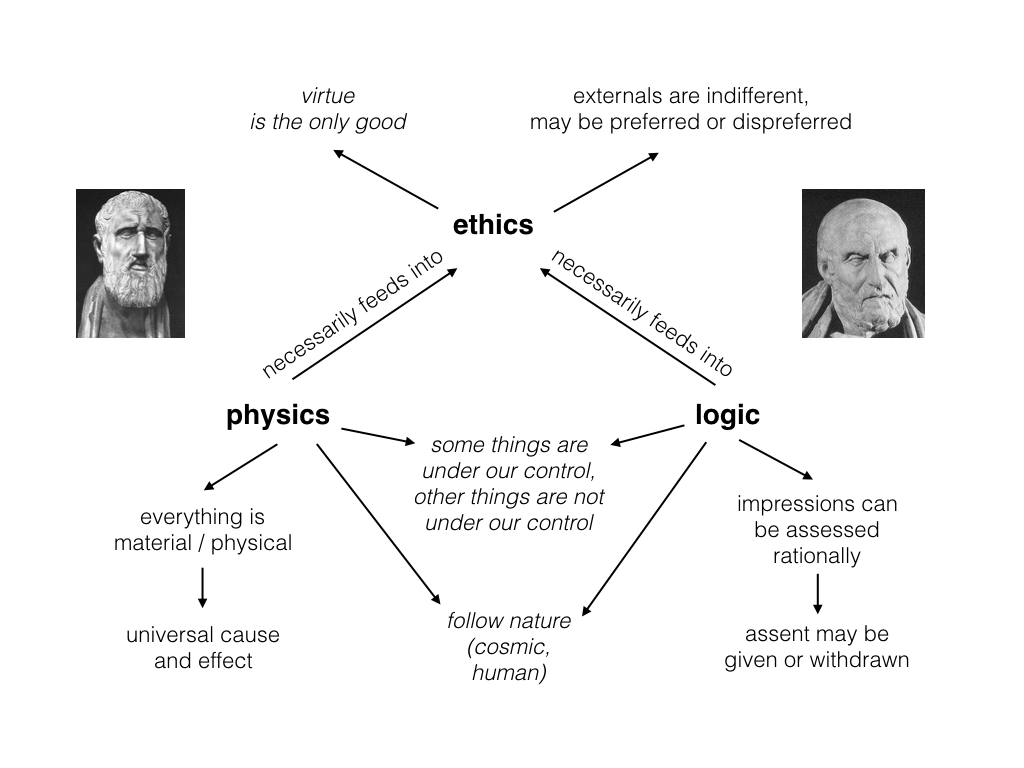
Stoic physics is a systems theory about cosmic law of rationality, that also covers almost the same idea as today's physics about the concept of dark energy, imo.


Stoic physics

https://en.wikipedia.org/wiki/Stoic_physics

Materialism

Philosophers since the time of Plato had asked whether abstract qualities of the soul, such as justice and wisdom, have an independent existence.[1] In particular, could something that was not visible and tangible be said to exist. The Stoics' answer to this dilemma was to assert that everything, including wisdom, justice, etc., are corporeal. Plato had defined being as "that which has the power to act or be acted upon,"[2] and for the Stoics this meant that all action proceeds by bodily contact; every form of causation is reduced to the efficient cause, which implies the communication of motion from one body to another. Only Body exists. Stoicism was thus fully materialistic; the answers to metaphysics are to be sought in physics; particularly the problem of the causes of things for which the Platonic Theory of Forms and the Peripatetic "constitutive form" had been put forth as solutions.
 
Here is about Stoic Logic.

How often religious people would like to follow logic in their thoughts or discussion?

Basically, religious people would prefer referring you to their holy books' verses, which is the only truth to them. Their logic then starts from there, according to the holy verses.


https://en.wikipedia.org/wiki/Stoic_logic

Stoics

The other great school of Greek logic is that of the Stoics.[33] Stoic logic traces its roots back to the late 5th century BC philosopher Euclid of Megara, a pupil of Socrates and slightly older contemporary of Plato, probably following in the tradition of Parmenides and Zeno. His pupils and successors were called "Megarians", or "Eristics", and later the "Dialecticians". The two most important dialecticians of the Megarian school were Diodorus Cronus and Philo, who were active in the late 4th century BC.

240px-Chrysippos_BM_1846.jpg
Stone bust of a bearded, grave-looking man - Chrysippus of Soli

The Stoics adopted the Megarian logic and systemized it. The most important member of the school was Chrysippus (c. 278–c. 206 BC), who was its third head, and who formalized much of Stoic doctrine. He is supposed to have written over 700 works, including at least 300 on logic, almost none of which survive.[34][35] Unlike with Aristotle, we have no complete works by the Megarians or the early Stoics, and have to rely mostly on accounts (sometimes hostile) by later sources, including prominently Diogenes Laertius, Sextus Empiricus, Galen, Aulus Gellius, Alexander of Aphrodisias, and Cicero.[36]

Three significant contributions of the Stoic school were (i) their account of modality, (ii) their theory of the Material conditional, and (iii) their account of meaning and truth.[37]

Modality. According to Aristotle, the Megarians of his day claimed there was no distinction between potentiality and actuality.[38] Diodorus Cronus defined the possible as that which either is or will be, the impossible as what will not be true, and the contingent as that which either is already, or will be false.[39] Diodorus is also famous for what is known as his Master argument, which states that each pair of the following 3 propositions contradicts the third proposition:

Everything that is past is true and necessary.
The impossible does not follow from the possible.
What neither is nor will be is possible.

Diodorus used the plausibility of the first two to prove that nothing is possible if it neither is nor will be true.[40] Chrysippus, by contrast, denied the second premise and said that the impossible could follow from the possible.[41]

Conditional statements. The first logicians to debate conditional statements were Diodorus and his pupil Philo of Megara. Sextus Empiricus refers three times to a debate between Diodorus and Philo. Philo regarded a conditional as true unless it has both a true antecedent and a false consequent. Precisely, let T0 and T1 be true statements, and let F0 and F1 be false statements; then, according to Philo, each of the following conditionals is a true statement, because it is not the case that the consequent is false while the antecedent is true (it is not the case that a false statement is asserted to follow from a true statement):

If T0, then T1
If F0, then T0
If F0, then F1

The following conditional does not meet this requirement, and is therefore a false statement according to Philo:

If T0, then F0

Indeed, Sextus says "According to [Philo], there are three ways in which a conditional may be true, and one in which it may be false."[42] Philo's criterion of truth is what would now be called a truth-functional definition of "if ... then"; it is the definition used in modern logic.

In contrast, Diodorus allowed the validity of conditionals only when the antecedent clause could never lead to an untrue conclusion.[42][43][44] A century later, the Stoic philosopher Chrysippus attacked the assumptions of both Philo and Diodorus.

Meaning and truth. The most important and striking difference between Megarian-Stoic logic and Aristotelian logic is that Megarian-Stoic logic concerns propositions, not terms, and is thus closer to modern propositional logic.[45] The Stoics distinguished between utterance (phone), which may be noise, speech (lexis), which is articulate but which may be meaningless, and discourse (logos), which is meaningful utterance. The most original part of their theory is the idea that what is expressed by a sentence, called a lekton, is something real; this corresponds to what is now called a proposition. Sextus says that according to the Stoics, three things are linked together: that which signifies, that which is signified, and the object; for example, that which signifies is the word Dion, and that which is signified is what Greeks understand but barbarians do not, and the object is Dion himself.[46]
 
Your comprehension is beyond mine.

I would like to hear from you how you could compare the religion of Islam and the practical philosophy of Stoicism. Because I know very little about Islam, almost zero.

As a practical philosophy, Stoicism has no any religious laws that a practitioner of Stoicism would have to follow. A Stoic follows natural law. There is no personal God in Stoicism, but Universal God.

I would like to see one day the religious people believing in either Islam or Christianity or anything else would accept the practical philosophy of Stoicism, more than their religious doctrines. Much much more.

Then the whole world would become a more peaceful world. Solving problems with rationality, rather than following any interpretations from their holy books they were taught.

Fair enough, but let me explain!

In the Quranic verse, Muhammed was describing the evolution process and natural laws that governors our universe to the unbelievers in layman’s terms; which I found it to be very similar to the way you described God in your previous post.
By the way, Islam means peace!

Having said that, I believe that religion is part of the human society evolution ladder and that Buddha, Ibrahim, Moses, Jesus, Muhammad and many others are all good men who contemplated the existence of god and came up with a very similar concept that good will prevail on evil as the human society progresses!

Peace!
 
Last edited:
The last of 3 major parts about Stoicism is Stoic Ethics.

Very much a practical philosophy of inner peace in our daily life, imo.

https://en.wikipedia.org/wiki/Stoicism

Ethics and virtues

The ancient Stoics are often misunderstood because the terms they used pertained to different concepts in the past than they do today. The word "stoic" has come to mean "unemotional" or indifferent to pain, because Stoic ethics taught freedom from "passion" by following "reason". The Stoics did not seek to extinguish emotions; rather, they sought to transform them by a resolute "askēsis" that enables a person to develop clear judgment and inner calm.[17] Logic, reflection, and concentration were the methods of such self-discipline.

Borrowing from the Cynics, the foundation of Stoic ethics is that good lies in the state of the soul itself; in wisdom and self-control. Stoic ethics stressed the rule: "Follow where reason leads." One must therefore strive to be free of the passions, bearing in mind that the ancient meaning of "passion" was "anguish" or "suffering",[18] that is, "passively" reacting to external events, which is somewhat different from the modern use of the word. A distinction was made between pathos (plural pathe) which is normally translated as passion, propathos or instinctive reaction (e.g., turning pale and trembling when confronted by physical danger) and eupathos, which is the mark of the Stoic sage (sophos). The eupatheia are feelings that result from correct judgment in the same way as passions result from incorrect judgment.

The idea was to be free of suffering through apatheia (Greek: ἀπάθεια; literally, "without passion") or peace of mind,[19] where peace of mind was understood in the ancient sense—being objective or having "clear judgment" and the maintenance of equanimity in the face of life's highs and lows.

For the Stoics, reason meant not only using logic, but also understanding the processes of nature—the logos, or universal reason, inherent in all things. Living according to reason and virtue, they held, is to live in harmony with the divine order of the universe, in recognition of the common reason and essential value of all people.

The four cardinal virtues of the Stoic philosophy is a classification derived from the teachings of Plato:

wisdom (Sophia)
courage (Andreia)
justice (Dikaiosyne)
temperance (Sophrosyne).

Following Socrates, the Stoics held that unhappiness and evil are the results of human ignorance of the reason in nature. If someone is unkind, it is because they are unaware of their own universal reason, which leads to the conclusion of kindness. The solution to evil and unhappiness then, is the practice of Stoic philosophy: to examine one's own judgments and behavior and determine where they diverge from the universal reason of nature.

The Stoics accepted that suicide was permissible for the wise person in circumstances that might prevent them from living a virtuous life.[20] Plutarch held that accepting life under tyranny would have compromised Cato's self-consistency (constantia) as a Stoic and impaired his freedom to make the honorable moral choices.[21] Suicide could be justified if one fell victim to severe pain or disease,[20] but otherwise suicide would usually be seen as a rejection of one's social duty.[22]


The doctrine of "things indifferent"

In philosophical terms, things that are indifferent are outside the application of moral law, that is without tendency to either promote or obstruct moral ends. Actions neither required nor forbidden by the moral law, or that do not affect morality, are called morally indifferent. The doctrine of things indifferent (ἀδιάφορα, adiaphora) arose in the Stoic school as a corollary of its diametric opposition of virtue and vice (καθήκοντα kathekon and ἁμαρτήματα hamartemata, respectively "convenient actions," or actions in accordance with nature, and mistakes). As a result of this dichotomy, a large class of objects were left unassigned and thus regarded as indifferent.

Eventually three sub-classes of "things indifferent" developed: things to prefer because they assist life according to nature; things to avoid because they hinder it; and things indifferent in the narrower sense. The principle of adiaphora was also common to the Cynics and Sceptics. The doctrine of things indifferent was revived during the Renaissance by Philipp Melanchthon.


Spiritual exercise

Philosophy for a Stoic is not just a set of beliefs or ethical claims, it is a way of life involving constant practice and training (or askesis, see asceticism). Stoic philosophical and spiritual practices included logic, Socratic dialogue and self-dialogue, contemplation of death, training attention to remain in the present moment (similar to some forms of Eastern meditation), and daily reflection on everyday problems and possible solutions. Philosophy for a Stoic is an active process of constant practice and self-reminder.

In his Meditations, Marcus Aurelius defines several such practices. For example, in Book II.I:

Say to yourself in the early morning: I shall meet today ungrateful, violent, treacherous, envious, uncharitable men. All of the ignorance of real good and ill... I can neither be harmed by any of them, for no man will involve me in wrong, nor can I be angry with my kinsman or hate him; for we have come into the world to work together...

Prior to Aurelius, Epictetus in his Discourses, distinguished between three types of act: judgment, desire, and inclination.[23] According to French philosopher Pierre Hadot, Epictetus identifies these three acts with logic, physics, and ethics respectively.[24] Hadot writes that in the Meditations, "Each maxim develops either one of these very characteristic topoi [i.e., acts], or two of them or three of them."[25]

The practices of spiritual exercises have been described as influencing those of reflective practice by Seamus Mac Suibhne.[26] Parallels between Stoic spiritual exercises and modern cognitive-behavioral therapy have been detailed at length in Robertson's The Philosophy of Cognitive-Behavioral Therapy.[27]
 
Fair enough, but let me explain!

In the Quranic verse, Muhammed was describing the evolution process and natural laws that governors our universe to the unbelievers in layman’s terms; which I found it to be very similar to the way you described God in your previous post.
By the way, Islam means peace!

Having said that, I believe that religion is part of the human society evolution ladder and that Buddha, Ibrahim, Moses, Jesus, Muhammad and many others are all good men who contemplated the existence of god and came up with a very similar concept that good will prevail on evil as the human society progresses!

Peace!

imo, the evolution/weakness of various religions has/had been trying to find/define God in a mystical direction which is to limit/ restrict what God can do and what God will not do, according to their holy books that was written by human beings, in order to ask their followers to follow through.

The holy books Is beyond and above God! ??? (Possibly a major source of causing various religious/political conflicts.)

A practical philosophy like Stoicism removes all the religious mysticism.

imo, the leaders of traditional religions should modernise/liberalise their religions by adopting/integrating more and more practical philosophy elements. Making their religions becoming much more believable than before.

That would be truly a Real Peace!

LOL
 
Last edited:
The last of 3 major parts about Stoicism is Stoic Ethics.

Very much a practical philosophy of inner peace in our daily life, imo.

“Say to yourself in the early morning: I shall meet today ungrateful, violent, treacherous, envious, uncharitable men. All of the ignorance of real good and ill... I can neither be harmed by any of them, for no man will involve me in wrong, nor can I be angry with my kinsman or hate him; for we have come into the world to work together...”

Marcus Aurelius

To that I say Amen Brother!
 
“Say to yourself in the early morning: I shall meet today ungrateful, violent, treacherous, envious, uncharitable men. All of the ignorance of real good and ill... I can neither be harmed by any of them, for no man will involve me in wrong, nor can I be angry with my kinsman or hate him; for we have come into the world to work together...”

Marcus Aurelius

To that I say Amen Brother!

There are too many new things I would like to learn from Stoicism.

One of them is the concept about evil person/doing.

Stoicism accepts that evil person/doing is simply part of nature/God. AFAIK

That makes me how to understand why Jesus says to accept your evil enemies' existence. This kind of acceptance is agape-love, therefore to agape-love your enemies' existence.

That's Stoicism.

Perhaps because of this, the concept of sin is also not much mentioned in Stoicism. AFAIK

When people following the Stoicism, with a mind of accepting evil person/thing as part of daily life, and without much concept of sin, (s)he then should be hardly often a hater.

It's funny, and practically useful.

Just 10 cents!
 
Religion: Whatever the holy book says is good!
Philosophy: Arguing what is good!
Practical Philosophy: Just being good!

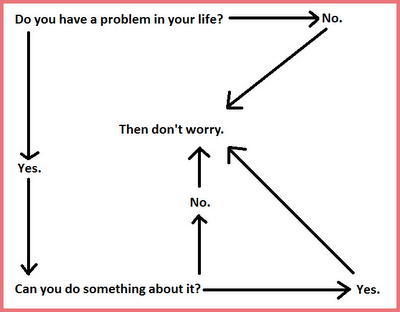
No+Worries+Diagram.png


stoic-decision-making.jpeg


minimalist-stoicism.jpeg
 
Last edited:
Status
Not open for further replies.
Back
Top