one question: need know:describe you stop-loss.This is true, but then the answer to your problem is contained within what you say... don't trade the lower time frame. I've been stopped out many times via a pre-set 5 point stop loss, only to see price quickly recover. The critical thing to watch in my opinion is what happens once price reaches a previous swing low or high that you're watching. Just because it penetrates a little and might stop you out is no reason to get out if the buying or selling isn't actually there to break through that level. I often try and think "if a trade doesn't set up in the opposite direction, then there perhaps is no reason to get out just yet"

You are using an out of date browser. It may not display this or other websites correctly.
You should upgrade or use an alternative browser.
You should upgrade or use an alternative browser.
House of If You Can Draw A Straight Line
- Thread starter dbphoenix
- Start date
- Status
- Not open for further replies.
i ask because a trader stop-loss define the trade. trader stop tell much about TF,psychy, ENTRYone question: need know:describe you stop-loss.
i apologize i have not read 'straight line' thread nor familiar with method
Last edited:

I don't understand why you guys are scared of the lower time frame. For NQ there is isn't much difference. Same demand & supply dynamic works even on ticks. One has to ensure where one's getting in but the theory or logic of it doesn't change.
I am getting a bit confused as to the theoretical disconnect between stop losses and the questions being asked. It seems as if the basic understanding about price movement is only being eluded to instead of being the core of the thinking process. Maybe I haven't been paying much attention to smaller time frames much but I did trade a bit of intra-day and everything worked the same.
This idea that algos are somehow causing some ripples that are causing the supposed stop loss hit isn't anything to do with the algos and more to do with how trading takes place. There is at times confusion among traders and the waves do get turbulent.
Stop losses aren't a pick-a-stop-and-let-it-be thing with this method. We're looking at how demand and supply change behavior, and even if stop loss isn't hit but price isn't doing what's it was supposed to can be reason enough to exit. So those looking at where stop loss is placed are missing the point of what's being done.
Straight line reduces the thinking to focusing on fewer things, and mainly on price itself. Line itself isn't necessary, but is a visual guide. Books on trading generally teach us to think about risk/reward before placing a trade, and not on the dynamic aspects of price itself.
Before the trade is placed it's all speculation as to how far the price might go. I am going off on a tangent here but this threat may not be about this discussion and maybe there's a coherent way to explain all this and I am just seriously startled at the kinds of questions and answer coming this way.
With SLA we know when to exit but it's not fixed and the stop changes. K P are you with me here or am I losing you too in this discussion? I haven't been writing much about the theoretical aspects of it since SLA-AMT was so clear about entry and exit criteria. There is deep theory behind all this and confusion only means one needs to stick to the basics (as I do mostly) and just keep it simple. That deep theory, however, isn't that necessary since the advent of SLA-AMT. That's the whole point of it.
Gringo
I am getting a bit confused as to the theoretical disconnect between stop losses and the questions being asked. It seems as if the basic understanding about price movement is only being eluded to instead of being the core of the thinking process. Maybe I haven't been paying much attention to smaller time frames much but I did trade a bit of intra-day and everything worked the same.
This idea that algos are somehow causing some ripples that are causing the supposed stop loss hit isn't anything to do with the algos and more to do with how trading takes place. There is at times confusion among traders and the waves do get turbulent.
Stop losses aren't a pick-a-stop-and-let-it-be thing with this method. We're looking at how demand and supply change behavior, and even if stop loss isn't hit but price isn't doing what's it was supposed to can be reason enough to exit. So those looking at where stop loss is placed are missing the point of what's being done.
Straight line reduces the thinking to focusing on fewer things, and mainly on price itself. Line itself isn't necessary, but is a visual guide. Books on trading generally teach us to think about risk/reward before placing a trade, and not on the dynamic aspects of price itself.
Before the trade is placed it's all speculation as to how far the price might go. I am going off on a tangent here but this threat may not be about this discussion and maybe there's a coherent way to explain all this and I am just seriously startled at the kinds of questions and answer coming this way.
With SLA we know when to exit but it's not fixed and the stop changes. K P are you with me here or am I losing you too in this discussion? I haven't been writing much about the theoretical aspects of it since SLA-AMT was so clear about entry and exit criteria. There is deep theory behind all this and confusion only means one needs to stick to the basics (as I do mostly) and just keep it simple. That deep theory, however, isn't that necessary since the advent of SLA-AMT. That's the whole point of it.
Gringo
Last edited:

With SLA we know when to exit but it's not fixed and the stop changes. K P are you with me here or am I losing you too in this discussion? I haven't been writing much about the theoretical aspects of it since SLA-AMT was so clear about entry and exit criteria. There is deep theory behind all this and confusion only means one needs to stick to the basics (as I do mostly) and just keep it simple. That deep theory, however, isn't that necessary since the advent of SLA-AMT. That's the whole point of it.
Gringo
Hey Gringo... not losing me at all. What I found was that a line break is of course a much worse reason to exit and when I was drawing lines in too tight, they broke far too easily anyway. Then I started to use previous swing points (dropping the lines along the way), and this works much better, but of course you're still caught when you exit sometimes only to see price shoot back in your direction. Now I think that the best thing to do is watch how price reacts to that swing point that you're using as a way to figure out if buyers or sellers are in charge.
Of huge importance is knowing where to put your trade on. If you're trading in the middle of a range or chop, this all gets quite messy, and trades that are stopped out might still be great with-trend trades and you're simply caught in consolidation. But if you focus on trading at the extremes, which could be either channel extremes or levels you get from hourly/daily charts, then things get a bit easier because these entries either decisively work or they don't, and hence the stop will either never come close, or the fact that it does is a big clue in and of itself. Add to this the importance of figuring out if you're trending or ranging, which is part of the whole process of prep, and things get less cloudy.
I will say this though. The hard part is translating having a backtested trading plan with knowing what to do when and where based on the market. For me this means that things are firm, that rules are firm, which fulfills the first part, but watching what the market is telling you seems in some ways "lose". As you say, stop losses aren't a "pick-a-stop-loss" kind of thing, but are in some ways fluid. So once you introduce some amount of variability or the idea that "it depends", then you get really lost for a while.... at least I sure did.
Hey Gringo... not losing me at all. What I found was that a line break is of course a much worse reason to exit and when I was drawing lines in too tight, they broke far too easily anyway. Then I started to use previous swing points (dropping the lines along the way), and this works much better, but of course you're still caught when you exit sometimes only to see price shoot back in your direction. Now I think that the best thing to do is watch how price reacts to that swing point that you're using as a way to figure out if buyers or sellers are in charge.
Of huge importance is knowing where to put your trade on. If you're trading in the middle of a range or chop, this all gets quite messy, and trades that are stopped out might still be great with-trend trades and you're simply caught in consolidation. But if you focus on trading at the extremes, which could be either channel extremes or levels you get from hourly/daily charts, then things get a bit easier because these entries either decisively work or they don't, and hence the stop will either never come close, or the fact that it does is a big clue in and of itself. Add to this the importance of figuring out if you're trending or ranging, which is part of the whole process of prep, and things get less cloudy.
I will say this though. The hard part is translating having a backtested trading plan with knowing what to do when and where based on the market. For me this means that things are firm, that rules are firm, which fulfills the first part, but watching what the market is telling you seems in some ways "lose". As you say, stop losses aren't a "pick-a-stop-loss" kind of thing, but are in some ways fluid. So once you introduce some amount of variability or the idea that "it depends", then you get really lost for a while.... at least I sure did.
Since much of this has little or nothing to do with the SLA, perhaps moving the discussion to your journal would be more appropriate.
Opppss... my apologies.. you're absolutely right!Since much of this has little or nothing to do with the SLA, perhaps moving the discussion to your journal would be more appropriate.
the student transcend the mentor? noone know db you should be proud
Thanks DB for your constant work and sharing.
I'm a long term lurker and on and off trader.
Having a bit off time in between the years I try to reach another level in the game guided by SLA-AMT. This can only happen trough backtesting I believe, which is my topic at the moment.
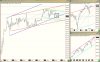
But to start, I would like to post a pic of how one can get lost in context...
At the end I believe that the channels are valid, aren't they?
At the end we are below the midline of all that colorful channels on the 60M
I'm a long term lurker and on and off trader.
Having a bit off time in between the years I try to reach another level in the game guided by SLA-AMT. This can only happen trough backtesting I believe, which is my topic at the moment.
But to start, I would like to post a pic of how one can get lost in context...
At the end I believe that the channels are valid, aren't they?
At the end we are below the midline of all that colorful channels on the 60M
Attachments
- Status
- Not open for further replies.