
Columbus was an extremely brave visionary and contributed so much to the world.

You are using an out of date browser. It may not display this or other websites correctly.
You should upgrade or use an alternative browser.
You should upgrade or use an alternative browser.
Happy Columbus Day !
- Thread starter brass_trader
- Start date

Welcoem back NY Hood!
A Columbus shipmate, Miguel Cuneo, wrote that “When our caravels … were to leave for Spain, we gathered … 1,600 male and female ‘Indians’ … on Feb. 17, 1495 … (and) we let it be known… that ... (any of the sailors) who wanted to take … them could do so.” Cuneo took a teenage “Caribbean girl as a gift from Columbus.” And when she “resisted …, (he) thrashed her mercilessly and raped her.” Speaking of rape, it was noted by University of Vermont history professor Dr. James Loewen that “As soon as the 1493 expedition got to the Caribbean ... Columbus was rewarding his lieutenants with native women to rape. On Haiti, sex slaves were one more prerequisite that … (they) enjoyed.” It included adult rape and child rape. As Columbus himself wrote in 1500, “… girls … from 9-10 … are … in demand.” In one day, de las Casas saw Columbus’ soldiers “dismember, behead or rape 3,000 natives.” As a result, de las Casas wrote, “My eyes have seen these acts so foreign to human nature that now I tremble as I write.”
A Columbus shipmate, Miguel Cuneo, wrote that “When our caravels … were to leave for Spain, we gathered … 1,600 male and female ‘Indians’ … on Feb. 17, 1495 … (and) we let it be known… that ... (any of the sailors) who wanted to take … them could do so.” Cuneo took a teenage “Caribbean girl as a gift from Columbus.” And when she “resisted …, (he) thrashed her mercilessly and raped her.” Speaking of rape, it was noted by University of Vermont history professor Dr. James Loewen that “As soon as the 1493 expedition got to the Caribbean ... Columbus was rewarding his lieutenants with native women to rape. On Haiti, sex slaves were one more prerequisite that … (they) enjoyed.” It included adult rape and child rape. As Columbus himself wrote in 1500, “… girls … from 9-10 … are … in demand.” In one day, de las Casas saw Columbus’ soldiers “dismember, behead or rape 3,000 natives.” As a result, de las Casas wrote, “My eyes have seen these acts so foreign to human nature that now I tremble as I write.”
That is total bullshit. Stop listening to clowns from the university of vermont.

Brutality is a human plague
The indigenous peoples of North America are fortunate not to have a written history to record their Brutality
With scant archeological evidence, it is hard to know how many Aztecs died under the sacrificial knife. Many reputable scholars today put the number between 20,000 and 250,000 per year for the whole Aztec Empire
_0.jpg)
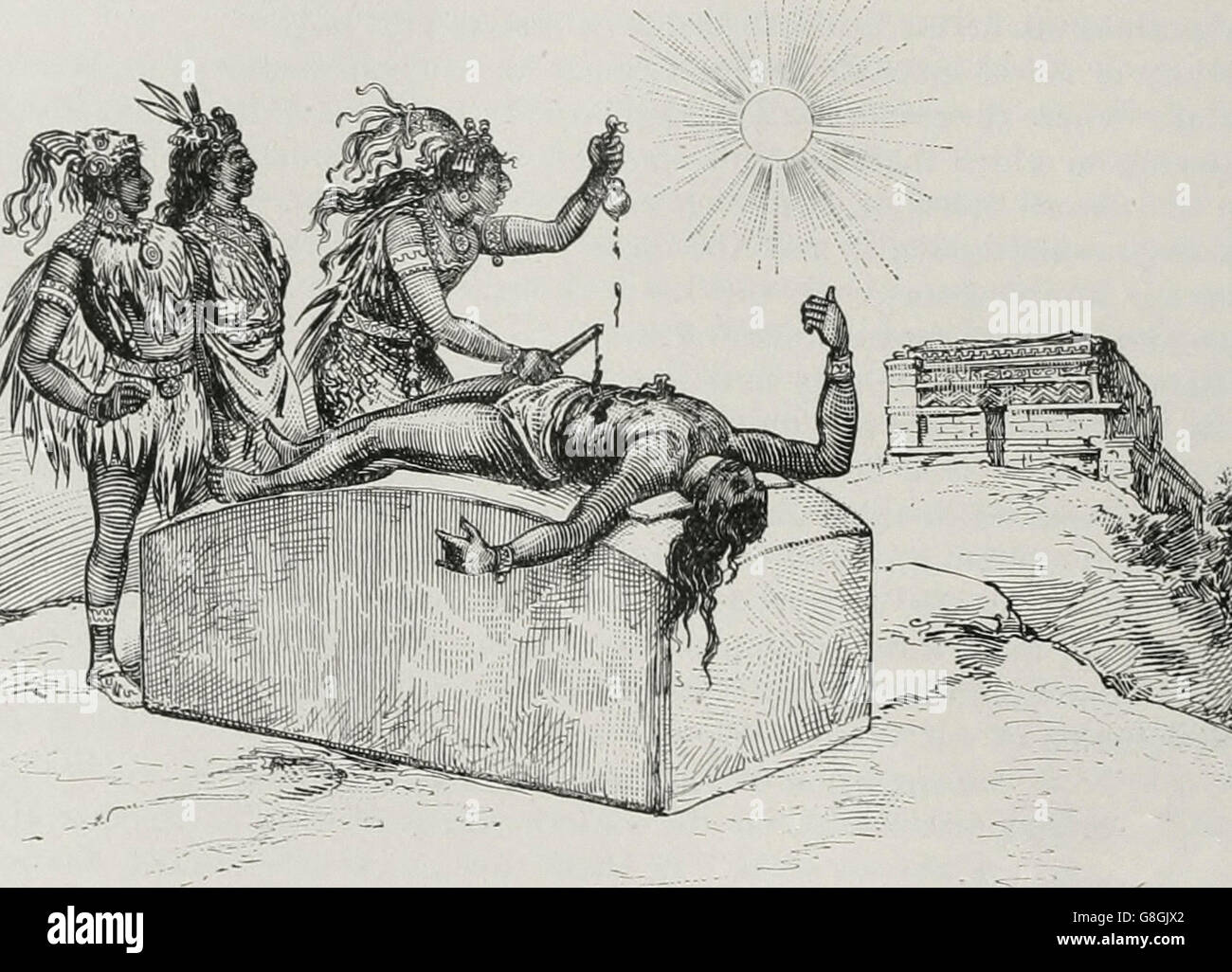
The indigenous peoples of North America are fortunate not to have a written history to record their Brutality
With scant archeological evidence, it is hard to know how many Aztecs died under the sacrificial knife. Many reputable scholars today put the number between 20,000 and 250,000 per year for the whole Aztec Empire
Last edited:
I would believe this professor.
“Enter the scholarly work of a professor emerita at Stanford University, Carol Delaney, a cultural anthropologist with degrees from Harvard and the University of Chicago. She is also a research fellow at Brown University. Her riveting book, “Columbus and the Quest for Jerusalem,” was actually published in 2012, but has gained little in the way of promotion even by its publisher, Simon & Schuster, who are as politically correct about the issue as some school boards. The book’s impeccable scholarship is rarely cited. Why would that be?
Given the now-popular debunking of the historical narrative of Columbus as a hero, is it possible no one wants to acknowledge contrary evidence from solid sources — so solid that it debunks the debunking?
Delaney offers a provocative, central point: she found in her research something of a surprise, what most if not all historians have up till now virtually ignored: Columbus left behind a considerable volume of his own writings, right down to orders he issued to his crews, letters to the then Pope, Alexander VI, a lengthy diary and just before he died, his “Book of Prophecies.” Delaney also recounts the informative writings of his contemporaries, including those who wrote objectively of his voyages, commenting on his failings as well as his achievements.
So the book is hard if not impossible to dispute, and that is one of several reasons it was named among the “top 100 books of the year” by the Times Literary Review.
When Columbus took this bold voyage, contrary to the myth that smears him today, he befriended the native people, traded with them, respectfully interacted with them and led his crews to do the same. He also formed a close relationship with their chief, whose son became their interpreter. Columbus later took the chief’s son and five other tribe members as guests — not slaves in chains as some would have us believe — on his emergency return back to Spain to replace his lost ships. Those lost ships caused him to leave 46 of his crew behind on the island of Hispaniola with clear written, recorded orders: continue to treat the indigenous people well.
It was his crew who disobeyed Columbus’s strict orders, who pillaged and raped their way around the island in his absence, sealing their own fate. Meanwhile, Columbus spent considerable time in Spain, replacing his lost ships. He proudly introduced the six members of the tribe at court to Isabella and King Ferdinand, who proclaimed themselves the godparents of the chief’s son, a significant honor.
Upon his anxious return to the New World, Columbus found all his marooned crew dead, killed for their misdeeds at the hands of their intended Native American victims. The chief and his tribe welcomed Columbus back, and Columbus wrote with palpable remorse of what the chief reported of the crew members’ atrocities.
Professor Delaney’s book is not an apologist’s take, but a thought-provoking and compelling reappraisal of Columbus and his legacy, as several distinguished book reviews describe it. His writings reveal a thoughtful interpretation of the native cultures that he encountered. He was sensitive and respectful in this regard in a way that was ahead of his time. While the reconquest of Jerusalem was his life’s passion, his views are today ignored or downplayed. They get in the way of the now commonly accepted, distorted opinion of a great man. Delaney’s magnificent tome, by its content and total effect, admirably defines the real Columbus, and will correctly inform the public, its opinions and policymakers, such as the Southampton school board.
One final thought: Is the precipitous decline of the teaching of American history opening the door to a new generation’s complete misunderstanding of not only Columbus, but also of Washington, Lincoln, MacArthur and other giants of America’s seriously flawed, but still exceptional and proud story?”
“Enter the scholarly work of a professor emerita at Stanford University, Carol Delaney, a cultural anthropologist with degrees from Harvard and the University of Chicago. She is also a research fellow at Brown University. Her riveting book, “Columbus and the Quest for Jerusalem,” was actually published in 2012, but has gained little in the way of promotion even by its publisher, Simon & Schuster, who are as politically correct about the issue as some school boards. The book’s impeccable scholarship is rarely cited. Why would that be?
Given the now-popular debunking of the historical narrative of Columbus as a hero, is it possible no one wants to acknowledge contrary evidence from solid sources — so solid that it debunks the debunking?
Delaney offers a provocative, central point: she found in her research something of a surprise, what most if not all historians have up till now virtually ignored: Columbus left behind a considerable volume of his own writings, right down to orders he issued to his crews, letters to the then Pope, Alexander VI, a lengthy diary and just before he died, his “Book of Prophecies.” Delaney also recounts the informative writings of his contemporaries, including those who wrote objectively of his voyages, commenting on his failings as well as his achievements.
So the book is hard if not impossible to dispute, and that is one of several reasons it was named among the “top 100 books of the year” by the Times Literary Review.
When Columbus took this bold voyage, contrary to the myth that smears him today, he befriended the native people, traded with them, respectfully interacted with them and led his crews to do the same. He also formed a close relationship with their chief, whose son became their interpreter. Columbus later took the chief’s son and five other tribe members as guests — not slaves in chains as some would have us believe — on his emergency return back to Spain to replace his lost ships. Those lost ships caused him to leave 46 of his crew behind on the island of Hispaniola with clear written, recorded orders: continue to treat the indigenous people well.
It was his crew who disobeyed Columbus’s strict orders, who pillaged and raped their way around the island in his absence, sealing their own fate. Meanwhile, Columbus spent considerable time in Spain, replacing his lost ships. He proudly introduced the six members of the tribe at court to Isabella and King Ferdinand, who proclaimed themselves the godparents of the chief’s son, a significant honor.
Upon his anxious return to the New World, Columbus found all his marooned crew dead, killed for their misdeeds at the hands of their intended Native American victims. The chief and his tribe welcomed Columbus back, and Columbus wrote with palpable remorse of what the chief reported of the crew members’ atrocities.
Professor Delaney’s book is not an apologist’s take, but a thought-provoking and compelling reappraisal of Columbus and his legacy, as several distinguished book reviews describe it. His writings reveal a thoughtful interpretation of the native cultures that he encountered. He was sensitive and respectful in this regard in a way that was ahead of his time. While the reconquest of Jerusalem was his life’s passion, his views are today ignored or downplayed. They get in the way of the now commonly accepted, distorted opinion of a great man. Delaney’s magnificent tome, by its content and total effect, admirably defines the real Columbus, and will correctly inform the public, its opinions and policymakers, such as the Southampton school board.
One final thought: Is the precipitous decline of the teaching of American history opening the door to a new generation’s complete misunderstanding of not only Columbus, but also of Washington, Lincoln, MacArthur and other giants of America’s seriously flawed, but still exceptional and proud story?”
It is clear Columbus wasn't pleased with the Spaniards, and he wasn't giving them women. It's also clear Columbus was not okay with rape.
It is ironic how revisionists highlighted, and magnified Michele de Cuneo’s rape story, but avoided the parts in the very same letter where he confirmed that the Caribs depopulated islands with raids, slavery, rapes, murder, and cannibalism. Cuneo also tells us that, in the meantime, Columbus was rescuing the Taínos from being kidnapped and raped by the Caribs. This is what he wrote:
It is ironic how revisionists highlighted, and magnified Michele de Cuneo’s rape story, but avoided the parts in the very same letter where he confirmed that the Caribs depopulated islands with raids, slavery, rapes, murder, and cannibalism. Cuneo also tells us that, in the meantime, Columbus was rescuing the Taínos from being kidnapped and raped by the Caribs. This is what he wrote:
Welcoem back NY Hood!
A Columbus shipmate, Miguel Cuneo, wrote that “When our caravels … were to leave for Spain, we gathered … 1,600 male and female ‘Indians’ … on Feb. 17, 1495 … (and) we let it be known… that ... (any of the sailors) who wanted to take … them could do so.” Cuneo took a teenage “Caribbean girl as a gift from Columbus.” And when she “resisted …, (he) thrashed her mercilessly and raped her.” Speaking of rape, it was noted by University of Vermont history professor Dr. James Loewen that “As soon as the 1493 expedition got to the Caribbean ... Columbus was rewarding his lieutenants with native women to rape. On Haiti, sex slaves were one more prerequisite that … (they) enjoyed.” It included adult rape and child rape. As Columbus himself wrote in 1500, “… girls … from 9-10 … are … in demand.” In one day, de las Casas saw Columbus’ soldiers “dismember, behead or rape 3,000 natives.” As a result, de las Casas wrote, “My eyes have seen these acts so foreign to human nature that now I tremble as I write.”
Just note that this supposed letter from Miguel Cuneo (who is actually Michele de Cuneo -- they don't even get the name right in social media) may very well be a fabrication.
http://www.officialchristophercolumbus.com/2018/08/did-columbus-rape-anyone-michele-de.html
Just note that this supposed letter from Miguel Cuneo (who is actually Michele de Cuneo -- they don't even get the name right in social media) may very well be a fabrication.
http://www.officialchristophercolumbus.com/2018/08/did-columbus-rape-anyone-michele-de.html
You do know that Columbus was arrested and sent back in chains to Spain for the atrocities he committed in Haiti.... are you defending Columbus?
Columbus’s governance of Hispaniola could be brutal and tyrannical. Native islanders who didn’t collect enough gold could have their hands cut off, and rebel Spanish colonists were executed at the gallows. Colonists complained to the monarchy about mismanagement, and a royal commissioner dispatched to Hispaniola arrested Columbus in August 1500 and brought him back to Spain in chains. Although Columbus was stripped of his governorship, King Ferdinand not only granted the explorer his freedom but subsidized a fourth voyage
Why does the left hate Columbus and lie about him? Columbus was a devout Catholic who opened up a new world. The left is also constantly looking for victims and they need to go back to the 1400’s to invent atrocities at the hands of a devout Catholic that never occurred.
The left wont mention how the “ caribs” were violent cannibals that raped and murdered countless numbers of innocent people.
The left wont mention how the “ caribs” were violent cannibals that raped and murdered countless numbers of innocent people.
Yes I am.You do know that Columbus was arrested and sent back in chains to Spain for the atrocities he committed in Haiti.... are you defending Columbus?
Francisco de Bobadilla had Columbus sent back to Spain in chains after Columbus refused to recognise him as governor of Haiti).
It was all political and completely fabricated.