
Global Warming: For Experts Only

December 23 2017

UFOs: we are at 'beyond reasonable doubt', says former head of real-life X-Files

Earth may well have been visited by UFOs, the former head of a secret US government programme believes.

Luis Elizondo says the existence of supremely advanced unidentified aircraft, using technology that does not belong to any nation, has been "proved beyond reasonable doubt".

http://www.theage.com.au/technology...ead-of-real-life-x-files-20171222-p4yy2r.html

"It was enough where we began to see trends and similarities in incidents," he says.

"There were very distinct observeables. Extreme manoevrability, hypersonic velocity without a sonic boom, speeds of 7-8000 miles per hour (11,000 to 13,000 km/h), no flight surfaces on the objects. A lot of this is backed with radar signal data, gun camera footage from aircraft, multiple witnesses.

"There was never any display of hostility but the way they manouevred, in ways no one else in the world had, you have to be conscious something could happen."

Logically the proven technology UFOs currently use would help easily resolving our AGW problem, through using their Green Powerful Radiation-free CO2-free technology to provide our green energy needs.

Providing the UFO technology doesn't create any Green problems. Providing CO2 and energy are the only problems.

How do we know their technology is actually Green, without causing/contributing to our AGW (or UFO-GW) problems?


There is another possibility:
Too many visits in the last many decades by UFOs producing too much CO2 due to extra-fast speed flying in the sky/oceans. lol
 
Last edited:
Today's news - From strength to strength:

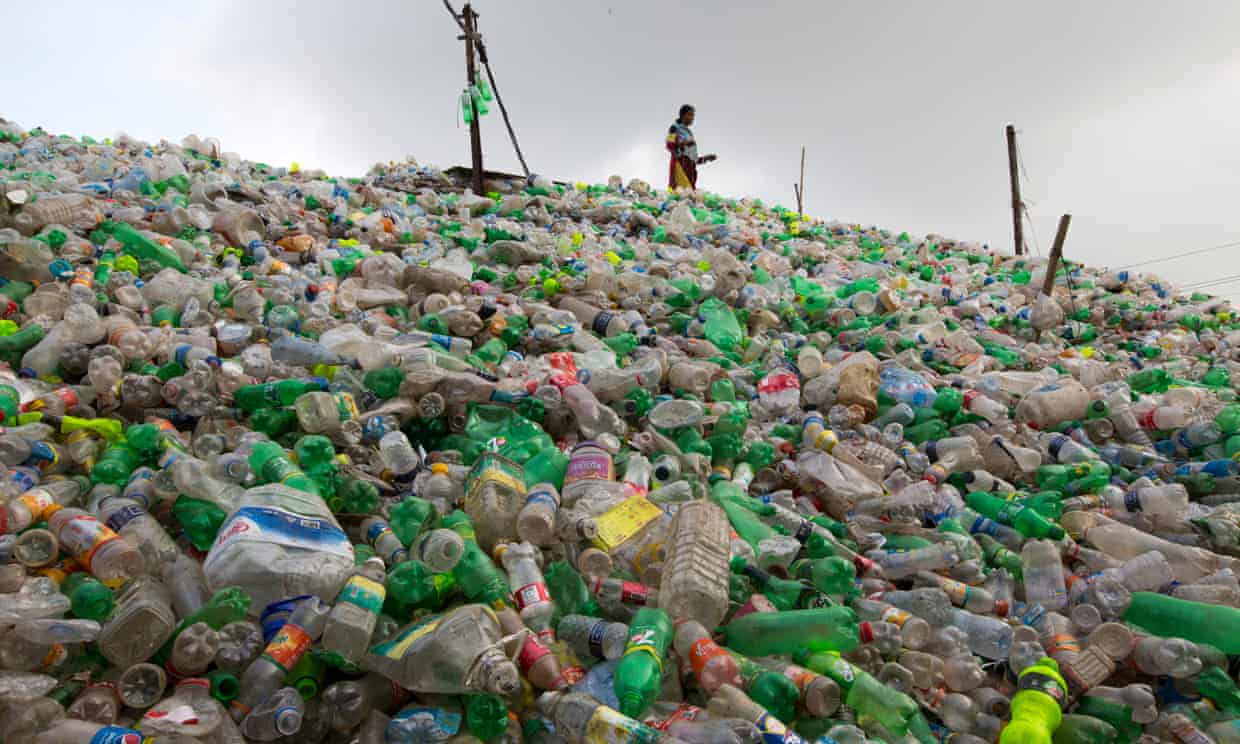
Does "Not" have to be Micro-Plastics, or CO2!

"One million plastic bottles are bought around the world every minute, with most ending up in landfill or in the sea. Photograph: Zakir Chowdhury/Barcroft Images "

5760.jpg


"In one recent survey, an international team reported more than 5 trillion pieces of plastic are floating in the world’s oceans, collectively weighing nearly 269,000 tonnes."


79b5b1e1-e5ea-4eed-8b31-b26bc73a3416-2060x1236.jpeg
Coastal pollution, viewed from underwater, in Philippines. Photograph: Jurgen Freund/Corbis

Q
Does "Not" have to be Micro-Plastics, or CO2!
UQ

When the density of plastic microbead/microfiber/waste in ocean waters since decades ago has been growing gradually higher and alarmingly higher daily in a cumulative manner sooner or later at an exponential rate/level, anything could happen ...


Climate Sea Rise
Climate-Sea-Rise.jpg
https://newmatilda.com/2016/12/05/climate-sea-rise/


http://www.beatthemicrobead.org/science/

* Substantial quantities of microplastics in the ocean sink to the bottom. This is shown in a study into plastics in the Atlantic Ocean, the Indian Ocean and the Mediterranean Sea. A team of scientists researched these oceans between 2001 and 2012 to a depth of up to 3000 metres. The amount of plastic on the ocean floor is 1000 times greater than the amount floating on the surface. http://bit.ly/2arHkGj.

* The ocean contains an estimated minimum of 5.25 trillion plastic particles weighing nearly 269,000 tons of floating particles. http://bit.ly/2aGMe2K.
 
Last edited:
I used to think people made rational decisions. But now I know I was wrong
Deborah Orr

The value of calm reasoning – the cornerstone of democracy – is acknowledged rarely today. Even when we think we’re being rational, we don’t know what that is

https://www.theguardian.com/comment...cond-thoughts-rational-decisions-brexit-trump
Thu 28 Dec ‘17

It’s been coming on for a while, so I can’t claim any eureka moment. But something did crystallise this year. What I changed my mind about was people. More specifically, I realised that people cannot be relied upon to make rational choices. We would have fixed global warming by now if we were rational. Instead, there’s a stubborn refusal to let go of the idea that environmental degradation is a “debate” in which there are “two sides”.

Debating is a great way of exploring an issue when there is real room for doubt and nuance. But when a conclusion can be reached simply by assembling a mountain of known facts, debating is just a means of pitting the rational against the irrational.

Sometimes alarmists unknowingly push a real issue (temperature warming due to using too many containers) from a bad direction (don't cut tress for bettering CO2 cycle when using less paper containers) to a worse direction (producing plastic micro-beads/micro-fibers/wastes when using degradable plastic containers)!

Perhaps the saving by producing Non-Biodegradable products is not worth the cost of cleaning up the general Degradable products that are now flowing in waters everywhere, especially the oceans causing temperature warming/volatility.

My guess is the Non-Biodegradable plastic micro-beads/micro-fibers/wastes could cause not only long-lasting plastic density/content in ocean waters, but also ever-growing volume of sea waters, concurrently!

Perhaps we need to clean up the existing plastic micro-beads/micro-fibers/wastes (Not easy!);

Greatly slowing down our daily use of any new plastic micro-beads/micro-fibers/wastes (Not easy!) by learning how we can do that (possibly we don't really know how yet from experts!);

Speeding up our development of new technologies for producing Biodegradable plastic products (It's currently very expensive - a few times dearer, while not as durable/reliable!)!

As sooner or later who are going to pay for the clean-up cost (including sometimes properties damages by extreme weathers)? The public, or the manufacturers?

New legislation is needed - For producing not just low-cost Non-Biodegradable plastic products! Or marking and printing bar code of serial numbers and dates from registered manufacturers!

Selling and using any products from Non-registered manufacturers should be prohibited!

Just 2 cents! LOL

Degradable Vs Biodegradable - Because We Care Biodegradable ...
www.becausewecare.com.au/why.../degradable-vs-biodegradable.aspx

http://www.becausewecare.com.au/why-compostable/degradable-vs-biodegradable.aspx

What's the difference? Degradable bags are commonly mistaken for biodegradable bags. But unlike biodegradable bags, they do not break down into water, carbon dioxide and biomass. A degradable bag is still a petroleum-based plastic bag that break down into smaller pieces.

f.ashx
 
I know I could be wrong by saying this but I would venture to say that both the CO2 and the temperature are not the problems, as they are actually the measures and derivatives of the real problems.

The sources and the feedback loops regarding how the CO2 and the temperature are created to affect/impact the environment imo is the real problem that requires thorough investigation.

According to Deming, the root causes generating CO2 and heat are the actual problem(s), imo, and both the "common" and "special" sources for the root causes must be known to people in order to reduce the adverse impact of the problem.

That is the knowledge we need to learn from the experts in climate change. Not reduction targets!

"We do need knowledge for improvements, and incorrect knowledge would prolong the problem and sometimes make it even worse!", per Deming (paraphrase).

Just 2 cents!

" Page 60: There is widespread resistance of knowledge. Advances of the kind needed in Western industry require knowledge, yet people are afraid of knowledge. Pride may play a part in resistance to knowledge. New knowledge brought into the company might disclose some of our failings. A better outlook is of course to embrace new knowledge because it might help us to do a better job.

Some people may wonder whether at this stage of life they can learn something new. If there were a change, where would I be?

New knowledge would cost money. Would we get our money back? When?

...

Fundamental research, to be effective, requires infusion of knowledge.

" Page 466: Knowledge is a scarce national resource. Knowledge in any country is a national resource. Unlike rare matals,which can not be replaced, the supply of knowledge in any field can be increased by education."

--- 'Out of the Crisis' by W. Edward Deming (Eighteenth Printing, May 1992)

 
Last edited:
'Sea bugs' attack Melbourne teen's legs during Brighton ocean swim

Updated August 07, 2017

"It sort of looked like hundreds of little pinholes or pin-sized bites distributed all over my ankle and the top of my foot," he said.
http://www.abc.net.au/news/2017-08-07/brighton-sea-bugs-ocean-swim-teenager/8780138
8780158-3x2-700x467.jpg
Photo: Hospital staff were at a loss to explain what happened. (AAP: Supplied) http://www.abc.net.au/news/2017-08-07/teen-attacked-by-sea-bugs/8781570


What if the fish nowadays prefers to eat plastic micro-beads than other usual sea-stuff http://www.flokka.com/fish-eat/ ?

Probably the whole ecology would be changed (if not damaged yet), at least temporarily.

The combination of sea-stuff (that remind alive till they die naturally) and micro-beads (that would not be digested before returning to ocean waters) in oceans can be collectively increased in a non-linear manner, and could become an exponential growth later.


* Fish prefer to eat plastic over food – and it is killing them, study ...
www.independent.co.uk/.../fish-microplastic-microbeads-perch-pike-food-marine-pollution-a7063161.html - Cached - Similar
3 Jun 2016 ... Microplastic particles appear to be killing fish because their larvae prefer to eat them rather than their actual food, researchers have warned. With fears that ... Cosmetics companies are also continuing to put plastic microbeads into their products, with the industry saying it will try to phase them out by 2020.

* From sea to plate: how plastic got into our fish | Life and style | The ...
https://www.theguardian.com/lifeandstyle/.../sea-to-plate-plastic-got-into-fish - Similar
14 Feb 2017 ... Contaminated fish and shellfish have been found everywhere from Europe, Canada and Brazil to the coast of mainland China – and plastic-eating fish ... all those plastic bottles and bags down into tiny pieces, which, in common with microbeads and fibres, potentially leach toxic chemical additives – PCBs, ...

* Microbeads could be turning the fish we eat toxic, study finds
https://www.sciencealert.com/microbeads-are-causing-the-fish-we-eat-to-become-toxic-study-finds - Cached
Microbeads Could Be Turning The Fish We Eat Toxic, Study Finds. Sashimi, please. Hold the plastic. JOSH HRALA. 17 AUG 2016. Scientists have found worrying evidence that fish are becoming toxic, as their environments are being polluted with billions of microbeads – the tiny plastic particles commonly found in face ...

* Plastic microparticles found in flesh of fish eaten by humans | The ...
www.independent.co.uk/.../plastic-microparticles-fish-flesh-eaten-humans-food-chain-mackerel-anchovy-mullet-a7860726.html - Cached
26 Jul 2017 ... Plastic microparticles are getting into the flesh of fish eaten by humans, according to a new study. A team of scientists from Malaysia and France discovered a total of 36 tiny pieces of plastic in the bodies of 120 mackerel, anchovies, mullets and croakers. They warned that as ...
 
Last edited:
Personally, I strongly believe the world scientists should produce/announce an operational definition for how to measure an Ocean-Plastic Density, so that people everywhere including living/working in vessels can measure and collect data to be used by others for further analysis.

https://en.wikipedia.org/wiki/Operational_definition


Removing microplastics from tap water starts at treatment plants

By Karen Graham Sep 7, 2017 in Technology

As we have learned, plastic pollution is not just a problem affecting our oceans. We are now ingesting tiny bits of plastic in our tap water. So this problem leaves but one question - Is there a solution?

http://www.digitaljournal.com/tech-...ter-starts-at-treatment-plants/article/501870

According to a recent study cited by Water World, more than 700,000 microscopic plastic fibers could be released into the environment during each cycle of a washing machine.

...

The bottom line is evident - Water treatment plants, those plants treating drinking water, have no agreed upon methodology for taking plastic pollution measurements or removing the plastic particles. Water UK reported, “the water industry has no current experience or technologies to separate out microplastics, and treatment of micro plastics by the water industry has never been explored.
 
Last edited:
First overview of microplastics in indoor and outdoor air

Johnny Gasperi 1 Rachid Dris 1 Cécile Mirande-Bret 1 Corinne Mandin 2 Valérie Langlois 3 Bruno Tassin 1
1 LEESU - laboratoire Eau, Environnement et Systèmes Urbains
2 CSTB - Centre Scientifique et Technique du Bâtiment
3 ICMPE - Institut de Chimie et des Matériaux Paris-Est

15th EuCheMS International Conference on Chemistry and the Environment, Sep 2015, Leipzig, Germany

https://hal-enpc.archives-ouvertes.fr/hal-01195546


For methodological reasons, the minimal microplastic particle size considered in this study is about 50 µm. For dust, a densimetric separation coupled with an enzymatic digestion was performed. Microplastics observed in indoor and outdoor air are exclusively fibrous with a size distribution. Fibers are mainly sub-millimetric (50-80% between 100 and 500 µm) and to a lesser extent millimetric (10-30% between 500 and 1 000 µm or between 1 000 and 5 000 µm). First campaigns indicate that indoor concentrations are in the 3-15 particles/m3 range. A gradient of indoor concentrations according to the sampling height (30, 125 and 250 cm) was also observed suggesting that the microplastics are mainly re suspended from the floor probably due to human activity and movement. Finally, a significant amount of fibers is observed in dust. Outdoor concentrations are lower than those observed for indoor and are in the 0.2-0.8 particles/m3 range. Due to their size, a high deposition velocity of microplastics may be expected and could explain the low concentrations observed. Parallel to that, a significant amount of particles is also observed in total atmospheric fallout (29-280 particles/m2/d), confirming the contamination of atmospheric compartment by microplastics. The time-variation of this flux seems to be strongly influenced by rain events suggesting that the microplastic wash out could be a major route of deposition. The chemical identification of the microplastics is in progress using Raman micro spectroscopy.
 
Leftists like fingercunts don’t know what a good source looks like.
You could provide a great peer reviewed paper written by someone who voted for Trump and Libtards like FC would thumb their nose at it because the scientists didn’t have an adequate degree from a Big 10 school or maybe he filled up his car with gas so he’s clearly in bed with the Oil Industry.

Even more amazing is the hypocrisy of these lying losers. Selling shit that poisons the environment and then pointing the finger at man for ‘poisoning the environment’.


LOL "fingercunts"! Good one!

Tell you what. You "provide a great peer reviewed paper written by someone who voted for Trump" or voted for anyone, or didn't vote, or can't vote because they have fingercunts.....that denies man made global warming, and I promise that I won't thumb my nose at it with my fingercunts, or anything else.

tumblr_ljh0puClWT1qfkt17.gif
 
Back
Top