Biohaven price target raised to $135 from $111 at H.C. Wainwright 05:00 BHVN H.C. Wainwright analyst Douglas Tsao raised the firm's price target on Biohaven Pharmaceutical to $135 from $111 and reiterates a Buy rating on the shares. With the strength of Q2 results, Biohaven "put to rest" any question regarding Nurtec's blockbuster potential and with the approval for the prevention of migraine, it should "easily surpass that threshold," Tsao tells investors in a research note. The analyst projects "steady growth" over the next few quarters and expects European approval in acute and preventative migraine in the second half of 2021.

You are using an out of date browser. It may not display this or other websites correctly.
You should upgrade or use an alternative browser.
You should upgrade or use an alternative browser.
GBA's "2021 Stock Phantasma"
- Thread starter stonedinvestor
- Start date
Beam Suntory, headquartered in Chicago, is a subsidiary of Suntory Holdings Ltd., a Japanese beverage company. Its spirits lineup also includes Maker’s Mark bourbon, Toki Japanese whisky, Teacher’s Scotch whisky, Canadian Club whisky and Hornitos tequila.
Yes, and Beam Suntory owns your little cocktail things.
But that has absolutely ZERO to do with $STBFY.
Suntory Holdings is a private company.
Beam Suntory could sell 18 Trillion bottles of Jim Beam and it would affect the finacials of STBFY by not so much as a penny.
This is not a hard concept here Stoney.
Geez.

Sometimes I wonder....
Next you'll tell me Grown up Soda is not making these new Moscow Mule mixers!
I am contacting the Suntory family and asking about this. I want in on the bourbon.
Van!
Bentley Systems announces Seequent's acquisition of Aarhus GeoSoftware 16:24 BSY Bentley Systems' Seequent business unit has acquired Danish company Aarhus GeoSoftware, a developer of geophysical software. The acquisition extends Seequent's solutions for operational ground water management, and for sustainability projects involving exploration, contaminants, and infrastructure resilience. Aarhus GeoSoftware, a spinoff company from Aarhus University in Denmark, develops the software packages AGS Workbench, SPIA, Res2DInv, and Res3DInv for the processing, inversion, and visualization of geophysical data from ground-based and airborne electromagnetic, electrical resistivity tomography remote sensing, and other sources. Airborne Electromagnetic remote sensing uses electromagnetic induction to collect extensive volumes of data from an aircraft.
I am contacting the Suntory family and asking about this. I want in on the bourbon.
Van!
Bentley Systems announces Seequent's acquisition of Aarhus GeoSoftware 16:24 BSY Bentley Systems' Seequent business unit has acquired Danish company Aarhus GeoSoftware, a developer of geophysical software. The acquisition extends Seequent's solutions for operational ground water management, and for sustainability projects involving exploration, contaminants, and infrastructure resilience. Aarhus GeoSoftware, a spinoff company from Aarhus University in Denmark, develops the software packages AGS Workbench, SPIA, Res2DInv, and Res3DInv for the processing, inversion, and visualization of geophysical data from ground-based and airborne electromagnetic, electrical resistivity tomography remote sensing, and other sources. Airborne Electromagnetic remote sensing uses electromagnetic induction to collect extensive volumes of data from an aircraft.
Is it possible to have a gummy on a drastically down open-? //
Yes.Is it possible to have a gummy on a drastically down open-? //
Usually on days like today, stocks like TSLA, and some of these other stupid super-high short interest stocks go up. Don't ask me why, but I've seen it a gillion times.
So TSLA at $627
AMC at $40
GME at $179
All pre-market quotes.
TSLA... maybe not. Its stale now.
My pick... AMC at $40
---------------------------------
Here's Suntory
Now.... all that said Stoney.... the Suntory family should SPAC Beam Suntory.
Hell it might even be in the works for all we know.
Seems like a good idea.
Call Ackman.
He won't take my call after I had that famous rant against him.
- Engine Media Holdings (NASDAQ:GAME) jumps 25.2% after-hours in reaction to the announcement that its Winview subsidiary has commenced an action in the U.S. District Court of New Jersey against DraftKings (NASDAQ:DKNG), alleging infringement of patents owned by Winview.
- The lawsuit alleges that various gaming services provided by DraftKings infringe Winview's U.S. Patent No. 9,878,243 entitled "Methodology for Equalizing Systemic Latencies in Television Reception in Connection with Games of Skill Played in Connection with Live Television Programming" and U.S. Patent No. 10,721,543 entitled "Method Of and System For Managing Client Resources and Assets for Activities On Computing Devices."
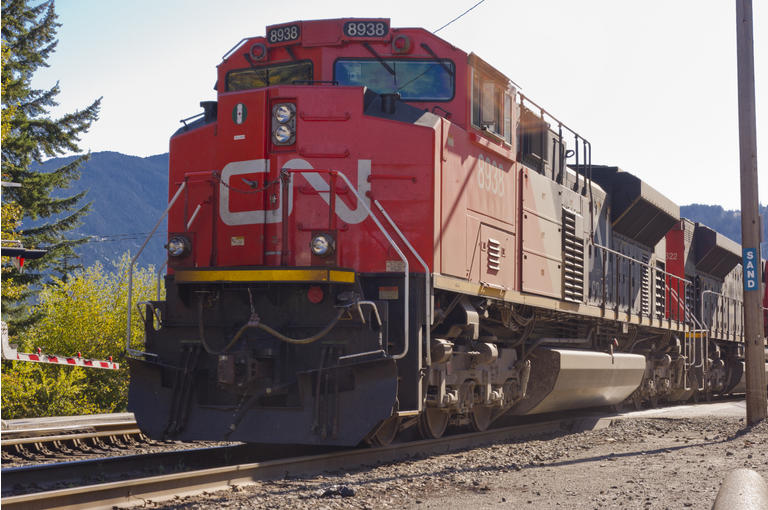
Kansas City Southern falls on report Biden to target railroads in executive order
Jul. 08, 2021 9:01 AM ETCNI, CP...
Jul. 08, 2021 9:01 AM ETCNI, CP...
- Kansas City Southern (NYSE:KSU), which is being sold to Canadian National Railway (NYSE:CNI), dropped 6.1% on a report that the Biden administration is pushing regulators to evaluate consolidation and anticompetitive pricing in the railroad and ocean shipping industries. CNI fell 1.9%.
- The Biden administration is expected to release an executive order this week that with ask the Surface Transportation Board and the Federal Maritime Commission to try to combat what it calls a "pattern of consolidation and aggressive pricing" that had made it more expensive for American companies to transport goods, according to a WSJ report.
They should have held on. Looks like they left another $500K on the table.Snap Inc. put buyer realizes 34% same-day gains 08:00 SNAP Notable profits for the buyer who lifted the $6.35 offer for 1,174 Snap Inc. (SNAP) Aug-21 70 puts yesterday at 10:23ET when underlying shares were trading at $68.86. Shares closed at $65.13, and the puts at $8.53 for a mark-to-market profit of 34%, or $255K, on the $745K outlay.
Write this down Stoney.
Sattelogic
$CFV
The tech
The company's ÑuSat satellites weigh just 42 kilograms (or 93 pounds) each to launch and are about the size of a kitchen dishwasher. Satellogic signed a multi-launch agreement with SpaceX earlier this year to launch the rest of the 300 satellites for its "Aleph" constellation – named in reference to a short story by Argentinian writer Jorge Luis Borges "about an object that allows you to see everything that is happening in the world," Kargieman said.
Satellogic is vertically integrated, which Kargieman emphasized is a "big differentiation that allows us to hit 60 to 100 times better unit economics than any other player in the small satellite market."
The current ÑuSats capture images at 70 centimeters per pixel and can cover 300,000 square kilometers of Earth in a day. Combined with a cost of $450,000 per satellite, Kargieman says his company has unit economics that "nobody" else in the Earth imagery market can match.
"You don't really have to focus on the unit economics so much for the defense market, as they are willing to pay a different price point for the data," Kargieman said. "If you really want to deliver to mainstream applications, as we plan to do, then you have to be able to deliver it at zero marginal cost."
The market
The Earth imagery marketplace is dominated by demand from defense and intelligence agencies, but is growing in applications for the energy, insurance, agriculture and forestry sectors. A report by space research firm Euroconsult estimates satellite imagery has an $140 billion total addressable market.
"We think this is a winner takes most or winner takes all market," Kargieman said. "This is a supply limited market – governments just can't get enough data today; there's not enough satellites out there."
Satellogic aims to be able map the entire planet weekly by 2023, and daily by 2025, to tap "over $40 billion" worth of opportunities in the market.
"We will also have the ability to revisit points of interest roughly every five minutes, so we will be able to do things like give you a two-minute long video of any event developing in the world," Kargieman said.
Satellogic's investor deck highlighted a use case example with oil pipeline monitoring, as Kargieman said the company did a pilot program with a major oil and gas corporation 18 months ago. The company needed to monitor about 1,800 miles of pipeline every other week, which cost about $750 per mile to check with aircraft. Satellogic "demonstrated similar detection capabilities at costs of less than" $60 per mile, the company said.
China
While Satellogic's presence around the world allows it to work with U.S. allies, and the company has a local subsidiary Satellogic North America to work with the U.S. government, it's also betting on China through its office in Beijing.
"We think the Chinese market for commercial applications will be very interesting and it's a nascent market for observation … it is growing from practically scratch because Chinese companies have not been allowed so far to build technology to deliver data to the commercial market," Kargieman said.
The CEO declined to comment on concern about the government ownership structure of many Chinese companies, saying instead that Satellogic is focused on private players.
"In China we're selling to commercial players in the market – information of what is happening inside of China for consumption inside of China – so we don't see any concerns," Kargieman said.
Growth goals
Satellogic booked $0 revenue last year, but expects to see that tick up to near $7 million in 2021 due to new contracts that began generating revenue in April.
"Up until last year we were testing more technology in orbit and improving the technology and validating the commercial model," Kargieman said.
The company has a backlog of about $38 million in signed contracts so far, and forecasts a "near-term pipeline" of $800 million in opportunities over the next two years, according to an investor slide deck. But Satellogic will need to generate over $100 million in annual revenue to meet its goal of profitability by 2023. The company then expects capital expenditures will remain relatively low as revenue soars, aiming to generate $255 million in free cash flow once it has its full Aleph constellation in orbit.
______________________
CFV $9.90