
How to Tell if Your Lizard is Sick

By PetMD Editorial
Published: June 16, 2017
By Laurie Hess, DVM, Diplomate ABVP (Avian Practice)
Lizards can make wonderful pets. They come in all shapes and sizes—from bearded dragons to geckos to iguanas and others—and can be fascinating to learn about and to care for. Different species have varying temperature, humidity, light, and nutritional requirements, and before taking a reptile home, potential reptile owners should learn about the needs of the particular species they are considering to ensure that they are able to meet these needs.
Since lizards (and generally, all reptiles) have such slow metabolisms, when they get sick, they often do not show signs of illness until a disease has progressed, and sometimes not until it is too late to treat. Therefore, it is critical that reptile owners know what signs to look for to tell that their pet is ill before the animal is too far gone for veterinary therapy.
What should lizard owners be watching for to indicate that their pets are ill and need to see a veterinarian as soon as possible? Here are five signs that indicate a lizard may be sick:
Lack of appetite
Lizards generally love to eat. Some lizards, such as iguanas, are herbivores (vegetable and fruit eaters); others, such as leopard geckos, are insectivores (insect eaters) or, like bearded dragons, they can be omnivores (eat insects and vegetables/fruit). Regardless of what the lizard eats, leaving lizard food after a meal can be one of the first signs of illness. Not eating at all—even once—is a sign that cannot be ignored.
In addition, if a lizard ignores insects in its tank and doesn’t eat them within a few minutes, the bugs should be removed or they may chew on the lizard, causing significant trauma and infection. Lizard owners should carefully monitor their pets’ appetites and take them to the veterinarian as soon as they notice any change.
Fewer droppings
Reptiles’ droppings have two parts: a white part made up of uric acid, or solid urine, and a green or brown portion, made up of stool. Less stool production usually means less food ingestion. Therefore, as soon as a lizard owner sees fewer droppings in the tank, he or she should pay extra attention to the pet’s appetite.
Whether the pet’s reduced stool production is due to decreased appetite or to constipation, a lizard that is passing less stool should be soaked in fresh water to keep it hydrated and checked out by a veterinarian as soon as possible.
Lethargy
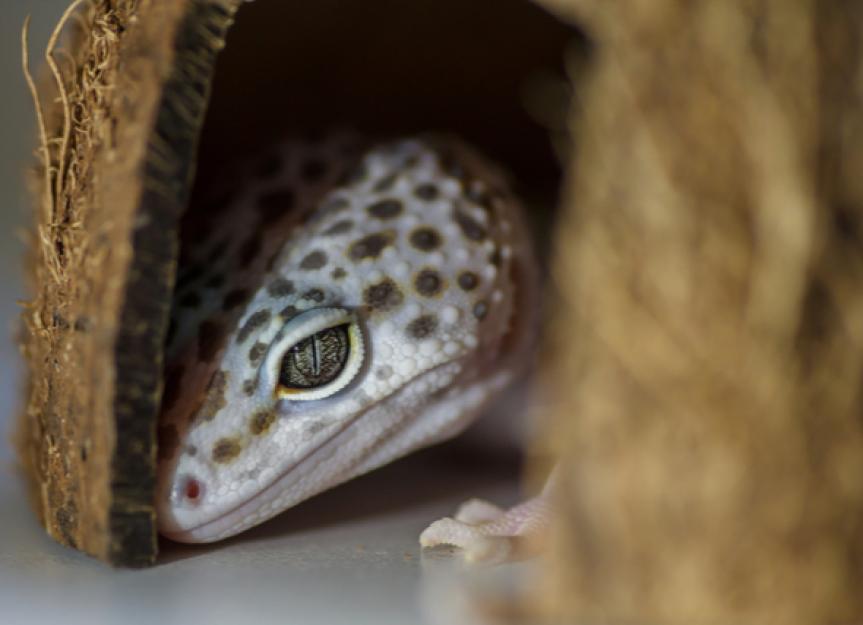
Healthy lizards are generally bright-eyed and active, moving around their tanks and, depending on their species, climbing on rocks or branches and basking in sunlight. They will respond to things they see and hear and appear alert, pushing up on all four legs in a ready-to-go posture. Sick lizards, on the other hand, often will stay stationary for hours or may even hide under lizard bedding or other objects in the tank. They may be too weak to push up off their bellies onto their legs, so if they move at all, they slither around like snakes. Any reptile owner who sees this kind of behavior or notices weakness in their pet should have the animal checked out immediately.
Sunken eyes
In general, healthy reptiles have wide-open eyes, moist gums, and supple skin. Reptiles absorb water through the food they eat and through their skin when they soak or are misted. Sunken eyes, sticky mucus in the mouth, and retained, non-shedding skin all can be signs of dehydration. A lizard showing any of these signs should be soaked/misted with warm water to provide immediate hydration and should be examined by a veterinarian to determine the underlying cause of the dehydration, such as a primary illness, causing the pet to eat less, or inadequate humidity in the lizard’s tank.
Lizards that are dehydrated from not eating should be syringe fed liquid feeding formula appropriate to their species, while those that are dehydrated from exposure to excessively dry air, such as that which occurs in cool, indoor climates during winter, should be provided with additional humidity through daily soaking and misting.
Weight loss
Weight loss in lizards is not always obvious until they have lost a significant amount of weight. There are some body changes lizard owners can look out for that can indicate weight loss, including thinning of the tail (a place lizards typically store fat) and prominence of the ribs. Some reptiles also demonstrate greater definition of the skull bones from loss of fat on their heads. Lizard owners who notice any of these signs should have their pets checked as soon as possible by a veterinarian to assess the cause of the weight loss and to start nutritional supplementation until the pet is at a more appropriate weight.
Since many reptiles can literally go months without eating and still stay alive, lizard owners will too often wait to see if their pets will resume eating and regain the weight. As they wait, the pet gets thinner and thinner and less able to fight the illness that is causing their decreased appetite, ultimately leading to death from malnutrition and starvation. If you suspect your lizard is gradually losing weight, don’t wait it out; have him examined by a veterinarian as soon as possible.
17 losing stock picks on ET
Monetary loss in lizards is not always obvious until they have lost a significant amount of their own, and possibly other people's money. This can range from anything like family offices, to readers of internet forums. Oftentimes your pet will disappear and re-emerge on dead cat bounces, but make no mistake, those come at a price too.

