
You are using an out of date browser. It may not display this or other websites correctly.
You should upgrade or use an alternative browser.
You should upgrade or use an alternative browser.
GBA Presents: RADIO SAVANT-!
- Thread starter stonedinvestor
- Start date
US Corn not ready to eat yet. Hopefully in a few weeks.
Green market meh. Haven't really has the taste of summer yet. Ramps not that good this year.
Strawberries got moldy quick.
Haven't tried the Rhubarb yet.
Green market meh. Haven't really has the taste of summer yet. Ramps not that good this year.
Strawberries got moldy quick.
Haven't tried the Rhubarb yet.
Obviously with corn watch ADM
Close above $90 would trigger me.
Close above $90 would trigger me.
I got confused there and rang up AMD by accident-- That's really looking attractive!
Yikes! Not a stock I usually cover....
Yikes! Not a stock I usually cover....
You have to be careful in this biz, flip just one letter and you get a different stock. 
Luke Bryan - Rain Is a Good Thing (lyrics)
I wonder if lyrics will ever say:
My Buddies Pile up in my electric truck!
I wonder if lyrics will ever say:
My Buddies Pile up in my electric truck!
US Corn not ready to eat yet. Hopefully in a few weeks.
Green market meh. Haven't really has the taste of summer yet. Ramps not that good this year.
Strawberries got moldy quick.
Haven't tried the Rhubarb yet.
Water needed to grow corn in Illinois falls naturally as rain, while water used to produce ethanol usually is pumped from a water source, such as a river, lake, or underground aquifer. The amount of water pumped from these sources has been a cause of concern for some consumers and communities. Let’s take a look at water usage to produce ethanol.

Ethanol Production
Ethanol production facilities have improved their water efficiency over time. They currently use approximately three gallons of water to produce a gallon of ethanol.
 This is down from 5.8 gallons of water:
+++++++++++++++++++++++++++++
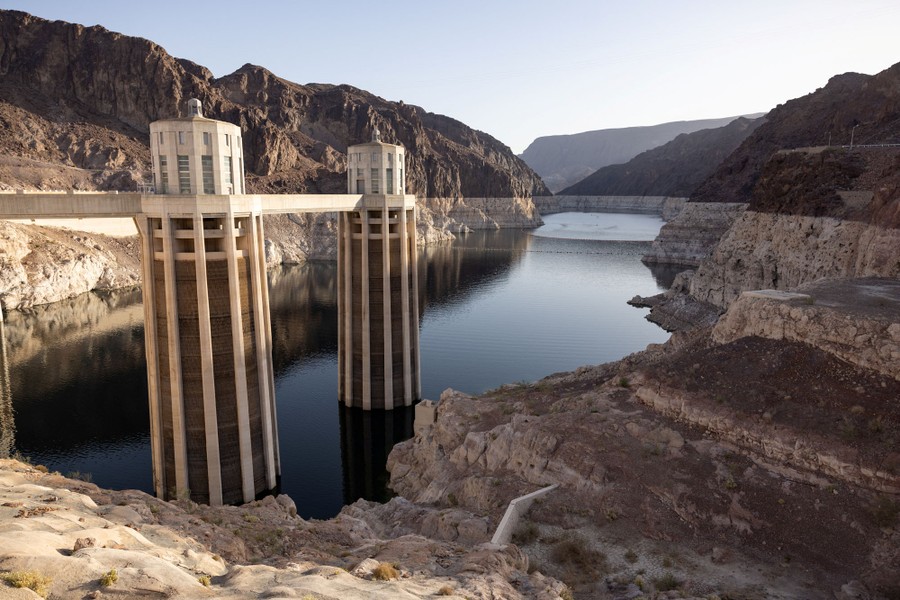
Exposed rock is seen near intake tubes at Hoover Dam, where water levels have declined dramatically in Boulder City, Nevada, on April 17, 2022. #
++++++++++++++++++++++++++++
The summary in the new report also states, “Increasing bioenergy crop cultivation poses risks to ecosystems and biodiversity” (WGIII).
The report lists many potential negative risks of development, such as direct conflicts between land for fuels and land for food, other land-use changes, water scarcity, loss of biodiversity and nitrogen pollution through the excessive use of fertilizers (Scientific American).
The International Institute for Sustainable Development was not so diplomatic, and estimates that the CO2 and climate benefits from replacing petroleum fuels with biofuels like ethanol are basically zero (IISD). They claim that it would be almost 100 times more effective, and much less costly, to significantly reduce vehicle emissions through more stringent standards, and to increase CAFE standards on all cars and light trucks to over 40 miles per gallon as was done in Japan just a few years ago.
++++++++++++++++++++++++++++++++++++++++++
Polluting Biorefineries
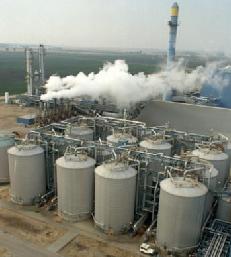 but some have been coal-powered.
Last edited:
Water>>> scarce
Corn>>>> scarce
Fertilizer>> scarce
Natural gas>>>> over $8
I have a feeling next Q is gonna suck for AMTX
>>>>Just a hunch.


-->>"beginner friendly" lol
Corn>>>> scarce
Fertilizer>> scarce
Natural gas>>>> over $8
I have a feeling next Q is gonna suck for AMTX
>>>>Just a hunch.
Stick to the script folks buy the stocks GBA researched for you.
-->>"beginner friendly" lol
Last edited:
Rally is ending soon Stoney.
4200 isn't in the cards I'm afraid.
4133 was a nice effort though.
4128 now.
We might get one last spike to about 4159 if we're lucky.
The bear is alive and well.
Sell programs kicking in soon.
Lower next week.
WOW!!!!
NOT ONLY DOES HE NAIL THE S&P CLOSE TO WITHIN .6O POINTS 3 HOURS BEFORE THE CLOSE,
WHILE THE REST OF THE WORLD WAS SAYING 4200 VZ STOOD FIRM.
READERS>>>>> THANK YOU FOR ALL THE LOVE.
BUT PLEASE... GIVE STONEY A CHANCE.
HE TRYS.

PLUS, HE'S GOT ME TO HELP HIM.
DON'T WORRY READERS, I'VE GOT YOUR BACK.
SPX>>>4115
AMTX>>> $8.23 ( -3.2%)
Last edited: