Fully Automated Stocks Trading

Status
Not open for further replies.
My 2 cents on the "execution edge" thing, I don't think it's a binary outcome whereby you either have or don't have "an edge". There are many components to execution: latency, venue selection, price, order splitting, timing (potentially among multiple instruments). Of course, any retail trader is going to be orders of magnitude slower to market than anybody with serious DMA access. But intelligent placement and routing can, at least, help to win rebates on a good proportion of orders, I wouldn't call that a disadvantage. As already discussed in this thread, speed matters less in lower volume equities.

Right! As well as knowing what is likely to execute with what characteristics. There are really a lot of components that effectively allow to extract edges that wouldn't be possible to extract without doing that, or not at the same extent.

Val
 
Even if the true source of retail alpha is capacity constraint, a somewhat-high-frequency trader still needs a half-decent execution infrastructure to extract it. Is a carpenter's edge the nail or the hammer?
I am just saying that it's important to know whos lunch you are eating and who's eating some food off your plate. This does not mean that minimizing your execution costs is not important and that you should not invest a significant effort into it.

If you really wanted to know, you can do some fairly straight forward TCA. The simplest form would be to compare your fills to your system arrival prices - if you are making money, you have an execution edge. That will usually underestimate the cost, a more complete form is to somehow include trades that you've missed by being passive. Otherwise, it's very easy to say "well, I did not pay the spread or even got a rebate" while neglecting the implicit cost of the negative selection.
 
This Sunday at 9am PST, I'll do a my process explainer and Q&A for a fresh batch of friends who asked.

If anyone interested PM me, I'll send you a Zoom link to join within a next couple of days.

Draft agenda:
- Example of what a systematic strategy consist of
- What realistic single strategy performance looks like
- What trading it manually looks like
- What automation looks like
- Q&A

Plan is to keep it ~40-60 mins. But I miserably failed at that last time I tried. Maybe this time will be different.

Val

Can you please record it for those of us that cannot attend live to learn from it?
 
Just finished the webinar, ~2x people joined comparing to how many I expected.

On a negative side - I messed up the recording. Really sorry guys. Was testing it yesterday is it automatically kicked in but not today.

If there will be enough people who want it I'll consider doing it again in foreseeable future.

Val
 
Over 2000 trades since Jan, +90% PL, -12% MaxDD. It's been a great trading year by any measure. I am most excited to see high % return figures while maintaining low DD. Recovery from DD was also very good.

Is 90%/y something I expect to be long term average? Certainly not. It is a very unusual year, market moved a lot, there was a lot of fear / volatility. My average expectations are way more modest. If I can beat them - awesome. But over decades it likely will get down to some modest numbers.

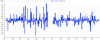
Here are couple of slides from the Webinar I gave last Sunday, called that section "Reality Check". The chart is my live equity vs SPX. Included DD % at the bottom of this post.

upload_2020-12-25_8-55-37.png


upload_2020-12-25_8-36-43.png


Daily PL.png

Val
 
Last edited:
Over 2000 trades since Jan, +90% PL, -12% MaxDD. It's been a great trading year by any measure. I am most excited to see high % return figures while maintaining low DD. Recovery from DD was also very good.

Is 90%/y something I expect to be long term average? Certainly not. It is a very unusual year, market moved a lot, there was a lot of fear / volatility. My average expectations are way more modest. If I can beat them - awesome. But over decades it likely will get down to some modest numbers.

Here are couple of slides from the Webinar I gave last Sunday, called that section "Reality Check". The chart is my live equity vs SPX. Included DD % at the bottom of this post.

View attachment 247337

View attachment 247335

View attachment 247338

Val

@ValeryN

Congratulations for a great performance this year. I think you are only 1 of the few legit traders in ET.

Personally, I'm wary of running long-short portfolios with a retail account. I've some quick questions and would like to seek your views,

- What's the slippage (e.g. commission costs) as a % of your profits
- In IB, I noticed that the stock borrowing fees (after factoring overnight interest rate) have gone up this year. How do you deal with it?
 
@ValeryN

Congratulations for a great performance this year. I think you are only 1 of the few legit traders in ET......
I follow ~150 of the more senior posters on ET and my guess the large majority of these are profitable. Ps; you being one of them :)

There will be others as well whom I don't follow.
 
Last edited:
@ValeryN

Congratulations for a great performance this year. I think you are only 1 of the few legit traders in ET.

Personally, I'm wary of running long-short portfolios with a retail account. I've some quick questions and would like to seek your views,

- What's the slippage (e.g. commission costs) as a % of your profits
- In IB, I noticed that the stock borrowing fees (after factoring overnight interest rate) have gone up this year. How do you deal with it?

Thank you for your trust.

I track slippage/commissions/borrowing fees separately.

Slippage is currently negligible. Which is why I call it execution edge. As with my pessimistic assumptions it could have cost me more than 30% of PL.
Commissions in 2020 were 2-5% of PL. I launched low priced stocks strategy in August which is a net looser so far, that's why there is a large range. It effectively x3 my commissions, but it puts me in a different TIER of IB commissions so net impact is likely less than top of the range.
Borrowing fees are ~1-1.5% of PL.

When I design a strategy I factor in pessimistic slippage assumptions. That serves as a simplified proxy for borrowing rates. If I am able to execute efficiently, which is normally true, my slippage is negligible and after borrowing rates total cost is ~ same a my model.

Just looked at relative % of borrowing costs to account values month by month and don't see any consistent increase. So I either haven't been impacted by what you mentioned or strategies been shorting less or I've been lucky not to borrow ones that experiences the increase.

In August I felt like we might see a bubble due to inflow of dumb money so I cut short position sizes by ~30% and slightly adjusted short strategies to be more resilient to very extreme moves typical for such market. That could have contributed to my borrowing fees staying more or less the same.

Val
 
Thank you for your trust.

I track slippage/commissions/borrowing fees separately.

Slippage is currently negligible. Which is why I call it execution edge. As with my pessimistic assumptions it could have cost me more than 30% of PL.
Commissions in 2020 were 2-5% of PL. I launched low priced stocks strategy in August which is a net looser so far, that's why there is a large range. It effectively x3 my commissions, but it puts me in a different TIER of IB commissions so net impact is likely less than top of the range.
Borrowing fees are ~1-1.5% of PL.

When I design a strategy I factor in pessimistic slippage assumptions. That serves as a simplified proxy for borrowing rates. If I am able to execute efficiently, which is normally true, my slippage is negligible and after borrowing rates total cost is ~ same a my model.

Just looked at relative % of borrowing costs to account values month by month and don't see any consistent increase. So I either haven't been impacted by what you mentioned or strategies been shorting less or I've been lucky not to borrow ones that experiences the increase.

In August I felt like we might see a bubble due to inflow of dumb money so I cut short position sizes by ~30% and slightly adjusted short strategies to be more resilient to very extreme moves typical for such market. That could have contributed to my borrowing fees staying more or less the same.

Val

Thanks for your reply! Good to know the breakdown of the costs as this could really eat into the profits.

I haven't done any detailed analysis on the slippage, execution side. At the moment, I'm just relying on the IB adaptive algos for trade placements.
 
Status
Not open for further replies.
Back
Top