
You are using an out of date browser. It may not display this or other websites correctly.
You should upgrade or use an alternative browser.
You should upgrade or use an alternative browser.
do not trade index futres.
- Thread starter padutrader
- Start date

I'm not sure you quite understand what's meant by being a competitive market.
In a market such as ES which there are hundreds if not thousands of strategies (manual and algorithmic both) being employed simultaneously with trading decisions being made for a wide variety of reasons/triggers/signals. This, partially explains why liquid index futures move the way they do with plenty of 'noisy' movement.
For example, you'll have arbitrage players/algorithms working simultaneously with mean reversion algorithms or trend following algorithms where a mean reversion algorithm will sell a pop and a trending algorithm / BO algorithm may buy it. There's always a tug of war between buyers and sellers.
I probably don't understand a lot of things.
Just logic tells me that when spreads are as tight as they are with SPX then a lot of money is willing to sit on them (bids/asks) all the time. Why though? If it was so much easier to make money elsewhere?
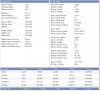
Care to share your performance summary trading index futures?
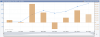
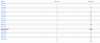
Sure, attached, last 6 months. My sortino got compromised a lot because i did some manual trades out of boredom, lol. But yeah, i'm all algo now. Check the trade count sheet, you'll see most trades are done with SP500.
PS. I don't trade futures per se, i trade CFD's for the simple reason i don't have an account big enough. I need 500k+ to start with just 1 MICRO (MES) lot.
Do you have a performance report on some other asset?
The low cost is great if you know how to trade. If you don't, it won't help you anyway.
Wrong, low costs help you in both cases, successful or not. If you lose, you lose slower and have a longer time to learn. If you don't know how to trade then it doesn't matter what market you trade but costs are REAL money. Spread is one thing, slippage is another. You can and do get a lot bigger spikes in, for example, FX market compared to SPX, volatility adjusted. That can be another painful cost if you're on the wrong side.
And i don't think we even need to mention options spreads...There's massive differences in costs and liquidity between different asset classes.

that is exactly my point.
if you think noise is the real thing you can really have hell
It is time for you to throw away all your trading books including Al Brook's book into the burning Mount of Doom.
Then with a clear clean mind, develop your own holy grail.
which is noisier?
i think indexes.
indexes are supposed to be easier but my experience ES whipsaws more often than it trends.
my observation purely
I think the problem lies in volatility adjustment. You've so used to low vola in the FX market, so perhaps you get frightened with SPX that has 2-3 times the vola.
Index can't be "noisier", otherwise you'd get constantly free money trading/hedging long gamma.
spot fx yes
but fx futures in cme is the same as ES as far as cost and commission
By fx futures, i assume you only talk about 6E or EUR fx futures. Even that isn't same cost if you adjust with volatility. Just divide the spread with the instrument's daily ATR.
There are no material differences (well for us retailers, anyway) between fx spot and futs. In fact, if you traded spot with IB, you'd get better spreads than with futures. So, spot is actually better. Not to mention the wide range of pairs you get with spot. Spot has ofc bigger counterparty risk by being OTC, so when there's slippages, they are wider than in futures. In that sense, futs are better.

Good Morning padutrader,IMO: for inexperienced traders not trading index futures will save a lot of hardship.
indexes do not move in a direction so it is difficult to trade. you need to deal with constant changes of direction, if you are trading indexes
Be a slave and you will get rich in the futures index market. I'm a slave.

IMO: for inexperienced traders not trading index futures will save a lot of hardship.
indexes do not move in a direction so it is difficult to trade. you need to deal with constant changes of direction, if you are trading indexes
"indexes do not move in a direction so it is difficult to trade. you need to deal with constant changes of direction"
You literally described every market that is out there. You want a market that goes in a straight 45 degree line or in a parabolic move?
Maybe have @SimpleMeLike teach you. Seem like he's doing better by not complicating things.

indexes do not move in a direction
Thus God has invented Bollinger bands.
Good Morning hilmy83,"indexes do not move in a direction so it is difficult to trade. you need to deal with constant changes of direction"
You literally described every market that is out there. You want a market that goes in a straight 45 degree line or in a parabolic move?
Maybe have @SimpleMeLike teach you. Seem like he's doing better by not complicating things.
Yes, I do not know any market that goes 45 degree line. lol, we all wish.
Yes, correct. Best to not complicate things and be very very simple.
Doing that is investing. Traders trade .... up and down.So, what makes it easier in stock indexes is the fact that you can ONLY take long signals whereas ...