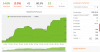
Are you billy hwang?!
Lol but seriously, you making money on your trading has nothing to do with you using a bad signal. You are making an attribution error by explaining your returns with your chart signal. What are you are likely profiting from is liquidity provisioning or intra-day momentum/reversal. For the former, the best signals are liquidity pre-trade, and for the latter, it's the slope of returns.
I've sat on a trading floor on both the sell side and buy side for 8+yrs, I've seen the gamut of strategies and no one uses charts to trade because they are very bad at representing what is actually going on. They are, however, visually appealing.
Good analogy would be a chef applying salt to their meal. "Grab and sprinkle salt until you start to see them pooling" is inferior to saying "eyeball 1 tspn" which is to using a teaspoon to measure and apply your salt.
I can make a list of price levels as to where to buy and where to sell. They will be valid for months to come. They will work. And then you will claim random walk. Let me say that for the AMD trade, the price already reversed very close to my level before going back. Under your theory, the move already occurred so it was only random that it worked this time. So why does it keep working? The drawdowns should also be relatively random but that isn't the case.
Multiple times I've caught the GME low of day. The one time it failed resulted in price getting barely back to breakeven the next day which is the maximum length of time allowed to let a trade allow for the Event B/breakeven effect. This so called randomness appears a lot less random when its the HoD/LoD which is statistically significant portion of the time.