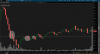
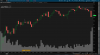
@stockpredictor are you able to predict every stock movement or just a few
Just a few. I know that there are certain methods to determine a lot movements but this will require the use of an algo, which I have not used.

@stockpredictor are you able to predict every stock movement or just a few
-Similar characteristics is possibly a misnomer. Certain events happen across stocks that are dissimilar. Eg AMD and CAT exhibit similar characteristics, but not CAT and DE. Their correlations and fundamentals may be similar but technically, no. Imagine mirrors; some convex, some concave. The correlation may show a similar picture (both convex) but the event types not. This is the great key to solving the market riddle; event types along levels which determine future possibilities.
- You can group stocks by similar characteristics to see if your pattern works
- Sure there are lots of things that have correlation, but correlation does not imply causation, and if you cannot provide a theory behind causal drivers then you do not know if you’re trading randomness or something real
- I’m not sure if your use of Markov and Poisson distributions is warranted here considering you are simplifying outcomes — yes if a, b, or c can happen then describing a change from c to a is markov, which actually illustrates the uselessness of historical information (that’s the whole point of markov)
- I agree that the day traders concept of r:r is not meaningful but conceptually your expected return should be profit x probability
-Similar characteristics is possibly a misnomer. Certain events happen across stocks that are dissimilar. Eg AMD and CAT exhibit similar characteristics, but not CAT and DE. Their correlations and fundamentals may be similar but technically, no. Imagine mirrors; some convex, some concave. The correlation may show a similar picture (both convex) but the event types not. This is the great key to solving the market riddle; event types along levels which determine future possibilities.
-The pattern determines reality. Eg overextension (standard deviation) on X which does not hit a level may simultaneously hit a level on Y at which point X can be entered, although no pattern exists, but only its correlation.
-Simplification of outcomes is exactly what is needed, and can be done. Eg, a is most expected with 60%, and b and c with 20% each, yet if only 1 outcome is expected to lose, it needs to be b or c (unless a great enough profit is expected from b or c to make it worthwhile).
-yes
I think you are confusing the return of liquidity provisioning with a chart pattern. No one is denying that there can be returns from buying low and selling high, and vice versa. What I’m saying is that chart patterns are random and are not useful at predicting subsequent returns.
With that being said, there are people that do make money trading these patterns, and if you compared them with the total population, it would fit around your expected error (luck). Some people have made a fortune trading using zodiac signs, but this is not a replicable or tractable trading strategy.
You're the one with the outrageous claim that professional traders as a whole consider chart analysis a waste of time.
The burden of proof is on you.
1. Local Max/Min.
2. Historical
Each trade is different. For a long time, I had been struggling to determine adequate subsequent return. I use 'statistically significant move', that is, if the level is indeed more than just randomness, it should generate a move that is greater than average with the timeframe that is being analyzed.
The probability of the signals of generating a profit or breakeven is close to 100%. Profit is expected ~80% of the time (anecdotal) but seems to be that it is closer to 9X% in reality