Can /NG fall below zero like /CL?

could you pse elaborate this cotton may 2011 problem?

Today in CL it was a long squeeze.

Cotton May 2011 was a short squeeze (Rallied to unprecedented highs because Louis Dreyfus was crazy long and intended (did in fact) to take delivery / all the other Commercials and big Specs were short).
 
TBH this is why I having been telling clients for years now to liquidate prompt physically settled contracts well before expiry. No measure of modeling or OI or COT data is going to predict a delivery or roll squeeze - that I’ve seen or am aware of at least.

I have been telling clients about the May 2011 Cotton expiry prior to today.

Now I have two really good examples. :vomit:


Can you tell us the second example if you dont mind
 
So, it's a myth that two consecutive calendar months spread gets narrower when expires. Sometimes it can get widen hugely and kill spread traders....... o_O
 
Unlike oil, they can burn natural gas if they cannot sell. However, I also heard some U.S. states or countries ban burning natural gas for environment. I don't think it's possible but do you think /NG contracts can fall below zero like /CL? I bet on calendar spread on /NG and to be honest I am somewhat scared watching /CL today.

Uneducated opinion here however at this point I have enough experience losing and gaining money in spreading NG and CL that maybe it's possible to give some thought to it.

CL has a lot of hard problems. It's hard to store, kind of expensive to process, and dependent on season consumption in the form of travel/boats/aircraft/etc. The coronavirus has chopped out nearly every form of consumption possible and, given that oil producers begin storing in January or so, there's a massive glut of oil that is not going to be spent. Moreover, you can't just "stop" crude oil production with a single switch. Moreover again, it's fairly expensive per barrel to make refining make sense in North America.

NG doesn't have many of these problems. I'd even argue they aren't very correlated. NG can be stored in a ton of different places - pumped into salt mines, containers, etc. It can be burned off if needed since NG is relatively clean burning. Consumption is fairly regular even given a pandemic since people need to heat and cool their homes.

I think it would be unlikely for NG to do what CL is doing. CLs behavior is a function of just how hard it is to store and just how important consumption is.

 
Uneducated opinion here however at this point I have enough experience losing and gaining money in spreading NG and CL that maybe it's possible to give some thought to it.

CL has a lot of hard problems. It's hard to store, kind of expensive to process, and dependent on season consumption in the form of travel/boats/aircraft/etc. The coronavirus has chopped out nearly every form of consumption possible and, given that oil producers begin storing in January or so, there's a massive glut of oil that is not going to be spent. Moreover, you can't just "stop" crude oil production with a single switch. Moreover again, it's fairly expensive per barrel to make refining make sense in North America.

NG doesn't have many of these problems. I'd even argue they aren't very correlated. NG can be stored in a ton of different places - pumped into salt mines, containers, etc. It can be burned off if needed since NG is relatively clean burning. Consumption is fairly regular even given a pandemic since people need to heat and cool their homes.

I think it would be unlikely for NG to do what CL is doing. CLs behavior is a function of just how hard it is to store and just how important consumption is.

And NG = electricity, Kinda' hard to see how electrical demand will go away.
 
Unlike oil, they can burn natural gas if they cannot sell. However, I also heard some U.S. states or countries ban burning natural gas for environment. I don't think it's possible but do you think /NG contracts can fall below zero like /CL? I bet on calendar spread on /NG and to be honest I am somewhat scared watching /CL today.
No, only CL, RBOB and HO are subject to negative pricing.

From CME:

  • If WTI Crude Oil futures prices settle, in any month, to a price between $8.00/bbl and $11.00/bbl, CME Clearing MAY switch its pricing and margining options models from the existing models to the Bachelier model, currently utilized in numerous spread options products where negative underlying prices and strike levels are a regular occurrence. If any WTI Crude Oil futures prices settle, in any month, to a level below $8.00/bbl, CME Clearing WILL move to the Bachelier model for all WTI Crude oil options contracts as well as all related crude oil options contracts effective the following trade date. CME Clearing will send out an advisory notice with one day notice before any implementation occurs with all appropriate details.
  • Similarly, if RBOB Gasoline futures prices settle, in any month, to a price between $0.20/gal and $0.30/gal, CME Clearing MAY switch its pricing and margining options models from the existing models to the Bachelier model. If any RBOB Gasoline futures price settle, in any month, to a level below $0.20/gal, CME Clearing WILL move to the Bachelier model for all RBOB Gasoline options contracts as well as all related gasoline options contracts effective the following trade date. CME Clearing will send out an advisory notice with one day notice before any implementation occurs with all appropriate details.
  • Similarly, if Heating Oil futures prices settle, in any month, to a price between $0.20/gal and $0.30/gal, CME Clearing MAY switch its pricing and margining options models from the existing models to the Bachelier model. If any Heating Oil futures price settle, in any month, to a level below $0.20/gal, CME Clearing WILL move to the Bachelier model for all Heating Oil options contracts as well as all related heating oil options contracts effective the following trade date. CME Clearing will send out an advisory notice with one day notice before any implementation occurs with all appropriate details.
https://www.cmegroup.com/content/da...g/2020/04/Chadv20-152.pdf.?mod=article_inline
 
Uneducated opinion here however at this point I have enough experience losing and gaining money in spreading NG and CL that maybe it's possible to give some thought to it.

CL has a lot of hard problems. It's hard to store, kind of expensive to process, and dependent on season consumption in the form of travel/boats/aircraft/etc. The coronavirus has chopped out nearly every form of consumption possible and, given that oil producers begin storing in January or so, there's a massive glut of oil that is not going to be spent. Moreover, you can't just "stop" crude oil production with a single switch. Moreover again, it's fairly expensive per barrel to make refining make sense in North America.

NG doesn't have many of these problems. I'd even argue they aren't very correlated. NG can be stored in a ton of different places - pumped into salt mines, containers, etc. It can be burned off if needed since NG is relatively clean burning. Consumption is fairly regular even given a pandemic since people need to heat and cool their homes.

I think it would be unlikely for NG to do what CL is doing. CLs behavior is a function of just how hard it is to store and just how important consumption is.
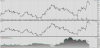
Thank you very much for your feedback. It really helps. If I simply buy current month contract and sell later month contract (Contango case), is this too risky? For example, I bought NGK and sold NGM for test to make a small profit (see picture below). It looks spread becomes narrower before expiration. In year 2003 and 2005 however, NG had huge upside swings. I am not sure if this strategy could survive during those periods.....

2020-04-21_16-02-35.png

2020-04-21_16-20-15.png
 
Last edited:
Uneducated opinion here however at this point I have enough experience losing and gaining money in spreading NG and CL that maybe it's possible to give some thought to it.

CL has a lot of hard problems. It's hard to store, kind of expensive to process, and dependent on season consumption in the form of travel/boats/aircraft/etc. The coronavirus has chopped out nearly every form of consumption possible and, given that oil producers begin storing in January or so, there's a massive glut of oil that is not going to be spent. Moreover, you can't just "stop" crude oil production with a single switch. Moreover again, it's fairly expensive per barrel to make refining make sense in North America.

NG doesn't have many of these problems. I'd even argue they aren't very correlated. NG can be stored in a ton of different places - pumped into salt mines, containers, etc. It can be burned off if needed since NG is relatively clean burning. Consumption is fairly regular even given a pandemic since people need to heat and cool their homes.

I think it would be unlikely for NG to do what CL is doing. CLs behavior is a function of just how hard it is to store and just how important consumption is.


But could other issues arise that might be bg specific or any commodity's specific that can cause similar situation, after all who thought or even imagined such issues with crude oil before?
 
No, only CL, RBOB and HO are subject to negative pricing.

From CME:

  • If WTI Crude Oil futures prices settle, in any month, to a price between $8.00/bbl and $11.00/bbl, CME Clearing MAY switch its pricing and margining options models from the existing models to the Bachelier model, currently utilized in numerous spread options products where negative underlying prices and strike levels are a regular occurrence. If any WTI Crude Oil futures prices settle, in any month, to a level below $8.00/bbl, CME Clearing WILL move to the Bachelier model for all WTI Crude oil options contracts as well as all related crude oil options contracts effective the following trade date. CME Clearing will send out an advisory notice with one day notice before any implementation occurs with all appropriate details.
  • Similarly, if RBOB Gasoline futures prices settle, in any month, to a price between $0.20/gal and $0.30/gal, CME Clearing MAY switch its pricing and margining options models from the existing models to the Bachelier model. If any RBOB Gasoline futures price settle, in any month, to a level below $0.20/gal, CME Clearing WILL move to the Bachelier model for all RBOB Gasoline options contracts as well as all related gasoline options contracts effective the following trade date. CME Clearing will send out an advisory notice with one day notice before any implementation occurs with all appropriate details.
  • Similarly, if Heating Oil futures prices settle, in any month, to a price between $0.20/gal and $0.30/gal, CME Clearing MAY switch its pricing and margining options models from the existing models to the Bachelier model. If any Heating Oil futures price settle, in any month, to a level below $0.20/gal, CME Clearing WILL move to the Bachelier model for all Heating Oil options contracts as well as all related heating oil options contracts effective the following trade date. CME Clearing will send out an advisory notice with one day notice before any implementation occurs with all appropriate details.
https://www.cmegroup.com/content/da...g/2020/04/Chadv20-152.pdf.?mod=article_inline


Based on cme making this effective the next day shouldn't crude have NOT traded negative today monday ? Since it never settled between 8-11 range they wrote
 
Back
Top