
Such as "proper" estimation. Without that, moving averages are much too slow to catch anything, but the largest moves.Much much research and tests with these myself. Learned some very interesting things...

You are using an out of date browser. It may not display this or other websites correctly.
You should upgrade or use an alternative browser.
You should upgrade or use an alternative browser.
Zero Lag Filtering
- Thread starter panzerman
- Start date
Or for those who are more visual learners:Same source. NP. Interesting and educational info, but not earth shattering regarding trading IMHO.
@panzerman: I'll respond once, but not interested in argument. How many years experience you have trading? I had couple of months before I studied Ehler's, and have since moved beyond those hypothesis'.
1. Zero phase really means trend, which is average, or any SMA, or CCI. All filters "lag", or should I say DISTORT. But zero phase has nothing directly to do with lag whatsoever.
2. Backwards calculation may be interesting and potentially useful, but the examples in your link just shows changing the past, which doesn't do much for your analysis NOW.
3. KISS
4. ...
5. Roofing could be predictive though, if just price action was clinically cyclical (in FT sense, not seasonal sense), which it ain't. Just an example of something similar.
6. I'd rather use FT and fade that..
7. I thought it looked neat in the beginning, especially the rocket science parts, but have since left it entirely..
8. WTF is "zero lag filtering" anyways? Zero lag is pure price and volume per time, nothing else. Oxymoron for morons who don't know any better if you ask me.
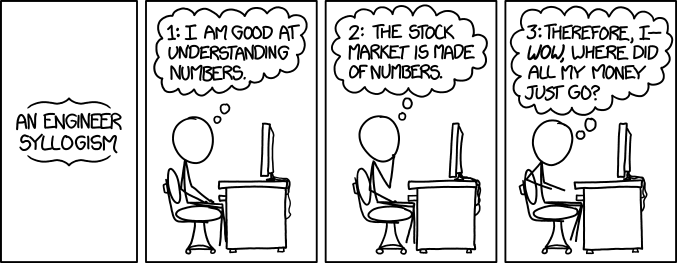
https://xkcd.com/1570/
As an electrical engineer whose been interested in trading since high school I also went down the DSP in trading rabbit hole and came to a similar conclusion to @Simples. Which is not to say you shouldn't give it a go @panzerman, I'll be the first to admit I could have missed something. But I would caution that if you find something that any reasonably intelligent EE could figure out, one of us already has and has either arb'd the opportunity out of existence or lost a bunch of money determining that it had a flaw. If it requires huge computation power or complex algo's, one of the hundreds of EE PhDs that have been hired by the quant funds have done that. So my caution would be to trade small for a non-trivial amount of time (months at least) every time you're sure you've found the holy grail. It will allow you to keep playing and eventually you may even decide the playing is worth a lot more than the money!
Or for those who are more visual learners:
https://xkcd.com/1570/
As an electrical engineer whose been interested in trading since high school I also went down the DSP in trading rabbit hole and came to a similar conclusion to @Simples. Which is not to say you shouldn't give it a go @panzerman, I'll be the first to admit I could have missed something. But I would caution that if you find something that any reasonably intelligent EE could figure out, one of us already has and has either arb'd the opportunity out of existence or lost a bunch of money determining that it had a flaw. If it requires huge computation power or complex algo's, one of the hundreds of EE PhDs that have been hired by the quant funds have done that. So my caution would be to trade small for a non-trivial amount of time (months at least) every time you're sure you've found the holy grail. It will allow you to keep playing and eventually you may even decide the playing is worth a lot more than the money!
Same story here. Realized a successful trading system is more than just indicators. Though "better" indicators can improve success.