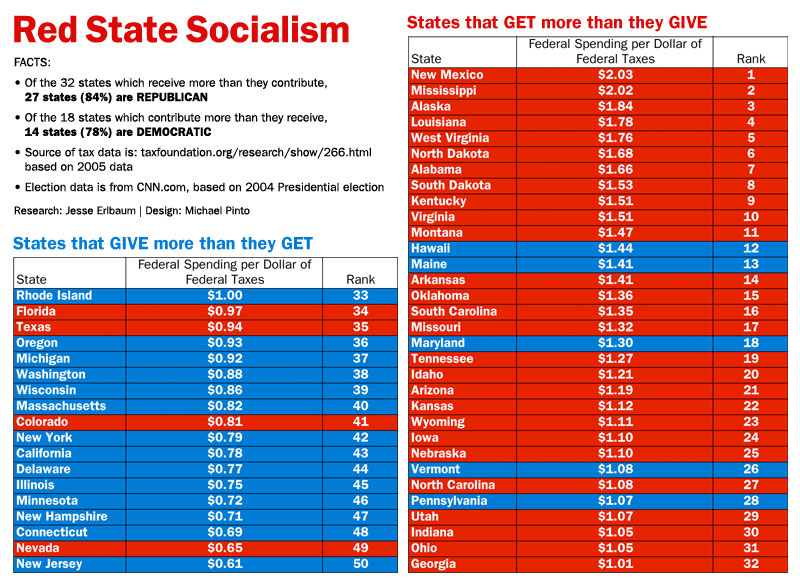
You have to love liberal economics.

No, I correctly stated that ISIS are right wing religious conservatives - they just happen to have a different religion and location while having the same ideology. Muslims in general are extremely conservative and if you look around the world, it's always conservatives fighting each other over religion/location/traditions.


LOL, yep the righties who despise muslims and are all racist towards brown people are the ones supporting ISIS, lol.
 
LOL, yep the righties who despise muslims and are all racist towards brown people are the ones supporting ISIS, lol.

Ideology is not same as religion, there are Muslim Cons just like there are Christian and Hindu Cons.

Muslim conservatives (Sunnis) and Muslim liberals (Shia, relatively liberal) kill each other in large numbers over differences of ideology and tradition.

White conservatives are not just racist towards brown people, they dislike non-whites of any color and even whites who don't bow to their dogma. It's all an issue of intellect and lack of it. Lower the processing power of the intellect, higher is the fear factor which leads to animalistic responses.
 
Wasn't this the intent of the trump tax cut? To give most Americans more spending money.


If giving every american 12000 dollars will grow our economy by 2.5 trillion why stop there why not give everyone 100,000 dollars or a million dollars, lol.


Giving every American $12,000 a year in free money could grow the economy by $2.5 trillion, study finds


A monthly check of $1,000 delivered to every American adult would grow the US economy by roughly $2.5 trillion over eight years, a new study found.

Conducted by the left-leaning Roosevelt Institute, the study investigated three strategies for implementing basic income, a form of wealth distribution that involves giving everyone a standard salary just for being alive.

Proponents of basic income say it would reduce or even eliminate poverty, while skeptics say it could erase people's motivations to keep working, possibly ruining the economy instead of improving it.

The three basic incomes proposed by the study were $1,000 paid monthly to every US adult; $500 paid monthly to every US adult; and $250 paid monthly to every US child. "For all three designs," a summary of the report said, "enacting a UBI and paying for it by increasing the federal debt would grow the economy."

Specifically, the study found that the largest of the three — $12,000 a year doled out to every American adult — would grow the economy by 12.6% to 13.1% over eight years, by which time the policy's effects would start to wane. That would translate to an increase in gross domestic product of $2.5 trillion, according to data from the Congressional Budget Office.

The researchers made some assumptions in the study that could lead to such an optimistic conclusion.

The team's analysis was based on people continuing to work as if they weren't receiving a basic income, something skeptics have taken issue with. Some believe that basic income, while not enough to live off, would disincentivize full-time work.

Some studies have found this not to be the case, but most have taken place in developing countries and have prompted skeptics to argue the results wouldn't necessarily translate to a richer, more populous country like the United States. At least in the few basic-income experiments ongoing in the US, employment rates haven't seemed to change much.

The researchers also assumed basic income would solve a demand problem in the economy — i.e., a lack of people spending their money to buy things. "Fundamentally, the larger the size of the UBI, the larger the increase in aggregate demand and thus the larger the resulting economy is," they wrote.

Other economic theories put less stock in that idea. They argue that other costs — like interest rates on mortgages and credit cards — would rise.

The US is still far from a comprehensive basic-income plan. The biggest experiment in the world is set to begin this fall in Kenya. Operated by GiveDirectly, it involves 6,000 people, some of whom will receive a monthly payment every month for the next 12 years. The experiment will cost $30 million.

Smaller experiments have cropped up around the world over the past few years, including in California, Canada, Finland, and the Netherlands. Other nations, such as India and Switzerland, have discussed experiments of their own in the coming years.

Until those experiments begin giving people money and analyzing the resulting data, however, economists will be left to speculate as to how transformative a basic income could really be.

https://finance.yahoo.com/news/givi...al&utm_source=twitter.com&utm_campaign=buffer

 
Also, why solve for 'freedom', economic questions should be solved for efficiency and utility, 'freedom' is a political concept and has nothing to do with economic principles. Same for morality.

Very good we got here pretty quick ....

And this is the source of the conflict that is "unresolvable".

Progressives think they have the right to remove citizen's rights for social and economic optimums.
 
Last edited:
I always had a hypothetical question in mind for libertarians. Say a company produces a drug that is carcinogenic in the long run but hides this fact from consumers due to lack of regulations over such matters, how would it be moral for a government to ignore this and let their citizens die for 'economic freedom'.

I don't think less government and less regs means compromising dodgy drug companies selling dangerous drugs to the public :)
 
If you could take a supplement a day to improve nutrient uptake and prevent diseases, why not take 100 a day and become Superman?

If you could run 20 minutes a day and be fit, why not run 2 days in a row and be superfit?

If drinking 8 glasses of day keeps you healthy, why not drink 80 glasses and be a champ?

Cons = Low effort thinking

Why exactly do you feel entitled to receive $12,000 of other peoples money per year?
 
Enjoy this fact...

PRESIDENT DONALD TRUMP

Say it again over and over till you get used to it.

Yes, Americans have made a fairly regular habit of electing idiots to that position; in particular, several recent Republican presidents lacked the skills, intelligence, and ethics to properly do the job. But if you somehow feel proud of this crew, you are welcome to it.

You know what most Canadians say over and over again these days. Thank god we aren't American and ruled by Trump. Thank god we have affordable, universal health care and quality public schools, and we aren't in a constant state of social unrest along political and ethnic lines. Thank god we don't have many fellow citizens carrying a lethal weapon in public just to live their normal day.
 
Very good we got here pretty quick ....

And this is the source of the conflict that is "unresolvable".

Progressives think they have the right to remove citizen's rights for social and economic optimums.

But were talking economic theories, progressivism is a political concept, not an economic one.

As for progressive choosing a type of economic policy, I would say they choose based on what works. Adam Smith himself said that the rich have to pay more than they take in primarily because they are the biggest beneficiaries of a stable society. An unequal society creates a scenario where the rich have more to lose than those below them - the rich are simply paying for the privilege.

This is why I asked you for examples of libertarianism in practice - there aren't any examples because it's unworkable. Libertarians have to dream about cruise ships but even there the principles won't work.
 
Why exactly do you feel entitled to receive $12,000 of other peoples money per year?

Say what?

2987025203_fc2c517522_o.jpg
 
Back
Top