
You are using an out of date browser. It may not display this or other websites correctly.
You should upgrade or use an alternative browser.
You should upgrade or use an alternative browser.
Yawn....... Israel attacked by Hamas
- Thread starter themickey
- Start date


Oooooooohhhhh lookee.long pattern over time of Hamas stealing money and aid from the UN and other aid organizations.
Gaza is plagued by poverty, but Hamas has no shortage of cash. Where does it come from?
We just discovered this amazing news just now! Hamas the naughty rascals, oooohhh you naughty naughty boys....
Op-ed TIMES OF ISRAEL
For years, Netanyahu propped up Hamas. Now it’s blown up in our faces
The premier’s policy of treating the terror group as a partner, at the expense of Abbas and Palestinian statehood, has resulted in wounds that will take Israel years to heal from
By Tal Schneider 8 Oct 2023
https://www.timesofisrael.com/for-years-netanyahu-propped-up-hamas-now-its-blown-up-in-our-faces/
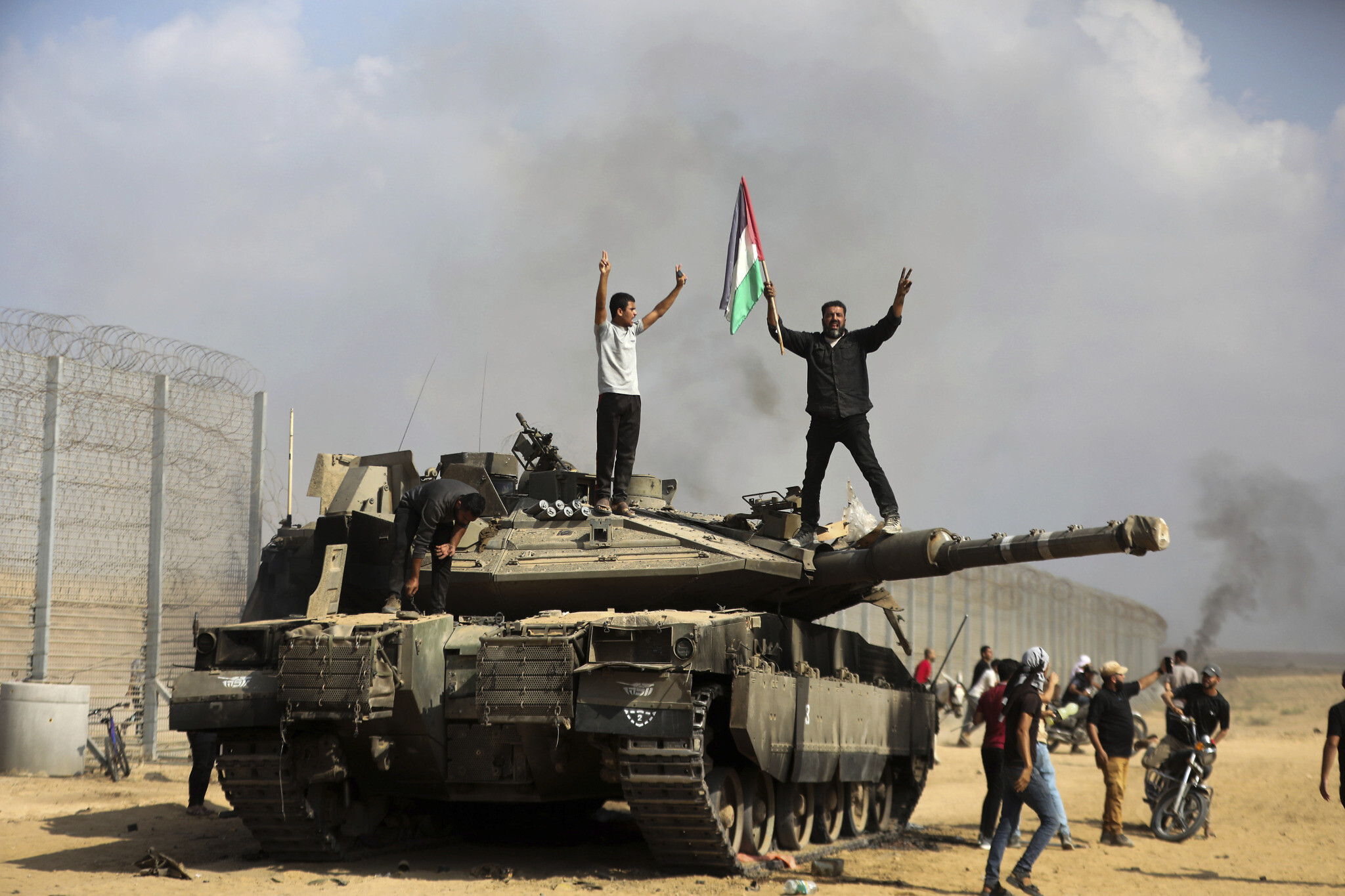
Gazans celebrate by a destroyed Israeli tank at the broken Israel-Gaza border fence, east of Khan Younis, October 7, 2023. (AP Photo/Yousef Masoud)
For years, the various governments led by Benjamin Netanyahu took an approach that divided power between the Gaza Strip and the West Bank — bringing Palestinian Authority President Mahmoud Abbas to his knees while making moves that propped up the Hamas terror group.
The idea was to prevent Abbas — or anyone else in the Palestinian Authority’s West Bank government — from advancing toward the establishment of a Palestinian state.
Thus, amid this bid to impair Abbas, Hamas was upgraded from a mere terror group to an organization with which Israel held indirect negotiations via Egypt, and one that was allowed to receive infusions of cash from abroad.
Hamas was also included in discussions about increasing the number of work permits Israel granted to Gazan laborers, which kept money flowing into Gaza, meaning food for families and the ability to purchase basic products.
Israeli officials said these permits, which allow Gazan laborers to earn higher salaries than they would in the enclave, were a powerful tool to help preserve calm.
Toward the end of Netanyahu’s fifth government in 2021, approximately 2,000-3,000 work permits were issued to Gazans. This number climbed to 5,000 and, during the Bennett-Lapid government, rose sharply to 10,000.
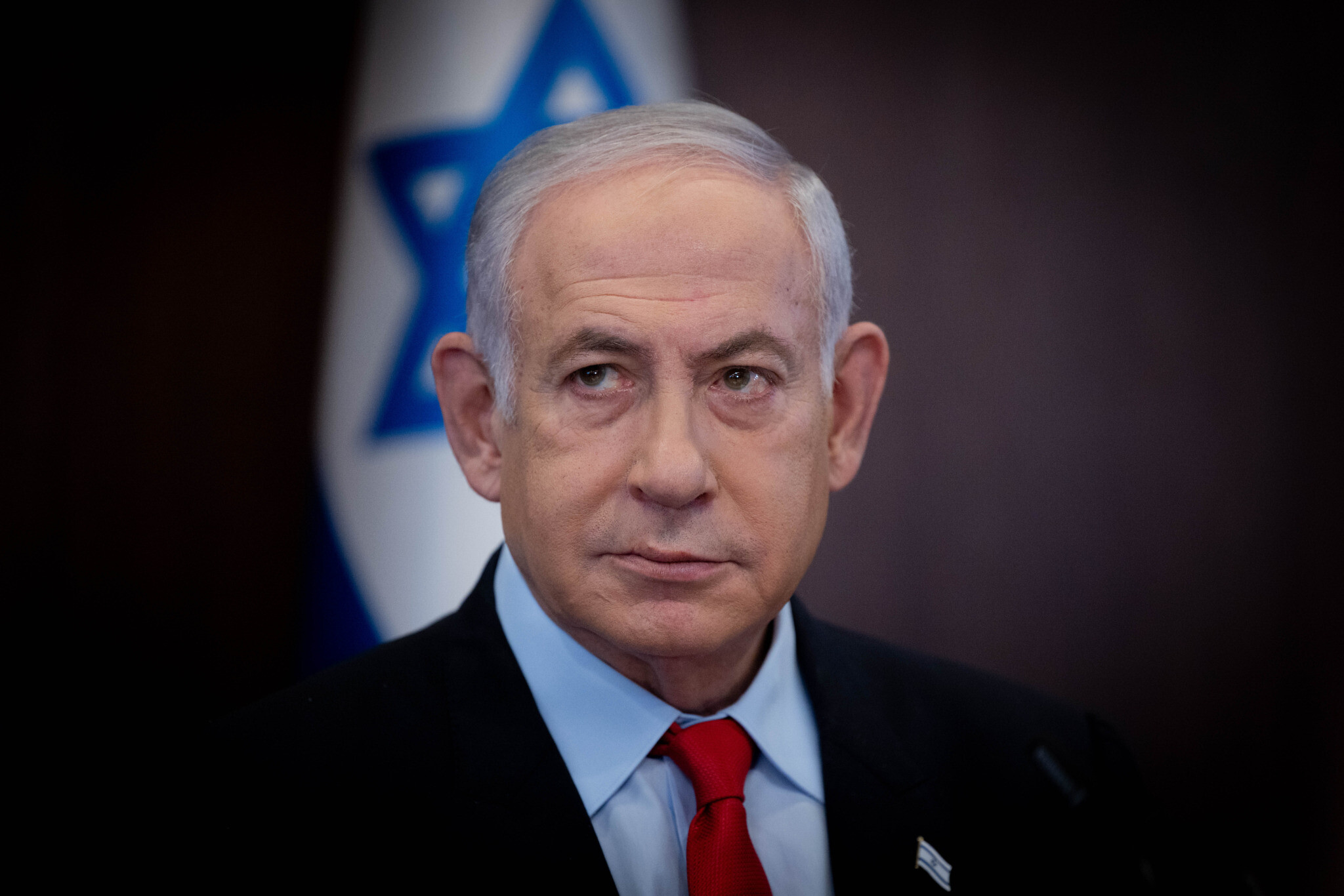
Prime Minister Benjamin Netanyahu leads a government conference at the Prime Minister’s Office in Jerusalem on September 27, 2023. (Chaim Goldberg/Flash90)
Since Netanyahu returned to power in January 2023, the number of work permits has soared to nearly 20,000.
Additionally, since 2014, Netanyahu-led governments have practically turned a blind eye to the incendiary balloons and rocket fire from Gaza.
Meanwhile, Israel has allowed suitcases holding millions in Qatari cash to enter Gaza through its crossings since 2018, in order to maintain its fragile ceasefire with the Hamas rulers of the Strip.

A Palestinian man receives financial aid at a supermarket in Gaza City, on September 15, 2021, as part of the UN’s Humanitarian Cash Assistance program, supported by the state of Qatar. (Mahmud Hams/AFP)
Most of the time, Israeli policy was to treat the Palestinian Authority as a burden and Hamas as an asset. Far-right MK Bezalel Smotrich, now the finance minister in the hardline government and leader of the Religious Zionism party, said so himself in 2015.
According to various reports, Netanyahu made a similar point at a Likud faction meeting in early 2019, when he was quoted as saying that those who oppose a Palestinian state should support the transfer of funds to Gaza, because maintaining the separation between the Palestinian Authority in the West Bank and Hamas in Gaza would prevent the establishment of a Palestinian state.
While Netanyahu does not make these kind of statements publicly or officially, his words are in line with the policy that he implemented.
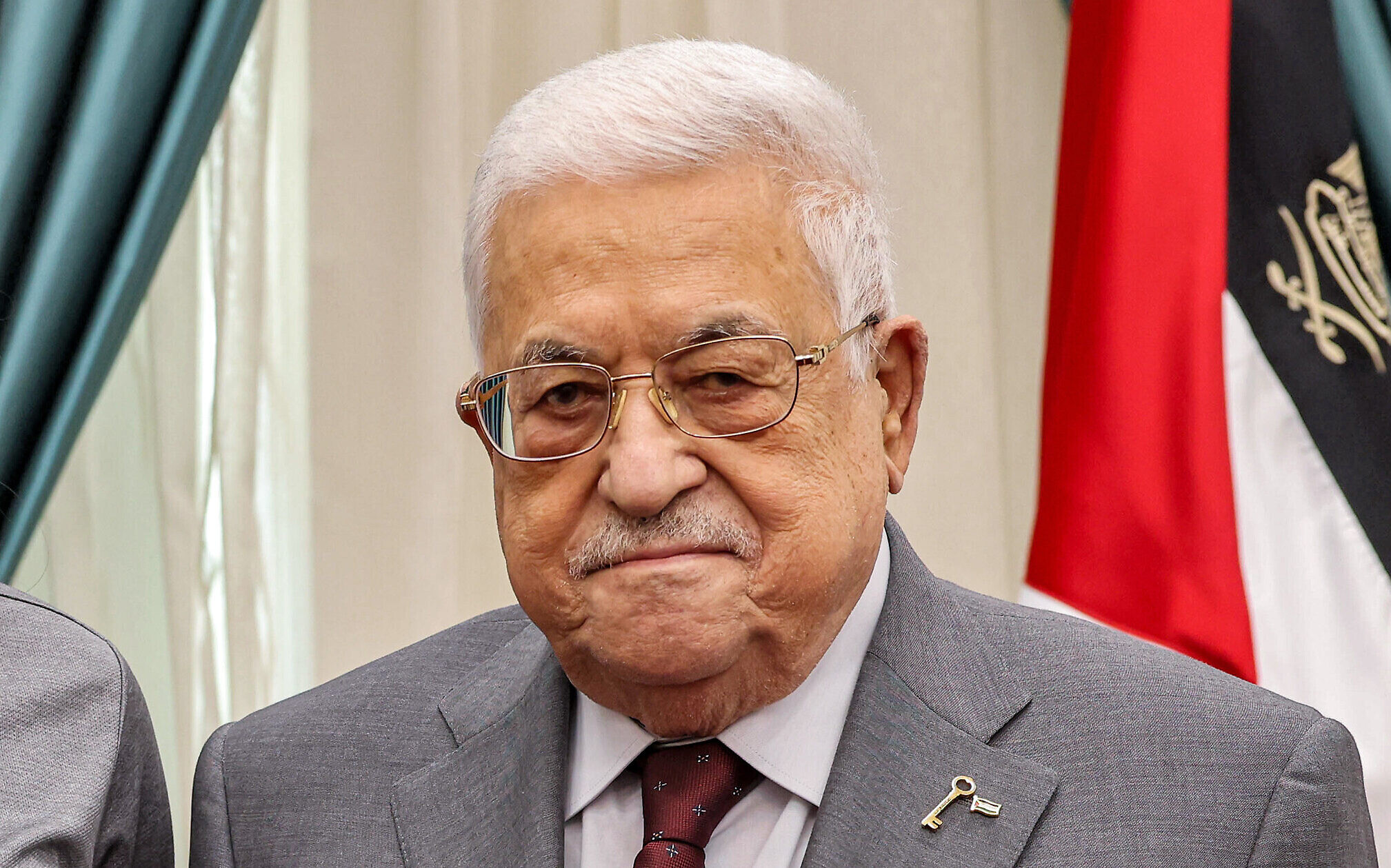
Palestinian Authority President Mahmoud Abbas looking on as he receives Palestinian athletes in Ramallah in the West Bank on August 4, 2023. (Wissam KHALIFA/PPO/AFP)
The same messaging was repeated by right-wing commentators, who may have received briefings on the matter or talked to Likud higher-ups and understood the message.
Bolstered by this policy, Hamas grew stronger and stronger until Saturday, Israel’s “Pearl Harbor,” the bloodiest day in its history — when terrorists crossed the border, slaughtered hundreds of Israelis and kidnapped an unknown number under the cover of thousands of rockets fired at towns throughout the country’s south and center.
The country has known attacks and wars, but never on such a scale in a single morning.
One thing is clear: The concept of indirectly strengthening Hamas — while tolerating sporadic attacks and minor military operations every few years — went up in smoke Saturday.
Just a few days ago, Assaf Pozilov, a reporter for the Kan public broadcaster, tweeted the following: “The Islamic Jihad organization has started a noisy exercise very close to the border, in which they practiced launching missiles, breaking into Israel and kidnapping soldiers.”

The body of a person killed by Hamas terrorists lies covered inside a bullet-riddled car in the southern city of Sderot on October 7, 2023 (Oren ZIV / AFP)
The difference between Islamic Jihad and Hamas doesn’t matter much at this point. As far as the State of Israel is concerned, the territory is under the control of Hamas, and it is responsible for all the training and activities there.
Hamas became stronger and used the auspices of peace that Israelis so longed for as cover for its training, and hundreds of Israelis have paid with their lives for this massive omission.
The terror inflicted on the civilian population in Israel is so enormous that the wounds from it will not heal for years, a challenge compounded by the dozens abducted into Gaza.
Judging by the way Netanyahu has managed Gaza in the last 13 years, it is not certain that there will be a clear policy going forward.
I read this before the attack of how Net had a weird relationship with Hammas, he wanted the PLO gone if my memory serves.
Netanyahu wanted to undermine Fatah (Palestinian Authority) which rules the West Bank. The Palestinian Authority has been pushing for a two state solution which Netanyahu does not want.
Hamas in Gaza simply wants to scrub Israel off the face of the earth and kill all the Jews (as written in their charter). Having an enemy like Hamas controlling Gaza was beneficial to Netanyahu's political policies and ambitions.
What a friend to the USA!
“Netanyahu urged Trump to attack Iran after he lost the presidency — report
General Mark Milley said to have battled against former US president's push for a missile strike, facing down his 'circle of Iran hawks,' including VP Pence and the then-Israeli PM
By TOI STAFF16 July 2021, 12:42 pm
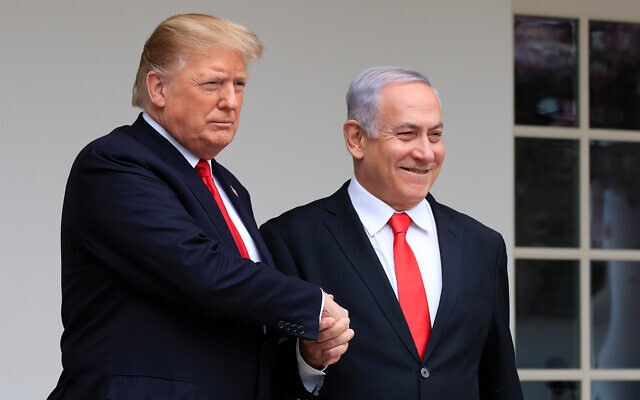
US president Donald Trump (left) welcomes visiting Prime Minister Benjamin Netanyahu to the White House in Washington, DC, on March 25, 2019. (AP Photo/Manuel Balce Ceneta, File)
General Mark Milley, the chairman of the US Joint Chiefs of Staff, battled to prevent Trump from ordering a strike against Iran, while the president was circled by hawks, including Netanyahu, pressuring him to execute such a strike, according to a reportThursday by the New Yorker.
“If you do this, you’re gonna have a fucking war,” Milley reportedly warned Trump at one point.
Other foreign policy advisers, including then-vice president Mike Pence, also reportedly pushed for military action against Iran.
Related: Joint Chiefs head said Trump was preaching Hitler’s ‘gospel’ before Capitol riot
“In the months after the election, with Trump seemingly willing to do anything to stay in power, the subject of Iran was repeatedly raised in White House meetings with the President, and Milley repeatedly argued against a strike,” the New Yorker piece reported. Milley “was worried that Trump might set in motion a full-scale conflict that was not justified. Trump had a circle of Iran hawks around him,” it said, and Netanyahu “was also urging the Administration to act against Iran after it was clear that Trump had lost the election. ‘If you do this, you’re gonna have a fucking war,’ Milley would say.”
On January 3, 2021, the defeated president convened his advisers in the Oval Office to discuss fresh reports from the International Atomic Energy Agency on Iran’s nuclear activities. Secretary of State Mike Pompeo and National Security Adviser Robert O’Brien told Trump at that meeting that “it was not possible to do anything militarily at that point,” the New Yorker said. “Their attitude was that it was ‘too late to hit them.’ After Milley walked through the potential costs and consequences, Trump agreed. And that was that: after months of anxiety and uncertainty, the Iran fight was over.”

Chairman of the US Joint Chiefs of Staff Gen. Mark Milley testifies to Senate Armed Services Committee about the budget, March 4, 2020, on Capitol Hill in Washington. (AP Photo/Jacquelyn Martin)
Israel, under Netanyahu, warned repeatedly that it would act independently against Iran if necessary to prevent it from obtaining nuclear weapons.
“We will not allow Iran to get nuclear weapons. There can be no going back to the previous nuclear agreement. We must stick to an uncompromising policy of ensuring that Iran will not develop nuclear weapons,” Netanyahu said last November, referring to the 2015 nuclear deal with world powers from which Trump withdrew in 2018.
“The IDF will forcefully attack anyone who takes part, from near or far, in activities against the State of Israel or Israeli targets. I am saying this plainly and am describing the situation as it is — the response and all the plans have been prepared and practiced,” Israel Defense Forces chief of staff Aviv Kohavi said in December of the same year.
Netanyahu’s successor, Naftali Bennett, has taken an approach of increased dialogue with the current US administration of Joe Biden on the matter, although he too has reserved Israel’s right to take independent action.
Israel is convinced that Iran is working to develop a nuclear weapons arsenal, and is believed behind a series of strikes and sabotage efforts — some of which it has acknowledged — aimed at setting back the regime’s rogue nuclear program.
https://www.timesofisrael.com/netan...k-iran-after-trumps-election-loss-report/amp/
“Netanyahu urged Trump to attack Iran after he lost the presidency — report
General Mark Milley said to have battled against former US president's push for a missile strike, facing down his 'circle of Iran hawks,' including VP Pence and the then-Israeli PM
By TOI STAFF16 July 2021, 12:42 pm
US president Donald Trump (left) welcomes visiting Prime Minister Benjamin Netanyahu to the White House in Washington, DC, on March 25, 2019. (AP Photo/Manuel Balce Ceneta, File)
- "); background-color: rgb(50, 82, 159); width: 30px; height: 30px; overflow: hidden !important;">
- "); background-color: rgb(0, 0, 0); width: 30px; height: 30px; overflow: hidden !important;">
- "); background-color: rgb(204, 39, 41); width: 30px; height: 30px; overflow: hidden !important;">
- "); background-color: rgb(37, 211, 102); width: 30px; height: 30px; overflow: hidden !important;">
General Mark Milley, the chairman of the US Joint Chiefs of Staff, battled to prevent Trump from ordering a strike against Iran, while the president was circled by hawks, including Netanyahu, pressuring him to execute such a strike, according to a reportThursday by the New Yorker.
“If you do this, you’re gonna have a fucking war,” Milley reportedly warned Trump at one point.
Other foreign policy advisers, including then-vice president Mike Pence, also reportedly pushed for military action against Iran.
Related: Joint Chiefs head said Trump was preaching Hitler’s ‘gospel’ before Capitol riot
“In the months after the election, with Trump seemingly willing to do anything to stay in power, the subject of Iran was repeatedly raised in White House meetings with the President, and Milley repeatedly argued against a strike,” the New Yorker piece reported. Milley “was worried that Trump might set in motion a full-scale conflict that was not justified. Trump had a circle of Iran hawks around him,” it said, and Netanyahu “was also urging the Administration to act against Iran after it was clear that Trump had lost the election. ‘If you do this, you’re gonna have a fucking war,’ Milley would say.”
On January 3, 2021, the defeated president convened his advisers in the Oval Office to discuss fresh reports from the International Atomic Energy Agency on Iran’s nuclear activities. Secretary of State Mike Pompeo and National Security Adviser Robert O’Brien told Trump at that meeting that “it was not possible to do anything militarily at that point,” the New Yorker said. “Their attitude was that it was ‘too late to hit them.’ After Milley walked through the potential costs and consequences, Trump agreed. And that was that: after months of anxiety and uncertainty, the Iran fight was over.”
Chairman of the US Joint Chiefs of Staff Gen. Mark Milley testifies to Senate Armed Services Committee about the budget, March 4, 2020, on Capitol Hill in Washington. (AP Photo/Jacquelyn Martin)
Israel, under Netanyahu, warned repeatedly that it would act independently against Iran if necessary to prevent it from obtaining nuclear weapons.
“We will not allow Iran to get nuclear weapons. There can be no going back to the previous nuclear agreement. We must stick to an uncompromising policy of ensuring that Iran will not develop nuclear weapons,” Netanyahu said last November, referring to the 2015 nuclear deal with world powers from which Trump withdrew in 2018.
“The IDF will forcefully attack anyone who takes part, from near or far, in activities against the State of Israel or Israeli targets. I am saying this plainly and am describing the situation as it is — the response and all the plans have been prepared and practiced,” Israel Defense Forces chief of staff Aviv Kohavi said in December of the same year.
Netanyahu’s successor, Naftali Bennett, has taken an approach of increased dialogue with the current US administration of Joe Biden on the matter, although he too has reserved Israel’s right to take independent action.
Israel is convinced that Iran is working to develop a nuclear weapons arsenal, and is believed behind a series of strikes and sabotage efforts — some of which it has acknowledged — aimed at setting back the regime’s rogue nuclear program.
https://www.timesofisrael.com/netan...k-iran-after-trumps-election-loss-report/amp/
What a friend to the USA!
“Netanyahu urged Trump to attack Iran after he lost the presidency — report
General Mark Milley said to have battled against former US president's push for a missile strike, facing down his 'circle of Iran hawks,' including VP Pence and the then-Israeli PM
By TOI STAFF16 July 2021, 12:42 pm
US president Donald Trump (left) welcomes visiting Prime Minister Benjamin Netanyahu to the White House in Washington, DC, on March 25, 2019. (AP Photo/Manuel Balce Ceneta, File)
Former prime minister Benjamin Netanyahu urged Donald Trump to launch a military strike against Iran after it was clear that the former US president had lost the 2020 election, a report said Thursday.
- "); background-color: rgb(50, 82, 159); width: 30px; height: 30px; overflow: hidden !important;">
- "); background-color: rgb(0, 0, 0); width: 30px; height: 30px; overflow: hidden !important;">
- "); background-color: rgb(204, 39, 41); width: 30px; height: 30px; overflow: hidden !important;">
- "); background-color: rgb(37, 211, 102); width: 30px; height: 30px; overflow: hidden !important;">
General Mark Milley, the chairman of the US Joint Chiefs of Staff, battled to prevent Trump from ordering a strike against Iran, while the president was circled by hawks, including Netanyahu, pressuring him to execute such a strike, according to a reportThursday by the New Yorker.
“If you do this, you’re gonna have a fucking war,” Milley reportedly warned Trump at one point.
Other foreign policy advisers, including then-vice president Mike Pence, also reportedly pushed for military action against Iran.
Related: Joint Chiefs head said Trump was preaching Hitler’s ‘gospel’ before Capitol riot
“In the months after the election, with Trump seemingly willing to do anything to stay in power, the subject of Iran was repeatedly raised in White House meetings with the President, and Milley repeatedly argued against a strike,” the New Yorker piece reported. Milley “was worried that Trump might set in motion a full-scale conflict that was not justified. Trump had a circle of Iran hawks around him,” it said, and Netanyahu “was also urging the Administration to act against Iran after it was clear that Trump had lost the election. ‘If you do this, you’re gonna have a fucking war,’ Milley would say.”
On January 3, 2021, the defeated president convened his advisers in the Oval Office to discuss fresh reports from the International Atomic Energy Agency on Iran’s nuclear activities. Secretary of State Mike Pompeo and National Security Adviser Robert O’Brien told Trump at that meeting that “it was not possible to do anything militarily at that point,” the New Yorker said. “Their attitude was that it was ‘too late to hit them.’ After Milley walked through the potential costs and consequences, Trump agreed. And that was that: after months of anxiety and uncertainty, the Iran fight was over.”
Chairman of the US Joint Chiefs of Staff Gen. Mark Milley testifies to Senate Armed Services Committee about the budget, March 4, 2020, on Capitol Hill in Washington. (AP Photo/Jacquelyn Martin)
Israel, under Netanyahu, warned repeatedly that it would act independently against Iran if necessary to prevent it from obtaining nuclear weapons.
“We will not allow Iran to get nuclear weapons. There can be no going back to the previous nuclear agreement. We must stick to an uncompromising policy of ensuring that Iran will not develop nuclear weapons,” Netanyahu said last November, referring to the 2015 nuclear deal with world powers from which Trump withdrew in 2018.
“The IDF will forcefully attack anyone who takes part, from near or far, in activities against the State of Israel or Israeli targets. I am saying this plainly and am describing the situation as it is — the response and all the plans have been prepared and practiced,” Israel Defense Forces chief of staff Aviv Kohavi said in December of the same year.
Netanyahu’s successor, Naftali Bennett, has taken an approach of increased dialogue with the current US administration of Joe Biden on the matter, although he too has reserved Israel’s right to take independent action.
Israel is convinced that Iran is working to develop a nuclear weapons arsenal, and is believed behind a series of strikes and sabotage efforts — some of which it has acknowledged — aimed at setting back the regime’s rogue nuclear program.
https://www.timesofisrael.com/netan...k-iran-after-trumps-election-loss-report/amp/
you can in fact read all about his dumb ass Iran war hawkery (including assassinations) after the loser lost the election starting here:
https://www.elitetrader.com/et/threads/war.333550/page-20
addendum:
https://www.elitetrader.com/et/threads/transition-sabotage-to-screw-over-america.352703/page-4
- Israel's Controlled Demolitions Are Razing Neighborhoods in Gaza
Jan. 31, 2024
https://www.nytimes.com/interactive/2024/02/01/world/middleeast/Israel-gaza-war-demolish.html
Residential buildings demolished by Israeli forces in January near Gaza’s border with Israel.
A resort hotel overlooking the Mediterranean. A multistory courthouse built in 2018. Dozens of homes, obliterated in seconds, with the pull of a trigger.
The damage caused by Israel’s aerial offensive in Gaza has been well documented. But Israeli ground forces have also carried out a wave of controlled explosions that has drastically changed the landscape in recent months.
At least 33 controlled demolitions have destroyed hundreds of buildings — including mosques, schools and entire sections of residential neighborhoods — since November, a New York Times analysis of Israeli military footage, social media videos and satellite imagery shows.
In response to questions about the demolitions, a spokesperson for the Israeli military said that soldiers are “locating and destroying terror infrastructures embedded, among other things, inside buildings” in civilian areas — adding that sometimes entire neighborhoods act as “combat complexes” for Hamas fighters.
Controlled demolitions in Gaza
The Times verified more than two dozen explosions in videos posted from Nov. 15 to Jan. 24.
Gaza City Residential buildings

Al-Qarara Rural residential area

Gaza City Blue Beach Resort

Gaza City Apartment buildings

Beit Lahia School

Gaza City Residential buildings

Jabaliya Al-Noor mosque

Gaza City Palestine Square

Beit Hanoun Two U.N. schools

Gaza City Multiple buildings

Khuza’a Residential buildings

Bani Suheila Mosque

Gaza City Multistory building

Gaza City Two-story building

Bani Suheila Al-Dhilal mosque

Gaza City Residential building

Gaza City Residential building

Khuza’a Residential buildings

Juhor Ad-Dik U.N. school

Al-Zahra Israa University

Gaza City Residential buildings

Al-Musaddar Multiple buildings

Gaza City Residential buildings

Al-Zahra Gaza’s Palace of Justice

Bani Suheila Residential buildings

Khuza’a Residential buildings

Al-Qarara Rural residential area

Beit Hanoun Multiple buildings

Al-Mughraqa Al-Azhar University campus

Bani Suheila Residential buildings

Israeli officials, who spoke anonymously because they were not authorized to speak publicly about the issue, said that Israel wanted to demolish Palestinian buildings close to the border as part of an effort to create a security “buffer zone” inside Gaza, making it harder for fighters to carry out cross-border attacks like the ones in southern Israel on Oct. 7.
But most of the demolition locations identified by The Times occurred well outside the so-called buffer zone. And the number of confirmed demolitions — based on the availability of visual evidence — may represent only a portion of the actual number carried out by Israel since the war began.
Note: Damage analysis data is through Jan. 29 at 5:44 a.m. in Gaza and Israel.
To carry out these demolitions, soldiers enter the targeted structures to place mines or other explosives, and then leave to pull the trigger from a safe distance. In most cases, Israeli troops have cleared and secured surrounding areas. But in areas of active fighting, the demolitions are not without risk.
Twenty-one Israeli soldiers were killed last week as their unit prepared to detonate multiple buildings near the border in central Gaza. Palestinian fighters fired a rocket-propelled grenade in their direction, triggering the explosives, Israeli officials said.
The soldiers were clearing the area to allow residents of southern Israel to safely return to their homes, according to Rear Adm. Daniel Hagari, the chief spokesman for Israel’s military.
In December, a State Department spokesman, Matthew Miller, said that the creation of a buffer zone along Gaza’s roughly 36-mile border with Israel would be “a violation” of Washington’s longstanding position against the reduction of territory in Gaza. And experts on humanitarian law say the demolitions — which would prevent some Palestinians from eventually returning to their homes — could violate rules of war prohibiting the deliberate destruction of civilian property.
In one video of a demolition from late November, a controlled explosion took down at least four high-rise residential buildings just blocks away from a major hospital in Gaza City. Another demolition in December destroyed over a dozen buildings around the city’s central Palestine Square, which the Israeli military said was home to a large network of tunnels.
At least half the buildings in Gaza have been damaged or destroyed since the start of the war, according to satellite analysis estimates. While much of the damage is from airstrikes and fighting, the large controlled demolitions represent some of the single most destructive episodes.
In the town of Khuza’a, along the buffer zone to the east of Khan Younis, in southern Gaza, videos from early January show soldiers triggering several detonations, destroying nearly 200 homes. Other videos show the soldiers setting off flares and clapping as they carry out a demolition.
One of the largest demolitions identified by The Times was carried out in Shuja’iyya, a residential neighborhood on the outskirts of Gaza City. Over three weeks, scores of homes in the same neighborhood were razed, according to satellite imagery from December.
In some videos, the demolitions appear to be targeting underground infrastructure. Others capture the destruction of mosques, U.N.-affiliated schools and university buildings — including the demolition of Israa University in mid-January, which drew widespread condemnation after the video circulated online.
After U.S. officials raised questions about the decision to demolish the university, the Israeli military said the episode was “under review.” While the site had been cleared and secured by Israeli ground troops, military officials said it had once served as a Hamas training camp and weapons-manufacturing facility — a claim The Times was unable to verify.
“That it has previously been used by enemy fighters is not a justification for such a destruction,” said Marco Sassòli, a professor of international law at the University of Geneva, who emphasized that such demolitions should only be carried out if absolutely necessary for military operations. “I cannot imagine how this can be the case for a university, parliament building, mosque, school or hotel in the midst of the Gaza Strip.”
A spokesperson for the Israeli military said that all actions by Israeli forces are “based on military necessity and with accordance to international law.”
For Palestinians, the demolitions are yet another symbol of loss and destruction in Gaza, raising questions about the territory’s future after decades of displacement and war.
“Israel’s plan is to destroy Gaza and make it unliveable and lifeless,” said Husam Zomlot, the Palestinian ambassador to Britain. “Israel’s goal has always been to make it impossible for our people to return to their land.”
Two days after the 21 Israeli soldiers were killed in central Gaza, another demolition video was filmed. In it, a soldier says that, in their memory, 21 homes would be destroyed.
Satellite images by Planet Labs. The image of Palestine Square in Gaza City was captured on Dec. 24, 2023. The image of Khuza’a was captured on Jan. 16, 2024. The image of Shuja’iyya in Gaza City was captured on Dec. 26, 2023.
Times reporters reviewed and verified dozens of videos from official Israeli military sources, news outlets and social media accounts, including posts from soldiers who carried out the demolitions in Gaza. Reporters cross-referenced the footage against satellite imagery and geospatial databases to confirm the date, location and spatial extent of the demolitions.
Aric Toler, Patrick Kingsley and Aaron Boxerman contributed reporting. Meg Felling contributed video production.
TURN ON THE PUMPS! This is one way to eliminate Hamas -- at the risk to the hostages.
IDF admits it is flooding Hamas tunnels with seawater — a move that the US has warned could endanger hostages
https://nypost.com/2024/01/30/news/idf-admits-it-is-flooding-hamas-tunnels-with-seawater/
IDF admits it is flooding Hamas tunnels with seawater — a move that the US has warned could endanger hostages
https://nypost.com/2024/01/30/news/idf-admits-it-is-flooding-hamas-tunnels-with-seawater/
mask off moment.....tho honestly beats bombing civilians.TURN ON THE PUMPS! This is one way to eliminate Hamas -- at the risk to the hostages.
IDF admits it is flooding Hamas tunnels with seawater — a move that the US has warned could endanger hostages
https://nypost.com/2024/01/30/news/idf-admits-it-is-flooding-hamas-tunnels-with-seawater/
never forget:By Leanne Abraham, Bora Erden, Nader Ibrahim, Elena Shao and Haley Willis
- Israel's Controlled Demolitions Are Razing Neighborhoods in Gaza
Jan. 31, 2024
https://www.nytimes.com/interactive/2024/02/01/world/middleeast/Israel-gaza-war-demolish.html
Residential buildings demolished by Israeli forces in January near Gaza’s border with Israel.
A resort hotel overlooking the Mediterranean. A multistory courthouse built in 2018. Dozens of homes, obliterated in seconds, with the pull of a trigger.
The damage caused by Israel’s aerial offensive in Gaza has been well documented. But Israeli ground forces have also carried out a wave of controlled explosions that has drastically changed the landscape in recent months.
At least 33 controlled demolitions have destroyed hundreds of buildings — including mosques, schools and entire sections of residential neighborhoods — since November, a New York Times analysis of Israeli military footage, social media videos and satellite imagery shows.
In response to questions about the demolitions, a spokesperson for the Israeli military said that soldiers are “locating and destroying terror infrastructures embedded, among other things, inside buildings” in civilian areas — adding that sometimes entire neighborhoods act as “combat complexes” for Hamas fighters.
Controlled demolitions in Gaza
The Times verified more than two dozen explosions in videos posted from Nov. 15 to Jan. 24.
Gaza City Residential buildings
Al-Qarara Rural residential area
Gaza City Blue Beach Resort
Gaza City Apartment buildings
Beit Lahia School
Gaza City Residential buildings
Jabaliya Al-Noor mosque
Gaza City Palestine Square
Beit Hanoun Two U.N. schools
Gaza City Multiple buildings
Khuza’a Residential buildings
Bani Suheila Mosque
Gaza City Multistory building
Gaza City Two-story building
Bani Suheila Al-Dhilal mosque
Gaza City Residential building
Gaza City Residential building
Khuza’a Residential buildings
Juhor Ad-Dik U.N. school
Al-Zahra Israa University
Gaza City Residential buildings
Al-Musaddar Multiple buildings
Gaza City Residential buildings
Al-Zahra Gaza’s Palace of Justice
Bani Suheila Residential buildings
Khuza’a Residential buildings
Al-Qarara Rural residential area
Beit Hanoun Multiple buildings
Al-Mughraqa Al-Azhar University campus
Bani Suheila Residential buildings
Israeli officials, who spoke anonymously because they were not authorized to speak publicly about the issue, said that Israel wanted to demolish Palestinian buildings close to the border as part of an effort to create a security “buffer zone” inside Gaza, making it harder for fighters to carry out cross-border attacks like the ones in southern Israel on Oct. 7.
But most of the demolition locations identified by The Times occurred well outside the so-called buffer zone. And the number of confirmed demolitions — based on the availability of visual evidence — may represent only a portion of the actual number carried out by Israel since the war began.
Note: Damage analysis data is through Jan. 29 at 5:44 a.m. in Gaza and Israel.
To carry out these demolitions, soldiers enter the targeted structures to place mines or other explosives, and then leave to pull the trigger from a safe distance. In most cases, Israeli troops have cleared and secured surrounding areas. But in areas of active fighting, the demolitions are not without risk.
Twenty-one Israeli soldiers were killed last week as their unit prepared to detonate multiple buildings near the border in central Gaza. Palestinian fighters fired a rocket-propelled grenade in their direction, triggering the explosives, Israeli officials said.
The soldiers were clearing the area to allow residents of southern Israel to safely return to their homes, according to Rear Adm. Daniel Hagari, the chief spokesman for Israel’s military.
In December, a State Department spokesman, Matthew Miller, said that the creation of a buffer zone along Gaza’s roughly 36-mile border with Israel would be “a violation” of Washington’s longstanding position against the reduction of territory in Gaza. And experts on humanitarian law say the demolitions — which would prevent some Palestinians from eventually returning to their homes — could violate rules of war prohibiting the deliberate destruction of civilian property.
In one video of a demolition from late November, a controlled explosion took down at least four high-rise residential buildings just blocks away from a major hospital in Gaza City. Another demolition in December destroyed over a dozen buildings around the city’s central Palestine Square, which the Israeli military said was home to a large network of tunnels.
At least half the buildings in Gaza have been damaged or destroyed since the start of the war, according to satellite analysis estimates. While much of the damage is from airstrikes and fighting, the large controlled demolitions represent some of the single most destructive episodes.
In the town of Khuza’a, along the buffer zone to the east of Khan Younis, in southern Gaza, videos from early January show soldiers triggering several detonations, destroying nearly 200 homes. Other videos show the soldiers setting off flares and clapping as they carry out a demolition.
One of the largest demolitions identified by The Times was carried out in Shuja’iyya, a residential neighborhood on the outskirts of Gaza City. Over three weeks, scores of homes in the same neighborhood were razed, according to satellite imagery from December.
In some videos, the demolitions appear to be targeting underground infrastructure. Others capture the destruction of mosques, U.N.-affiliated schools and university buildings — including the demolition of Israa University in mid-January, which drew widespread condemnation after the video circulated online.
After U.S. officials raised questions about the decision to demolish the university, the Israeli military said the episode was “under review.” While the site had been cleared and secured by Israeli ground troops, military officials said it had once served as a Hamas training camp and weapons-manufacturing facility — a claim The Times was unable to verify.
“That it has previously been used by enemy fighters is not a justification for such a destruction,” said Marco Sassòli, a professor of international law at the University of Geneva, who emphasized that such demolitions should only be carried out if absolutely necessary for military operations. “I cannot imagine how this can be the case for a university, parliament building, mosque, school or hotel in the midst of the Gaza Strip.”
A spokesperson for the Israeli military said that all actions by Israeli forces are “based on military necessity and with accordance to international law.”
For Palestinians, the demolitions are yet another symbol of loss and destruction in Gaza, raising questions about the territory’s future after decades of displacement and war.
“Israel’s plan is to destroy Gaza and make it unliveable and lifeless,” said Husam Zomlot, the Palestinian ambassador to Britain. “Israel’s goal has always been to make it impossible for our people to return to their land.”
Two days after the 21 Israeli soldiers were killed in central Gaza, another demolition video was filmed. In it, a soldier says that, in their memory, 21 homes would be destroyed.
Satellite images by Planet Labs. The image of Palestine Square in Gaza City was captured on Dec. 24, 2023. The image of Khuza’a was captured on Jan. 16, 2024. The image of Shuja’iyya in Gaza City was captured on Dec. 26, 2023.
Times reporters reviewed and verified dozens of videos from official Israeli military sources, news outlets and social media accounts, including posts from soldiers who carried out the demolitions in Gaza. Reporters cross-referenced the footage against satellite imagery and geospatial databases to confirm the date, location and spatial extent of the demolitions.
Aric Toler, Patrick Kingsley and Aaron Boxerman contributed reporting. Meg Felling contributed video production.
If Israel performing indiscriminate aerial bombing then far more Palestinians would be dead.
Returning fire when you are fired upon is not indiscriminate. Hint to civilians: Stay out of and away from buildings where Hamas is shooting at the IDF from or launching rockets from.
By Leanne Abraham, Bora Erden, Nader Ibrahim, Elena Shao and Haley Willis
- Israel's Controlled Demolitions Are Razing Neighborhoods in Gaza
Jan. 31, 2024
https://www.nytimes.com/interactive/2024/02/01/world/middleeast/Israel-gaza-war-demolish.html
Residential buildings demolished by Israeli forces in January near Gaza’s border with Israel.
A resort hotel overlooking the Mediterranean. A multistory courthouse built in 2018. Dozens of homes, obliterated in seconds, with the pull of a trigger.
The damage caused by Israel’s aerial offensive in Gaza has been well documented. But Israeli ground forces have also carried out a wave of controlled explosions that has drastically changed the landscape in recent months.
At least 33 controlled demolitions have destroyed hundreds of buildings — including mosques, schools and entire sections of residential neighborhoods — since November, a New York Times analysis of Israeli military footage, social media videos and satellite imagery shows.
In response to questions about the demolitions, a spokesperson for the Israeli military said that soldiers are “locating and destroying terror infrastructures embedded, among other things, inside buildings” in civilian areas — adding that sometimes entire neighborhoods act as “combat complexes” for Hamas fighters.
Controlled demolitions in Gaza
The Times verified more than two dozen explosions in videos posted from Nov. 15 to Jan. 24.
Gaza City Residential buildings
Al-Qarara Rural residential area
Gaza City Blue Beach Resort
Gaza City Apartment buildings
Beit Lahia School
Gaza City Residential buildings
Jabaliya Al-Noor mosque
Gaza City Palestine Square
Beit Hanoun Two U.N. schools
Gaza City Multiple buildings
Khuza’a Residential buildings
Bani Suheila Mosque
Gaza City Multistory building
Gaza City Two-story building
Bani Suheila Al-Dhilal mosque
Gaza City Residential building
Gaza City Residential building
Khuza’a Residential buildings
Juhor Ad-Dik U.N. school
Al-Zahra Israa University
Gaza City Residential buildings
Al-Musaddar Multiple buildings
Gaza City Residential buildings
Al-Zahra Gaza’s Palace of Justice
Bani Suheila Residential buildings
Khuza’a Residential buildings
Al-Qarara Rural residential area
Beit Hanoun Multiple buildings
Al-Mughraqa Al-Azhar University campus
Bani Suheila Residential buildings
Israeli officials, who spoke anonymously because they were not authorized to speak publicly about the issue, said that Israel wanted to demolish Palestinian buildings close to the border as part of an effort to create a security “buffer zone” inside Gaza, making it harder for fighters to carry out cross-border attacks like the ones in southern Israel on Oct. 7.
But most of the demolition locations identified by The Times occurred well outside the so-called buffer zone. And the number of confirmed demolitions — based on the availability of visual evidence — may represent only a portion of the actual number carried out by Israel since the war began.
Note: Damage analysis data is through Jan. 29 at 5:44 a.m. in Gaza and Israel.
To carry out these demolitions, soldiers enter the targeted structures to place mines or other explosives, and then leave to pull the trigger from a safe distance. In most cases, Israeli troops have cleared and secured surrounding areas. But in areas of active fighting, the demolitions are not without risk.
Twenty-one Israeli soldiers were killed last week as their unit prepared to detonate multiple buildings near the border in central Gaza. Palestinian fighters fired a rocket-propelled grenade in their direction, triggering the explosives, Israeli officials said.
The soldiers were clearing the area to allow residents of southern Israel to safely return to their homes, according to Rear Adm. Daniel Hagari, the chief spokesman for Israel’s military.
In December, a State Department spokesman, Matthew Miller, said that the creation of a buffer zone along Gaza’s roughly 36-mile border with Israel would be “a violation” of Washington’s longstanding position against the reduction of territory in Gaza. And experts on humanitarian law say the demolitions — which would prevent some Palestinians from eventually returning to their homes — could violate rules of war prohibiting the deliberate destruction of civilian property.
In one video of a demolition from late November, a controlled explosion took down at least four high-rise residential buildings just blocks away from a major hospital in Gaza City. Another demolition in December destroyed over a dozen buildings around the city’s central Palestine Square, which the Israeli military said was home to a large network of tunnels.
At least half the buildings in Gaza have been damaged or destroyed since the start of the war, according to satellite analysis estimates. While much of the damage is from airstrikes and fighting, the large controlled demolitions represent some of the single most destructive episodes.
In the town of Khuza’a, along the buffer zone to the east of Khan Younis, in southern Gaza, videos from early January show soldiers triggering several detonations, destroying nearly 200 homes. Other videos show the soldiers setting off flares and clapping as they carry out a demolition.
One of the largest demolitions identified by The Times was carried out in Shuja’iyya, a residential neighborhood on the outskirts of Gaza City. Over three weeks, scores of homes in the same neighborhood were razed, according to satellite imagery from December.
In some videos, the demolitions appear to be targeting underground infrastructure. Others capture the destruction of mosques, U.N.-affiliated schools and university buildings — including the demolition of Israa University in mid-January, which drew widespread condemnation after the video circulated online.
After U.S. officials raised questions about the decision to demolish the university, the Israeli military said the episode was “under review.” While the site had been cleared and secured by Israeli ground troops, military officials said it had once served as a Hamas training camp and weapons-manufacturing facility — a claim The Times was unable to verify.
“That it has previously been used by enemy fighters is not a justification for such a destruction,” said Marco Sassòli, a professor of international law at the University of Geneva, who emphasized that such demolitions should only be carried out if absolutely necessary for military operations. “I cannot imagine how this can be the case for a university, parliament building, mosque, school or hotel in the midst of the Gaza Strip.”
A spokesperson for the Israeli military said that all actions by Israeli forces are “based on military necessity and with accordance to international law.”
For Palestinians, the demolitions are yet another symbol of loss and destruction in Gaza, raising questions about the territory’s future after decades of displacement and war.
“Israel’s plan is to destroy Gaza and make it unliveable and lifeless,” said Husam Zomlot, the Palestinian ambassador to Britain. “Israel’s goal has always been to make it impossible for our people to return to their land.”
Two days after the 21 Israeli soldiers were killed in central Gaza, another demolition video was filmed. In it, a soldier says that, in their memory, 21 homes would be destroyed.
Satellite images by Planet Labs. The image of Palestine Square in Gaza City was captured on Dec. 24, 2023. The image of Khuza’a was captured on Jan. 16, 2024. The image of Shuja’iyya in Gaza City was captured on Dec. 26, 2023.
Times reporters reviewed and verified dozens of videos from official Israeli military sources, news outlets and social media accounts, including posts from soldiers who carried out the demolitions in Gaza. Reporters cross-referenced the footage against satellite imagery and geospatial databases to confirm the date, location and spatial extent of the demolitions.
Aric Toler, Patrick Kingsley and Aaron Boxerman contributed reporting. Meg Felling contributed video production.
The IDF should quite rightfully be razing fortified complex structures that have been used to shoot at the IDF from, are connected to the Hamas tunnel network, or are sitting in security buffer zones. There is a need to ensure these buildings and tunnels will never be used in the future to attack Israeli troops or used to fire rockets at Israel.
If you want to blame a group for this destruction then blame Hamas. They are solely responsible for this war in Gaza and using Palestinian civilians as human shields.
History will rightfully blame Israeli fascists looking to displace and ethnically cleanse a region under the guise of righteousness while trampling on the memories of massacred victims.The IDF should quite rightfully be razing fortified complex structures that have been used to shoot at the IDF from, are connected to the Hamas tunnel network, or are sitting in security buffer zones. There is a need to ensure these buildings and tunnels will never be used in the future to attack Israeli troops or used to fire rockets at Israel.
If you want to blame a group for this destruction then blame Hamas. They are solely responsible for this war in Gaza and using Palestinian civilians as human shields.