The ‘Doomsday Glacier’ is rapidly melting. Scientists now have evidence for when it started and why
By Laura Paddison, CNN Mon February 26, 2024
https://edition.cnn.com/2024/02/26/...er-antarctic-ice-melt-climate-intl/index.html
Scientists have looked back in time to reconstruct the past life of Antarctica’s “Doomsday Glacier” — nicknamed because its collapse could cause catastrophic sea level rise. They have discovered it started retreating rapidly in the 1940s, according to a new study that provides an alarming insight into future melting.
The Thwaites Glacier in West Antarctica is the world’s widest and roughly the size of Florida. Scientists knew it had been losing ice at an accelerating rate since the 1970s, but because satellite data only goes back a few decades, they didn’t know exactly when significant melting began.
Now there is an answer to this question, according to a study published Monday in the journal Proceedings of the National Academy of Sciences.
By analyzing marine sediment cores extracted from beneath the ocean floor, researchers found the glacier began to significantly retreat in the 1940s, likely kicked off by a very strong El Niño event — a natural climate fluctuation which tends to have a warmingimpact.
Since then, the glacier has been unable to recover, which may reflect the increasing impact of human-caused global warming, according to the report.
What happens to Thwaites will have global reverberations. The glacier already contributes 4% ofsea level rise as it sheds billions of tons of ice a year into the ocean. Its complete collapse could raise sea levels by more than 2 feet.
But it also plays a vital role in the stability of the West Antarctic Ice Sheet, acting like a cork holding back the vast stretch of ice behind it. Thwaites’ collapse would undermine the stability of the ice sheet, which holds enough water to raise sea levels by at least 10 feet, causing catastrophic global flooding.
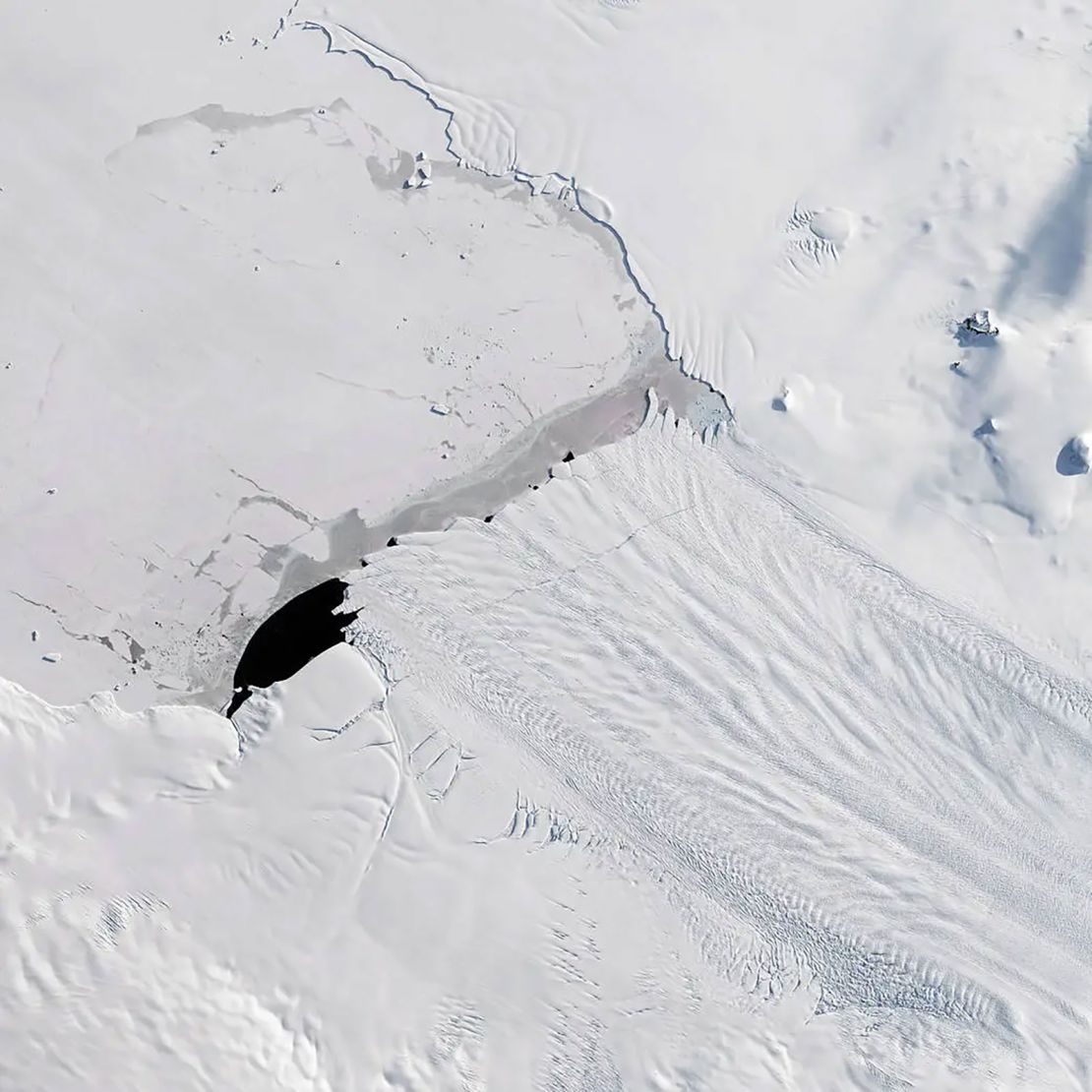
A 2017 photo shows a new iceberg calved from Pine Island Glacier, one of the main outlets where ice from the West Antarctic Ice Sheet flows into the ocean.
Joshua Stevens/NASA Earth Observatory/US Geological Survey
The study’s findings match previous research on the neighboring Pine Island Glacier, one of the largest ice streams in Antarctica, which scientists also found started retreating rapidly in the 1940s.
This makes the research significant, said Julia Wellner, an associate professor of geology at the University of Houston and one of the study’s authors. What’s happening to Thwaites is not specific to one glacier, but part of the bigger context of a changing climate, she told CNN.
“If both glaciers are retreating at the same time, that’s further evidence that they’re actually being forced by something,” Wellner said.
To build a picture of Thwaites’ life over the past nearly 12,000 years, the scientists took an icebreaker vessel up close to the edge of the glacier to collect ocean sediment cores from a range of depths.
These cores provide a historical timeline. Each layer yields information about the ocean and ice going back thousands of years. By scanning and dating the sediments, the scientists were able to pinpoint when the substantial melting began.
From this information, they believe Thwaites’ retreat was set off by an extreme El Niño that happened at a time when the glacier was likely already in a phase of melting, knocking it off balance. “It’s sort of like if you get kicked when you’re already sick, it’s going to have a much bigger impact,” Wellner said.
The findings are alarming because they suggest that once big changes are triggered, it’s very hard to stop them, said James Smith, a marine geologist at the British Antarctic Survey and a study co-author.
“Once an ice sheet retreat is set in motion it can continue for decades, even if what started it gets no worse,” he told CNN.
While similar retreats have happened much further back in the past, the ice sheet recovered and regrew, Smith said. But these glaciers “show no signs of recovery, which likely reflects the growing influence of human-caused climate change.”
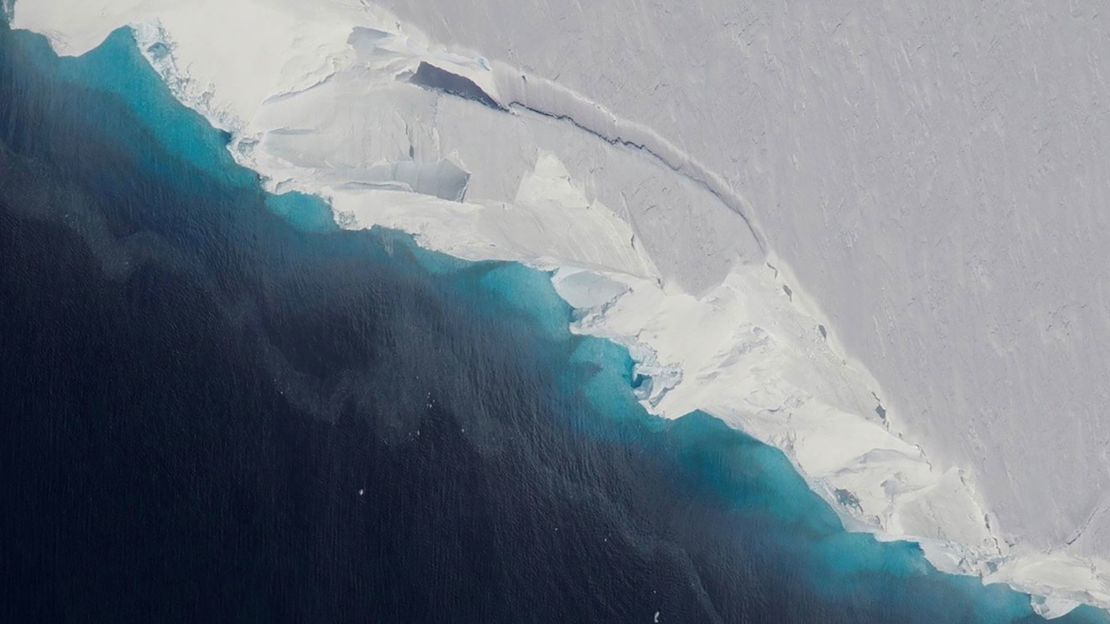
Thwaites Glacier in Antarctica.
Jeremy Harbeck/OIB/NASA
Ted Scambos, a glaciologist at the University of Colorado Boulder who was not involved in the research, said the study confirms and adds detail to our understanding of how Thwaites’ retreat began.
A system that was already close to being unstable “took a big shot from a mostly natural event,” said Scambos, referring to the El Niño. “Further events arising more from the warming climate trend took things further, and started the widespread retreat we’re seeing today,” he told CNN.
Martin Truffer, a physics professor at the University of Alaska Fairbanks, said the research shows if a glacier is in a sensitive state, “a single event can knock it into a retreat from which it is difficult to recover.”
“Humans are changing the climate and this study shows that small continuous changes in climate can lead to step changes in glacier state,” said Truffer, who was not involved in the research.
Antarctica is sometimes called the “sleeping giant,” because scientists are still trying to understand how vulnerable this icy, isolated continent may be as humans heat up the atmosphere and oceans.
Wellner is a geologist — she focuses on the past not the future — but she said this study gives important and alarming context for what might happen to the ice in this vital stretch of Antarctica.
It shows that even if a trigger for rapid melting has ended, that doesn’t mean the response stops. “So if the ice is already in retreat today,” she said, “just because we might stop warming, it might not stop its retreat.”
By Laura Paddison, CNN Mon February 26, 2024
https://edition.cnn.com/2024/02/26/...er-antarctic-ice-melt-climate-intl/index.html
Scientists have looked back in time to reconstruct the past life of Antarctica’s “Doomsday Glacier” — nicknamed because its collapse could cause catastrophic sea level rise. They have discovered it started retreating rapidly in the 1940s, according to a new study that provides an alarming insight into future melting.
The Thwaites Glacier in West Antarctica is the world’s widest and roughly the size of Florida. Scientists knew it had been losing ice at an accelerating rate since the 1970s, but because satellite data only goes back a few decades, they didn’t know exactly when significant melting began.
Now there is an answer to this question, according to a study published Monday in the journal Proceedings of the National Academy of Sciences.
By analyzing marine sediment cores extracted from beneath the ocean floor, researchers found the glacier began to significantly retreat in the 1940s, likely kicked off by a very strong El Niño event — a natural climate fluctuation which tends to have a warmingimpact.
Since then, the glacier has been unable to recover, which may reflect the increasing impact of human-caused global warming, according to the report.
What happens to Thwaites will have global reverberations. The glacier already contributes 4% ofsea level rise as it sheds billions of tons of ice a year into the ocean. Its complete collapse could raise sea levels by more than 2 feet.
But it also plays a vital role in the stability of the West Antarctic Ice Sheet, acting like a cork holding back the vast stretch of ice behind it. Thwaites’ collapse would undermine the stability of the ice sheet, which holds enough water to raise sea levels by at least 10 feet, causing catastrophic global flooding.
A 2017 photo shows a new iceberg calved from Pine Island Glacier, one of the main outlets where ice from the West Antarctic Ice Sheet flows into the ocean.
Joshua Stevens/NASA Earth Observatory/US Geological Survey
The study’s findings match previous research on the neighboring Pine Island Glacier, one of the largest ice streams in Antarctica, which scientists also found started retreating rapidly in the 1940s.
This makes the research significant, said Julia Wellner, an associate professor of geology at the University of Houston and one of the study’s authors. What’s happening to Thwaites is not specific to one glacier, but part of the bigger context of a changing climate, she told CNN.
“If both glaciers are retreating at the same time, that’s further evidence that they’re actually being forced by something,” Wellner said.
To build a picture of Thwaites’ life over the past nearly 12,000 years, the scientists took an icebreaker vessel up close to the edge of the glacier to collect ocean sediment cores from a range of depths.
These cores provide a historical timeline. Each layer yields information about the ocean and ice going back thousands of years. By scanning and dating the sediments, the scientists were able to pinpoint when the substantial melting began.
From this information, they believe Thwaites’ retreat was set off by an extreme El Niño that happened at a time when the glacier was likely already in a phase of melting, knocking it off balance. “It’s sort of like if you get kicked when you’re already sick, it’s going to have a much bigger impact,” Wellner said.
The findings are alarming because they suggest that once big changes are triggered, it’s very hard to stop them, said James Smith, a marine geologist at the British Antarctic Survey and a study co-author.
“Once an ice sheet retreat is set in motion it can continue for decades, even if what started it gets no worse,” he told CNN.
While similar retreats have happened much further back in the past, the ice sheet recovered and regrew, Smith said. But these glaciers “show no signs of recovery, which likely reflects the growing influence of human-caused climate change.”
Thwaites Glacier in Antarctica.
Jeremy Harbeck/OIB/NASA
Ted Scambos, a glaciologist at the University of Colorado Boulder who was not involved in the research, said the study confirms and adds detail to our understanding of how Thwaites’ retreat began.
A system that was already close to being unstable “took a big shot from a mostly natural event,” said Scambos, referring to the El Niño. “Further events arising more from the warming climate trend took things further, and started the widespread retreat we’re seeing today,” he told CNN.
Martin Truffer, a physics professor at the University of Alaska Fairbanks, said the research shows if a glacier is in a sensitive state, “a single event can knock it into a retreat from which it is difficult to recover.”
“Humans are changing the climate and this study shows that small continuous changes in climate can lead to step changes in glacier state,” said Truffer, who was not involved in the research.
Antarctica is sometimes called the “sleeping giant,” because scientists are still trying to understand how vulnerable this icy, isolated continent may be as humans heat up the atmosphere and oceans.
Wellner is a geologist — she focuses on the past not the future — but she said this study gives important and alarming context for what might happen to the ice in this vital stretch of Antarctica.
It shows that even if a trigger for rapid melting has ended, that doesn’t mean the response stops. “So if the ice is already in retreat today,” she said, “just because we might stop warming, it might not stop its retreat.”