You're absolutely right on the pressure, which is one of the reasons that very few people are looking at pressurized hydrogen as an auto fuel now. Reforming it into a liquid fuel that can use existing infrastructure is much more promising, although again I think batteries will ultimately win the cost war there. That said, no reason not to explore on all fronts. That's the venture capital model; accept it's impossible to know which new tech will win out but if you make enough bets it's highly likely at least one will.You are right...After I posted I started reading more and more about the use. It looks like it would not be an issue with a "dirty bomb". One thing I saw, the need for about 10,000 PSI for containment. Would you want handicap people sitting in their car or van while it gets refueled?? Hence, they are only using buses (empty) at this time. Just talking out loud...

You are using an out of date browser. It may not display this or other websites correctly.
You should upgrade or use an alternative browser.
You should upgrade or use an alternative browser.
Which way? Hydrogen / Green Energy
- Thread starter themickey
- Start date
That said, no reason not to explore on all fronts. That's the venture capital model; accept it's impossible to know which new tech will win out but if you make enough bets it's highly likely at least one will.
About 25 years ago I bought some GE stock. The reason...Superconductivity!! It will be in everything and everywhere!! It will be in the electric grid, under trains, under cars and trucks on tracks, endless uses!! It never took off...Aside from the MRI and a few microscopes and detectors, it's possibility has gone by the wayside.
%%That's not "green". That produces CO2 galore.
NO body is worried about a plant food like co2, anymore. IF they were; no co2 traps like a face mask would be permitted.

Norges Bank / Noregs Bank is the central bank of Norway. Apart from having traditional central bank responsibilities such as financial stability and price stability, it manages The Government Pension Fund of Norway, a stabilization fund that may be the world's largest sovereign wealth fund.[2] The limited transparency of some SWFs makes it difficult to make accurate assessments of their assets under management.[3]
Norges Bank

Logo
Headquarters
Headquarters Oslo
Established 14 June 1816
Ownership 100% state ownership[1]
Governor Øystein Olsen
Central bank of Norway
Currency Norwegian krone
NOK (ISO 4217)
Reserves 54 580 million USD[1]
Website www.norges-bank.no
On 31 December 2010, the bank had 590 employees. All Executive Board appointments are made by the King of Norway, after a decision by the Council of State. The Chairman of the Executive Board, Øystein Olsen, who presides over the bank, is also the acting Central Bank Governor. Both the Governor and the Deputy Governor make speaking appearances across the country on a number of occasions each year.
Norges Bank

Logo

Headquarters
Headquarters Oslo
Established 14 June 1816
Ownership 100% state ownership[1]
Governor Øystein Olsen
Central bank of Norway
Currency Norwegian krone
NOK (ISO 4217)
Reserves 54 580 million USD[1]
Website www.norges-bank.no
On 31 December 2010, the bank had 590 employees. All Executive Board appointments are made by the King of Norway, after a decision by the Council of State. The Chairman of the Executive Board, Øystein Olsen, who presides over the bank, is also the acting Central Bank Governor. Both the Governor and the Deputy Governor make speaking appearances across the country on a number of occasions each year.
Old news but still relevant.....
https://www.afr.com/companies/minin...p-up-to-3-7b-in-aussie-shares-20190613-p51xas
Norway prepares to dump up to $3.7b in Aussie shares
Lucas BairdReporter Jun 13, 2019 – 5.08pm
Norway's massive sovereign wealth fund may soon rip up to $3.7 billion out of Australian fossil fuel companies after the Norwegian Parliament passed a tightened set of ethical investment rules.
The laws were adopted late on Tuesday night and mandated Norges Bank to divest the equivalent of $17.3 billion from its Government Pension Fund Global portfolio, which is better known as the "Oil Fund".
While this amount is just a small portion of the trillions of dollars that the fund manages, it captures 11 high-profile Australian companies, according to a Norwegian government website.
BHP Group, Santos and Oil Search are the most valuable. Norges owns 0.8 per cent of BHP's ASX shares and 3.06 per cent of those listed on the London Stock Exchange; the fund owns 1.16 per cent and 1.15 per cent of Oil Search and Santos respectively.
"This tells us that the desire to invest ethically is global in nature."
— Nathan Parkin, Ethical Partners
The value of Norge's at-risk Australian investments is based on the fund's current holding in the 11 companies, as described by Bloomberg, at Thursday's share price.
It is possible, however, that not all companies listed on the website will be sold off. For example, BHP's moves last year to exit from the US shale oil industry may put the company back within the fund's acceptable parameters.
The package of legislation also included new restrictions on investments in companies that mine or draw power from coal, over specific thresholds, which could put the fund's $490 million exposure to AGL Energy and South32 in the firing line, as well. Again, moves by both AGL and South32 to reduce their coal exposure may mean they escape the divestment push.
Ethical Partners fund manager Nathan Parkin said Norway's decision showed the mood around an investment's environmental impact was shifting.
"This tells us that the desire to invest ethically is global in nature," he said. "It's about doing the right thing more than anything."
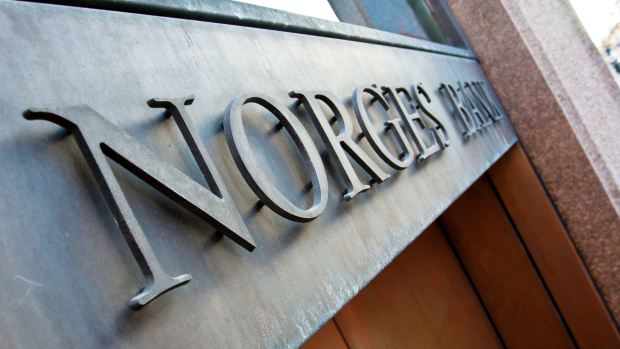
The Norwegian decision to tighten lending standards on fossil fuels comes shortly after a French mutual bank committed to phasing out its exposure to the sector completely by 2050. Norges Bank
However, Mr Parkin also said investors were "starting to get more worried about stranded assets".
Fossil fuels becoming stranded
Stranded assets are those that will see their economic value cut short by technology, regulatory or market changes. Mr Parkin said that fossil fuels were becoming a stranded asset due to the shift to renewables.
"Investors are scared that there are assets in the ground that won't be used anymore, and those energy companies that aren't actively transitioning to renewables are more likely to have them."
Australian activists welcomed the news. MarketForces campaigner Will van de Pol said it was another step on the path to a coal-free future.
"[Norway's divestment of Australian companies] is enough to send a message and that message needs to be heard loud and clear," he said.
Mr van de Pol noted that the Norwegian move was among several other ethical investment pushes in Europe. The world's largest credit union, Crédit Agricole, last week committed to phasing out its exposure to coal in Europe and OECD countries by 2030.
The French co-operative also said it would end its coal exposure in China by 2040 and the rest of the world by 2050 in a climate strategy document circulated on June 6.
"The goal of this strategy is to make green finance a growth driver for the Group. Thus, Crédit Agricole has undertaken to serve the needs of our territories and clients by designing and committing to a green finance path," the paper said.
Mr van de Pol said it was now time for local institutional investors to be sending the same message as their foreign counterparts.
"The Australian superannuation sector should take note of this decision because they too need to be divesting from fossil fuels to bring their portfolios into line with the Paris climate commitments," he said.
MarketForces say that just three of Australia's 50 most significant super funds have any policy preventing fossil fuel investments across their portfolios.
https://www.afr.com/companies/minin...p-up-to-3-7b-in-aussie-shares-20190613-p51xas
Norway prepares to dump up to $3.7b in Aussie shares
Lucas BairdReporter Jun 13, 2019 – 5.08pm
Norway's massive sovereign wealth fund may soon rip up to $3.7 billion out of Australian fossil fuel companies after the Norwegian Parliament passed a tightened set of ethical investment rules.
The laws were adopted late on Tuesday night and mandated Norges Bank to divest the equivalent of $17.3 billion from its Government Pension Fund Global portfolio, which is better known as the "Oil Fund".
While this amount is just a small portion of the trillions of dollars that the fund manages, it captures 11 high-profile Australian companies, according to a Norwegian government website.
BHP Group, Santos and Oil Search are the most valuable. Norges owns 0.8 per cent of BHP's ASX shares and 3.06 per cent of those listed on the London Stock Exchange; the fund owns 1.16 per cent and 1.15 per cent of Oil Search and Santos respectively.
"This tells us that the desire to invest ethically is global in nature."
— Nathan Parkin, Ethical Partners
The value of Norge's at-risk Australian investments is based on the fund's current holding in the 11 companies, as described by Bloomberg, at Thursday's share price.
It is possible, however, that not all companies listed on the website will be sold off. For example, BHP's moves last year to exit from the US shale oil industry may put the company back within the fund's acceptable parameters.
The package of legislation also included new restrictions on investments in companies that mine or draw power from coal, over specific thresholds, which could put the fund's $490 million exposure to AGL Energy and South32 in the firing line, as well. Again, moves by both AGL and South32 to reduce their coal exposure may mean they escape the divestment push.
Ethical Partners fund manager Nathan Parkin said Norway's decision showed the mood around an investment's environmental impact was shifting.
"This tells us that the desire to invest ethically is global in nature," he said. "It's about doing the right thing more than anything."
The Norwegian decision to tighten lending standards on fossil fuels comes shortly after a French mutual bank committed to phasing out its exposure to the sector completely by 2050. Norges Bank
However, Mr Parkin also said investors were "starting to get more worried about stranded assets".
Fossil fuels becoming stranded
Stranded assets are those that will see their economic value cut short by technology, regulatory or market changes. Mr Parkin said that fossil fuels were becoming a stranded asset due to the shift to renewables.
"Investors are scared that there are assets in the ground that won't be used anymore, and those energy companies that aren't actively transitioning to renewables are more likely to have them."
Australian activists welcomed the news. MarketForces campaigner Will van de Pol said it was another step on the path to a coal-free future.
"[Norway's divestment of Australian companies] is enough to send a message and that message needs to be heard loud and clear," he said.
Mr van de Pol noted that the Norwegian move was among several other ethical investment pushes in Europe. The world's largest credit union, Crédit Agricole, last week committed to phasing out its exposure to coal in Europe and OECD countries by 2030.
The French co-operative also said it would end its coal exposure in China by 2040 and the rest of the world by 2050 in a climate strategy document circulated on June 6.
"The goal of this strategy is to make green finance a growth driver for the Group. Thus, Crédit Agricole has undertaken to serve the needs of our territories and clients by designing and committing to a green finance path," the paper said.
Mr van de Pol said it was now time for local institutional investors to be sending the same message as their foreign counterparts.
"The Australian superannuation sector should take note of this decision because they too need to be divesting from fossil fuels to bring their portfolios into line with the Paris climate commitments," he said.
MarketForces say that just three of Australia's 50 most significant super funds have any policy preventing fossil fuel investments across their portfolios.
https://www.bloomberg.com/news/arti...ia-s-plan-to-rule-700-billion-hydrogen-market
How Saudi Arabia plans to make the kingdom a global hub for green hydrogen

Hydrogen is hard to store in gaseous form and is expensive to liquefy, which is why the Neom project plans to convert it to ammonia for transport. FILE PHOTO REUTERS
 Land set aside for a hydrogen plant and the wind and solar farms to power it in Neom, Saudi Arabia. Source: Neom
07 Mar 2021, Bloomberg
Saudi Arabia is building a $5 billion plant powered entirely by sun and wind that will be among the world’s biggest green hydrogen makers when it opens in the planned megacity of Neom in 2025
Sun-scorched expanses and steady Red Sea breezes make the northwest tip of Saudi Arabia prime real estate for what the kingdom hopes will become a global hub for green hydrogen.
As governments and industries seek less-polluting alternatives to hydrocarbons, the world’s biggest crude exporter doesn’t want to cede the burgeoning hydrogen business to China, Europe or Australia and lose a potentially massive source of income. So it’s building a $5 billion plant powered entirely by sun and wind that will be among the world’s biggest green hydrogen makers when it opens in the planned megacity of Neom in 2025.
The task of turning a patch of desert the size of Belgium into a metropolis powered by renewable energy falls to Peter Terium, the former chief executive officer of RWE AG, Germany’s biggest utility, and clean-energy spinoff Innogy SE. His performance will help determine whether a country dependent on petrodollars can transition into a supplier of non-polluting fuels.
“There’s nothing I’ve ever seen or heard of this dimension or challenge," Terium said. “I’ve been spending the last two years wrapping my mind around ‘from scratch,’ and now we’re very much in execution mode."
Hydrogen is morphing from a niche power source — used in zeppelins, rockets and nuclear weapons — into big business, with the European Union alone committing $500 billion to scale up its infrastructure. Huge obstacles remain to the gas becoming a major part of the energy transition, and skeptics point to Saudi Arabia’s weak track record so far capitalizing on what should be a competitive edge in the renewables business, especially solar, where there are many plans but few operational projects.
But countries are jostling for position in a future global market, and hydrogen experts list the kingdom as one to watch.
The U.K. is hosting 10 projects to heat buildings with the gas, China is deploying fuel-cell buses and commercial vehicles, and Japan is planning to use the gas in steelmaking. U.S. presidential climate envoy John Kerry urged the domestic oil and gas industry to embrace hydrogen’s “huge opportunities."
That should mean plenty of potential customers for the plant called Helios Green Fuels. Saudi Arabia is setting its sights on becoming the world’s largest supplier of hydrogen — a market that BloombergNEF estimates could be worth as much as $700 billion by 2050.
“You’re seeing a more diversified portfolio of energy exports that is more resilient," said Shihab Elborai, a Dubai-based partner at consultant Strategy&. “It’s diversified against any uncertainties in the rate and timing of the energy transition."
Blueprints are being drawn and strategies are being announced, but it’s still early days for the industry. Hydrogen is expensive to make without expelling greenhouse gases, difficult to store and highly combustible.
Green hydrogen is produced by using renewable energy rather than fossil fuels. The current cost of producing a kilogram is a little under $5, according to the International Renewable Energy Agency.
Saudi Arabia possesses a competitive advantage in its perpetual sunshine and wind, and vast tracts of unused land. Helios’s costs likely will be among the lowest globally and could reach $1.50 per kilogram by 2030, according to BNEF. That’s cheaper than some hydrogen made from non-renewable sources today.
It’s more expensive to produce renewable energy in Europe, and the continent’s anticipated demand while implementing a Green Deal should exceed its own supply, Terium said. That $1 trillion-plus stimulus package will try to make the continent carbon-neutral.
“By no means will they be able to produce all the hydrogen themselves," he said. “There’s just not enough North Sea or usable water for offshore wind."
Terium, who is Dutch, joined Neom in 2018 to design its energy, water and food networks. His enthusiasm for technologies such as electric vehicles and digital networks wasn’t matched by Innogy’s investors, but it is by the backers of Neom.
The most important of those is Crown Prince Mohammed bin Salman, the 35-year-old de facto ruler, who envisions Neom as a zero-emissions exemplar helping transform society and the economy. The hydrogen plant is part of that vision. But while Neom’s $500 billion price tag prompts questions about whether it will go ahead exactly as planned, the hydrogen effort doesn’t depend on the megacity’s overall success.
There are other challenges, too: The country produces one-eighth of the world’s oil supply, but its operational renewables capacity is small by regional standards, and it’s starting from zero with green hydrogen.
The government is partnering with Acwa Power, a Riyadh, Saudi Arabia-based power developer partly owned by the kingdom’s sovereign wealth fund, and Air Products and Chemicals Inc., a $58 billion company based in Allentown, Pennsylvania, to build the green hydrogen plant.
The trio is splitting the costs of Helios, which will use 4 gigawatts of solar and wind power.
“As the first gigawatt plant, we will have an advantage in developing further innovation," Terium said. “This is not going to be the end of the game."
For starters, Helios will produce 650 tons of hydrogen a day by electrolysis – enough for conversion to 1.2 million tons per year of green ammonia. Air Products will buy all of that ammonia, which is easier to ship than liquid or gaseous hydrogen, and convert it back upon delivery to customers.
Enough green hydrogen will be produced to maintain about 20,000 city buses. There are about 3 million buses operating worldwide, and Air Products wants to be a mainstay in depots switching to hydrogen, said Simon Moore, vice president of investor relations.
“We’re not going to wait until this project comes on-stream in 2025 to think about additional capacity," he said.
Fuel-cell vehicles could capture as much as 30% of bus-fleet volume globally by 2050, with growth coming primarily from China and the European Union, according to BNEF. Moore declined to identify Helios’s clients.
Hydrogen will cost more than polluting alternatives at first, but enough governments and businesses face stringent carbon targets that need the gas to meet them, Moore said. Thirteen nations have hydrogen strategies in place, and another 11 are preparing theirs, according to BNEF.
Germany said it needs “enormous" volumes of green hydrogen, and it hopes Saudi Arabia will be a supplier.
“The interest Saudi Arabia has had from investors leads us to believe that there is a sound economic case for hydrogen, even at current prices," a spokesman for the Energy Ministry said.
At the same time, the government is trying to boost its own scant use of renewable energy. Currently, under 700 megawatts operate nationwide -- less than 2% of Spain’s installed capacity. The nation plans to meet half of its power needs from renewables by 2030 and has several projects under construction or soon to start.
Saudi Arabia also is one of the few countries regularly burning crude to make electricity. The highly polluting practice reached a four-year peak in August, and critics say the energy used by the Neom plant should be diverted into the national grid instead.
Yet the focus remains on exports. Petrostates stand to lose as much as $13 trillion by 2040 because of climate-change targets, and Saudi Arabia is among those expected to be most affected.
The hydrogen plant will produce 15,000 barrels of oil equivalent per day at most, hardly a match for the 9 million barrels of crude the kingdom pumps daily. Even so, finding a way to corner part of the clean-fuels market represents a necessary economic lifeline.
“It’s sponsored at the highest possible level, so if any project happens, it’s got to be this," Elborai said.
How Saudi Arabia plans to make the kingdom a global hub for green hydrogen
Hydrogen is hard to store in gaseous form and is expensive to liquefy, which is why the Neom project plans to convert it to ammonia for transport. FILE PHOTO REUTERS
07 Mar 2021, Bloomberg
Saudi Arabia is building a $5 billion plant powered entirely by sun and wind that will be among the world’s biggest green hydrogen makers when it opens in the planned megacity of Neom in 2025
Sun-scorched expanses and steady Red Sea breezes make the northwest tip of Saudi Arabia prime real estate for what the kingdom hopes will become a global hub for green hydrogen.
As governments and industries seek less-polluting alternatives to hydrocarbons, the world’s biggest crude exporter doesn’t want to cede the burgeoning hydrogen business to China, Europe or Australia and lose a potentially massive source of income. So it’s building a $5 billion plant powered entirely by sun and wind that will be among the world’s biggest green hydrogen makers when it opens in the planned megacity of Neom in 2025.
The task of turning a patch of desert the size of Belgium into a metropolis powered by renewable energy falls to Peter Terium, the former chief executive officer of RWE AG, Germany’s biggest utility, and clean-energy spinoff Innogy SE. His performance will help determine whether a country dependent on petrodollars can transition into a supplier of non-polluting fuels.
“There’s nothing I’ve ever seen or heard of this dimension or challenge," Terium said. “I’ve been spending the last two years wrapping my mind around ‘from scratch,’ and now we’re very much in execution mode."
Hydrogen is morphing from a niche power source — used in zeppelins, rockets and nuclear weapons — into big business, with the European Union alone committing $500 billion to scale up its infrastructure. Huge obstacles remain to the gas becoming a major part of the energy transition, and skeptics point to Saudi Arabia’s weak track record so far capitalizing on what should be a competitive edge in the renewables business, especially solar, where there are many plans but few operational projects.
But countries are jostling for position in a future global market, and hydrogen experts list the kingdom as one to watch.
The U.K. is hosting 10 projects to heat buildings with the gas, China is deploying fuel-cell buses and commercial vehicles, and Japan is planning to use the gas in steelmaking. U.S. presidential climate envoy John Kerry urged the domestic oil and gas industry to embrace hydrogen’s “huge opportunities."
That should mean plenty of potential customers for the plant called Helios Green Fuels. Saudi Arabia is setting its sights on becoming the world’s largest supplier of hydrogen — a market that BloombergNEF estimates could be worth as much as $700 billion by 2050.
“You’re seeing a more diversified portfolio of energy exports that is more resilient," said Shihab Elborai, a Dubai-based partner at consultant Strategy&. “It’s diversified against any uncertainties in the rate and timing of the energy transition."
Blueprints are being drawn and strategies are being announced, but it’s still early days for the industry. Hydrogen is expensive to make without expelling greenhouse gases, difficult to store and highly combustible.
Green hydrogen is produced by using renewable energy rather than fossil fuels. The current cost of producing a kilogram is a little under $5, according to the International Renewable Energy Agency.
Saudi Arabia possesses a competitive advantage in its perpetual sunshine and wind, and vast tracts of unused land. Helios’s costs likely will be among the lowest globally and could reach $1.50 per kilogram by 2030, according to BNEF. That’s cheaper than some hydrogen made from non-renewable sources today.
It’s more expensive to produce renewable energy in Europe, and the continent’s anticipated demand while implementing a Green Deal should exceed its own supply, Terium said. That $1 trillion-plus stimulus package will try to make the continent carbon-neutral.
“By no means will they be able to produce all the hydrogen themselves," he said. “There’s just not enough North Sea or usable water for offshore wind."
Terium, who is Dutch, joined Neom in 2018 to design its energy, water and food networks. His enthusiasm for technologies such as electric vehicles and digital networks wasn’t matched by Innogy’s investors, but it is by the backers of Neom.
The most important of those is Crown Prince Mohammed bin Salman, the 35-year-old de facto ruler, who envisions Neom as a zero-emissions exemplar helping transform society and the economy. The hydrogen plant is part of that vision. But while Neom’s $500 billion price tag prompts questions about whether it will go ahead exactly as planned, the hydrogen effort doesn’t depend on the megacity’s overall success.
There are other challenges, too: The country produces one-eighth of the world’s oil supply, but its operational renewables capacity is small by regional standards, and it’s starting from zero with green hydrogen.
The government is partnering with Acwa Power, a Riyadh, Saudi Arabia-based power developer partly owned by the kingdom’s sovereign wealth fund, and Air Products and Chemicals Inc., a $58 billion company based in Allentown, Pennsylvania, to build the green hydrogen plant.
The trio is splitting the costs of Helios, which will use 4 gigawatts of solar and wind power.
“As the first gigawatt plant, we will have an advantage in developing further innovation," Terium said. “This is not going to be the end of the game."
For starters, Helios will produce 650 tons of hydrogen a day by electrolysis – enough for conversion to 1.2 million tons per year of green ammonia. Air Products will buy all of that ammonia, which is easier to ship than liquid or gaseous hydrogen, and convert it back upon delivery to customers.
Enough green hydrogen will be produced to maintain about 20,000 city buses. There are about 3 million buses operating worldwide, and Air Products wants to be a mainstay in depots switching to hydrogen, said Simon Moore, vice president of investor relations.
“We’re not going to wait until this project comes on-stream in 2025 to think about additional capacity," he said.
Fuel-cell vehicles could capture as much as 30% of bus-fleet volume globally by 2050, with growth coming primarily from China and the European Union, according to BNEF. Moore declined to identify Helios’s clients.
Hydrogen will cost more than polluting alternatives at first, but enough governments and businesses face stringent carbon targets that need the gas to meet them, Moore said. Thirteen nations have hydrogen strategies in place, and another 11 are preparing theirs, according to BNEF.
Germany said it needs “enormous" volumes of green hydrogen, and it hopes Saudi Arabia will be a supplier.
“The interest Saudi Arabia has had from investors leads us to believe that there is a sound economic case for hydrogen, even at current prices," a spokesman for the Energy Ministry said.
At the same time, the government is trying to boost its own scant use of renewable energy. Currently, under 700 megawatts operate nationwide -- less than 2% of Spain’s installed capacity. The nation plans to meet half of its power needs from renewables by 2030 and has several projects under construction or soon to start.
Saudi Arabia also is one of the few countries regularly burning crude to make electricity. The highly polluting practice reached a four-year peak in August, and critics say the energy used by the Neom plant should be diverted into the national grid instead.
Yet the focus remains on exports. Petrostates stand to lose as much as $13 trillion by 2040 because of climate-change targets, and Saudi Arabia is among those expected to be most affected.
The hydrogen plant will produce 15,000 barrels of oil equivalent per day at most, hardly a match for the 9 million barrels of crude the kingdom pumps daily. Even so, finding a way to corner part of the clean-fuels market represents a necessary economic lifeline.
“It’s sponsored at the highest possible level, so if any project happens, it’s got to be this," Elborai said.
Japan-Australia venture starts producing hydrogen from dirty coal
World-first trial project on safe export of hydrogen
https://www.google.com.au/url?sa=t&...0PADegQIAxAB&usg=AOvVaw3Prg5tjRY86t9tQW7Bhmmm
PUBLISHED : 12 MAR 2021
World-first trial project on safe export of hydrogen
LOY YANG, Australia: A Japanese-Australian venture has begun producing hydrogen from brown coal in a A$500 million (US$390 million) pilot project that aims to show liquefied hydrogen can be produced commercially and exported safely overseas.
The plan is to create the first international supply chain for liquefied hydrogen and the next big step will be to ship a cargo on the world's first liquefied hydrogen carrier.
"We have the potential here to be world leaders in the production and export of hydrogen and this project is developing up that technology to do exactly that," Australian Energy Minister Angus Taylor told Reuters on the sidelines of a ceremony marking the event.
Australia, already dominant in global liquefied natural gas (LNG) trade, is hoping liquefied hydrogen will give it a greener market for its coal and gas.Run by Kawasaki Heavy Industries and located in the state of Victoria, home to a quarter of the world's known brown coal reserves, the project is key to helping Japan meet its target of net zero carbon emissions by 2050.
The world's fifth-largest energy consumer aims to boost its annual hydrogen demand tenfold to 20 million tonnes by 2050, equivalent to about 40% of its current power generation.
Brown coal is considered the lowest rank of coal due to its relatively low energy content and has fuelled some of Australia's dirtiest power stations, some of which have already shut or are slated for closure.
"The important thing is hydrogen should be cost competitive, and Victorian brown coal is a cheap source of hydrogen," said Hirofumi Kawazoe, general manager of Kawasaki's Hydrogen Engineering Australia unit. (continues below)

The Hydrogen Energy Supply Chain coal-to-hydrogen plant at Loy Yang, Victoria. (Photo: Reuters)
The project is producing hydrogen by reacting coal with oxygen and steam under high heat and pressure in a process that also yields carbon dioxide and other gases. If the project goes commercial, the carbon dioxide would be buried off the coast of Victoria.
The Australian and Victoria state governments are running a parallel project to test transporting and injecting carbon dioxide under the seabed.
Studies show hydrogen produced from coal with carbon capture and storage is half to one-third the cost of producing green hydrogen, said Jeremy Stone, a J-Power director on the project. Green hydrogen is produced using wind and solar power to split water and unlike hydrogen produced from coal is dependent on the weather.
Groups campaigning to end the use of brown coal say, however, that the project is a waste of money.
"The technology will be superseded in the next few years by clean hydrogen sourced from renewable energy. Any investment in coal-to-hydrogen infrastructure will quickly become a white elephant," said Environment Victoria campaigns manager Nicholas Aberle.
The hydrogen produced in the 70 kilogrammes a day demonstration plant will be transported by trailer to a port site where it will be liquefied for export. The first cargo to Japan has been delayed to the second half of this year due to Covid-19 restrictions which have slowed final checks on the tanker.
Partners in the project include Iwatani Corp, Marubeni Corp, Sumitomo Corp and AGL Energy Ltd, whose mine is supplying the brown coal.

The liquefied hydrogen carrier Suiso Frontier, built by Kawasaki Heavy Industries and due to transport its first cargo of hydrogen extracted from brown coal from Australia to Japan, seen docked at Kobe Works yard in Kobe, western Japan on Jan 22, (Photo: Reuters).
World-first trial project on safe export of hydrogen
https://www.google.com.au/url?sa=t&...0PADegQIAxAB&usg=AOvVaw3Prg5tjRY86t9tQW7Bhmmm
PUBLISHED : 12 MAR 2021
World-first trial project on safe export of hydrogen

LOY YANG, Australia: A Japanese-Australian venture has begun producing hydrogen from brown coal in a A$500 million (US$390 million) pilot project that aims to show liquefied hydrogen can be produced commercially and exported safely overseas.
The plan is to create the first international supply chain for liquefied hydrogen and the next big step will be to ship a cargo on the world's first liquefied hydrogen carrier.
"We have the potential here to be world leaders in the production and export of hydrogen and this project is developing up that technology to do exactly that," Australian Energy Minister Angus Taylor told Reuters on the sidelines of a ceremony marking the event.
Australia, already dominant in global liquefied natural gas (LNG) trade, is hoping liquefied hydrogen will give it a greener market for its coal and gas.Run by Kawasaki Heavy Industries and located in the state of Victoria, home to a quarter of the world's known brown coal reserves, the project is key to helping Japan meet its target of net zero carbon emissions by 2050.
The world's fifth-largest energy consumer aims to boost its annual hydrogen demand tenfold to 20 million tonnes by 2050, equivalent to about 40% of its current power generation.
Brown coal is considered the lowest rank of coal due to its relatively low energy content and has fuelled some of Australia's dirtiest power stations, some of which have already shut or are slated for closure.
"The important thing is hydrogen should be cost competitive, and Victorian brown coal is a cheap source of hydrogen," said Hirofumi Kawazoe, general manager of Kawasaki's Hydrogen Engineering Australia unit. (continues below)
The Hydrogen Energy Supply Chain coal-to-hydrogen plant at Loy Yang, Victoria. (Photo: Reuters)
The project is producing hydrogen by reacting coal with oxygen and steam under high heat and pressure in a process that also yields carbon dioxide and other gases. If the project goes commercial, the carbon dioxide would be buried off the coast of Victoria.
The Australian and Victoria state governments are running a parallel project to test transporting and injecting carbon dioxide under the seabed.
Studies show hydrogen produced from coal with carbon capture and storage is half to one-third the cost of producing green hydrogen, said Jeremy Stone, a J-Power director on the project. Green hydrogen is produced using wind and solar power to split water and unlike hydrogen produced from coal is dependent on the weather.
Groups campaigning to end the use of brown coal say, however, that the project is a waste of money.
"The technology will be superseded in the next few years by clean hydrogen sourced from renewable energy. Any investment in coal-to-hydrogen infrastructure will quickly become a white elephant," said Environment Victoria campaigns manager Nicholas Aberle.
The hydrogen produced in the 70 kilogrammes a day demonstration plant will be transported by trailer to a port site where it will be liquefied for export. The first cargo to Japan has been delayed to the second half of this year due to Covid-19 restrictions which have slowed final checks on the tanker.
Partners in the project include Iwatani Corp, Marubeni Corp, Sumitomo Corp and AGL Energy Ltd, whose mine is supplying the brown coal.
The liquefied hydrogen carrier Suiso Frontier, built by Kawasaki Heavy Industries and due to transport its first cargo of hydrogen extracted from brown coal from Australia to Japan, seen docked at Kobe Works yard in Kobe, western Japan on Jan 22, (Photo: Reuters).
Hydrogen: what industry insiders think of the ‘fuel of the future’
https://www.ft.com/content/f50b16ca-8cbe-465f-b2ea-bd36bf14dbd4
One thing to start: Oil major Chevron has been accused of “greenwashing” in a complaint to the Federal Trade Commission, the US consumer protection agency, marking a novel approach by activists in their battle with Big Oil.
Hydrogen is vogue again. In the media, at conferences, in company presentations, there is no escaping the buzz around it. Industry players are increasingly convinced that the so-called “fuel of the future” can provide the missing piece of the puzzle in the energy transition: a route to cutting emissions in sectors where carbon-free electricity can’t.
Today’s first item takes a step back and looks at where things stand in the development of hydrogen as a key part of the energy complex. For more on this subject, we also suggest checking out the series the FT is currently running: Hydrogen — Fantasy or fuel of the future?
Our second item takes a look at the International Energy Agency’s oil market outlook for the next half-decade. It is not buying into the supercycle hype.
Bill Gates says it’s “a huge deal”. Frans Timmermans, the EU’s green boss, says “it rocks”. Shell chief Ben van Beurden says “we cannot aim to be a net-zero economy [without it].”
In the energy world, it has become increasingly difficult to avoid the subject of hydrogen. “It is really hard to pick up industry trade press these days without seeing at least one, if not two, three or four stories on hydrogen,” said Sandra Safro, a lawyer and partner at K&L Gates, at a panel I moderated last week at MIT’s annual energy conference.
But for all the buzz around this “rock star of new energies” (another Timmermans moniker), understanding of where it fits into the future of energy remains slim. At the MIT event, panellists delved into where things stand now with hydrogen and the road yet to be travelled. Here is some of what was discussed: Why now?
Hydrogen is not new. It has played a role in the US for almost a century and is widely used today in oil refining and agricultural fertiliser. Efforts to give it a meaningful role in energy have not been lacking: General Motors built its first hydrogen-powered vehicle in the 1960s and there was a drive under the Bush administration to incentivise its use as a fuel. But for all the hype, it has yet to take off.
Today, though, the drive to tackle climate change has focused minds: Most countries have signed up to the goals of the Paris Agreement and governments are scrambling to find feasible strategies to cut emissions nationally. Energy companies, under pressure from environmentally-conscious investors are being forced to develop their own strategies to achieve net-zero emissions at the corporate level. And the plummeting costs of wind and solar power mean the wide scale production of “green hydrogen” from renewables is no longer a pipe dream.
Most hydrogen produced today is either dubbed grey (from natural gas) or brown (from coal). In order for it to play a role in decarbonising the energy sector, the key is to develop production at scale of blue (from natural gas with carbon capture technology) and green (from the electrolysis of water by renewables) hydrogen.
“There’s a lot of opportunity right now to use hydrogen, as part of an overall carbon emission reduction strategy,” said Safro. “And countries around the world . . . are devoting significant dollars towards making those efforts into a reality.” Where would it be used? The lion’s share of decarbonisation can be achieved by electrification — fuelling everything from cars to heating systems with electric power (provided it comes from clean sources). Seventy per cent of the energy spectrum could likely be decarbonised this way, according to analysts. But for some so-called “hard to decarbonise” sectors, that will not possible.
Enter hydrogen. “If we have obvious ways of decarbonising certain parts of say our light duty vehicle transportation sectors . . . battery electric vehicles make a tonne of sense in that space,” said Mark Ruth, who heads up the Industrial Systems and Fuels Group in the Strategic Energy Analysis Center at the National Renewable Energy Laboratory. “The value of hydrogen on the demand side is where it’s really hard to decarbonise in other ways.” That means the likes of steel, concrete and heavy-duty transportation such as long-distance trucks could be decarbonised through a shift to clean hydrogen. It could also be used in energy storage, providing dispatchable power to compliment intermittent renewables. For more on the “where” check out these pieces on whether hydrogen has a role to play in vehicles and aviation.
When would this happen? Barclays estimates the hydrogen market could grow by a factor of eight by 2050 to a $1tn industry, saving up to 15 per cent of energy-related emissions. Key to this is bringing down the costs of clean hydrogen. (See here). They have a long way to fall. Producing green hydrogen via electrolysis currently costs between $900-$1,100 per kilowatt of power, said Ruth. For the process to be competitive, that needs to fall to $200-250/kW. Most of that cost can be slashed quickly, falling to about $400/kW as supply chains are developed. “If the market starts to develop . . . you’ll be able to get components cheaper, you no longer have PhDs turning wrenches to be able to build these things,” said Ruth. To go the final few yards, the market will need to turn to technological advances.
But industry players are optimistic this can be achieved. Belén Linares, innovation manager at renewables group Acciona, which is pivoting into hydrogen, reckons green hydrogen should be profitable within the next decade. “Green hydrogen for us is going to be a business,” she said. “I believe that the tendency of the cost decrease of the electrolysers is similar as what we saw in solar PV panels.”
Acciona is targeting profitability from its green hydrogen production by 2030. “It’s huge work that we will have in the next nine years in order to reach that,” said Linares. (Myles McCormick)
https://www.ft.com/content/f50b16ca-8cbe-465f-b2ea-bd36bf14dbd4
One thing to start: Oil major Chevron has been accused of “greenwashing” in a complaint to the Federal Trade Commission, the US consumer protection agency, marking a novel approach by activists in their battle with Big Oil.
Hydrogen is vogue again. In the media, at conferences, in company presentations, there is no escaping the buzz around it. Industry players are increasingly convinced that the so-called “fuel of the future” can provide the missing piece of the puzzle in the energy transition: a route to cutting emissions in sectors where carbon-free electricity can’t.
Today’s first item takes a step back and looks at where things stand in the development of hydrogen as a key part of the energy complex. For more on this subject, we also suggest checking out the series the FT is currently running: Hydrogen — Fantasy or fuel of the future?
Our second item takes a look at the International Energy Agency’s oil market outlook for the next half-decade. It is not buying into the supercycle hype.
Bill Gates says it’s “a huge deal”. Frans Timmermans, the EU’s green boss, says “it rocks”. Shell chief Ben van Beurden says “we cannot aim to be a net-zero economy [without it].”
In the energy world, it has become increasingly difficult to avoid the subject of hydrogen. “It is really hard to pick up industry trade press these days without seeing at least one, if not two, three or four stories on hydrogen,” said Sandra Safro, a lawyer and partner at K&L Gates, at a panel I moderated last week at MIT’s annual energy conference.
But for all the buzz around this “rock star of new energies” (another Timmermans moniker), understanding of where it fits into the future of energy remains slim. At the MIT event, panellists delved into where things stand now with hydrogen and the road yet to be travelled. Here is some of what was discussed: Why now?
Hydrogen is not new. It has played a role in the US for almost a century and is widely used today in oil refining and agricultural fertiliser. Efforts to give it a meaningful role in energy have not been lacking: General Motors built its first hydrogen-powered vehicle in the 1960s and there was a drive under the Bush administration to incentivise its use as a fuel. But for all the hype, it has yet to take off.
Today, though, the drive to tackle climate change has focused minds: Most countries have signed up to the goals of the Paris Agreement and governments are scrambling to find feasible strategies to cut emissions nationally. Energy companies, under pressure from environmentally-conscious investors are being forced to develop their own strategies to achieve net-zero emissions at the corporate level. And the plummeting costs of wind and solar power mean the wide scale production of “green hydrogen” from renewables is no longer a pipe dream.
Most hydrogen produced today is either dubbed grey (from natural gas) or brown (from coal). In order for it to play a role in decarbonising the energy sector, the key is to develop production at scale of blue (from natural gas with carbon capture technology) and green (from the electrolysis of water by renewables) hydrogen.
“There’s a lot of opportunity right now to use hydrogen, as part of an overall carbon emission reduction strategy,” said Safro. “And countries around the world . . . are devoting significant dollars towards making those efforts into a reality.” Where would it be used? The lion’s share of decarbonisation can be achieved by electrification — fuelling everything from cars to heating systems with electric power (provided it comes from clean sources). Seventy per cent of the energy spectrum could likely be decarbonised this way, according to analysts. But for some so-called “hard to decarbonise” sectors, that will not possible.
Enter hydrogen. “If we have obvious ways of decarbonising certain parts of say our light duty vehicle transportation sectors . . . battery electric vehicles make a tonne of sense in that space,” said Mark Ruth, who heads up the Industrial Systems and Fuels Group in the Strategic Energy Analysis Center at the National Renewable Energy Laboratory. “The value of hydrogen on the demand side is where it’s really hard to decarbonise in other ways.” That means the likes of steel, concrete and heavy-duty transportation such as long-distance trucks could be decarbonised through a shift to clean hydrogen. It could also be used in energy storage, providing dispatchable power to compliment intermittent renewables. For more on the “where” check out these pieces on whether hydrogen has a role to play in vehicles and aviation.
When would this happen? Barclays estimates the hydrogen market could grow by a factor of eight by 2050 to a $1tn industry, saving up to 15 per cent of energy-related emissions. Key to this is bringing down the costs of clean hydrogen. (See here). They have a long way to fall. Producing green hydrogen via electrolysis currently costs between $900-$1,100 per kilowatt of power, said Ruth. For the process to be competitive, that needs to fall to $200-250/kW. Most of that cost can be slashed quickly, falling to about $400/kW as supply chains are developed. “If the market starts to develop . . . you’ll be able to get components cheaper, you no longer have PhDs turning wrenches to be able to build these things,” said Ruth. To go the final few yards, the market will need to turn to technological advances.
But industry players are optimistic this can be achieved. Belén Linares, innovation manager at renewables group Acciona, which is pivoting into hydrogen, reckons green hydrogen should be profitable within the next decade. “Green hydrogen for us is going to be a business,” she said. “I believe that the tendency of the cost decrease of the electrolysers is similar as what we saw in solar PV panels.”
Acciona is targeting profitability from its green hydrogen production by 2030. “It’s huge work that we will have in the next nine years in order to reach that,” said Linares. (Myles McCormick)
Japan eyes undersea 'fire ice' as source of clean-burning hydrogen
Oil platform maker Modec looks to strike gold as it tests methane hydrates extraction
https://asia.nikkei.com/Spotlight/E...-fire-ice-as-source-of-clean-burning-hydrogen

Modec produces floating units for deepsea drilling of petroleum and natural gas. (Photo courtesy of Modec)
ANNU NISHIOKA, Nikkei staff writerMarch 20, 2021
TOKYO -- Deep down on the ocean's floor lies a sherbet-like substance that could revolutionize the way the Japan consumes energy, but there's just one problem: extracting the fuel from the dark depths of the seas.
One Japanese company believes it has the solution. Modec, a maker of offshore oil platforms, has plans to develop a system that is designed to extract methane hydrate, also known as "fire ice," from the ocean bottom and become a source of clean-burning hydrogen.
Modec will pilot the technology during the next fiscal year starting April. The technology will be used in a novel floating unit that will retrieve the methane hydrate.
The project aligns with the Japanese government's goal of attaining net-zero emissions of greenhouse gases by the year 2050. A stable source of hydrogen would play a pivotal role in achieving that objective.
One cubic meter of methane hydrate can produce roughly 160 cubic meters of methane gas, which in turn, can be transformed in hydrogen.
Methane hydrate has long been a subject of exploration as a source of natural gas. This February, a Japanese government panel cited methane hydrate as an untapped repository of hydrogen and ammonia, another clean energy source.
The conventional way to explore for methane hydrate is at deep-sea locations where the ocean floor lies 1,000 meters below the water surface. The deposits are located a few hundred more meters beneath the sea bed. This method, however, has yet to attain commercial viability.
Modec looks to achieve a breakthrough by drilling for methane hydrate in shallow waters close to shore. The fire ice is broken down and lifted into the floating gasification unit, where it is converted into methane gas and transported to an onshore terminal through an underwater pipeline.
 One cubic meter of methane hydrate can produce roughly 160 cubic meters of methane gas, which it turn can be transformed into hydrogen. (Photo courtesy of the U.S. Department of Energy)
Modec specializes in making floating units for petroleum exploration, among other resources. The company possesses the know-how to efficiently retrieve oil and natural gas using the natural upward pressure of the deposits.
Similarly, methane hydrate steadily becomes more gasified the closer it reaches the ocean surface. Modec believes it can apply its extraction technology to that concept.
Modec has already developed a prototype methane hydrate extraction unit. Next fiscal year, Modec will collaborate with Hokkaido's Kitami Institute of Technology to launch an onshore test extracting ice bars resembling methane hydrate measuring 3 meters in length and 2 meters high. The pilot will take place in Kitami, Hokkaido Prefecture.
Once the technology is developed, Modec aims to sell the equipment. An order for one floating unit is expected to fetch tens of billions of yen (10 billion yen equals $91.6 million).
Currently, most hydrogen is derived from natural gas, a fuel that resource-poor Japan imports. Securing stable supplies of hydrogen sources, as well as the costs, have been long-standing hurdles.
If Japan is able to access the methane hydrate deposits near its coastlines, the country can avoid the geopolitical risks inherent in procuring hydrogen sources. Methane hydrate emits 30% less carbon dioxide when burned than either coal or petroleum.
The government plans to raise Japan's annual hydrogen consumption to about 20 million tons by 2050. For that to happen, the cost needs to be lowered to 20 yen per cubic meter from approximately 100 yen currently. If production of methane hydrate reaches a certain scale, it will play a role in bringing the hydrogen prices to a level that is competitive with imported liquefied natural gas.
Modec believes that its floating units will cut costs of procuring hydrogen below that of hydrogen sources obtained overseas, even when accounting for transport expenses.
Other engineering companies have moved toward hydrogen exploration. Mitsubishi Shipbuilding, a unit of Mitsubishi Heavy Industries, is developing a methane hydrate floating unit as well based on its offshore mining tech.
A need to nurture a new source of earnings is also driving this business trend. The shipbuilding and offshore platform business have been hammered by the drop in energy demand amid the pandemic.
Stiff rivalry from China and South Korea has worsened the business environment. The worldwide shift away from carbon threatens to impede new oil projects, so next-generation fuel such as hydrogen are seen as viable alternatives.
Oil platform maker Modec looks to strike gold as it tests methane hydrates extraction
https://asia.nikkei.com/Spotlight/E...-fire-ice-as-source-of-clean-burning-hydrogen
Modec produces floating units for deepsea drilling of petroleum and natural gas. (Photo courtesy of Modec)
ANNU NISHIOKA, Nikkei staff writerMarch 20, 2021
TOKYO -- Deep down on the ocean's floor lies a sherbet-like substance that could revolutionize the way the Japan consumes energy, but there's just one problem: extracting the fuel from the dark depths of the seas.
One Japanese company believes it has the solution. Modec, a maker of offshore oil platforms, has plans to develop a system that is designed to extract methane hydrate, also known as "fire ice," from the ocean bottom and become a source of clean-burning hydrogen.
Modec will pilot the technology during the next fiscal year starting April. The technology will be used in a novel floating unit that will retrieve the methane hydrate.
The project aligns with the Japanese government's goal of attaining net-zero emissions of greenhouse gases by the year 2050. A stable source of hydrogen would play a pivotal role in achieving that objective.
One cubic meter of methane hydrate can produce roughly 160 cubic meters of methane gas, which in turn, can be transformed in hydrogen.
Methane hydrate has long been a subject of exploration as a source of natural gas. This February, a Japanese government panel cited methane hydrate as an untapped repository of hydrogen and ammonia, another clean energy source.
The conventional way to explore for methane hydrate is at deep-sea locations where the ocean floor lies 1,000 meters below the water surface. The deposits are located a few hundred more meters beneath the sea bed. This method, however, has yet to attain commercial viability.
Modec looks to achieve a breakthrough by drilling for methane hydrate in shallow waters close to shore. The fire ice is broken down and lifted into the floating gasification unit, where it is converted into methane gas and transported to an onshore terminal through an underwater pipeline.
Modec specializes in making floating units for petroleum exploration, among other resources. The company possesses the know-how to efficiently retrieve oil and natural gas using the natural upward pressure of the deposits.
Similarly, methane hydrate steadily becomes more gasified the closer it reaches the ocean surface. Modec believes it can apply its extraction technology to that concept.
Modec has already developed a prototype methane hydrate extraction unit. Next fiscal year, Modec will collaborate with Hokkaido's Kitami Institute of Technology to launch an onshore test extracting ice bars resembling methane hydrate measuring 3 meters in length and 2 meters high. The pilot will take place in Kitami, Hokkaido Prefecture.
Once the technology is developed, Modec aims to sell the equipment. An order for one floating unit is expected to fetch tens of billions of yen (10 billion yen equals $91.6 million).
Currently, most hydrogen is derived from natural gas, a fuel that resource-poor Japan imports. Securing stable supplies of hydrogen sources, as well as the costs, have been long-standing hurdles.
If Japan is able to access the methane hydrate deposits near its coastlines, the country can avoid the geopolitical risks inherent in procuring hydrogen sources. Methane hydrate emits 30% less carbon dioxide when burned than either coal or petroleum.
The government plans to raise Japan's annual hydrogen consumption to about 20 million tons by 2050. For that to happen, the cost needs to be lowered to 20 yen per cubic meter from approximately 100 yen currently. If production of methane hydrate reaches a certain scale, it will play a role in bringing the hydrogen prices to a level that is competitive with imported liquefied natural gas.
Modec believes that its floating units will cut costs of procuring hydrogen below that of hydrogen sources obtained overseas, even when accounting for transport expenses.
Other engineering companies have moved toward hydrogen exploration. Mitsubishi Shipbuilding, a unit of Mitsubishi Heavy Industries, is developing a methane hydrate floating unit as well based on its offshore mining tech.
A need to nurture a new source of earnings is also driving this business trend. The shipbuilding and offshore platform business have been hammered by the drop in energy demand amid the pandemic.
Stiff rivalry from China and South Korea has worsened the business environment. The worldwide shift away from carbon threatens to impede new oil projects, so next-generation fuel such as hydrogen are seen as viable alternatives.